
Wagyu beef is known for its intense marbling, rich flavor, and exceptionally tender texture, which is why many people consider it some of the best beef in the world. But not all Wagyu is the same. There are several types, and the differences between them matter more than most people realize.
In this guide, I’ll explain what Wagyu beef is, where it comes from, and what makes it so special. I’ll also break down the main types of Wagyu, compare Japanese and American Wagyu, and show you how much authentic Wagyu costs and where to buy it safely. Think of this as Wagyu Beef 101, a beginner’s guide to everything you need to know about Wagyu.
What is Wagyu Beef?
Wagyu beef comes from specific Japanese cattle breeds. The word Wagyu literally means “Japanese cattle” (“Wa” means Japanese, and “gyu” means cattle). In Japan, the term refers to four specific breeds of Japanese beef cattle: Kuroge Washu (Japanese Black), Akage Washu or Akaushi (Japanese Brown), Nihon Tankaku Washu (Japanese Shorthorn), and Mukaku Washu (Japanese Polled) – as well as their crossbreds.
In other words, Wagyu is a breed-based category, not just a general label for premium beef. According to Japan’s Ministry of Agriculture, Forestry and Fisheries (MAFF), Kuroge Washu (Japanese Black) accounts for more than 97 percent of all Wagyu in Japan.
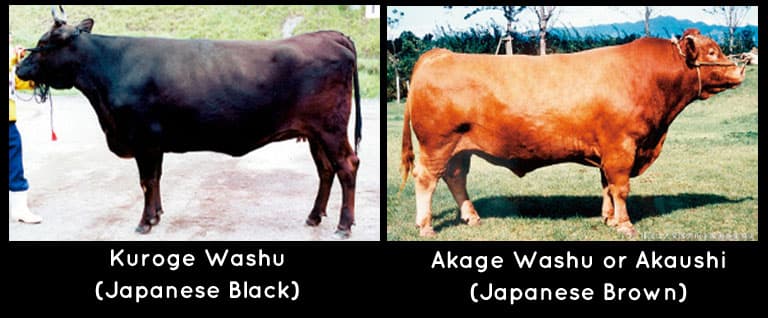
(Japanese Black) and Akage Washu or Akaushi (Japanese Brown) – Source: www.maff.go.jp
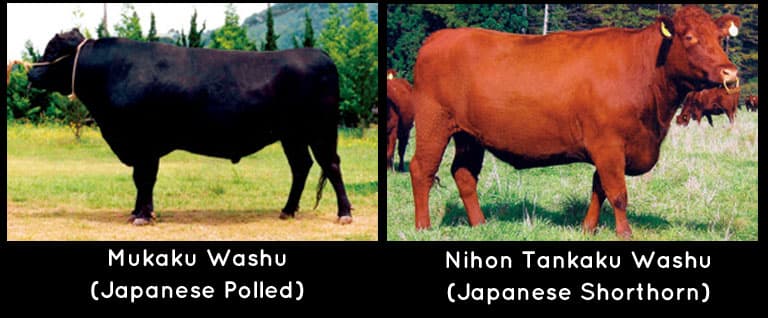
Outside Japan, however, the term Wagyu can also refer to cattle with Wagyu bloodlines that are raised in countries such as the United States or Australia. That’s why you may see terms like Japanese Wagyu, American Wagyu, and Australian Wagyu. In breeding and registry language, these cattle may be described as fullblood, purebred, or crossbred, depending on their traceable Wagyu ancestry, the market, and the breeding program.
Note
In breeding terms, labels such as fullblood, purebred, and crossbred are used mainly outside Japan to show how closely a given animal traces its ancestry to original Japanese Wagyu bloodlines.
It’s also important not to confuse Wagyu with more specific names like Kobe beef or Olive Wagyu. Those are not just alternative names for Wagyu. They’re much narrower designations with their own rules. For example, Kobe beef is a protected certified name used only for qualifying Wagyu beef from Tajima cattle raised under strict standards in Hyogo Prefecture. Olive Wagyu is a specialty designation from Kagawa associated with olive-feed standards.
To keep things simple, think of Wagyu as the broader category, and names like Kobe beef or Olive Wagyu as more specific subtypes within that world. Later in the article, I’ll break down the most common types of Wagyu and explain what makes each one different.
What Is the Origin of Wagyu Beef?
Wagyu beef comes from Japan, where the breed developed over a long period through regional breeding, selective improvement, and the later standardization of cattle lines. While Wagyu is now strongly associated with premium beef, Japanese cattle were originally valued more for agricultural work than for meat.
A major turning point came after the Meiji Restoration, when Japan began crossbreeding native cattle with imported breeds as part of broader agricultural modernization. Breeds introduced during that period included Brown Swiss, Devon, Shorthorn, Simmental, Ayrshire, and Korean cattle.
Over time, Japan moved away from open crossbreeding and toward more controlled breeding programs, which helped shape the Wagyu lines recognized today. Because breeding developed regionally, distinct local bloodlines and production styles emerged across Japan.
This long process helped shape the Wagyu cattle known today, especially Japanese Black, which later became the dominant type most closely associated with the intense marbling for which Wagyu is famous. In the modern era, Wagyu breeding in Japan became increasingly structured through registration, evaluation, and selective breeding.
What Makes Wagyu Beef Special?
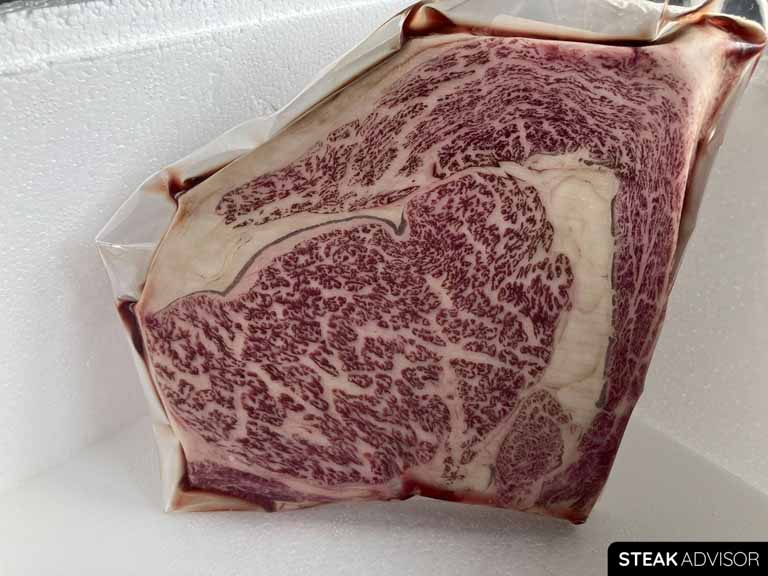
Wagyu offers a very different eating experience from standard beef. A well-marbled USDA Prime is rich, beefy, and very tender, but it still has the firmer, meatier bite most people expect from a steak. High-grade Wagyu is different. Its intense marbling gives it an exceptionally tender, almost melts-in-your-mouth texture and a richer, more buttery flavor, with a slightly sweet, savory, umami character that feels more luxurious than standard beef.
That difference comes from several factors, including genetics, marbling, fat distribution, texture, flavor, and how the cattle are bred, fed, and raised.
- Genetics: Part of what makes Wagyu so unique lies in its genetics. These cattle have breed-specific traits that affect how fat develops within the muscle.
- Marbling: One of the things Wagyu is best known for is its high level of intramuscular fat (known as marbling). That fat appears as fine white streaks throughout the meat.
- Fat distribution: The fat is distributed more evenly throughout the meat.
- Texture and flavor: Because of its marbling, fat distribution, and muscle structure, Wagyu has a much more delicate texture and richer flavor than standard beef. As it cooks, that intramuscular fat begins to melt, which is a big part of why the meat feels so tender, juicy, and rich.
- Raising methods: The final quality also depends on how the cattle are fed and raised. Feeding programs, production methods, and the longer time these cattle are raised all play a role.
- Rarity and production limits: Authentic Wagyu is also limited in supply, especially at the highest grades. That limited supply is one of the reasons it is so exclusive and expensive.
Note
Wagyu beef is so rich that you don’t want to eat it the same way you’d eat a regular steak. It’s better in smaller portions, especially if you want to really enjoy the texture and flavor without it feeling too heavy.
What Are the Main Types of Wagyu?
Not all Wagyu is the same, and this is where the terminology often gets confusing. Some types are based on the main Japanese Wagyu breeds. Others refer to regional Wagyu products from Japan, some of which follow strict origin and quality standards. Outside Japan, Wagyu is often grouped by country, such as American Wagyu or Australian Wagyu, or by breeding type.
So when people talk about the main types of Wagyu, they aren’t always referring to the same thing. Depending on the context, they may mean breed, region, country of production, or a more specific set of production standards.
To make things easier, I’ve listed some of the most common Wagyu types below, along with a short description of each.
Japanese Wagyu
When people say Japanese Wagyu, they usually mean Wagyu produced in Japan from the Wagyu breeds recognized there. In Japan, Wagyu refers to four specific breeds: Japanese Black, Japanese Brown, Japanese Shorthorn, and Japanese Polled – along with their crossbreds. Japanese Black is by far the most common, and it is the breed most people associate with the rich marbling Wagyu is famous for.

Regional Japanese Wagyu Products
Beyond the main Wagyu breeds, there are also more specific regional products tied to particular prefectures, production methods, or certification standards. That’s why names like Kobe Beef, Miyazaki Beef, or Olive Wagyu don’t just mean “Wagyu from Japan”. They refer to much more specific products with their own standards and identity.
Below, I’ve listed three of the most well-known regional Japanese Wagyu products and briefly explained what makes each one different.
- Kobe Beef: One of the most specific regional Wagyu products in Japan. It is not a separate breed, but a specific regional product selected from Tajima cattle, a line of Japanese Black cattle from Hyogo Prefecture. To qualify as Kobe Beef, the cattle must come from a pure Tajima line, be bred and fattened in Hyogo Prefecture, be processed at slaughterhouses in Hyogo, and pass strict certification standards for marbling and overall quality. That’s a big part of why Kobe Beef has such a strong reputation for consistently top-tier quality.
- Miyazaki Beef: A premium regional Japanese Wagyu product from Miyazaki Prefecture. Like Kobe Beef, it is known for its high quality, strong marbling, and consistently high grading. Miyazaki Beef comes from Japanese Black cattle born and raised in Miyazaki Prefecture. To be sold under the Miyazaki Beef name, the beef must grade A4 or A5. It also has one of the strongest reputations for quality in Japan, helped by its repeated success at the National Competitive Exhibition of Wagyu, often called the Wagyu Olympics.
- Olive Wagyu: A regional Japanese Wagyu specialty from Shodoshima Island in Kagawa Prefecture, Japan. What makes it different from other Wagyu beef is the cattle’s diet. In addition to their regular feed, they are fed the leftover pulp from olive oil production, a by-product of the island’s olive oil industry. It is one of the rarest and most luxurious types of Wagyu, known for its high price, limited supply, and consistently top-level quality.
American Wagyu
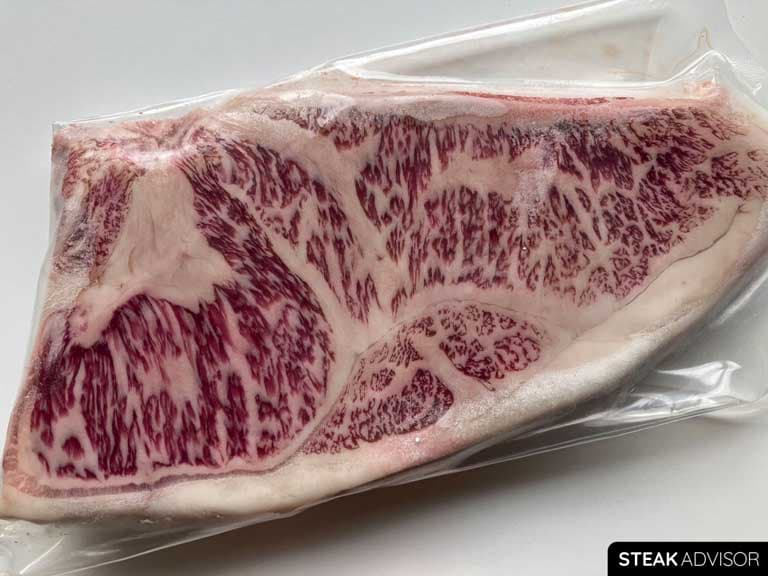
American Wagyu refers to Wagyu cattle raised in the United States. The term sounds simple, but in practice, it covers a range of very different types of beef. Some American Wagyu is fullblood, some is purebred, and a lot of it is crossbred, often with Angus. Under American Wagyu Association rules, fullblood means 100% Wagyu genetics, while purebred means at least 93.75% Wagyu genetics, so “American Wagyu” by itself does not automatically mean fullblood
In terms of eating quality, high-quality American Wagyu usually falls somewhere between top-tier American beef and Japanese Wagyu. It is typically more marbled, tender, and rich than standard USDA Prime, but it still keeps more of that classic beefy, steak-like character than high-grade Japanese Wagyu. That balance is a big part of why many people, including me, actually prefer it over very high-grade Wagyu like A4 or A5. You get some of that Wagyu richness, but it is still much easier to enjoy as a full steak, especially when it is crossbred rather than fullblood.

Australian Wagyu
Australian Wagyu refers to Wagyu cattle raised in Australia, which has one of the largest and most established Wagyu industries outside Japan. Like American Wagyu, Australian Wagyu includes different breeding classifications.
According to the Australian Wagyu Association, Australian Wagyu includes Fullblood, Purebred, and F1 cattle. Fullblood Wagyu traces 100% of its genetics to the original Japanese exports with no evidence of outcrossing. Purebred Wagyu refers to cattle with 93% or higher Wagyu content, while F1 cattle are the main crossbred commercial type in Australia, commonly produced from Fullblood Wagyu and Angus.
Australian Wagyu is often closer to Japanese Wagyu than to American Wagyu, mainly because Australia has a well-established Wagyu industry and a strong fullblood program. It’s known for rich marbling, tenderness, and that buttery texture people associate with Wagyu. Still, in most cases, it’s a little less intense than the highest-graded Japanese Wagyu.
It’s still rich and luxurious, just usually easier to eat and easier to find. That’s why I think of Australian Wagyu as sitting somewhere in the middle: closer to Japanese Wagyu in overall eating experience, but not quite as extreme.

Japanese Wagyu vs. American Wagyu
The biggest difference between American and Japanese Wagyu comes down to genetics. Japanese Wagyu comes from fullblood Wagyu cattle, meaning both parents are 100% Wagyu. American Wagyu, on the other hand, is usually a crossbreed, most often Wagyu crossed with Black Angus. In most cases, it contains at least 50% Japanese Wagyu genetics.
There’s also a noticeable difference in how the cattle are raised. Authentic Japanese Wagyu follows much stricter standards, with tighter control over breeding, feeding, and overall production. American Wagyu is far less regulated so that the final product can vary more depending on the producer.
When it comes to flavor and texture, the difference is pretty easy to notice. American Wagyu feels much closer to a traditional steak. It still has excellent marbling, but not nearly as much as Japanese Wagyu, so the flavor is beefier, and the texture has a bit more bite. Japanese Wagyu is different. The marbling is much heavier, so the texture feels softer, richer, and much more buttery. It almost melts in your mouth.

So which one is better? That depends on what kind of steak experience you want. If you’re after a few bites of something incredibly rich, tender, and luxurious, high-grade Japanese Wagyu is the better choice. But if you want to eat a larger steak that still feels special while tasting more like a traditional steak, American Wagyu makes more sense.
Personally, I prefer American Wagyu because I’d rather eat a larger steak without it feeling overly rich or too fatty after just a few bites.
How to Identify Authentic Wagyu
To verify whether a Wagyu steak is authentic, start with its country of origin.
For Japanese Wagyu, the most useful thing you can ask for is the 10-digit individual identification number. Japan’s traceability system lets you look up that number online and check details such as breed, gender, farm of origin (location and farmer name), date of birth, and more. The national cattle search is not just for Kobe or Miyazaki beef. It’s part of Japan’s broader beef traceability system.
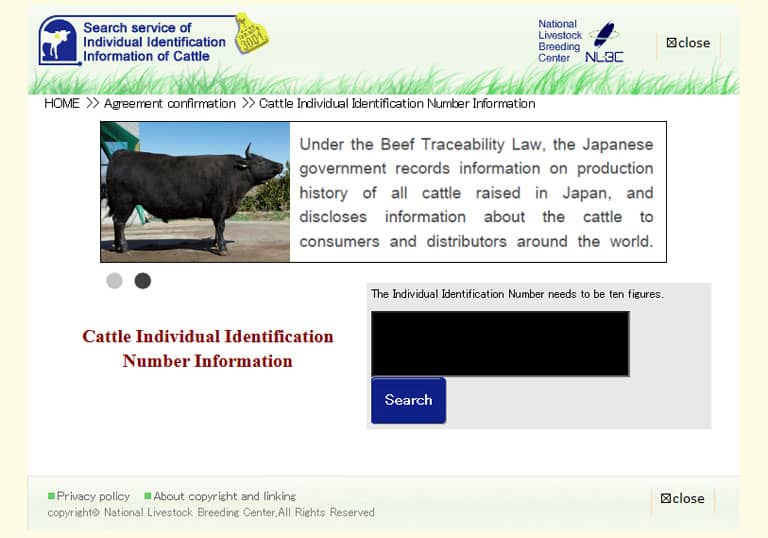
That said, the 10-digit ID alone does not automatically prove every premium brand claim. It helps confirm that the beef is tied to a real animal in Japan’s traceability system. Still, if a seller claims the beef is Kobe, Miyazaki, or another famous regional product, you should also look for the relevant brand-specific source.
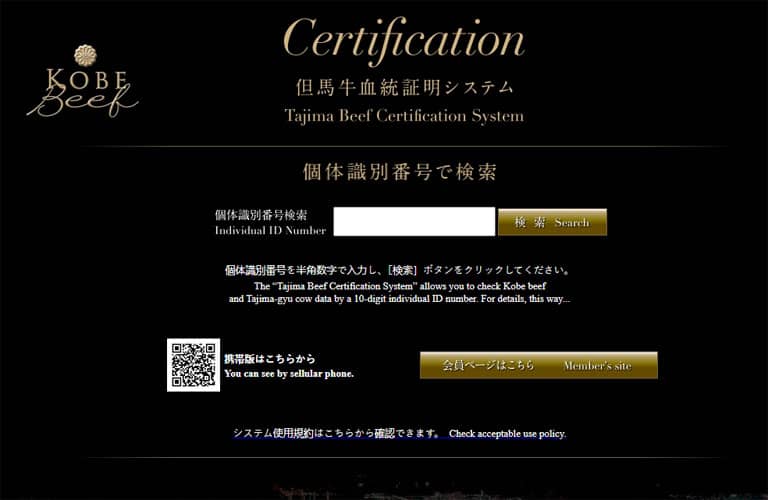
For Kobe Beef, there’s one more layer of verification. The official Kobe Beef association says that certified Kobe carcasses receive official stamps and are issued a Kobe Beef Certificate of Authenticity. The association also keeps official lists of designated stores and restaurants. So if someone claims the beef is Kobe, I would not stop at the national cattle-ID search alone. I’d also want Kobe-specific documentation and some proof that the seller is part of the official Kobe system.
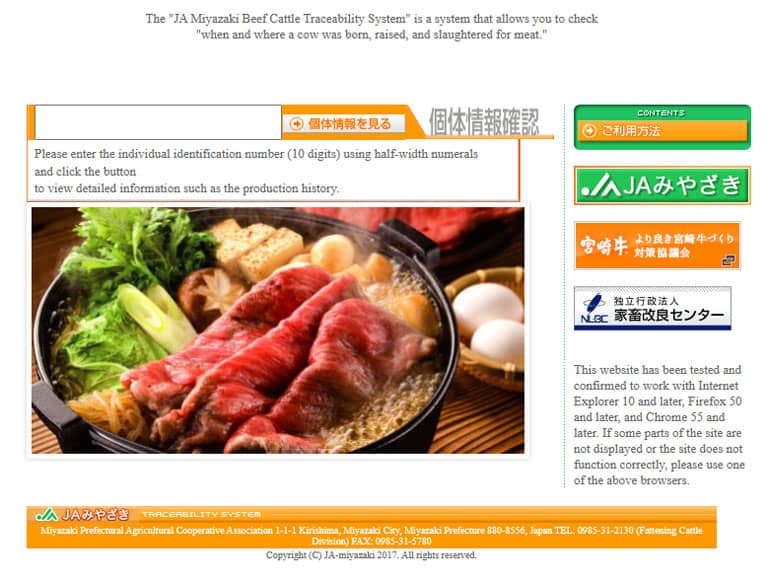
For Miyazaki Beef, the same idea applies. Besides the national Japanese cattle search system, there is also an official Miyazaki traceability system where you can enter the same 10-digit identification number and check production-history details. So if the seller is making a Miyazaki-specific claim, it makes sense to verify it there too.
For Wagyu produced outside Japan, things are less straightforward. In most cases, there is no single public consumer database that works like Japan’s national 10-digit system. That means you need to rely more on documentation from the producer, importer, seller, or breed association. In practice, I’d look for documents such as breed registration, source verification, DNA parentage verification, and traceability paperwork.
In the U.S., for example, the USDA’s official list of approved Process Verified Programs includes the American Wagyu Association Authentic Wagyu PVP, which is the kind of documentation I’d want to see instead of trusting the word “Wagyu” on the label alone.
Of course, I know that most of us don’t have the time or the tools to verify all of that quickly and easily. That’s why, in practice, the safest option is to buy Wagyu from trusted sources. It’s not that hard to find reputable sellers online. Restaurants are a bit different. In that case, I’d rely more on the restaurant’s reputation and reviews from other customers.
How Much Does Wagyu Cost?
Wagyu can cost anywhere from about $100 per pound for premium American or Australian Wagyu to well over $500 per pound for authentic A5 Kobe Beef.
I listed below a few wagyu ribeye examples from premium online sellers (as of March 31, 2026):
- American Wagyu – Snake River Farms, SRF Gold ribeye, 1.5-inch (3.8 cm), avg. 15 oz (425 g): $99 ($105.60/lb; $232.94/kg)
- Australian Wagyu – The Wagyu Shop ribeye, 12 oz (340 g): $99 ($132/lb; $291.18/kg)
- Australian Wagyu – Crowd Cow, Margaret River ribeye, 16 oz (454 g): ($108.99/lb; $240.07/kg)
- Miyazakigyu A5 – The Wagyu Shop ribeye 10 oz (283 g): $159 ($254.40/lb; $561.84/kg)
- Miyazakigyu A5 – The Wagyu Shop thick-cut ribeye, 16 oz (454 g): $209 ($209/lb; $460.35/kg)
- Olive Wagyu A5 – The Wagyu Shop ribeye, 10 oz (283 g): $189 ($302.40/lb; $667.84/kg)
- Olive Wagyu A5 – Crowd Cow ribeye, 12 oz (340 g): $238.14 ($317.51/lb; $701.03/kg)
- Kobe Beef A5 – The Wagyu Shop ribeye, 10 oz (283 g): $349 ($558.40/lb; $1,233.22/kg)
This is not a perfect direct comparison, because the steaks are not all the same size. Still, the price gap is easy to see. American and Australian Wagyu are expensive, while Japanese A5, Olive Wagyu, and especially Kobe Beef are in a completely different price range.
One quick note: at Snake River Farms, Gold Plus is the highest marbling tier (BMS 11–12), but the ribeye listing I found was for the SRF Gold version, not Gold Plus.
If you want to check current prices yourself, these are the same shops I used for the examples above:
- https://snakeriverfarms.com/products/
- https://wagyushop.com/products/
- https://www.crowdcow.com/shop/japanese-wagyu
- https://www.crowdcow.com/shop/wagyu
Why Is Wagyu Beef So Expensive?
Here are the main reasons why Wagyu beef is so expensive:
- The unique genetics of Wagyu cattle
- The long feeding period and specialized feeding methods
- Limited land and small-scale production
- The high labor costs in Japan
- Low-stress raising and higher care standards
- Strict traceability and authentication systems
- High global demand
- Import and distribution costs
I explain all of this in more detail in my separate article: 8 Reasons Why Wagyu Beef Is So Expensive.
Is Wagyu Beef Worth It?
In my opinion, Wagyu is worth it, but only if you already know you enjoy very rich, heavily marbled beef. This is not the kind of steak you buy for a regular dinner. You buy it for a specific kind of steak experience.
The biggest mistake people make is expecting Wagyu to taste like a normal steak, just on a higher level. That’s not really what it is. All that marbling gives it a much richer, softer, more buttery texture, and that’s exactly why some people love it so much. But that same richness is also the reason some people try it once and decide it’s not worth the money.
Personally, I think Wagyu makes the most sense as a special treat, not as an everyday steak. If I want that very rich, heavily marbled kind of steak experience, then yes, Wagyu is worth it. But if I want a more traditional steak, something beefier and easier to enjoy in a full portion, I’d much rather choose a good USDA Choice or USDA Prime steak instead.
That’s why I think Wagyu makes the most sense as a special-occasion steak. It’s not something I’d treat like a regular steak dinner. It’s something I’d buy when I want that specific kind of rich, luxurious eating experience.
Where To Buy Authentic Wagyu in the United States?
Buying authentic Wagyu in the United States is not that easy, especially if you’re looking for Japanese Wagyu like Kobe Beef, Miyazaki Beef, or Olive Wagyu. If you can find authentic Wagyu at a good local butcher shop or specialty meat store, that’s great. But if there’s nothing like that near you, the easiest and usually the safest option is to buy it online from a trusted seller with a good reputation and plenty of reviews.
For American Wagyu, I highly recommend Snake River Farms.
For other types of Wagyu, especially Japanese Wagyu, I’d start with Crowd Cow, The Wagyu Shop, Grand Western Steaks, or Holy Grail Steak Co. They all sell Wagyu online. The Wagyu Shop also states that its Japanese Wagyu is imported directly from Japan and that every order comes with a certificate of authenticity.
Note
Remember that “Wagyu” is not a quality grade. It just tells you what kind of cattle the beef comes from. And yes, even Wagyu beef can be low-graded. The breed matters, but genetics alone do not guarantee top quality.
I’m pointing this out because I’ve seen steaks labeled Wagyu in some stores that looked closer to USDA Choice than anything truly special. In a case like that, don’t focus on the label. Check the price, compare it with other steaks that look similar, and buy the one that gives you the best value for the money.

Very helpful, thanks! Was super confused when I had a tough, gristly Wagyu ribeye and now I now why!
Thanks, Belle. Appreciate the comment.