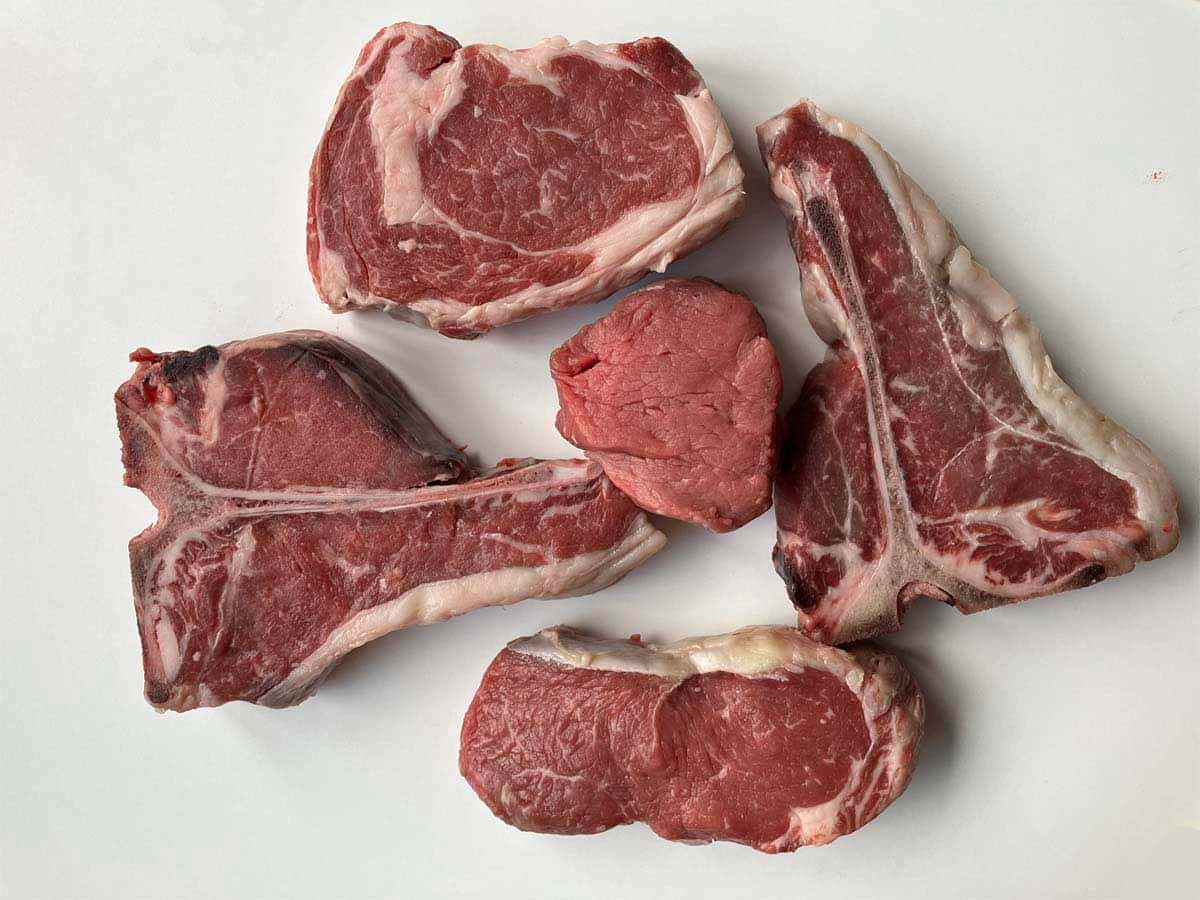

Steaks come in all shapes and sizes, varying in fat content, tenderness, flavor, and price. To help you choose the perfect cut, I’ve ranked the top 10 steak cuts from best to worst.
How I Ranked the Best Cuts of Steak
There’s no completely objective way to rank steak cuts, and I didn’t use a fixed scoring formula. Instead, I considered overall eating quality (especially flavor, tenderness, and marbling) along with practical factors such as price, availability, and how easy each cut is to cook and serve.
For eating quality, I assume each steak is properly prepared using a method suited to the cut. The final order reflects my own experience and judgment.
What Are the Best Cuts of Steak?
Below are the 10 steak cuts ranked from best to worst.
- Ribeye Steak
- New York Strip Steak
- Filet Mignon (Tenderloin Steak)
- Coulotte Steak (Picanha)
- Porterhouse Steak
- Hanger Steak
- Outside Skirt Steak
- Flat Iron Steak
- Denver Steak
- Flank Steak
1. Ribeye Steak
Ribeye takes the top spot in my ranking because it offers the best balance of flavor and tenderness. Its generous marbling gives it a rich, beefy taste and helps keep the meat tender and juicy, making it my go-to choice when eating quality matters more than price or leanness. I also like how widely available it is and relatively easy to cook well.

Ribeye Steak Highlights
Cut from: Rib primal
Marbling: Typically high
Tenderness: Tender to very tender
Flavor: Rich, beefy, and buttery
Price: High
Cut from the rib primal, ribeye has a tender center surrounded by a heavily marbled outer cap. Seams of fat separate the different muscles, giving the steak a mix of textures. The center is fine-grained and tender, while the cap is softer, fattier, and even more flavorful.
The high level of marbling (intramuscular fat) is what makes ribeye stand out. As the steak cooks, the fat softens and renders, adding richness and helping the meat stay juicy. It also gives you a little more room for error, since ribeye will not dry out as quickly as a leaner steak if you leave it on the heat a bit too long. That makes it a solid choice for beginners.
Medium-rare to medium is the sweet spot. At that level of doneness, the fat has enough time to soften while the center stays tender and juicy. The main thing to watch for is flare-ups when grilling over direct heat, since the rendering fat can drip onto the flames.
Another reason ribeye ranks so highly is its consistency. Even a moderately marbled USDA Choice ribeye can still be tender, juicy, and flavorful, which is why this cut rarely disappoints.
The main drawbacks are price and the amount of fat. Ribeye is not the best choice if you want a lean steak or maximum value. Still, when it comes to richness, tenderness, and juiciness, few cuts can compete. If you have never tried a properly cooked ribeye, it is worth having at least once.

Ribeye is sold bone-in or boneless. Cowboy steaks and tomahawks are both bone-in ribeyes; the main difference is the length and presentation of the bone, not the flavor.
The ribeye’s main muscles are also sold separately. Ribeye cap steak comes from the rich outer cap, while ribeye filet comes from the tender center, as shown in the photo below.

2. New York Strip Steak
New York strip takes second place because it offers an excellent balance of bold beef flavor, tenderness, and moderate marbling. It is leaner and slightly firmer than ribeye, but it still has enough fat to stay juicy. When I want a classic, straightforward steak that is still full of flavor, especially for an easy weeknight dinner, this is usually the cut I reach for.

New York Strip Steak Highlights
Cut from: Loin primal
Marbling: Moderate to high
Tenderness: Tender, with a slight chew
Flavor: Bold and beefy
Price: High
Also known as strip steak or Kansas City strip, the New York strip comes from the short loin. It consists of a single, uniform muscle with a firm strip of fat running along one edge. Some people trim the fat off or leave it on the plate, but when the steak is seared fat-side down, the fat renders, browns, and develops a lightly crisp exterior that complements the meat.
Compared with ribeye, New York strip has a more consistent texture from end to end. It is tender and fine-grained, but slightly firmer, with a noticeable chew and a bold, straightforward beef flavor. It is available both bone-in and boneless, but the bone is just for presentation; it does not add any flavor.
The New York strip is one of the easiest steaks to cook and works well with just about any method, from grilling and pan-searing to reverse searing. Like ribeye, it is widely available, but it usually costs a little less. No matter which grade you buy, look for a strip steak with more marbling. It will not disappoint.
Its main drawbacks are the relatively high price and slightly firmer texture. That said, it is still an excellent cut. When I want something leaner than ribeye, with plenty of beef flavor and a satisfying chew, the New York strip is hard to beat.
Read More on New York Strip Steak »
3. Filet Mignon (Tenderloin Steak)
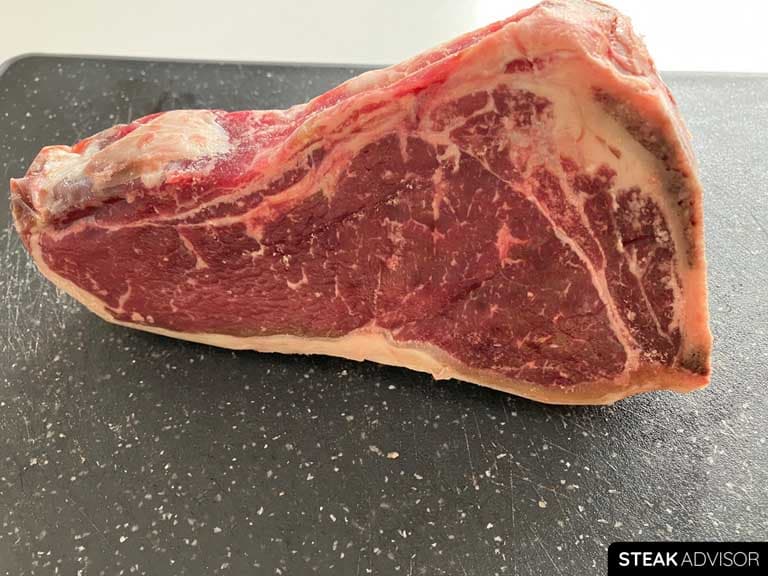
Filet mignon takes third place because it is the most tender cut of steak. It has an incredibly soft, almost melt-in-your-mouth texture, but its flavor is much milder than ribeye or New York strip. If tenderness is your top priority, filet mignon is the clear choice. If you care more about bold beef flavor or value for money, there are better options.

Filet Mignon (Tenderloin Steak) Highlights
Cut from: Loin primal
Marbling: Low
Tenderness: Extremely tender
Flavor: Mild and delicate
Price: Very high
Filet mignon is cut from the tenderloin, a muscle that does very little work. Its fine grain and minimal connective tissue give it the softest texture of any steak cut.
The tradeoff is flavor. Filet mignon is very lean, with little marbling and almost no exterior fat. It lacks the rich, beefy flavor of ribeye and the firmer, meatier bite of New York strip. Its mild flavor, however, makes it a great match for compound butter, pan sauces, and other rich toppings.
Because filet mignon is so lean, it dries out quickly when overcooked. Rare to medium-rare is the sweet spot, and I would not take it past medium.
Price is its biggest drawback. Filet mignon is one of the most expensive steaks, and what you are primarily paying for is its exceptionally tender texture. I understand why it is so popular, but I also think it gets more hype than it deserves. The texture is outstanding, but plenty of cheaper cuts offer much more flavor.
Read More on Filet Mignon (Tenderloin Steak) »
4. Coulotte Steak (Picanha)
Coulotte steak comes in at number four for me, thanks to its bold beef flavor, relatively tender texture, and thick fat cap, which crisps up beautifully when cooked properly. Known as picanha in Brazil, it is commonly served as part of churrasco (a style of barbecue in which meat is grilled over an open flame, usually on large skewers), though it is also excellent when pan-seared.

Picanha Steak Highlights
Cut from: Sirloin primal
Marbling: Low to moderate
Tenderness: Tender, with some chew
Flavor: Bold and beefy
Price: Moderate to high
Coulotte steak is cut from the top sirloin cap, a triangular section of beef that sits over the top sirloin. The whole cut is typically portioned into steaks about 1 to 1.5 inches (2.5 to 3.8 cm) thick, with the signature fat cap left intact. Its most distinctive feature is the thick fat cap covering one side.
The meat has a firm, steak-like texture that is somewhat similar to a New York strip. However, coulotte usually has a more pronounced grain, and its tenderness can vary depending on where each steak is cut from the whole piece. A steak from the end closer to the loin is generally more tender than one from the end closer to the round.
I think of coulotte as an alternative to a New York strip. I usually pan-sear it as an individual steak and serve it with compound butter. Its main drawbacks are its inconsistent tenderness and limited availability at many grocery stores.
In the United States, it may be labeled picanha, coulotte steak, top sirloin cap steak, or sirloin cap steak. It should not be confused with tri-tip, which comes from the bottom sirloin.
Read More on Coulotte Steak (Picanha) »
5. Porterhouse Steak
First, let me clear up a common point of confusion: Porterhouse and T-bone steaks are essentially the same cut, both with the characteristic T-shaped bone. However, the names are not interchangeable. The key difference is the size of the tenderloin portion. Under USDA Institutional Meat Purchase Specifications, a Porterhouse must have a tenderloin at least 1 1/4 inches (3.2 cm) wide at its widest point. A T-bone has a smaller tenderloin portion, with the USDA specification requiring at least 1/2 inch (13 mm).
Porterhouse is essentially two steaks in one, which is one reason I rank it so highly. On one side, you get the beefy flavor and firmer bite of a New York strip; on the other, the soft, buttery tenderness of filet mignon. It is not the easiest steak to cook evenly, and it is definitely not cheap, but when I want a big steak to share, especially for a special dinner, porterhouse never disappoints.

Porterhouse Steak Highlights
Cut from: Loin primal
Marbling: Moderate to high
Tenderness: Tender to exceptionally tender
Flavor: Beefy on the strip side, milder on the tenderloin side
Price: Very high
The biggest downsides are the price and the fact that a Porterhouse is hard to cook evenly. The tenderloin is leaner and cooks faster than the strip, so getting both sides right at the same time takes some practice. Sous vide is the easiest way to cook a porterhouse evenly, but even then, developing a nice, even crust during the final sear is tricky.
What really makes a Porterhouse worth the price for me is the presentation. It’s a big, impressive steak with two excellent cuts on either side of the bone, and it makes the whole meal feel like an occasion. That’s something I’m happy to pay extra for once in a while when I want a truly memorable dinner.
Read More on Porterhouse Steak »
6. Hanger Steak
Hanger steak ranks this high because it has one of the deepest beef flavors of any cut. It is super juicy, tender when sliced against the grain, and usually costs less than ribeye or New York strip. For me, it is one of the best alternatives to the traditional steakhouse cuts.

Hanger Steak Highlights
Cut from: Plate primal
Marbling: Low to moderate
Tenderness: Tender, with some chew
Flavor: Deep and intensely beefy
Price: Moderate to high
Hanger steak gets its name from where it hangs, right near the diaphragm. It’s also known as the “butcher’s steak” because butchers supposedly used to keep this incredibly flavorful cut for themselves. That pretty much tells you everything you need to know about how good it is. I rank hanger steak No. 6 on my list of the best steaks, but personally, it’s one of my favorite butcher’s cuts.
A whole hanger steak has a thick strip of sinew running down the center. Once the tough membrane is removed, the steak separates into two long pieces. From there, you can cook the two pieces as they are or cut them into smaller, more evenly sized portions. I usually go with the second option when I’m planning to pan-sear the steak indoors.
The meat has a loose texture and a clearly visible grain. It takes well to marinades, but a good hanger steak really doesn’t need much more than salt and pepper. I like to serve it with garlic-herb compound butter, which complements its bold, beefy character. Chimichurri or another bright, herb-forward sauce also works beautifully.
The biggest drawbacks are its limited availability and rising price. Since each animal yields only one hanger steak, the cut is hard to find.
7. Outside Skirt Steak
Coming in at number seven, outside skirt steak is one of the most flavorful cuts on this list. It has a rich, beefy taste, plenty of juiciness, and a surprisingly tender bite. If that ranking surprises you, keep in mind that outside skirt is quite different from the inside skirt commonly sold at grocery stores.

Outside Skirt Steak Highlights
Cut from: Plate primal
Marbling: Moderate to high
Tenderness: Tender, with a noticeable chew
Flavor: Rich, beefy, and slightly sweet
Price: High
Outside skirt comes from the diaphragm and is narrower, thicker, and better marbled than inside skirt. It is naturally more tender, so there is no need to marinate it. Inside skirt is much tougher and needs to be marinated before cooking to soften its coarse texture.
Outside skirt is excellent served on its own, with chimichurri, or topped with compound butter. It also works well for tacos and fajitas, but given its price, I would rather serve it as a steak.
Another thing I like about outside skirt is that it still tastes great when cooked beyond medium. While many steaks become dry and tough at higher doneness levels, outside skirt stays surprisingly juicy and tender, making it a great choice for anyone who prefers their steak medium-well or well-done.
The key to a tender bite is slicing it against the grain. Just like hanger steak, cutting across the coarse muscle fibers shortens them and makes each bite much easier to chew.
What keeps outside skirt from ranking even higher is its price, limited availability, and inconsistent labeling. Skirt steak is often sold without specifying whether it is inside or outside, and if the package does not say, it is usually inside skirt. Outside skirt is harder to find at regular grocery stores. You are more likely to find it at a butcher shop, while much of it is sold directly to restaurants.
Read More on Outside Skirt Steak »
8. Flat Iron Steak
At number eight, I have flat iron steak, a cut I think is still underrated. Flat iron steak is very tender, nicely marbled, and has a rich beefy flavor that puts it much closer to premium steakhouse cuts than its reputation might suggest.

Flat Iron Steak Highlights
Cut from: Chuck primal
Marbling: Moderate to high
Tenderness: Very tender
Flavor: Rich and beefy
Price: Moderate to high
In fact, flat iron is one of the most tender cuts on the cow, second only to filet mignon, and even more tender than ribeye. For a cut from the chuck primal, that is pretty impressive. Unlike many chuck cuts, it has very little gristle once properly trimmed and has fine, even marbling throughout the meat.
Flat iron works great with the same cooking methods you would use for strip steak or ribeye, from a hot pan or grill to sous vide. It is simply a great alternative to classic steakhouse cuts.
Another advantage is that flat iron stays tender and juicy even when cooked past medium-rare. It is best around medium-rare to medium, but it does not dry out as quickly as many other steak cuts if you cook it a little further.
The main drawbacks are price and availability. Flat iron used to be inexpensive, but growing popularity has driven prices up, and it is still surprisingly hard to find. Even so, I still think it is one of the most underrated steaks.
Read More on Flat Iron Steak »
9. Denver Steak
I put Denver steak at number nine because it is well-marbled, very tender, and full of rich, beefy flavor. It comes from the chuck, but it is much more tender than you might expect from a shoulder cut. I guarantee that a high-quality Denver steak will surprise you like no other cut. For me, it is one of the best lesser-known alternatives to ribeye or New York strip.

Denver Steak Highlights
Cut from: Chuck primal
Marbling: Moderate to high
Tenderness: Very tender
Flavor: Rich and beefy
Price: Moderate
Denver steak is cut from the serratus ventralis muscle in the under blade, just below the shoulder blade. Despite coming from the chuck, this muscle has plenty of marbling, which gives the steak its juiciness and rich, beef-forward flavor. It also has a noticeable grain, so slicing it against the grain makes a real difference in tenderness. The grain is easy to see, which makes this straightforward once the steak is on the cutting board.
Denver steak works especially well with quick, high-heat cooking. A hot grill or skillet gives it a good crust while keeping the center juicy and tender, with medium-rare to medium being my preferred doneness.
One of the biggest drawbacks is availability. Denver steak takes more work for a butcher to separate and trim, so it is not something you will find in every grocery store. It has also become more expensive as more people have discovered it. Still, if I see a well-marbled Denver steak at a good price, I am usually happy to pick one up.
10. Flank Steak
Flank steak lands at number ten thanks to its bold beef flavor, versatility, and generous size, which makes it a great choice for feeding a crowd. It is noticeably chewier than the top three cuts, but when cooked properly and sliced thinly against the grain, it has a satisfying bite.

Flank Steak Highlights
Cut from: Flank primal
Marbling: Low
Tenderness: Firm, with a noticeable chew
Flavor: Bold and beefy
Price: Moderate to high
Flank steak is a long, flat, boneless cut from the lower abdominal section of the cow. It has very little marbling and a clearly visible grain, which gives it a firm, coarse texture.
It tastes great with nothing more than salt and pepper, but it is especially good with a flavorful sauce. Chimichurri is my favorite pairing because the fresh herbs and acidity complement the beef without overpowering it. Flank steak also takes well to marinades, which add flavor and help soften its coarse texture.
Another reason I like flank steak is its size. One steak can easily feed several people, and because it is boneless and usually needs very little trimming, there is almost no waste. It cooks quickly and works just as well served on its own as it does in tacos, fajitas, salads, or steak sandwiches.
The biggest drawback is that flank steak gets dry and tough when overcooked. Just as important, it needs to be sliced thinly against the grain. Many people overlook this step, but it shortens the long muscle fibers and makes the steak much easier to chew. It makes a huge difference with this cut.
Cuts That Almost Made the List
I had a really hard time narrowing this list down to just ten steaks, especially when I got to the last few spots. There are quite a few cuts I really like that could have easily made the list.
Tri-tip is one of them. It’s closely associated with Santa Maria-style barbecue, and if you’ve never grilled one before, it’s absolutely worth trying. Teres major is another cut I’m a big fan of. I think of it as a great alternative to filet mignon because it has a similarly tender texture but a little more beefy flavor.
Then there’s flap steak, also known as bavette. It’s one of those cuts I think deserves more attention. It takes marinades really well, tastes fantastic off the grill, and works especially well for tacos and fajitas.
Chuck eye steak was another tough one to leave out. You’ll often hear it called the “poor man’s ribeye,” and when you get a good one, I can see why. It is tender, juicy, and full of rich beef flavor. The problem is that chuck eye can be pretty inconsistent. Not every steak sold under that name comes from the exact part of the chuck roll closest to the rib section, which is where you get those ribeye-like qualities. In my experience, that inconsistency is probably a big reason why some people love chuck eye while others don’t see what all the fuss is about.
And those are just a few examples. There are plenty of other steak cuts I could have included here, and I’m sure everyone has a favorite that didn’t make my top ten.
If you want to go beyond this ranking, check out my guide to the different types of steak. I cover nearly every cut you’re likely to come across and explain what makes each one worth trying.
How to Choose the Best Steak?
Choosing the right steak comes down to what you like, how you plan to cook it, and how much you want to spend. With so many cuts to choose from, knowing what to look for makes it much easier to find the right one.
Here are the main things to consider:
- Think about the occasion: What are you cooking for? A quick weeknight dinner, a backyard cookout, or a special occasion can all call for a different steak. Knowing what you’re planning makes it easier to choose a cut that fits the meal and your budget.
- Decide what you want from the steak: If tenderness is your priority, go with a cut like filet mignon. If you want more marbling and a richer beef flavor, ribeye is a better bet. For something in between, New York strip gives you plenty of flavor with a slightly firmer bite.
- Choose a steak that fits your cooking style: Consider whether you’re grilling, pan-searing, broiling, or using sous vide, along with the steak’s thickness and fat content. Some cuts are much more forgiving over high heat than others.
- Check the steak’s thickness: Look at its size and thickness. A thicker cut helps you achieve desired doneness more easily while creating a superior crust. For cuts like ribeye, New York strip, or filet mignon, look for steaks around 1 1/2 inches (3.8 cm) thick.
- Check the steak’s grade and marbling: Higher beef grades generally have more marbling, which adds flavor and helps keep the steak juicy as it cooks. More marbling usually means a higher price, so choose a grade that fits both your preferences and your budget.
- Consider how the steak was aged: Dry-aged and wet-aged steaks develop different flavors and textures. Dry-aged beef usually has a deeper, more concentrated flavor and tends to cost more.
- Consider the price: Compare prices between cuts, grades, and sizes to find the best balance of quality and value for your budget.
Read More on How to Choose a Good Steak »

My top 10: ribeye, NY strip, hanger, picanha, porterhouse, outside skirt, flat iron, filet, denver, flank. I’d rank hanger higher than you did, but ribeye is still #1 for me.
Solid list.
Ribeye at #1 is hard to argue with. Personally, I’d rank hanger a little higher.
Fair take. Hanger has a ton of flavor.
My top 5 would be ribeye, NY strip, picanha, hanger, and flank. Solid list overall, and I like that you included cuts people don’t talk about enough.
Good list. Picanha and hanger definitely deserve more attention.