Steak and Potatoes

PREP TIMEREST TIMECOOK TIME
15 mins1 to 6 h30 mins

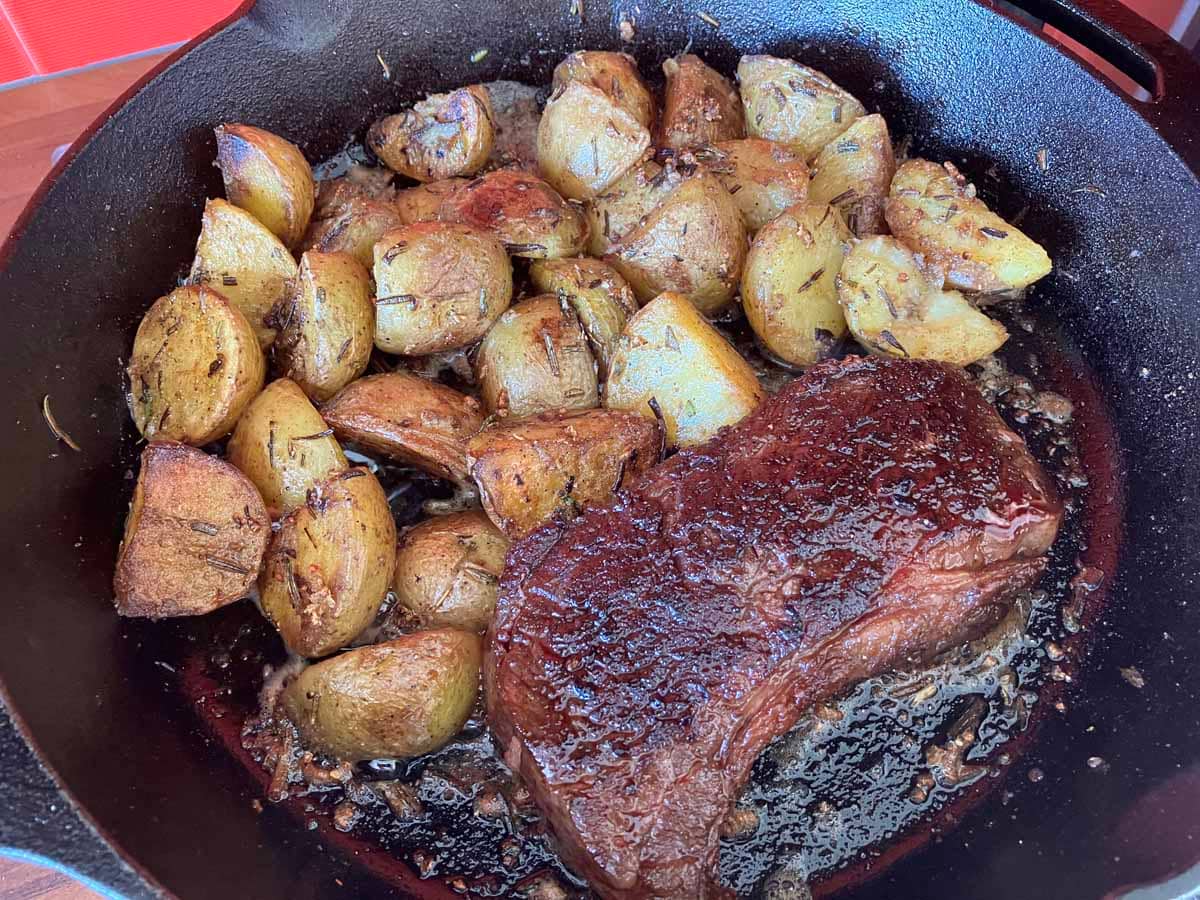
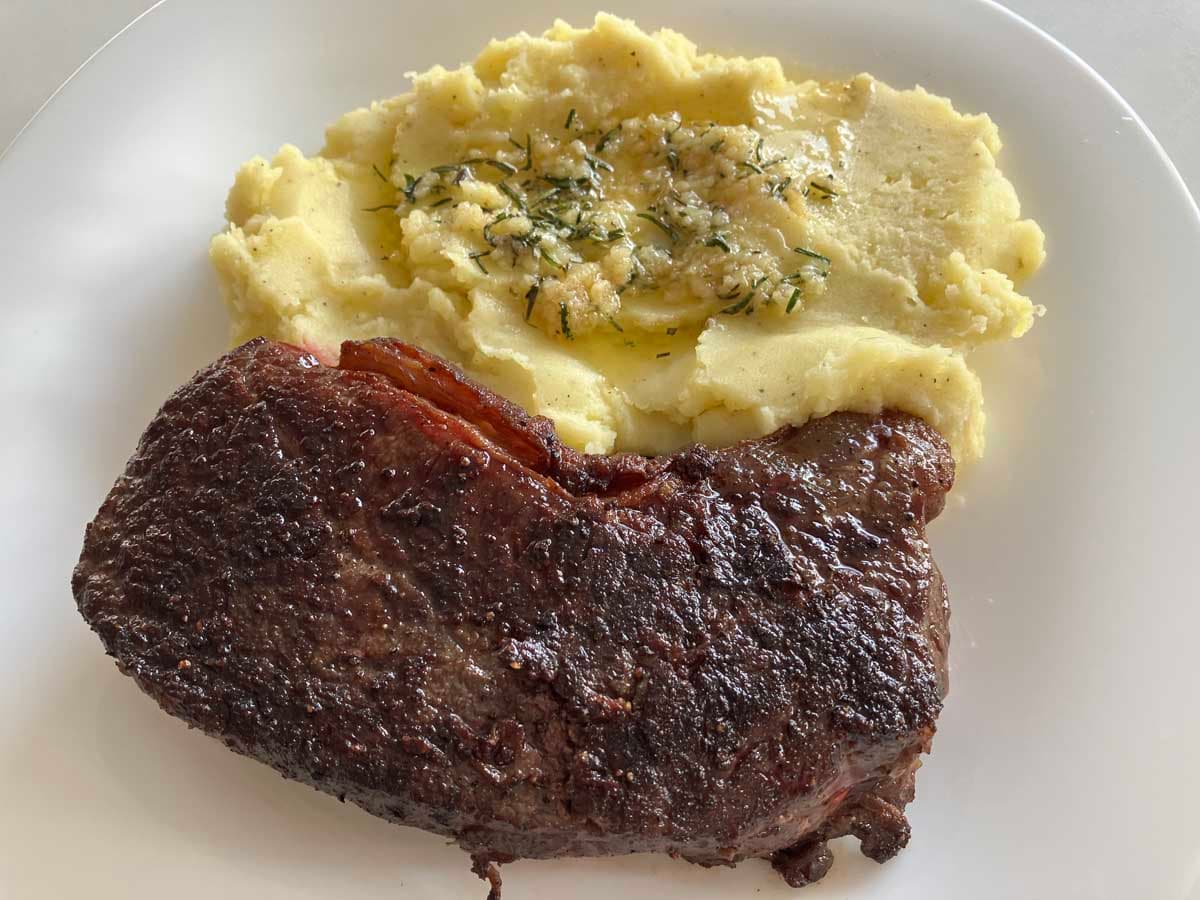
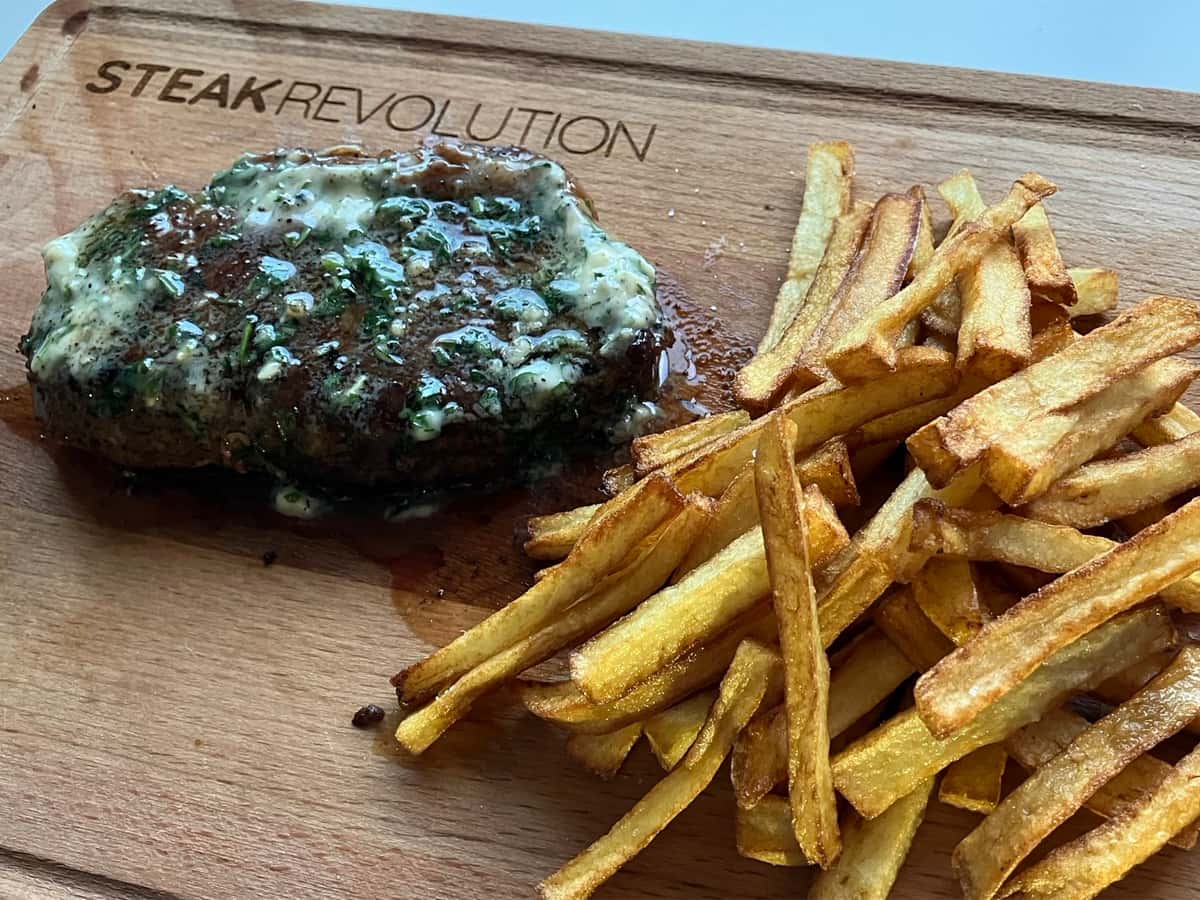
Steak and potatoes, a timeless combo that never fails. This recipe brings together a perfectly pan-seared steak with a dark crust and juicy, even doneness on the inside, with crispy fried potatoes finished with butter, garlic, and herbs. It’s everything you want in a classic steak dinner, made easily at home with just a few basic ingredients and tools. This is one of my go-to steak dinners when I want something simple but seriously satisfying.

Sliced seared steak with golden garlic herb potatoes in a pan
Sliced seared steak with golden garlic herb potatoes in a pan.

In my steak and potatoes recipe, the goal is simple: cook both the steak and potatoes so they’re perfectly warm and ready to serve at the same time. I skip the fancy ingredients here to keep things easy and practical, but feel free to experiment and play with the seasoning if you’d like.

It all starts with dry-brining the steak, which makes a huge difference in flavor and helps you get that deep crust. It’s an easy step, but it does take some time, about 4–6 hours for the best results, or at least 1 hour if you’re short on time. While the steak is dry-brining, I parboil the potatoes. That part is very simple, and you can do it well in advance. Parboiling softens the potatoes just enough so they cook faster later and get that golden, crispy exterior when you sear them in the pan. Once everything’s ready: the dry-brined steak, the parboiled potatoes, and the rest of your ingredients – it’s time to cook. The timing is simple: while the steak rests for a few minutes after searing, I use that short window to pan-fry the potatoes in oil with garlic and herbs. Since they’re already cooked through, it only takes a couple of minutes to get them beautifully golden and hot, right as the steak’s ready to slice and serve. That way, the steak and potatoes hit the table warm.

The Ingredients You’ll Need

For Steak:

  • Steak: Tender cut about 1 to 2 inches (2.5–5 cm) thick. My go-to cuts for this recipe are ribeye or strip, but filet mignon, flat iron, denver, hanger, picanha, or teres major are also great. Just stick with a naturally tender cut. That way, you’ll get that juicy, melt-in-your-mouth texture without needing marinades or extra steps.
  • High-smoke-point oil: 2-4 tablespoons (30-60 ml). You’ll want an oil that can handle high heat without burning. Refined avocado oil is my favorite because of its neutral flavor and high smoke point (around 500°F / 260°C).
  • Kosher salt: 1-2 teaspoons, about 5-10 g. As a general rule, use roughly 1% of the steak’s weight in salt, or up to 1.5% if you prefer a deeper, more seasoned flavor. Always go with kosher salt. It spreads more evenly and gives you better control than table salt.
  • Black pepper: 1/2 teaspoon per steak. I like it finely ground as it sticks better.

For Potatoes:

  • Potatoes: 1.5 pound (680 g).
  • Salt: 1/2 teaspoon.
  • Black pepper: 1/2 teaspoon.
  • Garlic: 4-5 cloves of fresh garlic, peeled and minced.
  • Herbs: 2 tablespoon chopped fresh rosemary or thyme (you can substitute with 1 tablespoon dried thyme or rosemary).
  • Unsalted butter: 3-4 tablespoons (45-60 g).

How to Make Steak and Potatoes – Step by Step Photos

First, start by dry-brining the steak. It’s the easiest step but takes the most time, so it’s best to do it ahead (see Step 1 below). While the steak is brining, parboil the potatoes so they’re ready to go when it’s time to cook. (See Step 2.) Once both are ready, gather the rest of your ingredients and tools. From there, the cooking moves quickly: sear the steak, let it rest, and finish the potatoes in the same pan. Follow the steps below for timing and tips to get everything perfectly cooked and served warm at the same time.

Ingredients: Black pepper, potatoes, garlic, salt, butter, refined avocado oil, rosemary, and steak.

Step 1: Dry-Brine the Steak

Start by patting the steak dry with paper towels. Season both sides evenly with kosher salt, about 1/2 teaspoon per side for about a 1-inch (3.8 cm) thick steak (or roughly 1-1.5% of the steak’s weight if you want to be precise). Place the steak on a wire rack set over a baking sheet and refrigerate uncovered for 4 to 6 hours. About 20–30 minutes before cooking, take the steak out of the refrigerator and let it sit at room temperature.

If you’re short on time, a 1-hour dry brine is the absolute minimum. But next time, go for 4 to 6 hours. Trust me, the difference in flavor and a much nicer crust is totally worth it.

Note

A dry surface is key if you want to build a deep, flavorful crust on your steak. Patting the steak dry with paper towels helps a lot, but there’s another step that makes a world of difference: proper salting. Most people season their steak with salt (as they should), but not everyone does it the right way. Salt doesn’t just sit on the steak’s surface; it draws moisture out, then slowly pulls it back in, taking flavor deeper into the meat. At the same time, it helps dry the surface, which is exactly what you want for a perfect sear. But here’s the catch: this process takes time.

Between 5 and 30 minutes after salting, the steak’s surface will be completely wet. That’s the salt at peak moisture-drawing process. It’s also the worst time to sear the steak. If you try cooking it, then you’ll struggle to build a crust. You must let the salted steak rest for at least 1 hour, and ideally 4 to 6 hours. That gives it enough time to reabsorb most of the surface moisture. The result? A drier exterior, a deeper crust, more flavor, and even a slightly more tender bite.

Dry-brining done properly is one of the simplest yet most effective ways to take your steak to another level. All you need to do is salt both sides and let it rest uncovered in the fridge for a few hours on a wire rack set over a baking sheet. That’s it, no tricks, just patience and results.

If you want to understand exactly why this works, check out my full guide on salting steak. I ran multiple tests to monitor exactly what happens inside and outside the meat depending on when and how you salt. The results might surprise you.

steak seasoned with kosher salt
Steak seasoned with kosher salt.

Step 2: Parboil the Potatoes

Wash the potatoes and cut them into evenly sized pieces, about 1 inch (2.5 cm) in size, so they cook quickly and evenly. You can peel them if you like, but it’s not necessary (I usually leave the skins on). If you’re working with very small potatoes, skip the cutting. Place the potatoes in a pot, cover with cold water, and add about 1 teaspoon of salt. Bring to a boil over high heat, then reduce the heat to medium and cook the potatoes uncovered until they’re fork-tender (about 10 minutes from the moment the water starts to boil). Meanwhile, chop the herbs and set them aside. When the potatoes are ready, drain them well (ideally by letting them sit under the colander), and set aside uncovered until you’re ready to finish them in the pan.

Note

In the next step, we’ll focus on searing the steak, which usually takes about 10–15 minutes, including time to preheat the pan. Don’t worry if the potatoes cool down a bit during this time. We’ll bring them back to the pan for a few minutes right before serving, so they’ll be hot when you plate everything.

I always sear the steak and potatoes separately to avoid overcooking the steak. Searing raw potatoes takes much longer than searing a steak, even one up to 1.5 inches (3.8 cm) thick. That’s why it makes more sense to sear the steak first, then finish the parboiled potatoes while it rests. Parboiling speeds everything up; since the potatoes are already cooked through, they only need a couple of minutes in the pan to get a light golden surface before serving.

Evenly sliced potatoes
Raw potatoes sliced evenly into pieces about 1 inch (2.5 cm) in size.

Step 3: Pan-Sear the Steak

Preheat a pan over medium-high heat for about 3–4 minutes, then add 1–2 tablespoons of high-smoke-point oil and let it heat for another minute. While the pan heats, pat the steak dry again with paper towels (the drier the surface, the better the sear), then season on both sides with black pepper. Once the pan is hot, carefully place the steak in the pan and sear it, flipping every 30 seconds to build an even crust and cook it more evenly.

If you’re working with a steak that has a fat cap, like strip or picanha, start by searing it fat-side down for 1 to 2 minutes to render some of that fat before searing the other sides.

Keep flipping until the internal temperature is about 20°F (6°C) below your target doneness for a steak 1–2 inches (2.5–5 cm) thick (see the temperature chart below). Once it reaches the right internal temperature, remove the steak from the pan and set it aside to rest. Then immediately move on to finishing the potatoes.

DonenessRemove at temp:Final temp:
Rare100–110°F (38–43°C)120–130°F (49–54°C)
Medium Rare110–120°F (43–49°C)130–140°F (54–60°C)
Medium120–130°F (49–54°C)140-150˚F (60–66°C)
Medium-Well130–140°F (54–60°C)150-160˚F (66–71°C)
Well Done140–150°F (60–66°C)160°F+ (71°C+)
These guidelines apply only to cooking a steak in a pan.

Note

To get a proper sear, you need the right pan. One that can reach high temperatures and hold onto heat. I highly recommend a cast-iron skillet for this recipe. It’s ideal for building a deep, even crust. If you don’t have one, a carbon steel or heavy-bottomed stainless steel pan will work too. You’ll want your pan to hit around 450–500°F (232–260°C) before adding the steak. In my experience, a cast-iron skillet usually takes 3–4 minutes to reach that temperature over medium-high heat on a gas stove.

Just as important as the pan is the oil. You need a high-smoke-point oil that can handle that heat without burning. I usually use refined avocado oil; it has a smoke point around 500°F (260°C) and a neutral flavor that won’t interfere with the steak. If you don’t have it on hand, check the table below for other good options.

Type of FatSmoke Point ºFSmoke Point ºC
Refined Avocado Oil520ºF270ºC
Refined Safflower Oil510ºF266ºC
Beef Tallow480ºF250ºC
Pecan Oil470ºF243ºC
Refined Peanut Oil450ºF232°C

Don’t forget to pat the steak dry again right before it goes in the pan. And be sure to flip it every 30 seconds – that helps minimize the gray band inside and build a more even crust on both sides. If you want to understand why all these little details matter, check out my ultimate guide to pan-seared steak – I go deep into technique, timing, and the science behind what really makes a great sear.

Steak seared fat side down in a hot pan
Steak seared fat-side down in a hot pan.

Step 4: Pan-Sear the Potatoes

Set the same pan over medium-high heat, add a bit of oil (refined avocado oil works great here again), and let it heat for about 1 minute. Add the potatoes and cook, stirring occasionally, for about 6-8 minutes, or until they start to turn lightly golden. In the meantime, mince the garlic. Next, add the minced garlic and cook for about 1 minute.

Finally, add the butter, salt, and pepper. Stir everything together and cook for another 1–2 minutes, just until the butter melts and coats the potatoes evenly. Once the butter has melted and everything is well-coated, turn off the heat, remove the pan from the burner, and move straight to serving while everything’s hot.

Note

Remember, the potatoes are parboiled, which means they’re already halfway cooked. They’ll need much less time in the pan than raw potatoes. Just a quick sear over high heat to get a nice golden-brown color, and that’s it. It’s best to do this while the steak rests, so everything comes together warm and ready to serve at the same time.

Evenly sliced potatoes with fresh herbs in a pan
Sliced potatoes with chopped herbs in a pan.

Step 5: Serve the Steak and Potatoes

Once the potatoes are ready, thinly slice the steak and serve both warm on a plate. You can finish with a sprinkle of chopped parsley or top with a bit of compound butter for even more flavor and juiciness, or just enjoy it as is.

When slicing, remember: cuts like denver, hanger, skirt, or flat iron always slice against the grain for maximum tenderness. Naturally tender cuts like filet mignon, ribeye, or strip, slice however you like. They’ll be tender no matter what.

Pan-seared steak and potatoes
Print
clock clock iconcutlery cutlery iconflag flag iconfolder folder iconinstagram instagram iconpinterest pinterest iconfacebook facebook iconprint print iconsquares squares iconheart heart iconheart solid heart solid icon

Steak and Potatoes Recipe

  • Author: Adam Wojtow
  • Prep Time: 15 minutes
  • Rest Time: 1 hour
  • Cook Time: 30 minutes
  • Total Time: 1 hour 45 minutes
  • Yield: 2 servings

Description

A classic steak dinner made simple at home. Juicy, pan-seared steak with a deep crust, served alongside pan-fried, golden-brown potatoes finished with garlic, herbs, and butter. No fancy ingredients, equipment, or techniques needed.


Ingredients

For Steak:

  • Steak (Tender cut about 1 to 2 inches / 2.5–5 cm thick)
  • 24 tablespoons (3060 ml) high-smoke-point oil
  • 12 teaspoons (about 510 g) kosher salt
  • 1/2 teaspoon black pepper per steak

For Potatoes:

  • 1.5 pound (680 g) potatoes
  • 1/2 teaspoon salt
  • 1/2 teaspoon black pepper
  • 45 cloves of fresh garlic (peeled and minced)
  • 1 tablespoon chopped fresh rosemary or thyme (you can substitute with dried thyme or rosemary)
  • 34 tablespoons (4560 g) unsalted butter

Instructions

  1. Dry-Brine the Steak: Start by patting the steak dry with paper towels. Season both sides evenly with kosher salt, about 1/2 teaspoon per side for about a 1-inch (3.8 cm) thick steak (or roughly 1-1.5% of the steak’s weight if you want to be precise). Place the steak on a wire rack set over a baking sheet and refrigerate uncovered for 4 to 6 hours. About 20–30 minutes before cooking, take the steak out of the refrigerator and let it sit at room temperature.
  2. If you’re short on time, a 1-hour dry brine is the absolute minimum. But next time, go for 4 to 6 hours. Trust me, the difference in flavor and a much nicer crust is totally worth it.
  3. Parboil the Potatoes: Wash the potatoes and cut them into evenly sized pieces, about 1 inch (2.5 cm) in size, so they cook quickly and evenly. You can peel them if you like, but it’s not necessary (I usually leave the skins on). If you’re working with very small potatoes, skip the cutting. Place the potatoes in a pot, cover with cold water, and add about 1 teaspoon of salt. Bring to a boil over high heat, then reduce the heat to medium and cook the potatoes uncovered until they’re fork-tender (about 10 minutes from the moment the water starts to boil). Meanwhile, chop the herbs and set them aside. When the potatoes are ready, drain them well (ideally by letting them sit under the colander), and set aside uncovered until you’re ready to finish them in the pan.
  4. Pan-Sear the Steak: Preheat a pan over medium-high heat for about 3–4 minutes, then add 1–2 tablespoons of high-smoke-point oil and let it heat for another minute. While the pan heats, pat the steak dry again with paper towels (the drier the surface, the better the sear), then season on both sides with black pepper. Once the pan is hot, carefully place the steak in the pan and sear it, flipping every 30 seconds to build an even crust and cook it more evenly.
  5. Keep flipping until the internal temperature is about 20°F (6°C) below your target doneness for a steak 1–2 inches (2.5–5 cm) thick (see the temperature chart below). Once it reaches the right internal temperature, remove the steak from the pan and set it aside to rest. Then immediately move on to finishing the potatoes.
  6. Pan-Sear the Potatoes: Set the same pan over medium-high heat, add a bit of oil (refined avocado oil works great here again), and let it heat for about 1 minute. Add the potatoes and herbs (fresh or dried), and cook, stirring occasionally, for about 6-8 minutes, or until they start to turn lightly golden. In the meantime, mince the garlic. Next, add the minced garlic and cook for about 1 minute.
  7. Finally, add the butter, salt, and pepper. Stir everything together and cook for another 1–2 minutes, just until the butter melts and coats the potatoes evenly. Once the butter has melted and everything is well-coated, turn off the heat, remove the pan from the burner, and move straight to serving while everything’s hot.
  8. Serve the Steak and Potatoes: Once the potatoes are ready, thinly slice the steak and serve both warm on a plate. You can finish with a sprinkle of chopped parsley or top with a bit of compound butter for even more flavor and juiciness, or just enjoy it as is.
  9. When slicing, remember: cuts like denver, hanger, skirt, or flat iron always slice against the grain for maximum tenderness. Naturally tender cuts like filet mignon, ribeye, or strip, slice however you like. They’ll be tender no matter what.

Notes

If you’re working with a steak that has a fat cap, like strip or picanha, start by searing it fat-side down for 1 to 2 minutes to render some of that fat before searing the other sides.

pan seared steak temperature chart1

More Steak Recipes To Try

Photo of author

Written by: Adam Wojtow

Adam Wojtow founded Steak Advisor in 2020 because of his passion for steaks. After years of cooking and experimenting, he knows the ins and outs of different steak cuts, how long to cook them, and the best ways to get the perfect result every time.