
As a general rule, plan on about 1/2 pound (8 oz / 227 g) of steak per person. That’s a good starting point for most meals, but you may need a little more or less depending on the cut of steak, the number of sides you’re serving, and your guests’ appetites. Use the calculator below for a more precise estimate, or keep reading for more tips on how much steak to buy.
e.g. chicken, sausages, fish alongside the steak
e.g. potato gratin, pasta, risotto, hearty salads
—
FAQs
Does the Type of Occasion Matter?
Yes, more than most people expect. The kind of meal you’re planning has a direct impact on how much steak you should prepare per person. A casual family dinner, a backyard barbecue, and a formal sit-down meal don’t follow the same expectations.
For relaxed meals like a family dinner or barbecue, steak is usually just one part of the meal. You’ll often have sides, salads, or other mains on the table, so smaller portions of steak tend to be enough. At more formal dinners, steak is usually the star of the plate, so guests may expect a larger portion. That’s why it’s important to think about the role steak plays in the meal before deciding how much to buy.
The takeaway: the more central the steak is to the meal, the larger the portion should be.
At What Time Are You Planning to Serve the Steaks?
The time of day can also affect how much steak you should prepare. If you’re serving steak for lunch, people typically eat a bit less. Portions can be lighter without anyone feeling unsatisfied. Dinner is where expectations change. That’s when steak is usually the main part of the meal, and guests naturally expect a more generous serving.
A simple rule of thumb:
- lunch -> lighter portions
- dinner -> fuller portions
It’s not a strict rule, but it works well in most situations.
Should You Adjust Portions Based on Your Guests?
Absolutely. The people you’re cooking for matter just as much as the type of occasion. Some people naturally have bigger appetites, while others prefer lighter meals or don’t eat much meat at all. That’s why it’s worth thinking about who will be at the table before deciding how much steak to buy.
If you know your guests usually eat lighter meals or don’t eat much meat, preparing large portions can easily lead to waste. In that case, it makes more sense to scale the portions down a bit and rely on side dishes to round out the meal. On the other hand, if you’re cooking for big eaters or steak enthusiasts, smaller portions may leave people unsatisfied.
The key: match your portions to your guests, not just the recipe.
What Type of Steak Are You Planning to Cook?
This goes beyond just the name of the cut. What really matters is how much fat the steak contains and how it’s structured. That directly affects how filling it is and how much usable meat ends up on the plate.
Fatty cuts like ribeye or strip steak contain a higher amount of intramuscular fat (marbling), but also intermuscular fat (fat between muscles) that doesn’t fully render during cooking. Some cuts also include bones and thick fat caps. All of this leads to more shrinkage and trimming, so the final portion is often smaller than the raw weight suggests.
Leaner cuts, like filet mignon or flank steak, are different. They contain much less fat, so they don’t shrink as much during cooking and leave very little waste behind. What you cook is much closer to what you actually serve.

There’s also a difference in how these cuts feel when eaten. Fatty steaks are richer and more filling, so you don’t need as much per person. Leaner cuts, like filet mignon, are different. They’re lighter, lower in fat, and easier to eat in larger portions. That also makes them a better option when you’re serving multiple sides, since they won’t feel as heavy.
In practice:
- rich, fatty cuts → slightly smaller portions, unless you’re cooking for big eaters or steak enthusiasts, best as the main focus
- lean cuts → slightly larger portions, better alongside sides
There’s no “better” option here. It depends on how you want the meal to feel – rich and steak-focused, or lighter and more balanced.
Important: don’t rely only on raw weight. Two steaks of the same size can yield very different portions depending on fat content, bone, and trimming loss.
How Do You Plan to Serve the Steak?
The way you serve the steak directly affects portion size. If you’re serving whole steaks, each person gets their own piece. That makes planning straightforward, but it also means there’s less flexibility if someone eats more or less than expected.
Slicing the steak before serving works differently. It allows guests to take as much or as little as they want, which is especially useful when appetites vary. It also helps with distribution. Some parts of a steak are more desirable than others, and slicing makes it easier to spread those pieces more evenly instead of leaving unwanted portions on the plate.
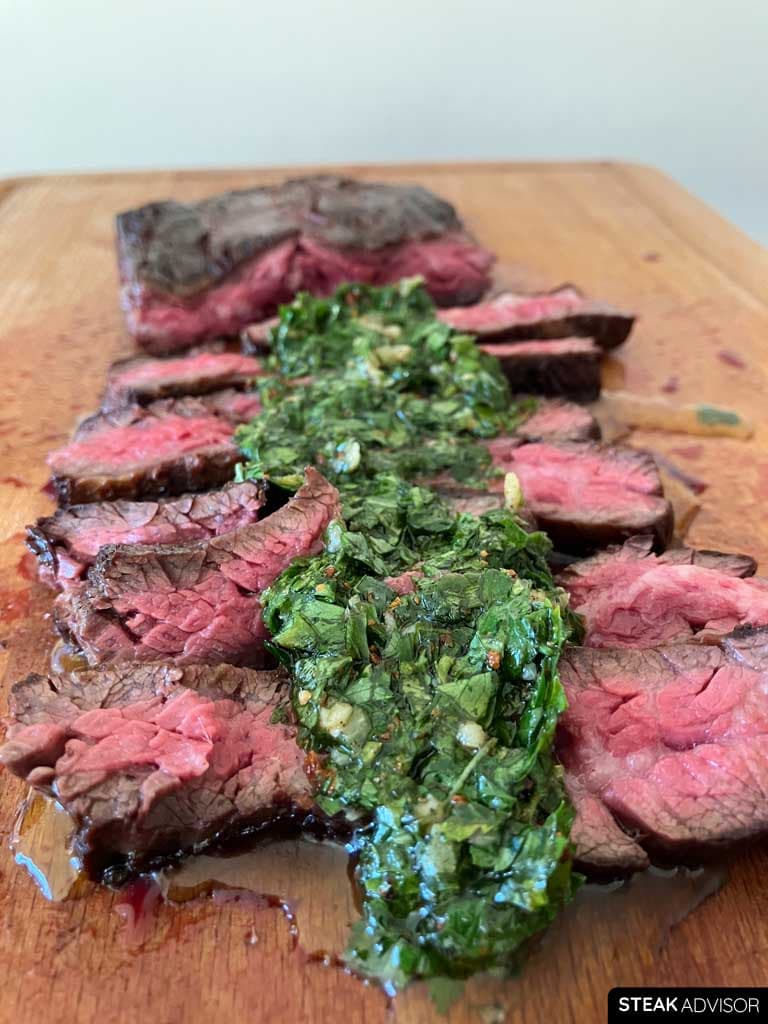
In practice: sliced steak gives you more flexibility and helps reduce waste, especially if your guests don’t eat much meat. Some cuts are perfect for serving sliced. Flank steak and outside skirt steak are great examples, often served sliced with chimichurri or a similar sauce. More premium cuts, like filet mignon or ribeye, are usually served whole. That said, you can still slice them and serve them with sauces and sides if you want a more flexible setup.
Are You Serving Anything Alongside the Steak?
This is where portion planning becomes more strategic.
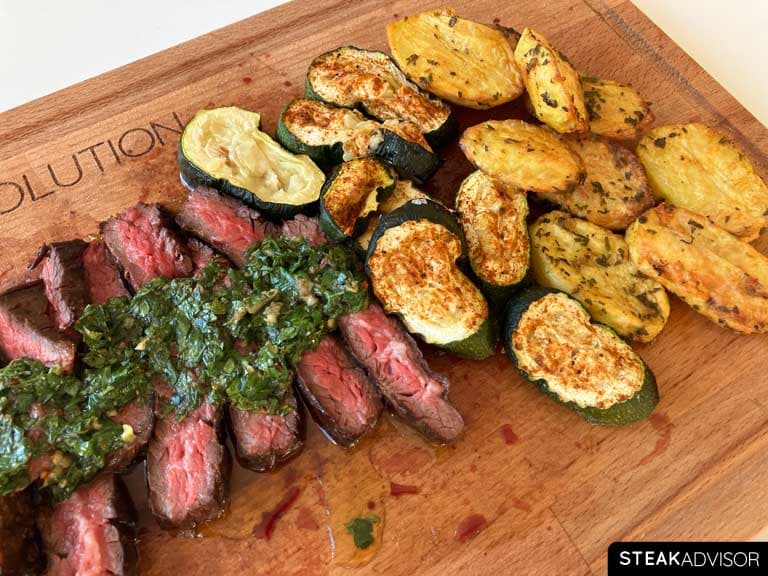
If steak is the only main dish, you’ll need to plan for larger portions. But if you’re offering other proteins (like chicken, pork, or seafood), you can serve less steak per person. Side dishes matter just as much. A meal with multiple sides naturally reduces how much steak each person will eat. On the other hand, if sides are minimal, guests will rely more on the steak itself.
The takeaway: the more options you offer, the less steak you typically need per person.
Are You Comfortable With Leftovers?
If you’re unsure about portions, rounding up slightly is usually the safer option. Running out of food in the middle of a meal is much harder to fix than having extra. That’s why I recommend rounding up slightly when buying steak. It gives you a margin of safety and makes the whole meal less stressful to plan. The good news is that leftover steak rarely goes to waste. More importantly, it’s incredibly versatile.
Cooked steak stores well in the refrigerator for a few days and can even be frozen if needed. You can repurpose it into quick, high-quality dishes like sandwiches, salads, tacos, stir-fries, or even pasta. If you’re looking for more ideas, check out my list of 10 Leftover Steak Recipes for creative, tasty ideas that make the most of every bite.
The takeaway: plan for a little extra. It’s the safer and more flexible option.


