Of course, you can freeze steak, but you need to do it the right way if you want to preserve its texture and flavor as much as possible. From a food safety standpoint, the USDA says frozen steak stays safe almost indefinitely. The real issue is quality. Over time, the meat can lose texture, juiciness, and flavor, especially if it isn’t wrapped and stored properly.
In this guide, I’ll show you the two best ways to freeze steak, so that when it’s time to thaw, the meat is still in great shape.
Why Freeze Steak?
Freezing steak is a safe and effective way to store it for longer. It stops the growth of bacteria responsible for spoilage, and if you do it properly, it won’t significantly affect the steak’s texture or flavor.
Here are the biggest benefits of freezing steak:
- It helps preserve quality for a longer period.
- It reduces waste, especially if the steak would otherwise sit in the fridge for too long, risking spoilage.
- It gives you more flexibility, so you always have steak ready for a quick meal or even a last-minute dinner.
- It can save you money, especially if you buy a larger cut, slice it into steaks yourself, and freeze them individually.
For me, the money-saving part is one of the biggest advantages. Instead of buying precut steaks at the store, you can buy a larger cut, such as a ribeye roast, striploin roast, or even tenderloin roast, portion it yourself, pack the steaks, and freeze them. In most cases, that costs noticeably less per pound (or kilogram) than buying individual steaks.
The key is to properly freeze steak. If you do it right, you’ll preserve its quality without ruining its texture.
Note
Freezing does not kill bacteria. It only stops them from multiplying while the steak stays frozen. Once the meat starts thawing, bacteria can become active again.
Does Freezing Steak Affect Its Taste or Tenderness?
Yes, freezing can affect a steak’s texture and flavor, especially if it stays in the freezer for too long or develops freezer burn. The good news is that if the steak is wrapped and frozen properly, the difference is usually small.
In fact, many people won’t notice much of a difference between a fresh steak and one that has been properly frozen and stored for a few weeks. Whether the difference is noticeable mostly depends on how long the steak stays in the freezer and how you thaw it.

How Long Can You Freeze Steak?
From a food-safety standpoint, steak stored in the freezer at 0°F (-18°C) stays safe to eat indefinitely. The more important issue is quality, not safety. According to the USDA, raw beef steaks keep their best quality in the freezer for about 4 to 12 months. The longer a steak stays frozen, the more likely it is to lose moisture, texture, flavor, and juiciness once cooked. There’s also a higher chance of freezer burn over time.
If you want the best quality, I recommend using frozen steak within about 4 months. That’s already a long time, and for most people, it’s more than enough. That said, if you forget about a steak and it ends up sitting in the freezer much longer, don’t worry. As long as it stayed frozen the entire time at a consistent freezer temperature, it should still be completely safe to eat. You may notice some changes in flavor or juiciness, but in many cases, the difference won’t be dramatic, especially if the steak was frozen for less than a year.
If your steak develops freezer burn, you can still save part of it. In many cases, freezer burn affects only part of the surface. If the steak is thick enough, trim away the dried-out or discolored areas and keep the rest. The unaffected part is still perfectly fine to cook like any other steak.
How to Freeze Steak: 2 Easy Methods
When freezing steak, the most important thing is to wrap it in airtight packaging. If air gets in, the steak can dry out and oxidize in the freezer, which leads to freezer burn. That affects the steak’s texture, flavor, and overall quality. To prevent that, make sure the steak is packed tightly and protected from air as much as possible.
Depending on what you have at home, there are two easy ways to freeze steak properly. The first method is the best option, but it requires a vacuum sealer. If you don’t have one, don’t worry. The second method uses only a freezer bag, costs almost nothing, and still does a very good job.
Method 1: Using a Vacuum Sealer (Best Method)
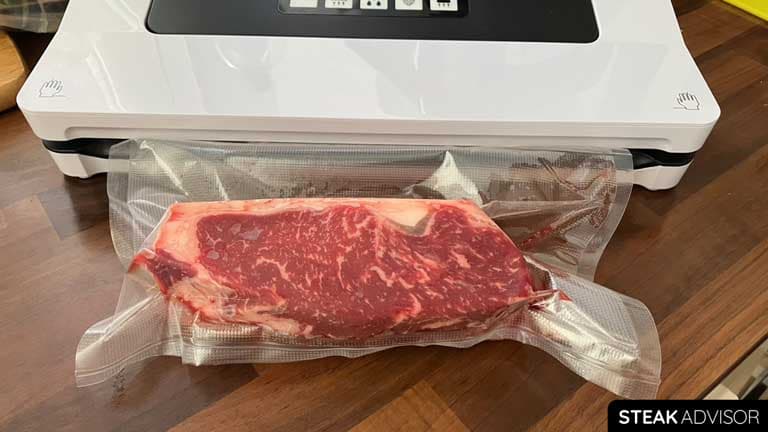
Here’s a quick step-by-step guide on how to freeze steak using a vacuum sealer:
- Pat the steak dry with paper towels. The goal is to remove excess surface moisture, which helps minimize frost in the bag.
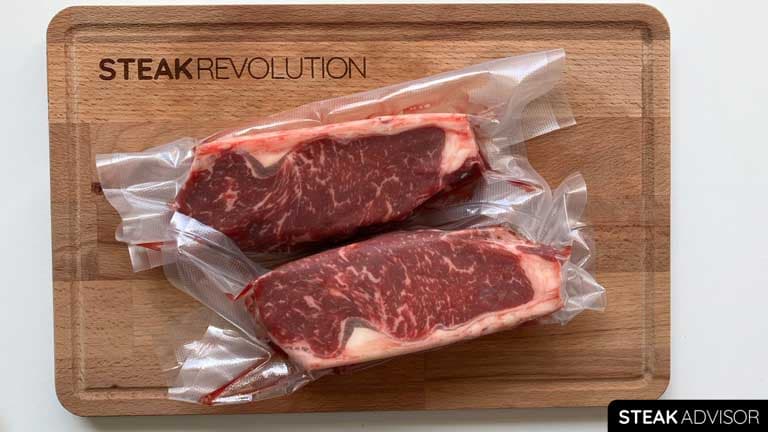
- Place the steak in a vacuum-sealer bag. If you’re freezing more than one steak, don’t put them all in the same bag. It’s better to freeze them in smaller batches. That way, you can take out only what you need later, without having to thaw the whole batch to separate the steaks. Once frozen, stacked steaks are difficult to pull apart.
- Vacuum-seal the bag. Use the vacuum sealer to remove as much air as possible, then seal the bag tightly. This is the most important step because limiting air exposure is what helps protect the steak from freezer burn.
- Label the bag. Write the freezing date on the bag, and optionally note what cut is inside. Trust me, after a while, you’ll forget when that steak went into the freezer. Labeling everything makes freezer storage much easier.
- Freeze the steak at 0°F (-18°C) or below. Place the sealed bag in the freezer as soon as possible. Rapid freezing helps reduce the formation of large ice crystals, which can damage the meat’s structure and affect how well it holds onto juices after thawing.
- Optional: For extra protection, you can wrap the sealed steak in freezer paper, foil, or place it inside another freezer bag. This helps protect the bag from damage and further reduces the risk of freezer burn.
Method 2: Using a Zip-Lock Freezer Bag
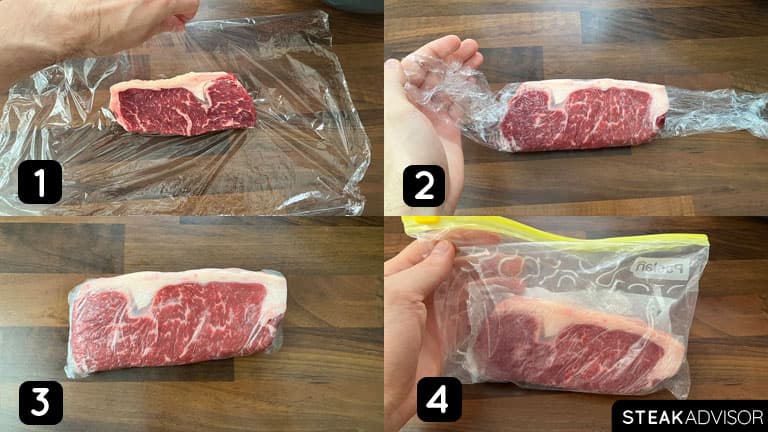
Here’s a quick step-by-step guide on how to freeze steak using a zip-lock freezer bag:
- Pat the steak dry with paper towels. Remove any excess surface moisture before wrapping.
- Wrap the steak tightly in plastic wrap. Wrap it as tightly as possible to minimize its exposure to air.
- Place the wrapped steak in a freezer bag. Use a zip-lock freezer bag, then press out as much air as you can before sealing it tightly.
- Freeze the steak. Place the bag in the freezer right away. The more air left inside the bag, the higher the risk of freezer burn, which can affect the steak’s texture and flavor over time.
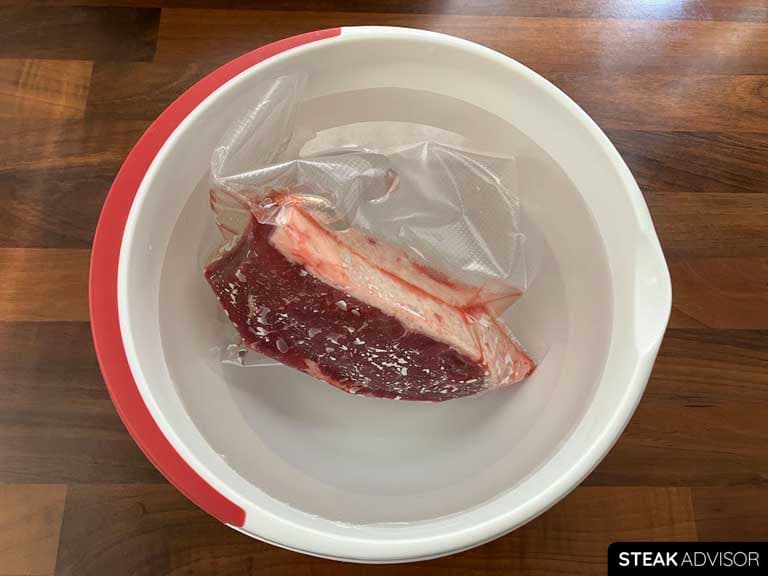
- Optional. Use the water displacement method. If you want to remove even more air, lower the bag slowly into a bowl of water before sealing it completely. The water’s pressure pushes most of the air out. It’s not quite as effective as a vacuum sealer, but it still works very well.
For a visual guide, check the step-by-step photos below.

Whether you have a ribeye steak, filet mignon, or any other cut of beef, you can freeze it using any of the above methods.
The best and easiest way to freeze steak is to pat it dry, place it in a vacuum-sealer bag, seal it, and freeze it at 0°F (-18°C) or below. That’s it. A vacuum sealer removes as much air as possible, helping protect the steak from freezer burn and preserving its quality for longer. But I understand that not everyone has a vacuum sealer, and that’s exactly why the second method is a good alternative. It’s not quite as effective as vacuum sealing, but it still works well.
If you freeze steak only occasionally and don’t store it for more than a few weeks, the second method (using a zip-lock freezer bag) is usually enough. But if you freeze steak often or want to store it for a few months, I highly recommend the first method (using a vacuum sealer). A vacuum sealer removes much more air from the package, which makes a big difference in preserving the steak’s quality over time.
Can You Freeze Steak in the Original Store Package?
Yes, you can freeze steak in its original store package, but whether that’s a good idea depends on the type of packaging. It’s completely safe, but not every store package protects the steak as well in the freezer. Standard supermarket wrapping is usually permeable to air, which means the steak can lose quality over time and become more prone to freezer burn.
If your steak comes on a tray wrapped in thin plastic film, that packaging is fine for short-term freezing, but it’s not ideal for longer storage. If you plan to keep the steak frozen for more than about 1–2 months, it’s better to add an extra layer of protection. You can overwrap the original package with airtight foil, plastic wrap, freezer paper, or place it inside a freezer bag. That extra step helps reduce air exposure and better protects the steak from freezer burn.
If the steak comes in a sealed vacuum package, that’s a much better option for freezing. Vacuum packaging removes most of the air before sealing, providing the steak with much better protection in the freezer. In general, vacuum-sealed steak holds up better over time and is less likely to develop freezer burn than steak packed in a standard tray-and-film supermarket package.
Best Practices for Freezing Steak
If you want your steak to stay in great shape in the freezer, the goal is simple: protect it from air, package it tightly, and freeze it as quickly as possible. Freezer burn usually happens when the steak is exposed to air or stored in poor packaging for too long.
The tips below will help you preserve the steak’s texture, flavor, and juiciness as much as possible.
- Freeze the steak as soon as possible. If you know you won’t be cooking the steak within the next few days, put it in the freezer right away. Freezing it while it’s still fresh helps preserve its quality.
- Use freezer-safe bags or proper freezer wrapping. Freezer bags, vacuum-sealer bags, freezer paper, or foil all work. The goal is to protect the steak from air exposure, which can lead to freezer burn.
- Remove as much air as possible. The less air around the steak, the lower the risk of freezer burn. If you don’t have a vacuum sealer, press out as much air as you can before sealing the bag.
- Keep the package flat. Try to flatten the bag as much as possible before freezing. Flat packages save freezer space, stack easily, and freeze more evenly. Odd shapes take up more room and make freezer storage less efficient.
- Label every package. Before placing the steak in the freezer, write the date and the type of cut on the bag. This makes it much easier to keep track of what you have and helps you use the older steaks first.
- Organize the freezer so older steaks stay on top. When adding new steaks to the freezer, place the older ones where they’re easiest to reach. This simple habit helps you rotate your stock and prevents steaks from getting forgotten for too long.
- Freeze the steak rapidly. The faster the steak freezes, the better. Slow freezing creates larger ice crystals inside the meat, which can damage its structure. As a result, the steak may lose more moisture during thawing, which can affect the steak’s texture, juiciness, and flavor.
- Keep the freezer temperature consistently low and stable. A steady freezer temperature helps protect the steak’s texture, flavor, and overall quality during storage.
How to Thaw Frozen Steak Properly?
When it comes to thawing, I recommend doing it slowly in the refrigerator. That’s the best option if you want the steak to retain as much quality as possible. If you’re short on time, the cold-water method or sous vide are both good alternatives.
To learn more, check out my full guide on How to Thaw Steak.