
You’ve bought a steak or pulled one from the fridge or freezer, ready to cook. But when you open the package, the steak isn’t bright red. Instead, it looks brown. Don’t worry. In most cases, a brown steak, especially one stored in the fridge or freezer, is still safe to eat as long as it smells fine and isn’t too sticky or slimy.
In this article, I’ll explain why steak turns brown, show a real example, what it actually means, and how to tell if it has gone bad.
Why Does Raw Steak Turn Brown?
Raw steak turns brown because myoglobin, the protein and pigment responsible for meat color, changes form over time as it reacts with oxygen and gradually oxidizes. During that process, the iron in myoglobin changes from Fe²⁺ to Fe³⁺, forming metmyoglobin, which gives the steak a brown color.
When a fresh raw steak is first cut and has had little or no exposure to oxygen, it looks purple because myoglobin is mostly in the deoxymyoglobin form. When oxygen reaches the surface, myoglobin changes its form to oxymyoglobin, giving the steak a bright red color. After longer exposure to oxygen, myoglobin oxidizes further, and the iron in it changes from Fe²⁺ to Fe³⁺, forming metmyoglobin, which gives the steak a brown color.
If the steak is vacuum-packed, the lack of oxygen shifts myoglobin back toward the deoxymyoglobin state, so the meat looks purple again. Once you open the package, oxygen reaches the surface again, and the steak turns red as oxymyoglobin forms. Over time, more of the myoglobin remains in the metmyoglobin form, and the steak turns brown.

I prepared a small case study based on a real example to show how steak changes color as oxygen reaches its surface.
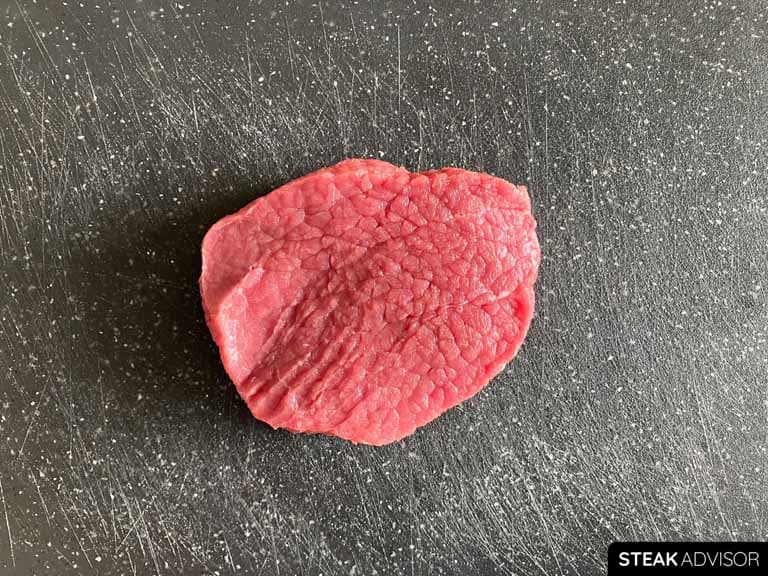
Example 1: I freshly cut this steak from a vacuum-sealed eye of round roast. It has a purple hue because there was little or no oxygen inside the package. In that low-oxygen environment, myoglobin stays in the deoxymyoglobin state, giving the meat a purplish color.
Example 2: Here’s the same steak, photographed 3 hours after I removed it from the vacuum packaging and left it exposed to air in the fridge. As oxygen reached the surface, myoglobin changed to oxymyoglobin, giving the steak a bright red color.

Example 3: I stacked these eye of round steaks and refrigerated them for 3 hours before separating them. As you can see in the photo, some areas of the steak turned purple. That happened because the stacked steaks blocked oxygen from reaching certain spots. Without enough oxygen, myoglobin continued to change, which gave those areas a purplish color.


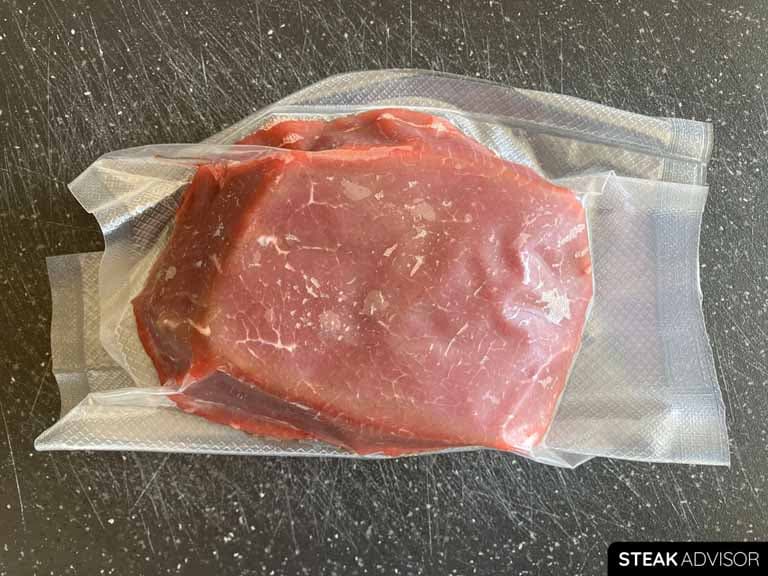
Example 4: This time, I vacuum-sealed the same steaks to remove the oxygen and stored them in the freezer. The photos below show how their color changed after 4 days in the freezer.

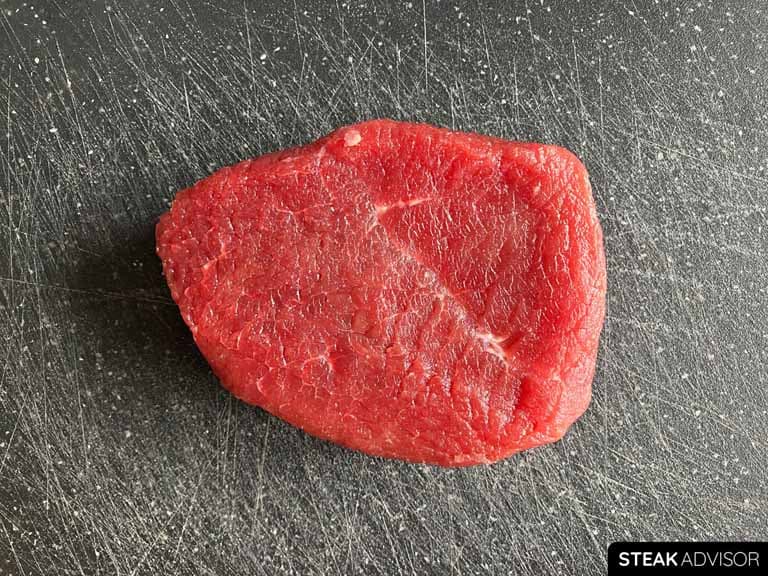
Example 5: I thawed the steaks from the previous example and exposed them to air again. After 3 hours in the fridge, this is how their color changed.

Example 6: In the next photo, you can see what happened after I seasoned one of those steaks with salt and left it in the fridge overnight. After 24 hours in the refrigerator, the steak turned deep red again.
Is Brown Steak Safe to Eat?
In most cases, yes. Just because a steak has turned brown doesn’t automatically mean it has gone bad. If you stored it properly in the fridge or freezer and it hasn’t passed its expiration date, it’s usually still safe to eat. In many cases, that brown color is simply the result of oxidation. This happens when myoglobin, the protein that gives beef its color, reacts with oxygen and, over time, oxidizes to form metmyoglobin.
This kind of discoloration usually doesn’t affect the steak’s flavor or texture, and it shouldn’t cause a bad smell. If the steak still smells normal and the texture feels fine, the brown color alone usually isn’t a problem.
As I showed earlier in my small case study, this can happen even with freshly cut steaks. For example, if you stack two freshly cut steaks and leave them in the fridge overnight, some parts may turn slightly brown by the next day. This usually happens in the spots where oxygen can’t reach the meat surface. Once you separate the steaks and expose those areas to oxygen again, the color should gradually turn red after some time. That’s a normal oxygen-related color change, not automatic spoilage.
Sometimes, however, a steak stays brown even after exposure to air. This usually happens because myoglobin has oxidized further, leaving more of it in the metmyoglobin state. In that case, you should inspect the steak more closely to decide whether it is still safe to eat. Browning can occur without spoilage, but it can also occur alongside spoilage. The difference is that spoiled steak usually comes with other clear warning signs, especially a sour or rotten smell and a slimy or sticky surface. Those signs matter much more than color alone. That’s why color should never be the only thing you use to judge whether a steak is still good.
So yes, a brown steak is usually safe to eat, but color alone isn’t enough to judge it. Below, I explain how to tell whether a brown steak is still good or it’s time to throw it away.
How to Tell if Brown Steak Has Gone Bad?
Color alone won’t tell you if a brown steak is still safe to eat. To figure that out, you need to check a few other things:
- Check the expiration date: First, make sure the date on the package hasn’t passed.
- Feel the texture: If the steak feels slimy, sticky, or slippery, that’s a bad sign.
- Look at the surface: If it looks unusually dry, shriveled, or off in some other obvious way, that’s another bad sign.
- Smell the steak: Any strong, unpleasant odor, especially one that smells sour, rotten, or like ammonia, is a clear sign the steak has spoiled.
If you want to learn more, check out my full guide on How to Tell if Steak is Bad.
Why Do Packaged Steaks Usually Look Bright Red?
Many supermarket steaks look bright red because they are packed in oxygen-containing packaging. Oxygen reacts with myoglobin in the meat to form oxymyoglobin, which gives the surface that bright red color. True vacuum-sealed steaks look different because they contain very little oxygen. In that environment, myoglobin stays mostly in the deoxymyoglobin state, so the meat looks darker red or purple.
Some steaks are sold in modified-atmosphere packaging (MAP) trays instead of vacuum-sealed packaging. These trays contain a controlled gas mixture, usually oxygen, carbon dioxide, and sometimes nitrogen. The oxygen helps keep the meat bright red by keeping myoglobin in the oxymyoglobin state, while the other gases help slow spoilage and extend shelf life.
Why Do Some Steaks Turn Brown Faster Than Others?
Some steaks turn brown faster than others because several factors affect how quickly myoglobin oxidizes. The main ones are oxygen exposure, packaging, storage conditions, and the meat’s natural ability to keep myoglobin in its red form.
Here are the most important reasons:
- Oxygen exposure: The longer a steak stays exposed to air, the more time myoglobin has to oxidize. Over time, that increases the amount of metmyoglobin, which makes the steak look brown.
- Packaging type: Packaging makes a big difference in how the steak looks. Vacuum packaging keeps steak darker red or purple because it contains very little oxygen. Steaks packed in oxygen-rich packaging look bright red at first, but that color is less stable over time and turns brown sooner.
- Age of the meat: An older steak has a lower ability to keep myoglobin in its red form.
- Muscle type: Different muscles differ in metabolism and color stability, so they brown at different rates.
- Fat oxidation: Oxidation of fats speeds up the oxidation of pigment (myoglobin).
- Temperature and storage conditions: Poor storage conditions, especially at higher temperatures, can cause the steak to brown faster.
- Light exposure: Strong display lighting in stores can accelerate color changes, causing the steak to turn brown sooner.
- Natural reducing capacity: Fresh meat can reverse some of that browning for a while by converting some metmyoglobin back into red forms of myoglobin when exposed to air again. But over time, that ability gets weaker, so the brown color becomes more permanent.
For a much more detailed explanation of the science behind meat color stability, I recommend checking out Andy King’s research.
How to Prevent Steak From Turning Brown?
Keep the steak cold, sealed, away from light, and don’t store it for too long. According to the USDA, food should not stay at room temperature for more than 2 hours. If the temperature is between 40°F and 90°F (4°C and 32°C), that 2-hour limit applies. But if it’s hotter than 90°F (32°C), such as on a hot summer day, that window drops to just 1 hour.
Also, remember this: brown does not automatically mean unsafe. Color alone is not enough to tell whether a steak is still good or has gone bad. Smell, surface texture, storage history, and the date matter much more than color alone.

I used to throw steak out as soon as it looked a little brown. This made it much clearer what to actually check before deciding.
Thanks, Natalie.