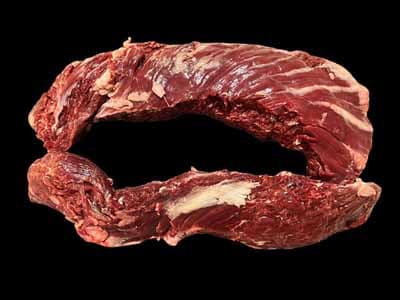
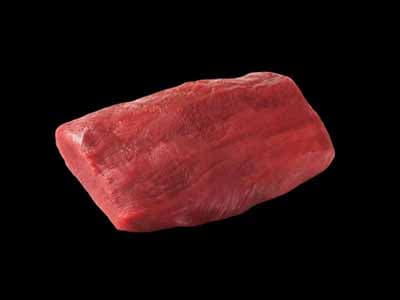
Flank steak is a long, flat, boneless cut of beef from the flank primal, located in the lower abdominal area below the loin. It is lean, has a clearly visible grain, and is known for its strong beefy flavor. Its long, coarse muscle fibers give it a firm, chewy texture. Slicing the steak thinly against the grain shortens those fibers and makes each bite easier to chew.
One thing I particularly like about flank steak is that a whole cut feeds several people. It is also extremely versatile: you can serve it as a steak with compound butter or chimichurri sauce, or slice it for use in other dishes.
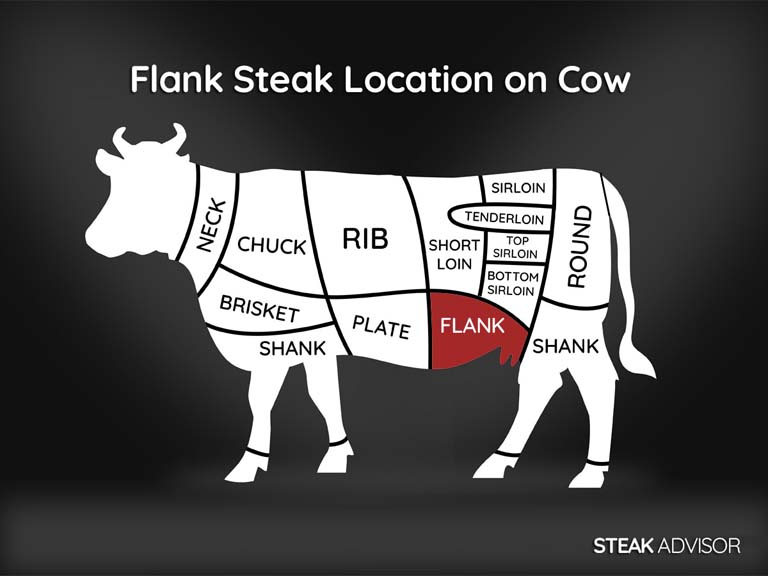
Where Does Flank Steak Come From on a Cow?
Flank steak comes from the flank primal, located below the loin and toward the rear of the abdomen. The cut consists of the rectus abdominis, a muscle of the abdominal wall.
Other Names for Flank Steak
In the United States, flank steak is also sold under several other names:
- Beef Flank
- Flank Steak Filet
- Jiffy Steak
- Plank Steak
Flank steak is also associated with London broil, but the terms are not interchangeable. Flank steak is a specific cut of beef, while London broil refers to a style of preparation and may also be made with other cuts.
What Does Flank Steak Look Like?
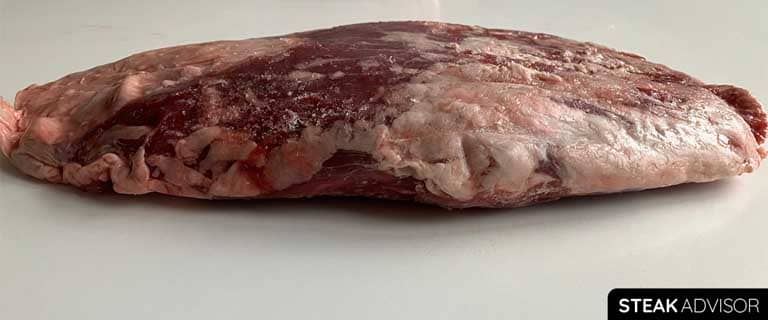
Flank steak is a long, flat cut with a clearly visible grain. On average, it measures about 12 inches (30 cm) long and 5 to 6 inches (13 to 15 cm) wide, with a thickness ranging from 0.5 to just over 1 inch (1.3 to 2.5 cm).
A whole flank steak commonly weighs between 2 and 4 pounds (900 g to 1.8 kg). Despite being one of the larger and heavier steak cuts, it contains relatively little fat.

What Does Flank Steak Taste Like?
Flank steak has a strong, distinctly beefy flavor. Because it is lean and contains little marbling, it tastes meaty rather than rich or buttery. Salt and pepper are enough to bring out its natural flavor, while bold sauces and marinades also work well with it. I like serving it with compound butter or, even better, with chimichurri, whose acidity and fresh herbs balance the meat’s intense beefiness.

Is Flank Steak Tender?
Flank steak is firm and chewy rather than naturally tender because it contains long, coarse muscle fibers. Slicing it thinly against the grain shortens those fibers and makes the meat much easier to chew. Because flank steak is lean, cooking it beyond medium quickly reduces its juiciness and makes its coarse fibers feel noticeably firmer.
In my experience, the direction you slice it makes a bigger difference with flank steak than with most other cuts. Slice it the wrong way, and even perfectly cooked meat will feel much tougher than it should.

Should You Marinate Flank Steak?
You do not need to marinate flank steak, but its large surface area makes it well suited to marinades. A marinade adds flavor to the exterior and can slightly soften the surface, but it does not tenderize the meat all the way through. Proper cooking and slicing against the grain still have a much greater effect on its texture.
Before grilling or pan-searing, remove the steak from the marinade and pat it thoroughly dry. Excess moisture prevents the surface from browning properly. Avoid leaving flank steak in a strongly acidic marinade for too long, as the outside can become soft and mushy.
I often skip a wet marinade and dry-brine flank steak with salt instead. This keeps the seasoning simple and helps the surface develop a better crust.
What Are the Best Methods for Cooking Flank Steak?
In my experience, grilling is the best way to cook flank steak, especially when it’s wet-marinated. For a dry-brined steak, I prefer a very hot skillet, provided the entire cut lies flat on the cooking surface.
Both methods use intense direct heat, which works well for a steak only about 0.5 to just over 1 inch (1.3 to 2.5 cm) thick. Flank steak cooks quickly, so a short cooking time over high heat produces the best results.

Sous vide offers precise control over doneness, but developing a strong crust afterward is difficult without overcooking such a thin steak. I do not recommend broiling, reverse searing, or finishing flank steak in the oven; grilling and pan-searing produce better browning and suit the cut’s thickness far better.
What Temperature Should Flank Steak Be Cooked To?
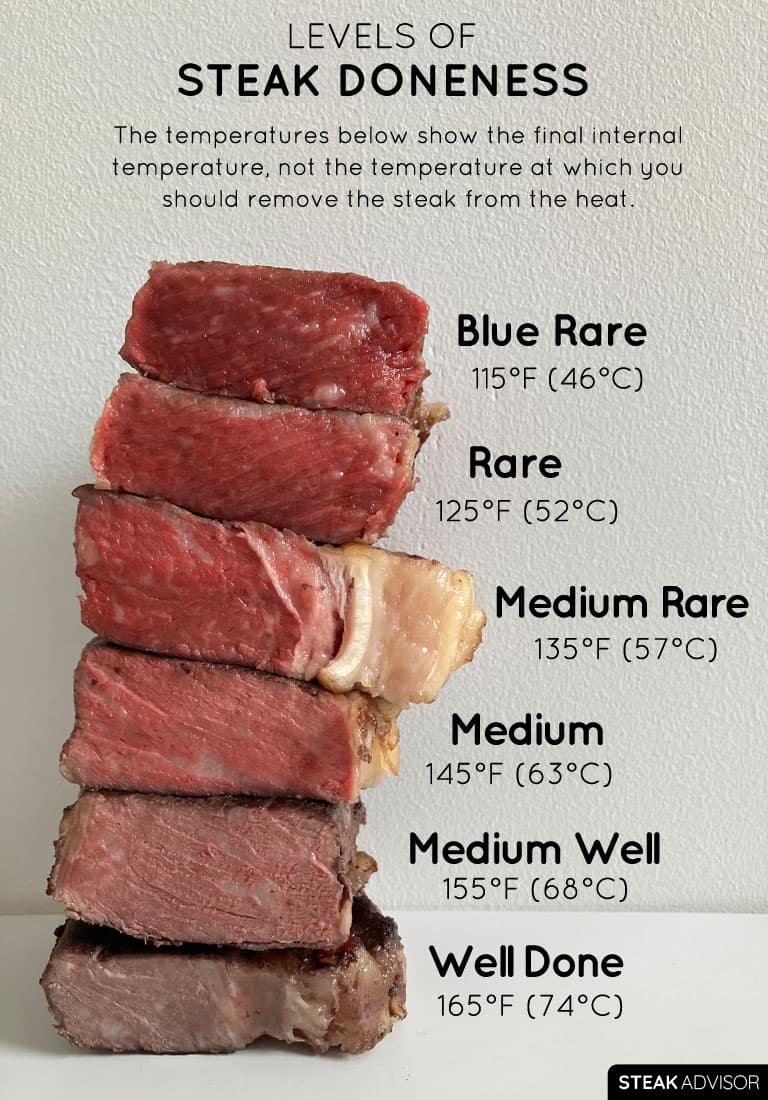
I prefer flank steak cooked to medium-rare, with a final internal temperature of about 135°F (57°C). At this doneness, it remains juicy, with a firm texture and strong beefy flavor. Medium also works well, but once the steak goes beyond that, even a few additional degrees make a noticeable difference, leaving its lean, coarse fibers significantly firmer and drier.
How to Slice Flank Steak Against the Grain
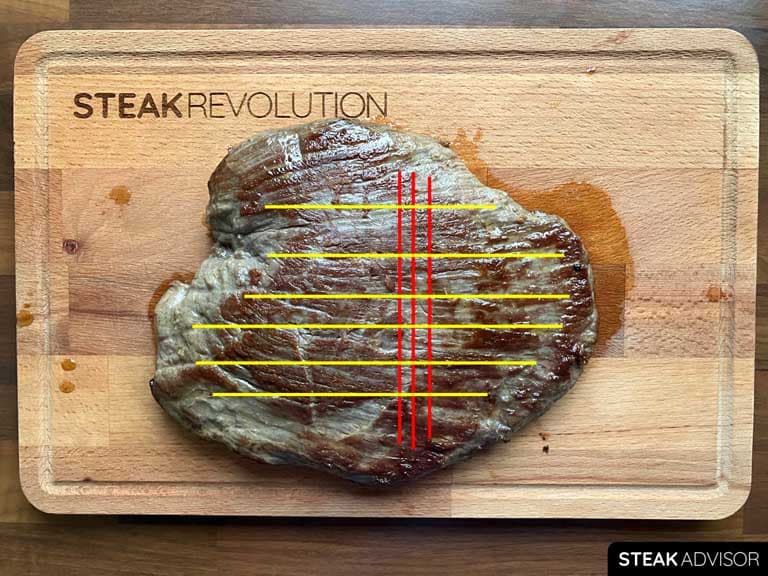
Flank steak must be sliced thinly against the grain. Grain refers to the direction in which the steak’s long muscle fibers run, and it is easy to identify by looking at the visible lines across the surface of the steak.
Position your knife perpendicular to those lines and cut across them rather than in the same direction. This shortens the muscle fibers in each slice, making the steak much easier to chew. Use a sharp knife and cut thin slices at a slight angle.
I recommend checking the grain direction before cooking, when the fibers are easiest to see.
What Is Flank Steak Used For?
Flank steak works well as both a main course and an ingredient in dishes that use thinly sliced beef. You can cook it whole, slice it against the grain, and serve it with compound butter, chimichurri, or another steak sauce.
Its strong beefy flavor also suits fajitas, tacos, stir-fries, salads, sandwiches, and rice bowls. For fajitas and stir-fries, cut the steak into thin strips. For salads and sandwiches, cut the steak into thin slices.
Is Flank Steak the Same as Skirt Steak?
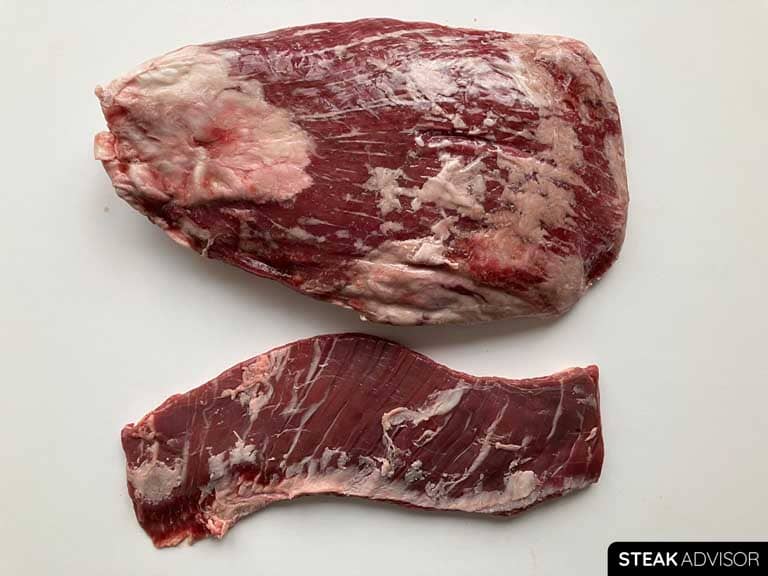
No. Flank steak is a separate cut, while the term skirt steak can refer to either inside skirt or outside skirt. These two skirt steaks differ significantly in tenderness, thickness, and texture, so comparing flank steak with “skirt steak” without specifying which one is misleading.
Outside skirt is more tender than inside skirt, while inside skirt has a firmer texture and benefits more from marinating. All three cuts have a pronounced grain and strong beefy flavor, but they do not cook or taste the same.
For a complete comparison, see my guide to flank steak vs. skirt steak.
Is Flank Steak the Same as Flat Iron Steak?
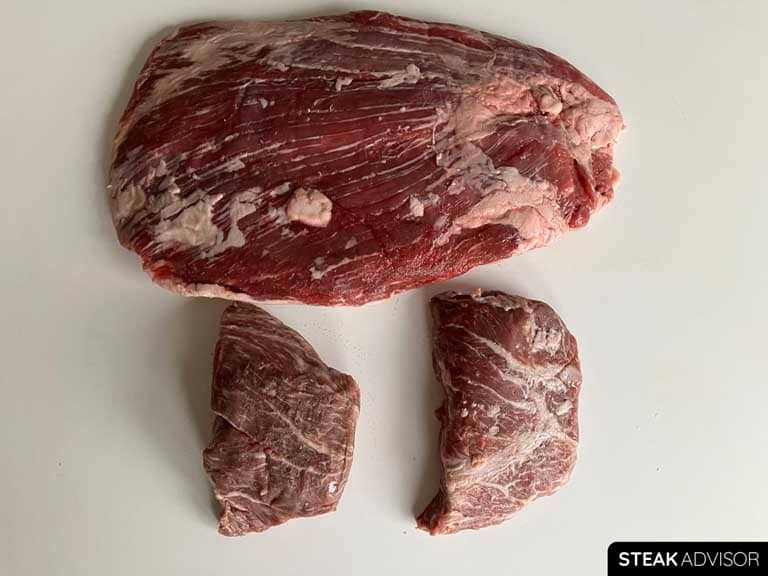
No. Flank steak comes from the flank primal and has a lean, coarse-grained texture, while flat iron steak comes from the chuck and is more marbled and naturally tender. Flank steak needs to be sliced thinly against the grain, whereas flat iron steak can be served in thicker slices.
For a detailed comparison, see my flank steak vs. flat iron steak guide.
Flank Steak Nutrition Facts
| Nutrition | Portion size: 3 oz = 85 g |
|---|---|
| Calories | 165 kcal |
| Total Fat | 7.07 g |
| Protein | 23.6 g |
| Zinc | 4.34 mg |
| Potassium | 287 mg |
| Vitamin B-6 | 0.492 mg |
| Vitamin B-12 | 1.48 µg |
Nutrition data source: USDA.
Is Flank Steak Expensive?
Flank steak is not one of the most expensive beef cuts, but it is no longer cheap. Each cow provides only two whole flank steaks, one from each side of the carcass, so the amount available from each animal is limited.
Demand has also increased because of flank steak’s strong flavor, size, and versatility. Its popularity for grilling, sliced-beef dishes, and Tex-Mex cooking has pushed its price above that of many other lean cuts.
Flank steak still costs less than premium steaks such as tenderloin, ribeye, and porterhouse when comparing beef of the same grade and from the same producer. The final price depends on the beef grade, brand, trimming, retailer, and location.