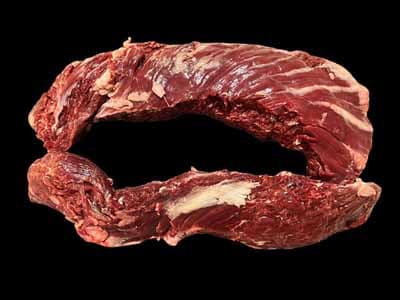
Flap steak, also known as bavette steak, is a long, relatively fatty cut of beef from the bottom sirloin. It has a coarse grain and loose texture that absorbs marinades well. When cooked properly, it delivers a deep, beefy flavor, plenty of juiciness, and a tender bite with a noticeable amount of chew.
Flap steak is often confused with hanger steak, flank steak, and skirt steak. These cuts share a strong beefy flavor, prominent muscle fibers, and similar preparation methods, but they come from different parts of the cow. Many recipes allow you to use them interchangeably, although their textures, thicknesses, and tenderness differ.
Flap steak is especially well suited to grilling and pan-searing, but it can also be cooked slowly. For grilling or pan-searing, medium-rare to medium is the best doneness range. When cooked too rare, its loose texture can feel undercooked, while taking it past medium can make it tough and chewy. After cooking, let the steak rest and always slice it against the grain to shorten the long muscle fibers and make each bite more tender.
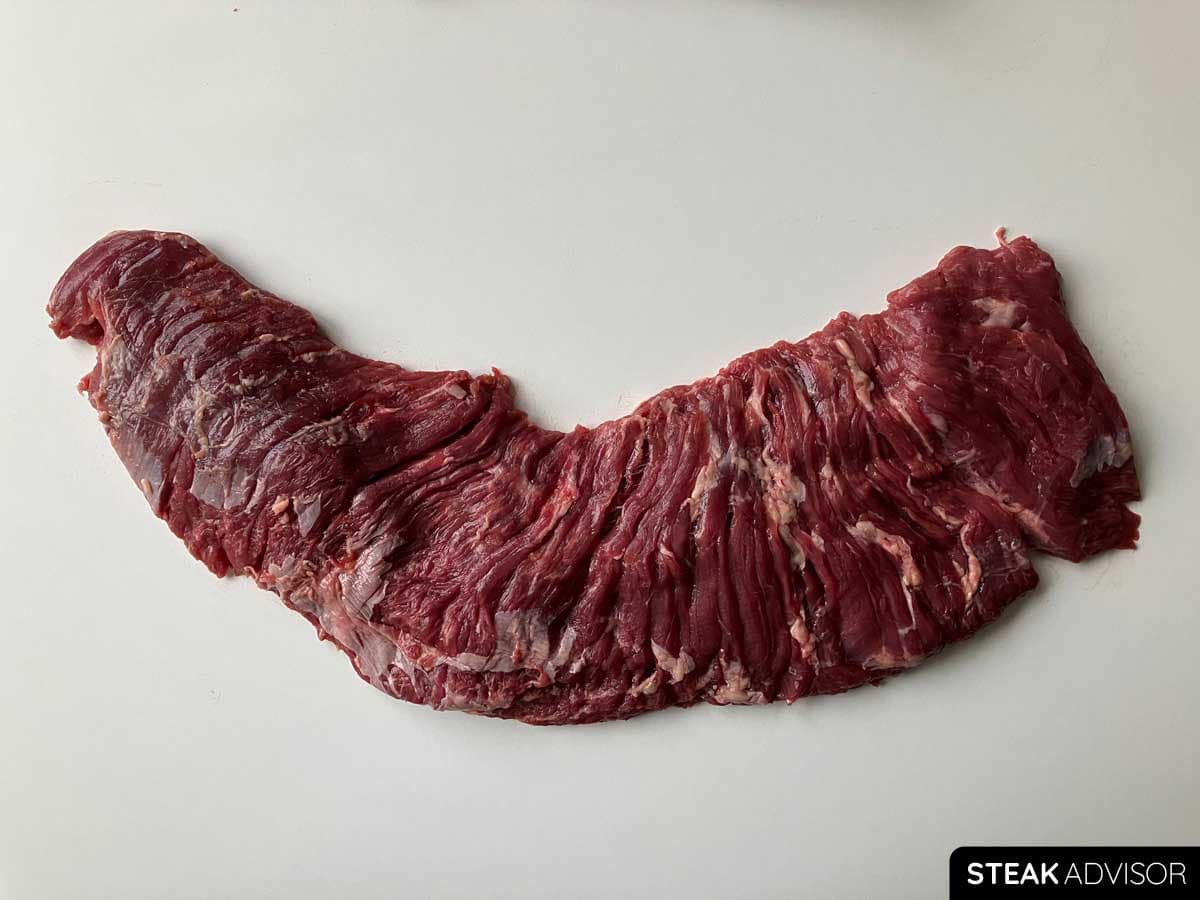
What Are The Other Names for Flap Steak?
The most popular other names for the flap steak in the United States are the bavette steak or “butcher’s cut”. You might also come across other names, like:
- Bavette,
- Bottom Sirloin Bavette Steak,
- Bottom Sirloin Butt,
- Bottom Sirloin Flap Steak,
- Bistro Steak,
- Sirloin Flap Steak,
- Flap Meat.
Where Does Flap Steak (Bavette Steak) Come From on the Cow?
Flap steak (bavette steak) comes from the bottom sirloin butt, which is part of the larger sirloin primal. Interestingly, this is also where the tri-tip comes from. You’ll find this cut in the abdominal area of the cow, close to the bottom. This part helps the cow walk and twist, making it an active muscle, which gives the meat its tougher texture.
Not too far from there, you’ll find the flank steak. Many people confuse it with the bavette steak, but they’re different cuts despite their similarities.

Flap Steak (Bavette Steak) Nutrition Facts
| Name | Portion size: 100g = About 3.5 oz |
|---|---|
| Calories | 196 |
| Total Fat | 12.5g |
| Saturated Fat | 4.46g |
| Protein | 19.64g |
What Does Flap Steak (Bavette Steak) Taste Like?
A well-cooked flap steak (bavette steak) is juicy and tender, boasting a robust beefy taste. Also, its unique, coarse texture makes it ideal for marinating, letting you experiment with different flavors.
Is Flap Steak (Bavette Steak) Tender or Tough?
Flap steak (bavette steak) is tender when cooked and sliced the right way. Medium-rare to medium doneness is the sweet spot; a rare cook gives it a mushy texture, while anything past medium tends to make it tough and chewy. The slicing technique also plays a significant role; thin slices against the grain are the way to go. Skip these steps, and you’re likely to end up with something dry and hard to chew.
How to Slice Flap Steak (Bavette Steak)?
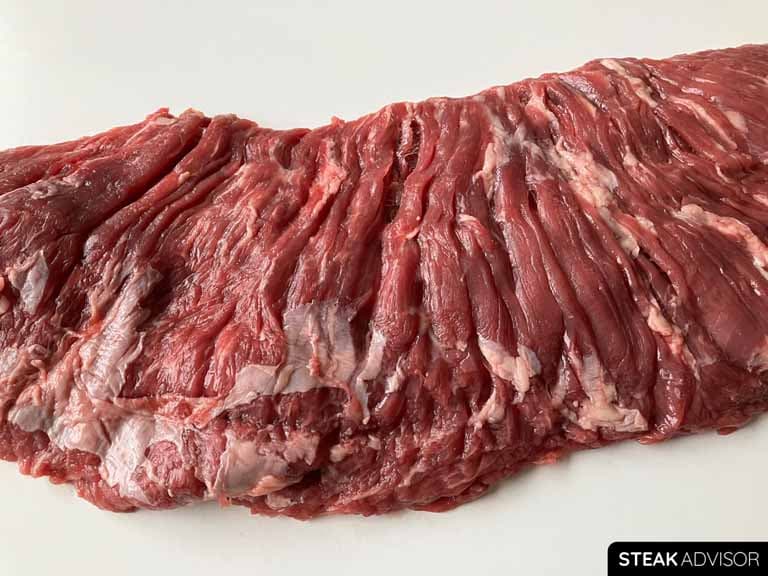
Flap steak (bavette steak) is known for its coarse and pronounced grain that runs the length of the meat. You’ll have a tough and chewy bite if you cut along this grain. Always cut flap steak (bavette steak) against the grain to enjoy a more tender bite. I’ve included a photo to guide you on the direction of the grain in flap steak (bavette steak) and the best way to slice it.
Considering the length of the flap steak, it’s a good idea first to divide the cooked steak into several smaller portions and then cut against the grain.

What is The Average Length and Weight of a Flap Steak (Bavette Steak)?
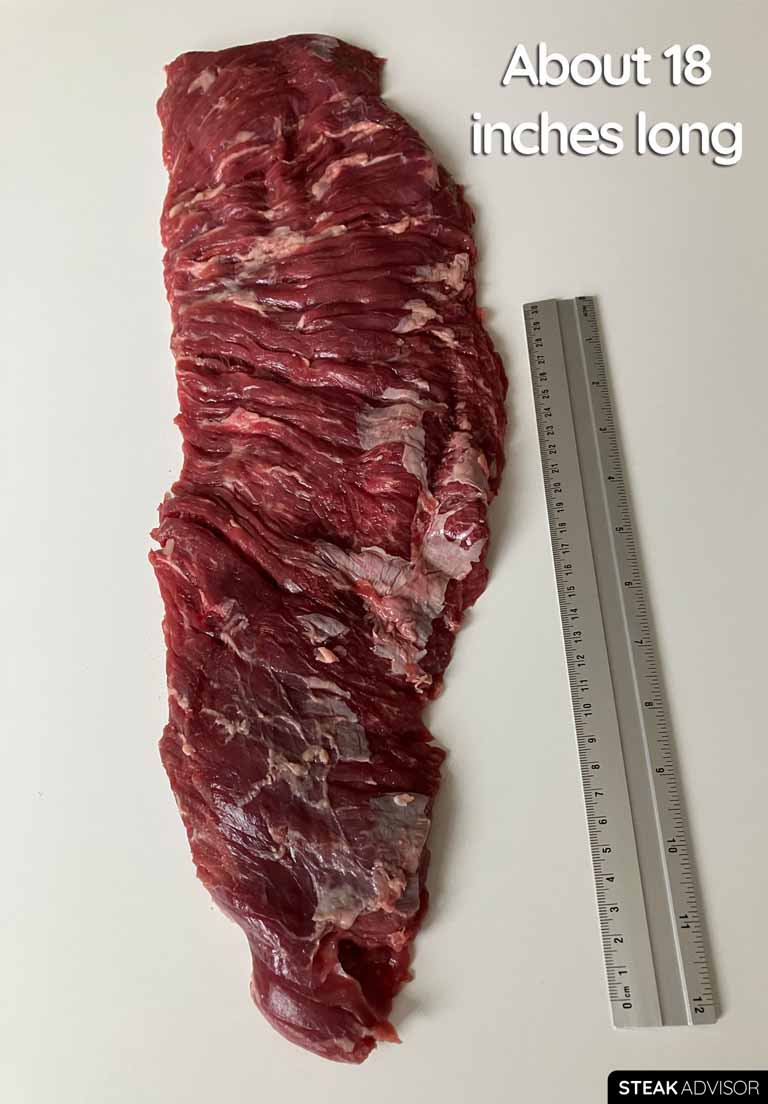
On average, a bavette steak measures 15 to 17 inches (38 to 43 cm) in length and weighs about 2 pounds (907 grams).
Is Flap Steak (Bavette Steak) Very Expensive?
Bavette steak is getting a lot of love in the US these days. Back in the day, not many knew about it, and it was pretty cheap. Now, it’s still more wallet-friendly than premium cuts like ribeye or porterhouse, but let’s be real – its price has gone up. It’s not the bargain it used to be, but it sits comfortably in the mid-price range. Despite the current price, it’s still a go-to for many who love a steak with a rich, beefy flavor.
What Are the Best Methods for Cooking Flap Steak (Bavette Steak)?
Flap steak (Bavette) is one of those beef cuts that’s wonderfully versatile. One of the best ways to enjoy it is by grilling the whole piece or giving it a good pan-sear over high heat. After that, just slice it up against the grain into thin strips. And if you’re in the mood for something different, why not slow-cook it?
Remember, for that perfect bite, aim for medium-rare to medium doneness. Go beyond, and you might end up with a piece that’s too dry, tough, and chewy. Undercook it, and it might feel a bit mushy. And don’t forget about marinades – they can bring out some awesome flavors and make the bavette steak even more tender.
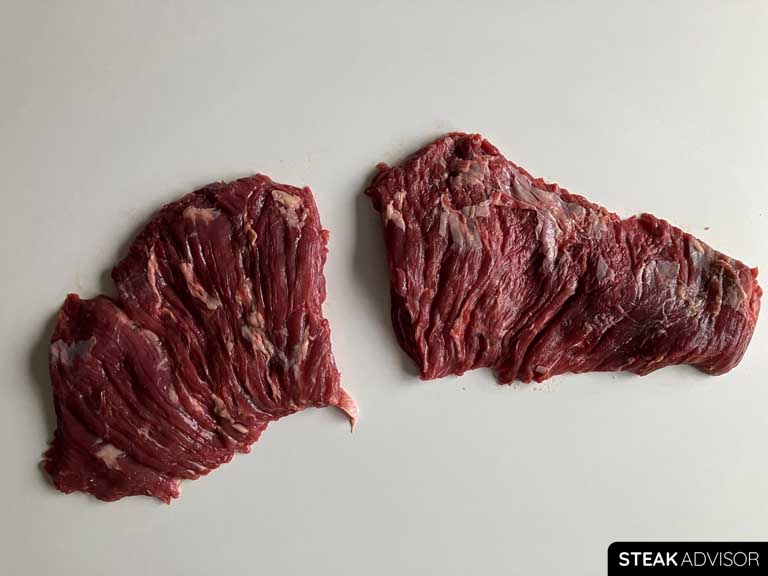
Is Bavette Steak (Flap Steak) The Same as Flank Steak?
Bavette steak (Flap steak) isn’t the same as flank steak, even if they sometimes get confused. They come from different parts of the cow. Flank steak is from the flank primal, while bavette (flap steak) comes from the sirloin primal. The flank steak has a different texture and shape from the bavette (flap steak). But what’s cool is that both have that strong beefy taste we all love, and they’re both great for quick cooking, especially grilling.