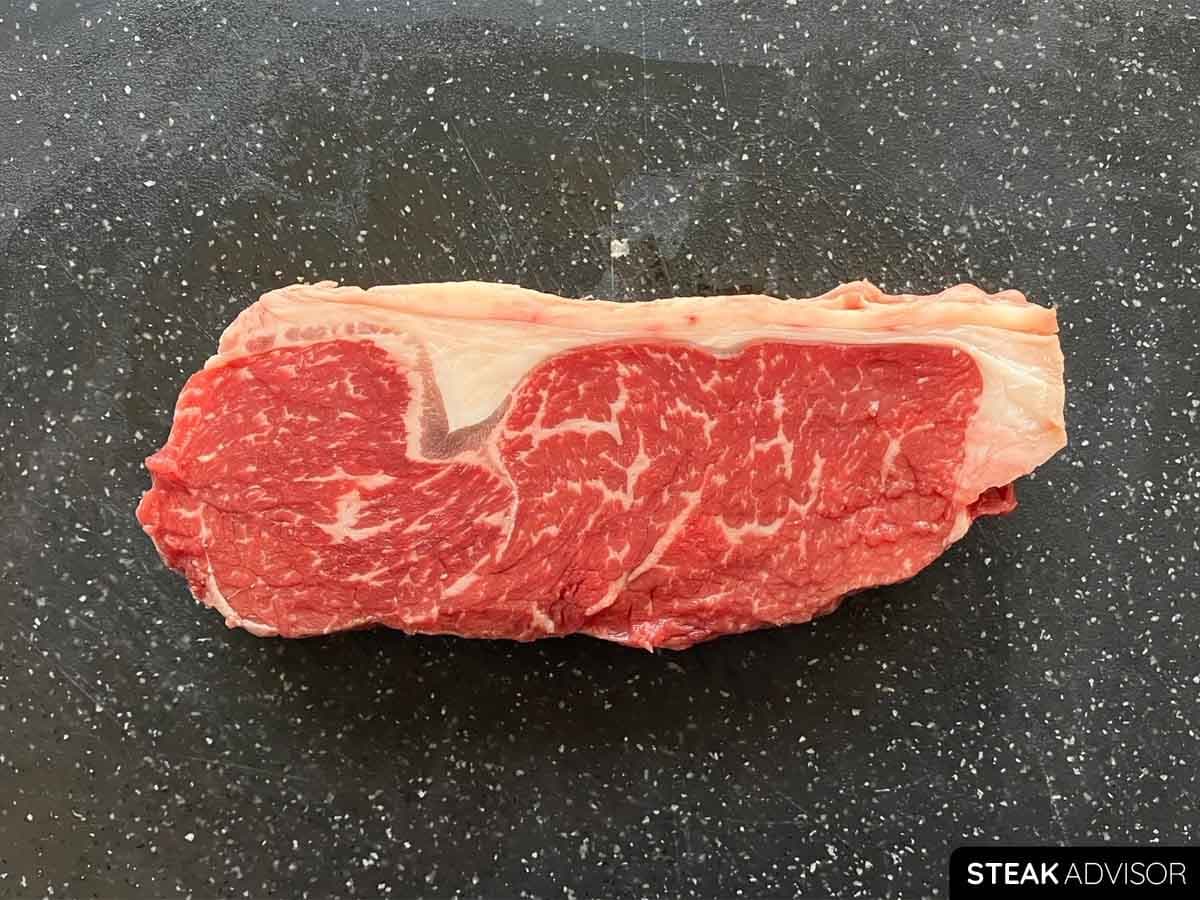

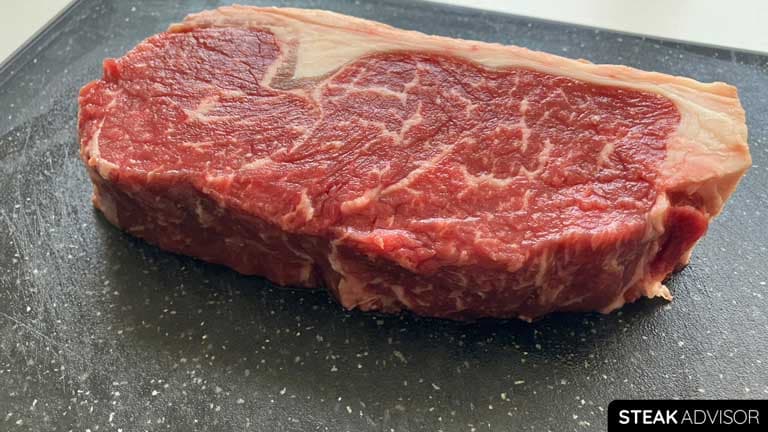
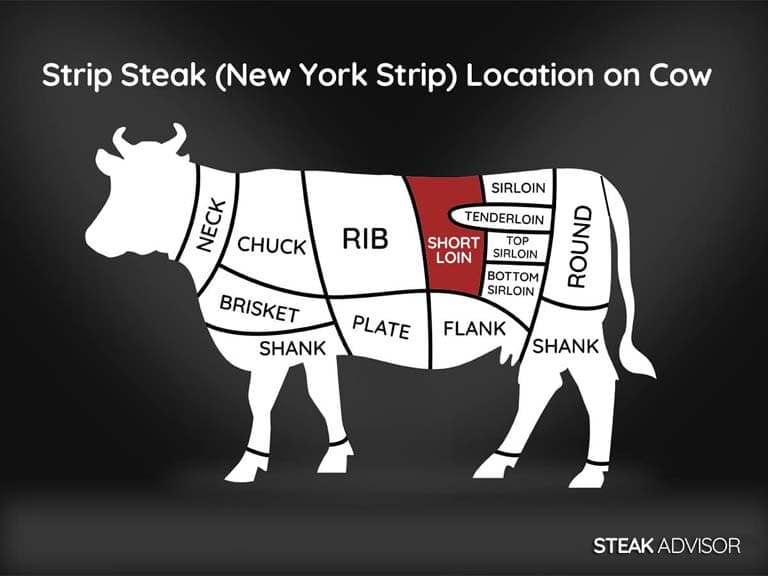
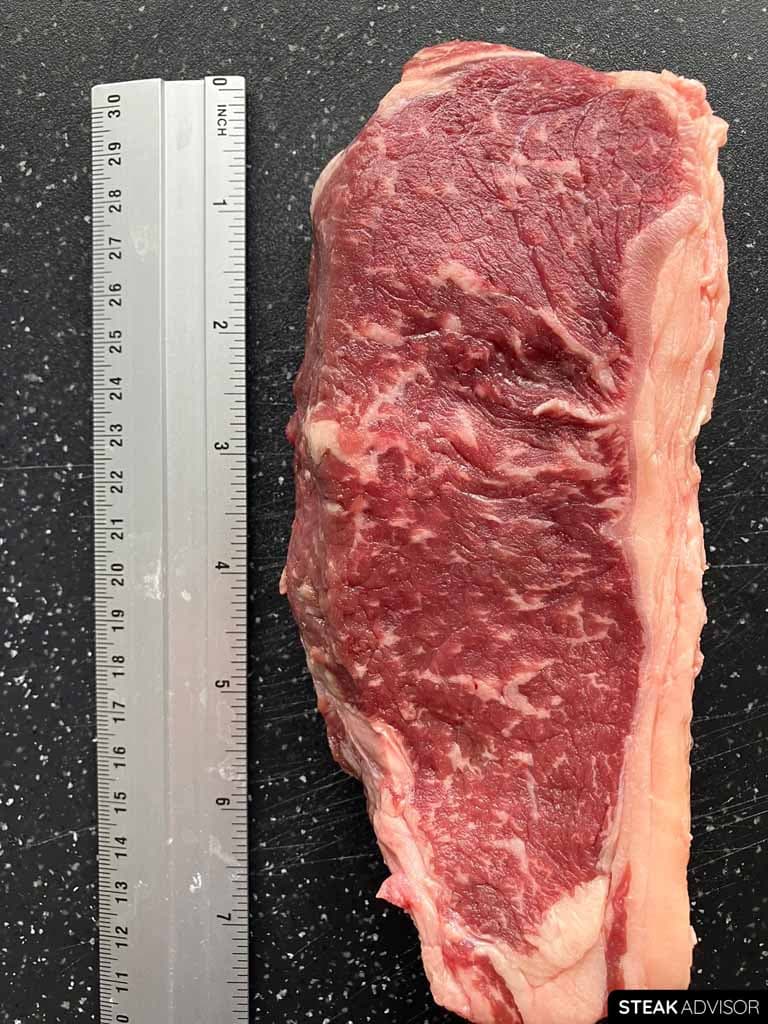
A New York strip steak, also known as a strip steak or Kansas City strip, is a premium cut from the short loin along the back of the cow. It has a bold, beefy flavor, moderate marbling, and a tender texture with a noticeable chew. The amount of marbling depends on the beef grade, so you can choose a leaner steak or a richer, more heavily marbled one. New York strip is leaner and slightly firmer than ribeye, but it still offers an excellent balance of flavor and tenderness.
I like New York strip because it is flavorful and straightforward to prepare, making it a good choice for beginners. The main downside is its high price, as it is considered a premium steak cut.
The name “New York strip” is commonly linked to Delmonico’s, the historic New York City restaurant that helped popularize strip steak in the nineteenth century.
What Are the Other Names for Strip Steak?
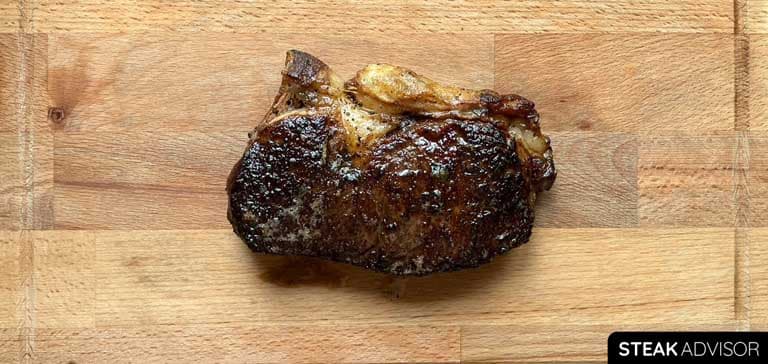
Here are some of the most popular other names for the strip steak in the United States:
- New York Strip
- Kansas City strip steak
- Strip loin steak
- Top loin steak
- Ambassador steak
- Hotel cut steak
- Hotel-style steak
- Club steak
- Boneless club steak
- Veiny steak
- Shell steak
- Delmonico steak
- Strip steak
Please note that “Delmonico steak” and “Club Steak” have been used to refer to various cuts of beef, not specifically the strip steak.
Where Does the Strip Steak Come From on a Cow?
The strip steak comes from the short loin, a section of the cow that doesn’t get much exercise. Because of this, the meat stays tender, which is one of the reasons it’s so popular.
The short loin is part of the larger loin primal, known for some of the most tender cuts of beef, including the famous tenderloin. You can also get a bone-in version of the strip steak, where it’s attached to a smaller portion of the tenderloin. This cut is known as a porterhouse or T-bone steak.
Strip Steak Nutrition Facts
| Nutrition | Portion size: 3 oz = 85 g |
|---|---|
| Calories | 171 kcal |
| Total Fat | 6-8 g |
| Protein | 24.8 g |
| Zinc | 4.65 mg |
| Potassium | 308 mg |
| Vitamin B-6 | 0.516 mg |
| Vitamin B-12 | 1.55 µg |
Data source: USDA.
What Does Strip Steak Taste Like?
Strip steak has a strong, beefy taste and a decent tenderness with a satisfying chew. Remember, though, that its taste and texture can change based on the steak’s grade, especially the amount of marbling it has.
Does The Strip Steak Have a Bone?
A strip steak is typically sold as a boneless cut, though a bone-in version is also available. Some people prefer the bone-in cut because it looks attractive on the plate. But no matter which version you choose (bone-in or boneless), please remember that the flavor stays the same.
Is Strip Steak Tender or Tough?
Strip steak is undoubtedly one of the best cuts of beef because it has great flavor, nice marbling, and a tender texture. It is not as tender as a ribeye or filet mignon, but it offers a strong, beefy taste that many people love. Plus, it’s easy to cook, which makes it a popular choice for beginners.

Is Strip Steak Expensive?
Strip steak is pretty reasonably priced – it’s not the cheapest, but it won’t break the bank either. It’s usually less expensive than high-end cuts like filet mignon or ribeye, though the price can vary based on beef grade, the specific cut, and where you buy it. To save some money, consider buying in bulk or looking for deals at your local grocery store or online butcher shop.
What is The Ideal Thickness for a Strip Steak?
The ideal thickness for a strip steak is 1.5 to 2 inches (3.8 to 5 cm). This thickness gives you that perfect balance – a beautifully seared, crispy crust while keeping the inside juicy and evenly cooked. If the steak is too thick, you might struggle to cook it through without burning the outside, and if it’s too thin (under 1 inch or about 2.5 cm), it could overcook before you even get a chance to develop that delicious crust.