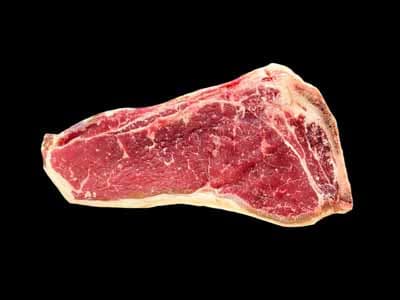
A bone-in tenderloin steak is simply a tenderloin steak with the bone still attached. In terms of flavor and tenderness, it is the same as boneless tenderloin because both are cut from the same muscle. The main differences are how they look and how they cook.
The bone gives the steak a more impressive appearance. However, when pan-searing a bone-in tenderloin steak, the bone can prevent the meat from lying flat against the pan, resulting in an uneven crust. It also slows down cooking in the area closest to the bone. As a result, that part may remain less done than the rest of the steak and seem juicier. The bone itself does not add flavor.
Bone-in tenderloin is one of the most expensive steak cuts. Its impressive presentation and exceptional tenderness make it a go-to choice for special occasions, especially for people who do not eat steak often but want something luxurious when they do. However, its mild flavor and high price lead many steak lovers to consider it overrated, particularly those who value bold, beefy flavor over tenderness.
What Are the Other Names for Bone-in Tenderloin Steak?
Here are the most popular other names for the bone-in tenderloin steak in the United States:
- Filet on the Bone,
- Bone-in Filet Mignon,
- Chateaubriand (Bone-In).
Where Does a Bone-in Tenderloin Steak Come From on a Cow?
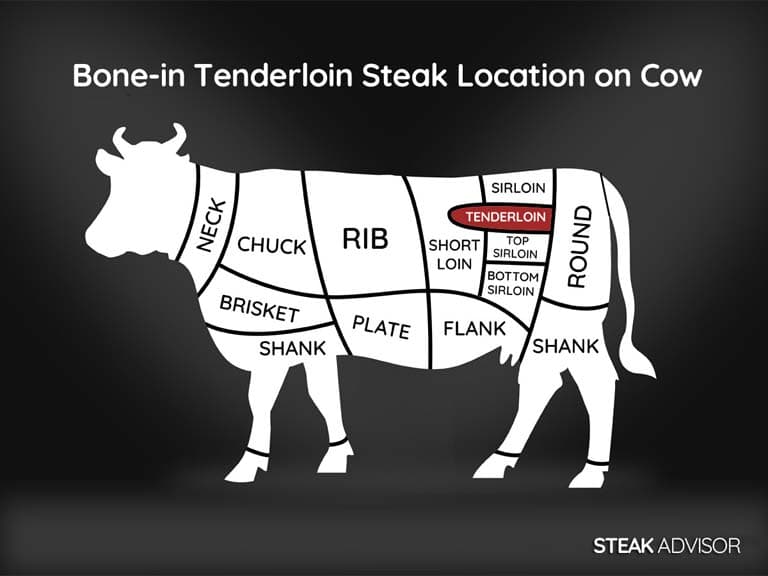
The bone-in tenderloin steak comes from the loin primal of a cow, specifically the tenderloin muscle that runs along the spine. Butchers cut it with the bone still attached.
Is Bone-in Tenderloin Better than Boneless?
Bone-in tenderloin looks more impressive than boneless tenderloin, which adds to the overall eating experience. However, there is no difference in flavor or tenderness between the two.
The meat near the bone can seem juicier because the bone slows down cooking in that area. As a result, the meat closest to the bone remains less done than the rest of the steak and retains more moisture. The bone itself does not add flavor or make the meat naturally juicier.
Cooking bone-in tenderloin on a flat surface like a pan can be problematic. The bone makes it harder for the steak to cook evenly inside since it prevents full contact with the pan. This uneven contact makes it harder to achieve a consistent sear and crust. On the other hand, boneless tenderloin (filet mignon) sticks better to the pan and cooks more evenly, which makes it easier to get that perfect sear.
Boneless is the way to go if you want a perfectly pan-seared steak. It cooks more evenly and gives you that perfect crust every time. Bone-in tenderloin, however, is better if you plan cooking with methods like grilling, where the heat surrounds the steak, so the bone doesn’t interfere, and you still get an even cook.
Choose bone-in if presentation matters more to you and you do not mind a slightly more difficult cooking process. Choose boneless if you want easier, more even cooking, especially in a pan. Both taste the same.
What Are the Best Methods for Cooking Bone-in Tenderloin Steak?
Here are the best cooking methods for bone-in tenderloin steak:
- Grilling: This is one of the best methods because the heat surrounds the bone-in tenderloin steak, helping it cook evenly. Start by searing the steak over high, direct heat to create a beautiful crust. Then, move it to indirect heat and cook until it reaches your desired temperature. This method highlights the steak’s flavor, guarantees even cooking, and delivers a perfect crust.
- Sous Vide and Sear: Cooking the steak sous vide lets you control the temperature precisely, ensuring even doneness from edge to edge. A quick sear afterward adds a nice crust, though getting that perfect sear can be tricky with a pan because of the bone. If that’s the case, finishing it on the grill will give you better results.
- Reverse Searing: This method is perfect for getting an even cook throughout the steak. It starts with slow, low-temperature cooking and finishes with a quick sear over high heat to create a delicious crust.
- Pan-Seared and Oven-Finished: Searing the steak in a hot pan gives it a nice crust, but how well it sears can depend on the shape of the bone and how the steak sits in the pan. Once it’s seared, finishing it in the oven makes it easier to cook the steak evenly and hit the perfect temperature throughout.
- Pan-Seared Only: It’s a fast and easy option, but the bone usually makes it difficult to get an even sear. Since the meat doesn’t always sit flat on the pan, getting a nice crust might be harder or impossible.