

The term “Wagyu” literally means Japanese (“Wa”) cow (“gyu”) and refers to Japanese beef cattle breeds. Because not all Wagyu beef is the same, Japan uses an official grading system created by the Japanese Meat Grading Association (JMGA) to classify it and make it easier to judge its overall quality and value.
In this guide, I’ll explain how the Japanese Wagyu grading system works, what grades like A4 and A5 actually mean, and whether A5 Wagyu is always worth the higher price.
If you want to learn more about Wagyu itself before getting into the grading system, check out my full guide on what Wagyu beef is.
How Does the Japanese Wagyu Beef Grading System Work?
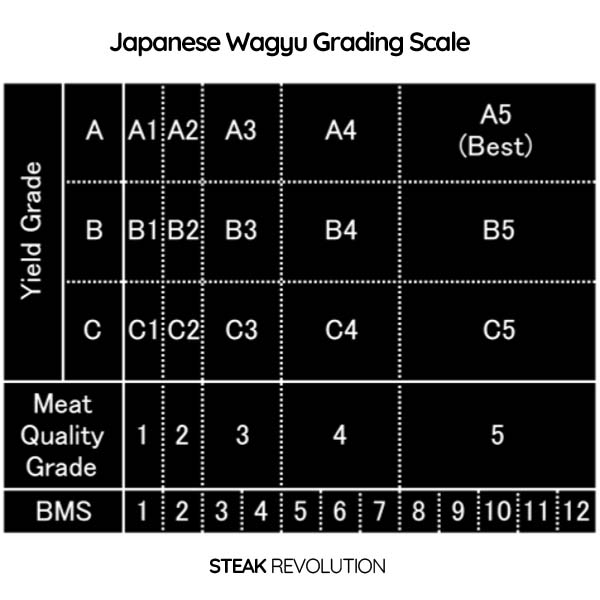
The Japanese Wagyu beef grading system is based on two separate scores: Yield Grade and Meat Quality Grade.
The Yield Grade, shown as A, B, or C, measures how much usable meat the carcass produces. The Meat Quality Grade, shown as a number from 1 to 5, evaluates the overall quality of the beef.
The Meat Quality Grade is based on four key factors: marbling (BMS), meat color and brightness (BCS), firmness and texture, and fat color, luster, and quality (BFS). The final quality grade is determined by the lowest score among those four factors. I’ll explain each of these in more detail below and include graphics to make the whole grading system easier to understand.
Yield Grade Explained
Yield grade refers to the amount of usable meat a carcass produces. It is labeled A, B, or C, with A representing the highest yield and C the lowest. In simple terms, a higher yield grade means more meat from the carcass.
| Grade | Yield |
|---|---|
| A | 72% and above |
| B | 69%-72% |
| C | Below 69% |
Meat Quality Grade Explained
Meat Quality Grade refers to the overall quality of the beef. It is scored from 1 to 5, with 5 representing the highest quality and 1 the lowest. In simple terms, a higher Meat Quality Grade generally indicates better marbling, appearance, texture, and fat quality.
Beef Marbling Score (BMS)
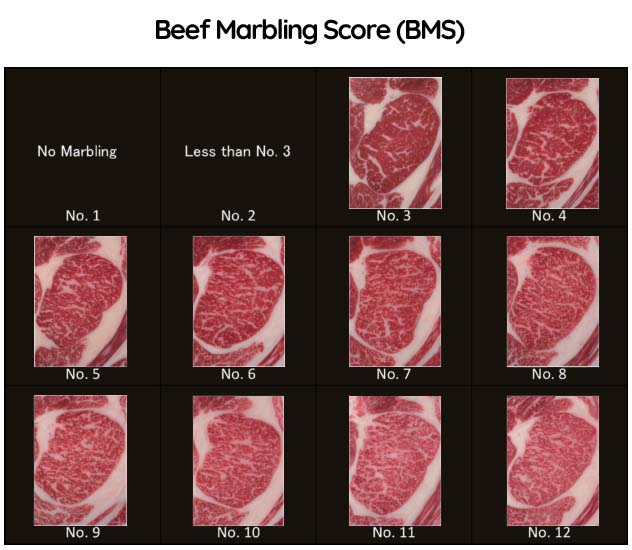
Marbling (intramuscular fat) is one of the main reasons Japanese Wagyu beef is so highly prized. The Beef Marbling Score (BMS) measures how much intramuscular fat the beef has. It is scored on a scale from 1 to 12, with 1 being the lowest and 12 the highest. In simple terms, the more marbling the beef has, the higher the BMS.
| Grade | BMS No. |
|---|---|
| 5 | No. 8 – No. 12 |
| 4 | No. 5 – No. 7 |
| 3 | No. 3 – No. 4 |
| 2 | No. 2 |
| 1 | No. 1 |
Beef Color Standard (BCS)
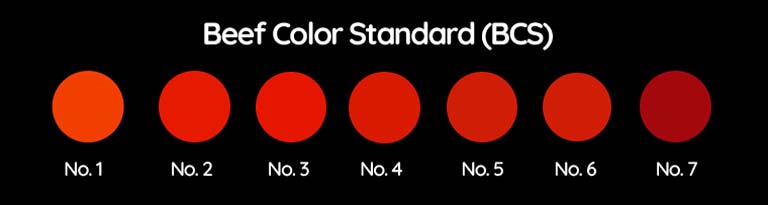
The Beef Color Standard (BCS) measures the color and brightness of the meat. It is graded on a scale of 1 to 5, with 5 being the highest. Beef with the ideal color and brightness receives a higher score, while meat that is too dark or too light is graded lower.
| Grade | Beef Color Standard (BCS) | Color B.C.S. No | Brightness |
|---|---|---|---|
| 5 | Very good | No. 3 – No. 5 | Very good |
| 4 | Good | No. 2 – No. 6 | Very good |
| 3 | Average | No. 1 – No. 6 | Average |
| 2 | Below Average | No. 1 – No. 7 | Below average |
| 1 | Inferior | A Grade, except 5 – 2 |
Beef Fat Standard (BFS)
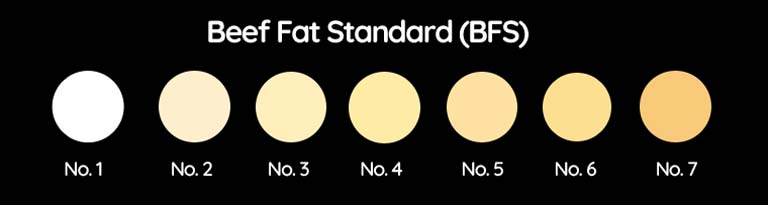
The Beef Fat Standard (BFS) measures the color, luster, and overall quality of the fat. It is graded on a scale of 1 to 5, with 5 being the highest. In general, fat that looks lighter, brighter, and more lustrous receives a higher grade, while darker, less shiny fat is rated lower.
| Grade | Fat Color | Beef Fat Standard (BFS) | Luster and Quality |
|---|---|---|---|
| 5 | Excellent | No. 1 – No. 4 | Excellent |
| 4 | Good | No. 1 – No. 5 | Good |
| 3 | Average | No. 1 – No. 6 | Average |
| 2 | Below average | No. 1 – No. 7 | Below average |
| 1 | Inferior | A grade | Except 5 – 2 |
Firmness and Texture
The final factor in the Japanese Wagyu grading system is firmness and texture. This part of the grading system evaluates how firm the meat is and how fine and uniform its texture appears. It is scored on a scale from 1 to 5, with 5 being the highest grade. In simple terms, beef with a firm texture and fine muscle structure receives a higher score.
| Grade | Firmness | Texture |
|---|---|---|
| 5 | Very good | Very fine |
| 4 | Good | Fine |
| 3 | Average | Average |
| 2 | Below average | Below average |
| 1 | Inferior | Coarse |
What Do A1, A2, A3, A4, and A5 Mean?
If you’ve ever seen labels like A4 or A5 and wondered what they actually mean, the answer is pretty simple. These grades combine the two parts of the Japanese beef grading system: the letter shows the Yield Grade, and the number shows the Meat Quality Grade.
So, A5 means the beef received an A for yield and a 5 for meat quality, which makes it the highest possible grade in the Japanese beef grading system. On the other end of the scale, C1 is the lowest possible grade. Since the system combines three yield grades (A, B, C) with five meat quality grades (1-5), there are 15 possible grade combinations. In practice, A3, A4, and especially A5 are the Japanese Wagyu grades you’ll come across most often in export and specialty retail markets.
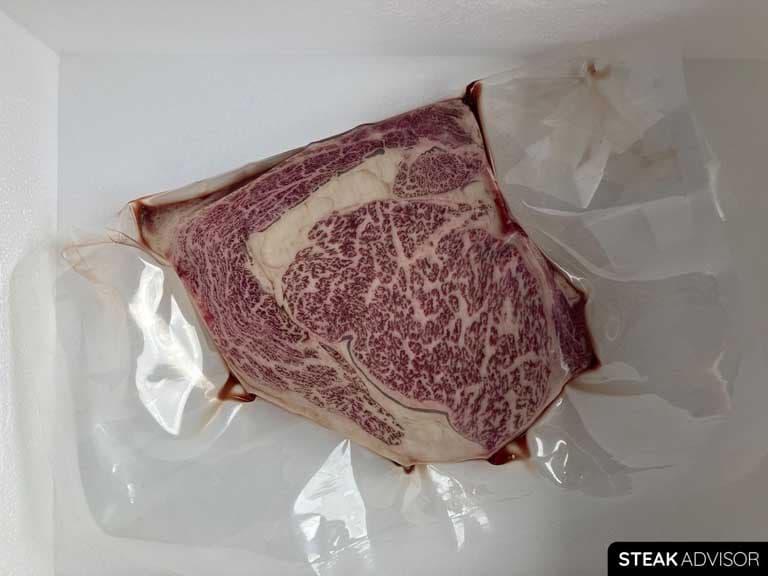
What Is the Difference Between A4 and A5 Japanese Wagyu?
The main difference between A4 and A5 Japanese Wagyu lies in the overall quality score, especially the level of marbling. A5 is the highest possible grade and is known for its extremely rich marbling, buttery flavor, and very soft texture. A4 is just one step below, but it is still extremely tender, flavorful, and heavily marbled, just not quite to the same level as A5.

Because A5 Wagyu is the highest grade, it comes with a higher price tag than A4. But that doesn’t automatically make it the better choice for everyone. Some people actually prefer A4 because it’s still incredibly tender, flavorful, and well marbled, while feeling just a little less rich and easier to enjoy in a larger portion.
For me, A4 is a great option if you want the Japanese Wagyu experience without paying A5 prices. It’s usually more affordable, but it still has everything people love about highly graded Wagyu.
Why Is Japanese Wagyu Beef Graded?
Japanese Wagyu beef is graded so buyers and sellers have a clear, standardized way to judge both yield and overall quality. The system helps measure how much usable meat a carcass produces and how good that beef is in terms of marbling, appearance, texture, and fat quality.
That matters even more with Japanese Wagyu because it’s one of the most expensive types of beef on the market. When people are paying that much, they want a reliable way to understand what they’re actually getting. In simple terms, the grading system helps support fair trading, maintains more consistent quality, and gives buyers more confidence that the beef matches the grade they’re paying for.
Does the Type of Wagyu Affect the Grade?
Yes, but not in the way most people think. In Japan, Wagyu beef is graded under the official Japanese beef grading system, which evaluates both yield and meat quality. That means grades like A4 and A5 come from that grading system, not just because the beef is labeled Wagyu. This matters because not all beef sold as Wagyu is graded the same way.
For example, American Wagyu and Australian Wagyu are evaluated under different local grading systems, so their grades are not directly comparable to Japanese Wagyu grades.
