

Wagyu beef is famous for its intense marbling, rich flavor, and tender texture. But that’s not the only reason it costs so much. The high price is due to a combination of factors. From the cattle’s genetics and how they are raised and fed to Japan’s strict tracking system and the cost of exporting it, several things make Wagyu much more expensive than regular beef.
Here are the main reasons why Wagyu beef is so expensive:
- The unique genetics of Wagyu cattle
- The long feeding period and specialized feeding methods
- Limited land and small-scale production
- The high labor costs in Japan
- Low-stress raising and higher care standards
- Strict traceability and authentication systems
- High global demand
- Import and distribution costs
Below, I’ll explain each reason in more detail.
1. The Unique Genetics of Wagyu Cattle
Authentic Japanese Wagyu comes from four native Japanese breeds: Kuroge Washu, Akage Washu, Nihon Tankaku Washu, and Mukaku Washu. These breeds are known for genetics that help produce high-quality beef. However, the extreme marbling most people associate with Wagyu is mainly a trait of Japanese Black cattle, also known as Kuroge Washu.
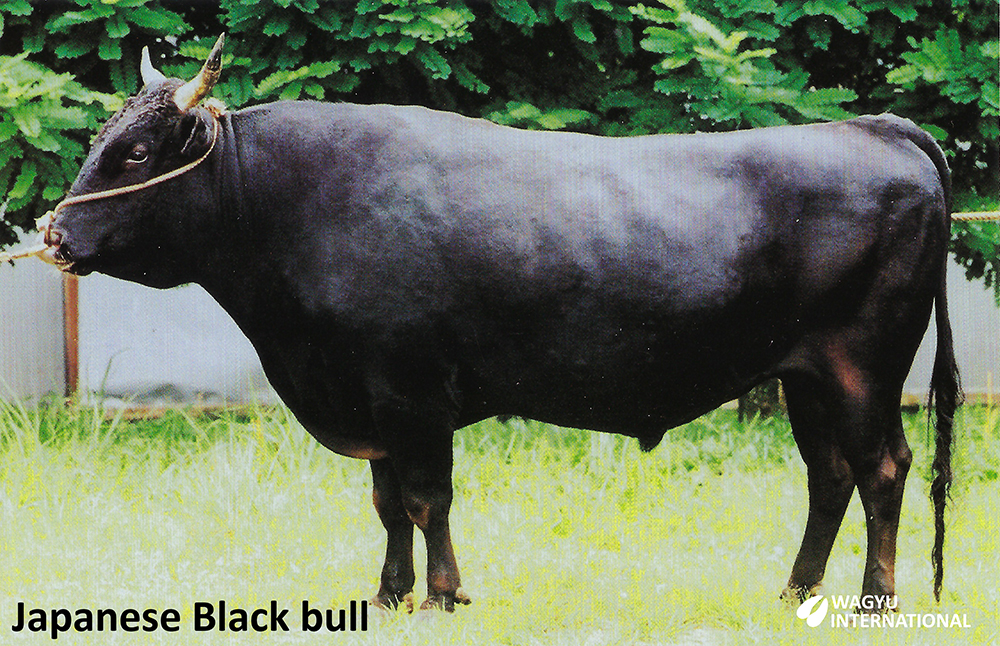
That marbling (intramuscular fat) is what gives Wagyu its rich flavor, juiciness, and almost buttery texture when cooked properly. The fat spreads more evenly throughout the muscle than it does in regular beef, which is why Wagyu looks so different from most other steaks. Just look at the photo below. An A5 Japanese Wagyu ribeye has marbling unlike any other.
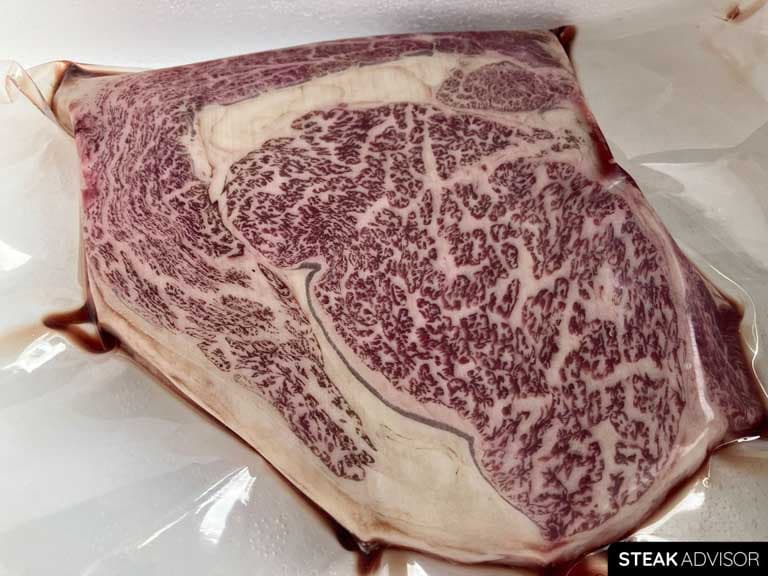
Of course, genetics are not the only thing that matters. Feeding, raising methods, and overall care also play a major role in the final quality of the beef. But without the right genetics, it’s impossible to achieve the kind of marbling Wagyu is known for. These factors are also part of the reason Wagyu beef is so expensive.
If you want to learn more about the four Wagyu breeds, check out this guide from Japan’s Ministry of Agriculture.
2. Longer Feeding Periods and Specialized Diets
Raising authentic Japanese Wagyu takes much longer than raising regular beef cattle. In Japan, Wagyu cattle are typically raised for around 600 to 700 days. During that time, breeders focus on steady weight gain and a high level of fat development, which are among the main reasons Wagyu develops such intense marbling.
Diet also plays a big role. Most Wagyu cattle are fed several times a day with a high-energy diet that usually includes grain, hay, rice straw, and other carefully selected feed ingredients. The goal is to help the animals gain weight gradually and consistently, without using growth hormones.
This long feeding period makes production much more expensive. The breeder has to pay for feed, housing, labor, and daily care for far longer than with standard beef cattle. So it’s not just the quality of the diet that increases the price. It’s also the time and money required to raise the animal properly.
3. Limited Land and Small-Scale Production
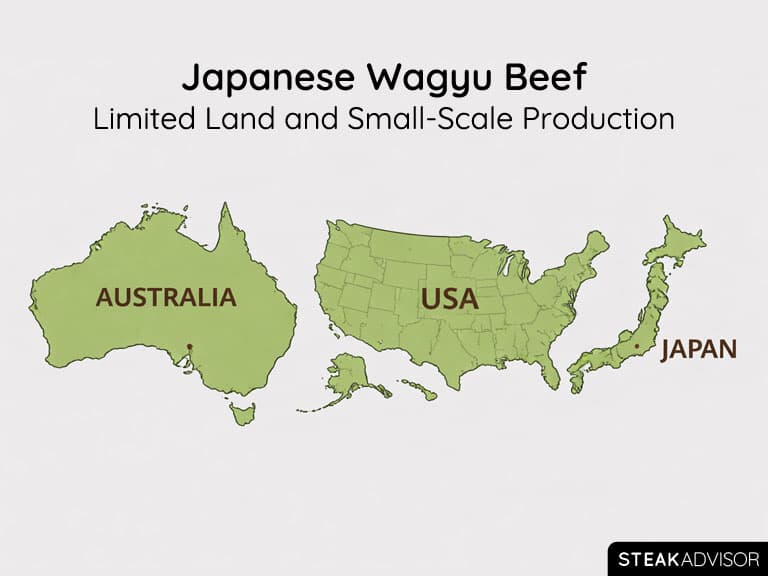
Japan’s limited land is another reason why Wagyu beef is so expensive. Unlike countries such as the United States or Australia, Japan does not have the same amount of open space for large-scale cattle farming. That makes production more limited and more expensive.
As a result, Wagyu production in Japan is relatively small and tightly controlled. Farmers usually raise fewer cattle, which allows for better care and more consistent quality, but it also means lower overall supply. And when supply is limited, prices tend to stay high.
4. High Labor Costs in Japan
Raising Wagyu cattle takes a lot of time, skill, and daily care. Farmers and workers must pay close attention to feeding, health, and overall cattle management throughout the entire breeding period. That makes the process much more labor-intensive than standard beef production.
On top of that, labor costs in Japan are also relatively high. When you combine that with the long feeding period and the level of care Wagyu requires, it becomes easier to understand why Wagyu beef costs so much.
5. Low-Stress Raising Conditions
Low-stress raising conditions are another reason authentic Wagyu is so expensive. In Japan, breeders focus heavily on animal welfare and consistency. The goal is not to “pamper” the cattle with things like massages, as some myths suggest. It’s to raise them in a calm, controlled environment that supports steady growth and high meat quality.
Wagyu cattle are provided with proper shelter, regular access to water, and carefully managed living conditions to help reduce stress. That matters because stress can negatively affect both the animal’s health and the final quality of the beef. A more controlled and comfortable environment helps breeders produce beef with better marbling, texture, and overall consistency.
Of course, this kind of care also increases production costs. It takes more time, more attention, and better overall management. But it’s one of the factors that helps make Wagyu beef so amazing.

6. Strict Traceability and Authentication Systems
Japan takes Wagyu traceability very seriously. Every authentic Wagyu animal gets its own ID number at birth, and that number lets you check its full history. You can see details such as the breed, birth date, bloodline, companies involved in distribution or export, and other information about the animal.
The reason is simple: when something is this expensive, people want proof that it’s real. And with Wagyu, that matters a lot because fake or misleading “Wagyu” products are everywhere, especially outside Japan. This traceability makes verification much easier and helps prevent regular beef from being sold as authentic Japanese Wagyu. It also adds extra work, paperwork, and control at every stage, increasing overall costs.
If you have a Wagyu ID code, you can use it to check the animal’s details in the official database – Wagyu Cattle Search. That level of traceability is one of the reasons Japanese Wagyu has built such a strong reputation worldwide.
7. High Global Demand
Wagyu beef has become much more popular worldwide, and that growing demand is another reason why it’s so expensive. More and more people want high-quality beef, but the supply of authentic Wagyu is still limited.
And that’s really the main issue. When demand keeps growing, but supply stays low, prices go up. That’s exactly what happened with Wagyu. Its global popularity increased, exports grew, and its limited availability pushed prices even higher.

8. Import and Distribution Costs
Another thing that makes Japanese Wagyu so expensive is the cost of importing it to other countries. Shipping, customs fees, taxes, and distribution all add extra cost before the beef even reaches the buyer.
So it’s not just the production in Japan that makes Wagyu expensive. Getting it overseas and into the market adds another layer of cost, which pushes the final price even higher.
How Much Does Wagyu Cow Cost in Japan?
Wagyu cattle in Japan can sell for very high prices, especially at auction. In some cases, a single animal can cost around $30,000. The most prized Matsusaka cows can sell for close to $100,000, and sometimes even more. In rare cases, the price can go much higher. One of the best-known examples comes from 2002, when a Matsusaka cow reportedly sold for around $400,000 (source).
How Much is a Wagyu Steak?
The price of a Wagyu steak depends on the cut and the quality. Japanese A5 Wagyu is usually the most expensive, so even one steak can cost a lot.
For example, a 16 oz (454 g) A5 Japanese Wagyu New York strip or ribeye costs around $150. And if you’re looking at filet mignon, the price can get even higher. A 5 oz (142 g) A5 Japanese Wagyu filet can cost around $100, which means a full pound could easily go over $300.
That’s a lot for a steak, but Wagyu isn’t regular beef. The marbling, quality, and limited supply all push the price much higher.
Why is A5 Wagyu Beef so Expensive?
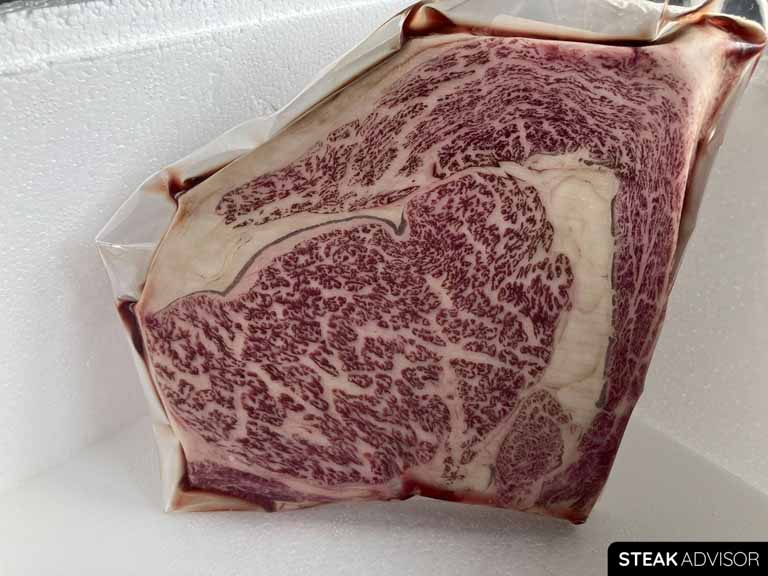
A5 is the highest grade in the Japanese Wagyu grading system, so it’s basically the best of the best. It’s known for exceptional marbling, great texture, and overall top-tier quality. When cooked properly, it’s incredibly tender, juicy, and rich.
But that’s not the only reason it’s so expensive. A5 Wagyu is also rare, produced under very strict standards, and available in limited quantities. So you’re not just paying for the flavor and texture. You’re also paying for the quality level, the production process, and the fact that there isn’t much of it. That’s what makes A5 Wagyu one of the most expensive types of beef in the world.
Is Wagyu Worth the Price?
That depends on what you expect from it. If you’re looking for a regular steak dinner, probably not. Wagyu is extremely rich, very fatty, and much more expensive than regular beef. For most people, it makes more sense as a special treat than something you eat often.
But if you enjoy highly marbled beef and want to try something very different, then yes, it can absolutely be worth it. Wagyu offers a texture and richness that regular beef doesn’t have. Just don’t expect it to replace a normal steak. It’s a different experience. Personally, I’d still rather eat a good Prime or well-marbled Choice steak for everyday meals.
So is Wagyu worth the price? In my opinion, for a special occasion, yes. For everyday eating, not.
