
Kobe beef is one of the most famous and expensive types of Japanese wagyu, known for its exceptional marbling, tenderness, and rich flavor. But despite all the hype, a lot of people still don’t really know what Kobe beef actually is. The term gets misused all the time, especially outside Japan, which makes the whole thing more confusing than it should be.
In this guide, I’ll explain exactly what Kobe beef is, what makes it so special, how it tastes, why it costs so much, and how to buy it safely.
What is Kobe Beef?
Kobe beef is a premium type of Japanese wagyu that comes from Hyōgo Prefecture, the region around the city of Kobe. It’s not a cattle breed, and it’s not a quality grade like USDA Prime in the United States or A4 and A5 in Japan. Instead, Kobe beef is a protected regional product selected from Tajima cattle, a bloodline of Japanese Black cattle raised in Hyōgo Prefecture and certified by the Kobe Beef Marketing & Distribution Promotion Association.
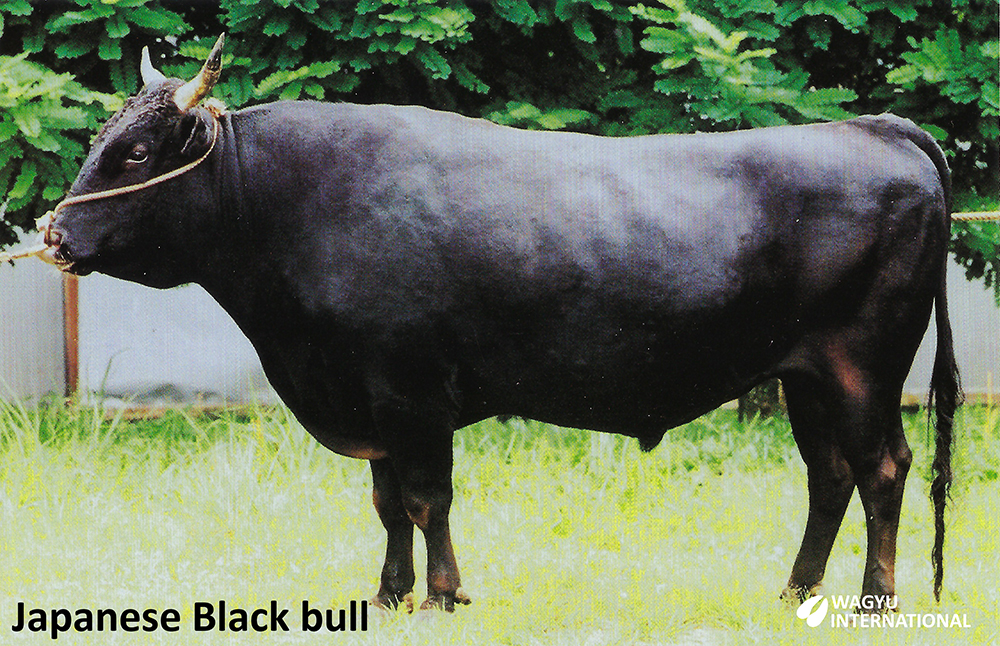
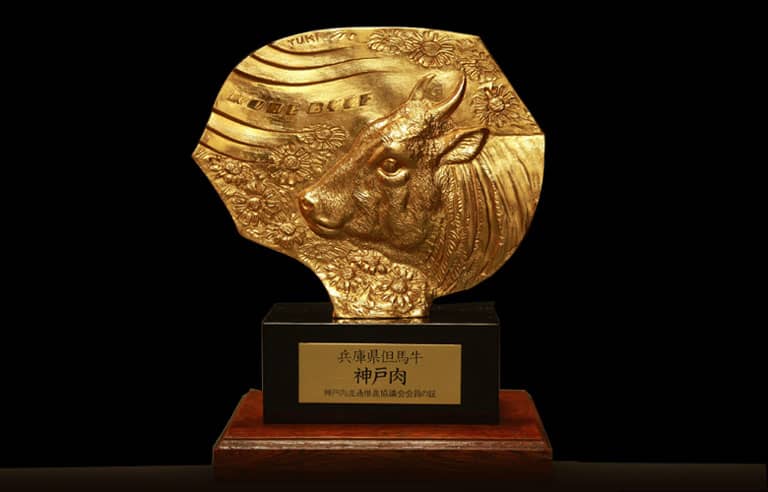
What’s interesting is that Kobe beef is legally protected in two different ways. It has registered trademarks, such as the chrysanthemum mark and the small bronze Kobe Beef statuette, and it’s also protected under Japan’s GI system. That GI status matters because it ties Kobe beef directly to Hyōgo Prefecture and strict production standards.
So no, Kobe beef isn’t just a fancy name people throw around. It’s a legally protected regional product with very specific rules behind it. You can read more about this on the official Kobe beef registered trademarks page.
What makes Kobe beef unique isn’t just the impressive marbling or the fact that it comes from Japan. The real difference is the strict certification system behind it. For beef to be officially certified as Kobe beef, it has to meet a very specific set of requirements.
Authentic Kobe beef comes only from Tajima-strain Japanese Black cattle that are born, raised, and processed in Hyōgo Prefecture. And that’s only part of the story. The beef also has to meet strict grading standards to earn the Kobe name. So no, it’s not enough for the beef to come from Japan or have beautiful marbling. If it doesn’t meet all of the official standards set by the Kobe Beef Marketing & Distribution Promotion Association, it isn’t real Kobe beef.

What Are the Classification Standards for Kobe Beef?
To qualify as authentic Kobe beef, the cattle must meet a very specific set of requirements:
- The cattle must be purebred Tajima cattle from the Tajima line of Japanese Black cattle born, raised, and fattened in Hyōgo Prefecture.
- Only a heifer or steer can qualify as Kobe beef.
- The cattle must be between 28 and 60 months old.
- The cattle must be slaughtered at a slaughterhouse in Hyōgo Prefecture.
- The beef must have a Beef Marbling Score (BMS) of 6 or higher.
- The meat quality score must be 4 or higher.
- The yield score must be A or B.
- The gross carcass weight must be 499.9 kg (1,102 pounds) or less. There’s also a minimum carcass weight requirement: at least 270 kg (595 pounds) for cows and 300 kg (661 pounds) for steers.
- The meat must have a fine texture and excellent firmness.
Note
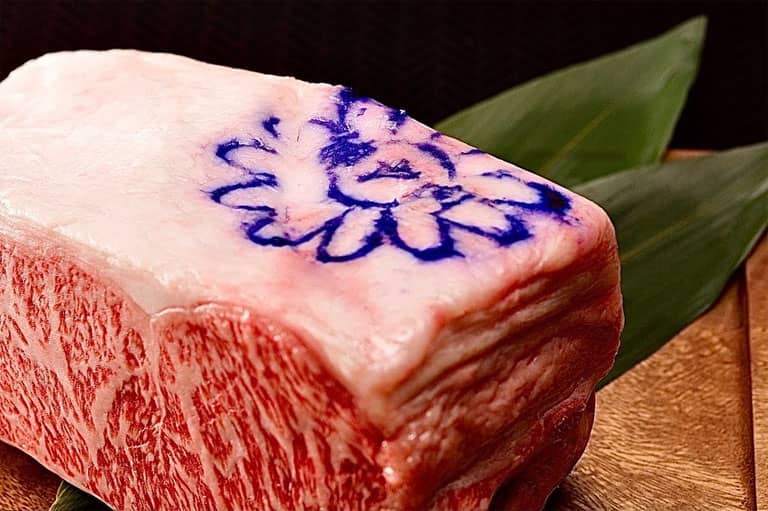
Only beef officially certified as Kobe beef receives the Japanese chrysanthemum stamp. That mark shows the beef met the official standards set by the Kobe Beef Marketing & Distribution Promotion Association. Certified Kobe beef carcasses are stamped in four places with that mark.
For more detailed information, check out the official article on the classification criteria for Kobe beef.

Kobe Beef vs. Wagyu: What’s the Difference?
Please don’t confuse Kobe beef with wagyu beef. They’re not the same thing. Wagyu is a broad term that refers to Japanese cattle breeds, while Kobe beef is a specific wagyu product with much stricter certification standards. Every Kobe beef is wagyu, but not every wagyu qualifies as Kobe beef. Authentic Kobe beef comes only from Tajima cattle from Hyōgo Prefecture and must meet strict brand requirements to earn the Kobe name.
If you want a more detailed comparison, check out my article on Wagyu vs. Kobe Beef.
What Is the History of Kobe Beef?
The story of Kobe beef dates back to 1868, when the port of Kobe opened to foreign trade. As more foreigners arrived and settled in the city, Kobe quickly became an international port town where Japanese tradition and Western culture came together.
At that time, eating beef wasn’t common in Japan. According to the official Kobe beef story, Tajima beef was first eaten in Kobe by an Englishman who got a work cow from local farmers, tasted the meat, and was impressed by its flavor. Not long after that, foreign ships entering Kobe port started asking for beef, and that beef became known as “Kobe beef”.
That early connection to the port city of Kobe is a big part of why the name stuck. Even though the beef comes from Tajima cattle raised in Hyōgo Prefecture, Kobe was the first place it became known to foreigners.
Over time, Kobe beef grew from a local specialty into something known around the world. The official page even mentions that Barack Obama specifically ordered Kobe beef during his 2009 visit to Japan. It also includes the well-known story that Kobe Bryant’s first name came from Kobe City after his parents were so impressed by Kobe beef during a visit to Japan.
You can read the full story of Kobe beef on the official website.
What Does Kobe Beef Taste Like?
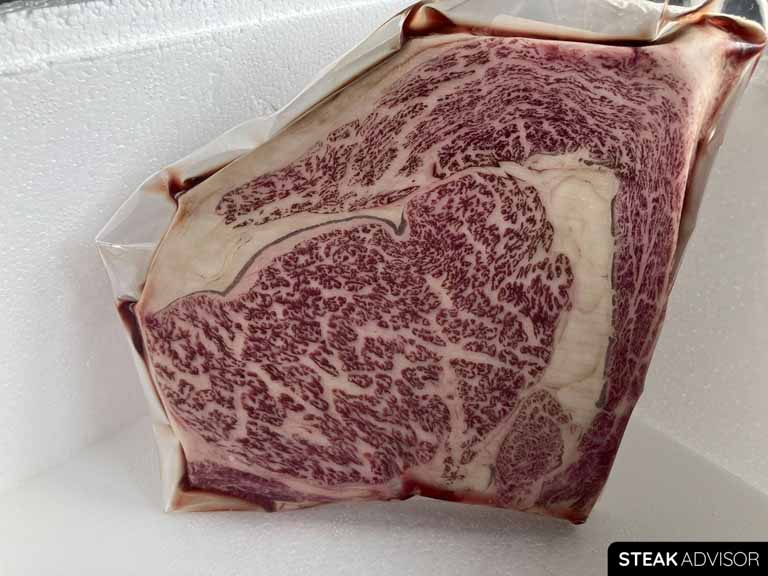
Kobe beef has a very rich, deeply savory flavor, with a noticeable buttery note and a slight sweetness from all that intramuscular fat (marbling). The fat is so evenly distributed throughout the meat that the texture turns out incredibly tender and juicy, almost melting in your mouth when cooked properly.
It’s a completely different experience from eating USDA Choice or even a well-marbled USDA Prime steak. Those cuts have a stronger, more traditional beefy flavor and are great as a regular full-size steak. Kobe beef is different. It’s so rich that it’s a better idea to enjoy it in a much smaller portion. And honestly, that’s probably a good thing, because Kobe beef is extremely expensive compared to most other types of beef.
Remember, you’re not eating Kobe beef because it tastes like a more intense version of a regular steak. You eat it for the experience: the extremely tender texture, the buttery richness, and the sweetness and juiciness that come from the melted fat.
How Much Does Kobe Beef Cost?
Kobe beef is one of the most expensive types of beef you can buy. Exactly how much it costs depends on the cut, portion size, and seller, but in most cases, you should expect to pay even several hundred dollars for a single steak.
A few examples from Holy Grail Steak Co. in the U.S. market (as of April 1, 2026):
- Kobe Japanese A5 Wagyu ribeye, 13 oz (368 g): $349 ($429.54/lb; $947.18/kg)
- Kobe Japanese A5 Wagyu strip steak, 14 oz (397 g): $349 ($398.86/lb; $879.34/kg)
- Kobe Japanese A5 Wagyu filet, 8 oz (227 g): $349 ($698.00/lb; $1,538.83/kg)
- BMS 12 Kobe Japanese A5 Wagyu ribeye, 14 oz (397 g): $399 ($456.00/lb; $1,005.31/ kg)
Source: Holy Grail Steak Co. A5 Japanese Wagyu collection page.
That’s another reason why most people don’t eat Kobe beef as a large, full-size steak. It’s simply too expensive.
Why is Kobe Beef so Expensive?
Kobe beef is expensive for a few simple reasons. It’s very rare, tightly regulated, expensive to raise, and costly to export outside Japan. On top of that, it’s widely considered one of the highest-quality types of beef in the world. When you combine all of that, the high price starts to make a lot more sense.
Here are the five main reasons why Kobe beef costs so much:
- Strict certification standards: To qualify as Kobe beef, the cattle must meet very specific standards set by the Kobe Beef Marketing & Distribution Promotion Association for breed, origin, age, carcass weight, marbling, overall meat quality, and more.
- A lot of care goes into raising the cattle: They are raised under tightly controlled conditions, which adds to the cost. It’s not just about feeding them. It’s the entire production process, from breeding to slaughter, that has to meet very strict standards.
- Limited supply: Authentic Kobe beef comes only from Tajima cattle raised in Hyōgo Prefecture, Japan. That alone makes the supply extremely limited. And because demand is high both in Japan and abroad, prices stay high.
- Exceptional quality: Kobe beef is famous for its intense marbling, extremely tender texture, and rich, buttery flavor. It’s widely considered one of the most luxurious types of beef in the world, and that kind of quality comes at a premium.
- High export and import costs: Outside Japan, Kobe beef becomes even more expensive due to transportation costs, import fees, cold-chain logistics required to keep the meat in perfect condition during shipping, and other related costs.

Is Kobe Beef Worth It?
I’d say yes, but only if you really enjoy highly marbled beef and understand what you’re paying for. Kobe beef isn’t the kind of steak you buy for a regular steak dinner. Kobe beef is more about the experience than the portion size, and that makes a big difference.
Kobe beef is known for its intense marbling, exceptional tenderness, and rich, buttery flavor. When cooked properly, the texture is incredibly soft and almost melts in your mouth. But whether it’s worth the high price really depends on what you expect from it.
Yes, Kobe beef tastes different from a regular steak. But don’t expect it to taste ten times better just because it costs ten times more. That’s not really how it works. The difference is noticeable, but it’s not only about a different flavor. In my opinion, the biggest difference is in the texture. Kobe beef is much more tender than a standard steak, and that’s what makes it stand out.
Personally, I enjoy Kobe beef, but only occasionally and usually in smaller portions. It’s simply too rich for me to eat as a large steak. For a regular steak dinner, I prefer a well-marbled USDA Choice, USDA Prime, or even American wagyu steak with a stronger, beefier flavor – something I can enjoy in a full-size portion without it feeling too heavy or too rich.
Where To Buy Authentic Kobe Beef in the United States?
If you want authentic Kobe beef in the United States, Crowd Cow, The Wagyu Shop, and Holy Grail Steak Co. are three of the best places to look.
All of them sell online and ship directly to your door, which is important because authentic Kobe beef is so rare that you will not find it at a local butcher shop or grocery store. That part matters more than it might seem. If you’re spending this much money, you want the real thing, not just wagyu with a fancy label. Authenticity is everything with Kobe beef.
For example, The Wagyu Shop includes a Certificate of Authenticity with every order. It also links directly on the product page to the official Kobe Beef Marketing & Distribution Promotion Association website, where you can verify the authenticity of the beef using the cattle ID included with your order. That is exactly the kind of thing I look for before buying something this expensive.
Here are the links to the Kobe beef pages on their websites:
- Crowd Cow: https://www.crowdcow.com/ranch/kobe-beef
- Holy Grail Steak Co: https://holygrailsteak.com/collections/kobe-beef
- The Wagyu Shop: https://wagyushop.com/collections/kobe-beef
For a first order, I would start with a smaller cut. Kobe beef is extremely rich, so jumping straight into a large steak is not always the best idea. A smaller piece is enough to see what it is all about without spending too much on something that might feel too heavy for your taste.
That’s one reason I like The Wagyu Shop and Crowd Cow for first-time buyers. They offer smaller cuts, like petite striploin steaks or even small cubes, so it’s much easier to try authentic Kobe beef without going all in on a big, expensive steak.
How to Verify Authentic Kobe Beef
The easiest way to verify whether your Kobe beef is authentic is to check it in the official Tajima Beef Certification System. All you need to do is visit the official verification page and enter the 10-digit individual ID number that came with the beef.
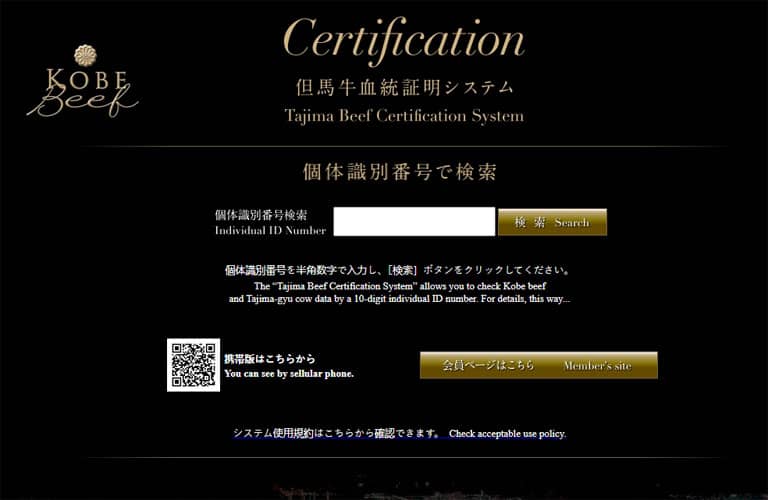
In most cases, online stores include this number with your order. If you don’t have it, ask the seller for it before or after buying. If you order Kobe beef at a restaurant, you can also ask the staff for the certificate details.
This is the best way to verify authenticity, as the Tajima Beef Certification System stores detailed information on each certified Kobe beef. You can use it to check important details, such as the origin of the cattle and production history.
Beware of Fake Kobe Beef
Authentic Kobe beef is extremely rare in the United States. As Kobe beef has become more popular, demand has increased while the supply has remained very limited. That combination creates the perfect situation for dishonest sellers and restaurants to mislead customers. Many places use terms like “Kobe” or “American Kobe” to attract attention, even when the beef is not authentic Kobe.
If you want to dig deeper into the problem of fake Kobe beef, take a look at Larry Olmsted’s article, Food’s Biggest Scam: The Great Kobe Beef Lie.
If you’re not sure whether the Kobe beef served at a restaurant is authentic, ask the waiter or chef to show you the certification or the individual cattle ID code. That’s one of the easiest ways to separate the real thing from marketing nonsense.
When buying Kobe beef online, things get a bit trickier, so you need to be more careful. Stick to sellers who can clearly prove what they’re selling. If they can’t show the certification or give you the individual cattle ID code, that should immediately make you suspicious.
Spotting fake Kobe beef just by looking at it isn’t always easy, especially if you haven’t seen the real thing before. But if you know what to ask for and where to check it, it becomes much harder for anyone to sell you fake Kobe beef.
