

Beef grades are one of the most important things to understand when choosing a steak because they tell you what kind of quality you can expect, especially in terms of marbling, tenderness, and overall eating experience.
If you don’t know the difference between the grades, it’s easy to overpay for a steak that isn’t worth the price or overlook options that offer better value. That’s why understanding beef grades matters. It helps you make more informed decisions and choose the right cut for your needs.
In this guide, I’ll focus primarily on USDA beef grades, since they’re the most commonly used standard in the United States. At the end, I’ll also cover other grading systems, including imported premium beef, so you can understand how they differ from USDA grades.
How is Beef Graded?
Not every country grades beef the same way. But across the most common systems, beef is graded by highly skilled meat graders using a combination of trained visual assessment and, in some cases, electronic measurements. The main factors they assess include marbling, animal/carcass maturity, lean color/texture/firmness, fat color and external fat, muscling or conformation, and yield (how much saleable lean meat the carcass will produce).
In the United States, beef is graded mainly by the USDA using two separate systems: quality grade and yield grade. The quality grade is based mainly on marbling and physiological maturity and is used to predict tenderness, juiciness, and flavor. The best-known quality grades are Prime, Choice, and Select. The yield grade estimates the amount of usable lean meat a carcass will produce and is scored from 1 to 5, with Yield Grade 1 indicating the highest cutability and Yield Grade 5 the lowest.
Keep in mind that the USDA assigns these grades to the whole carcass, not to individual steaks. Graders determine the quality grade by examining the ribeye cross-section between the 12th and 13th ribs, focusing mainly on marbling and maturity. That’s why two steaks with the same grade can still look slightly different.
To assess maturity, graders examine the size, shape, and ossification of the bones and cartilage, as well as the color and texture of the ribeye muscle. To assess marbling, they look at both the amount and distribution of intramuscular fat. In general, more marbling correlates to a higher quality grade.
If you want a more detailed explanation of how USDA grades beef, check out this article.
Is All Beef Graded?
No, not all beef is graded. In the U.S., processors can legally sell beef without a USDA grade as long as it passes inspection. USDA inspection is mandatory, except for some very small processing plants. Grading is optional. Since grading is a voluntary service that costs money, some processors skip it. But many of them still pay for it because it helps with marketing and gives buyers a clear, standardized signal of beef quality.
When you see a grade on a steak, it gives you a quick idea of what to expect. It’s not always a guarantee of top quality, and it’s not the only factor that determines whether a steak turns out tender and juicy or tough and chewy. But it’s still a useful reference point that helps you make a more informed decision when choosing a steak.
What Are the USDA Grades of Beef?
There are eight main USDA beef quality grades: Prime, Choice, Select, Standard, Commercial, Utility, Cutter, and Canner. There are also two additional grades related to tenderness: “USDA Tender” and “USDA Very Tender.”
In practice, though, the only grades most people need to care about are Prime, Choice, and Select. These are the ones you’ll usually see at grocery stores and steakhouses. In some cases, you might also come across the “Tender” and “Very Tender” labels, but they’re less common.
Let me explain what these grades actually mean and why they matter.
USDA Prime Beef

USDA Prime is the highest grade in the USDA beef grading system. It means the beef comes from young, well-fed cattle and has abundant marbling (intramuscular fat).
Marbling plays a major role in juiciness, tenderness, and flavor. As the steak cooks, the intramuscular fat melts, especially around 130–140°F (54–60°C), which makes the meat more tender and juicy. That’s why USDA Prime is the go-to choice for top steakhouses and high-end restaurants. If you like your steak cooked to medium-rare or medium, this is where Prime really stands out.
Prime beef is relatively rare, making up only about 10% of all USDA-graded beef in the United States, according to the USDA Market News Report from December 21, 2024. That’s one of the reasons it’s very expensive and mostly ends up in high-end restaurants. For most people, USDA Prime isn’t an everyday purchase but more of a special-occasion choice. That’s exactly how I treat it.
USDA Prime steak is ideal for quick, high-heat cooking methods like grilling or pan-searing. Its natural tenderness, juiciness, and rich marbling mean it does not need much beyond direct heat and proper timing. The goal is simple: build a nice crust on the outside while keeping the center at a medium-rare to medium. Of course, it is also an excellent choice for sous vide, reverse sear, or forward sear cooking, but it is usually not the best choice for low-and-slow methods.
USDA Choice Beef

USDA Choice is the most common grade of beef in the United States, making up about 70% of USDA-graded beef, based on the USDA Market News Report from December 21, 2024. It offers high quality without the price of USDA Prime. Compared to Prime, it has less marbling, so it’s slightly less tender, juicy, and flavorful. Still, it’s very good beef and, in most cases, more than enough for everyday cooking.
USDA Choice is the best option for everyday purchase because it offers the best balance of quality, versatility, and price. It is still excellent beef, but it won’t break your budget. That said, naturally tougher cuts won’t be as tender as you might expect. But for naturally tender cuts such as ribeye, filet mignon, strip, and flat iron, USDA Choice is still a very solid choice.
Like Prime, Choice beef works well with quick, high-heat cooking methods like grilling or pan-searing. It’s also a good option for sous vide, reverse sear, or forward sear. Overall, it’s a versatile grade that handles most steak-cooking methods without any issues.
USDA Select Beef

USDA Select is the leaner grade below Prime and Choice, with only a small amount of marbling. It is generally known as a lean option, but not always a satisfying one for steak.
According to the USDA Market News Report, Select makes up about 10% of all USDA-graded beef. However, please remember that not all beef sold in stores is USDA graded, so you will often come across unlabeled beef that may be similar in quality to Select.
Select is noticeably cheaper than Choice or Prime, but it’s not the best option for a classic steak cooked hot and fast over high heat. It simply doesn’t have enough marbling to give you the same level of flavor and juiciness as Choice or Prime. That said, if you find a naturally tender cut such as filet mignon or a ribeye with better-than-usual marbling, Select can still turn out well. But with cuts like strip steak, it’s much more likely to disappoint if you’re expecting the same tenderness and flavor as Choice.
Standard and Commercial Beef
Standard and Commercial beef are usually sold ungraded or under store-brand labels. They are very lean, with little to almost no marbling, which makes them less tender and less popular for steaks. Because of that, they’re better suited for slow-cooked dishes like stews or for use in lean ground beef.
Utility, Cutter, and Canner Grades of Beef
Utility, Cutter, and Canner are the lowest USDA beef grades and are rarely available in retail stores. Because they usually come from older animals and contain little to no marbling, producers use them mainly in processed products rather than selling them as fresh cuts.
Manufacturers use Utility-grade beef in frozen meals and canned stews, while the Cutter and Canner grades go mostly into heavily processed products like pet food.
USDA Tender and USDA Very Tender Beef
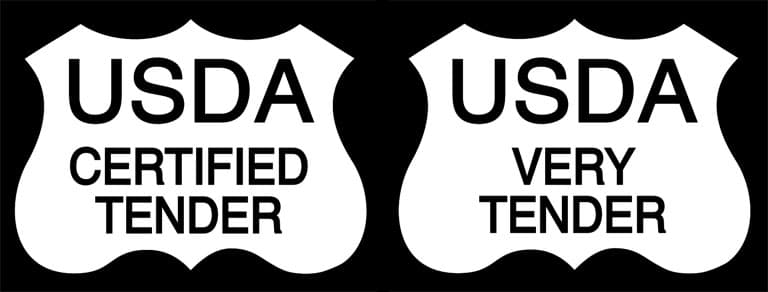
Some cuts of beef are naturally tender, regardless of the USDA quality grade. Filet mignon is a good example. On the other hand, some cuts can still be relatively tough, even when graded USDA Prime. That’s why the USDA introduced two additional labels (the “USDA Certified Tender” and “USDA Certified Very Tender”) that focus specifically on tenderness.
The “USDA Certified Tender” and “USDA Certified Very Tender” labels tell you how tender the meat is. To qualify for one of these labels, specific beef muscles must pass a standardized test called the slice shear force test. This test measures the force required to cut through the meat, which directly correlates with how tender it will feel when you eat it. You can learn more about the USDA tenderness grading process in this article.
These labels are not as common as the standard USDA grades, such as Prime, Choice, or Select. However, some larger beef processors do use them on selected products. If you come across one of these labels at the store, it simply means the cut has been tested and meets a specific level of tenderness.
That said, you don’t need to rely on these labels to get a tender steak. In practice, it’s much more useful to understand which cuts are naturally tender, which ones are tougher, and how cooking affects the final texture.
For example, even a USDA Prime steak can turn out tough if you overcook it. That’s why understanding the cut and cooking it properly matters more than relying on labels alone.
If your goal is a tender and flavorful steak, start with naturally tender cuts like ribeye or filet mignon. Choose at least USDA Choice, cook it properly, and don’t go past medium.
Why Is Beef Grading So Important?
Beef grading reduces uncertainty. It doesn’t guarantee a perfect cut of beef every time, but it makes it much more likely you’ll get what you expect. Here are the main reasons beef grading matters and what it means in practice.
- Grades help set pricing and value: It’s much easier for both consumers and processors to price beef when there’s a clear grading system. In general, the higher the grade, the more expensive the beef. Without grading, pricing would be far less consistent, especially for people who don’t know how to evaluate a cut themselves.
- It helps predict eating quality: Grades like USDA Prime, Choice, and Select give you a quick way to estimate quality. Higher grades usually have more marbling, which means the steak is more likely to turn out tender, juicy, and flavorful when cooked properly.
- It makes choosing beef easier: Instead of analyzing every cut in detail, you can quickly scan the display and narrow down your options based on grade. It’s not perfect, but it saves time and makes the decision easier.
- It standardizes quality across the industry: Grading creates a common reference point for everyone: ranchers, processors, restaurants, and retailers. If a restaurant orders a USDA Choice ribeye, they know roughly what to expect, regardless of the supplier.
- It supports branding and marketing: Restaurants and stores use grades to signal the beef quality level to customers.
Are Beef Grades Always Reliable?
Beef grading isn’t perfect. In rare cases, a cut can get a higher grade than it should. Grading relies mostly on visible marbling, and since it’s done by humans, mistakes can happen from time to time. Sometimes a USDA Prime steak can even look less marbled than a USDA Choice steak at first glance. It doesn’t happen often, though, and overall, the grading system still works well as a general guideline. Just don’t rely on the grade alone.
Look at the cut, think about how you’re going to cook it, and your budget. If you want to go deeper into that, check out my guide on how to choose a good steak.
What About Beef Grading Systems Other Than USDA?
Because grading is optional in the U.S., some producers use their own grading systems that better reflect the quality of their beef or match their specific standards.
For example, Snake River Farms, known for its American Wagyu, uses its own internal grading system. That makes sense, because high-quality Wagyu goes far beyond what standard USDA grades are designed to measure.
Another example is Certified Angus Beef (CAB). CAB builds on USDA grading by adding extra quality and consistency requirements. For example, CAB must meet stricter quality and consistency standards than regular USDA Choice.
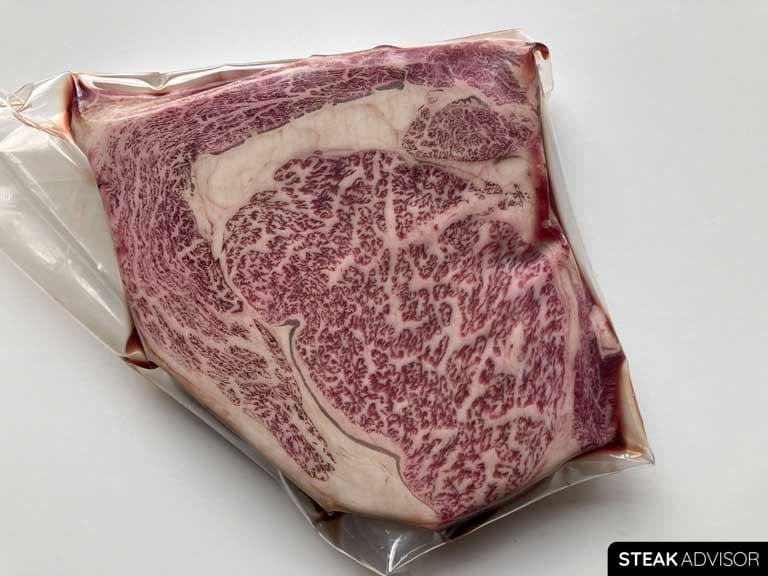
Imported beef is another case. It’s usually graded based on the system used in its country of origin. A good example is Japanese Wagyu beef, which is graded by the Japanese Meat Grading Association (JMGA), the official organization responsible for beef grading in Japan.
I’ve covered some of these grading systems in more detail in separate articles. If you want to learn more, check them out:

This made beef grades much easier to understand. I always assumed Prime was the only “good” option, but the point about Choice being better for everyday steaks makes a lot of sense.
Thanks, Rachel. Choice is definitely the sweet spot for most people.
Please comment on ‘certified tender’ in relation to the cuts.
Thank you!
Hi Kathleen, thank you.
I added the USDA tenderness certificates section.