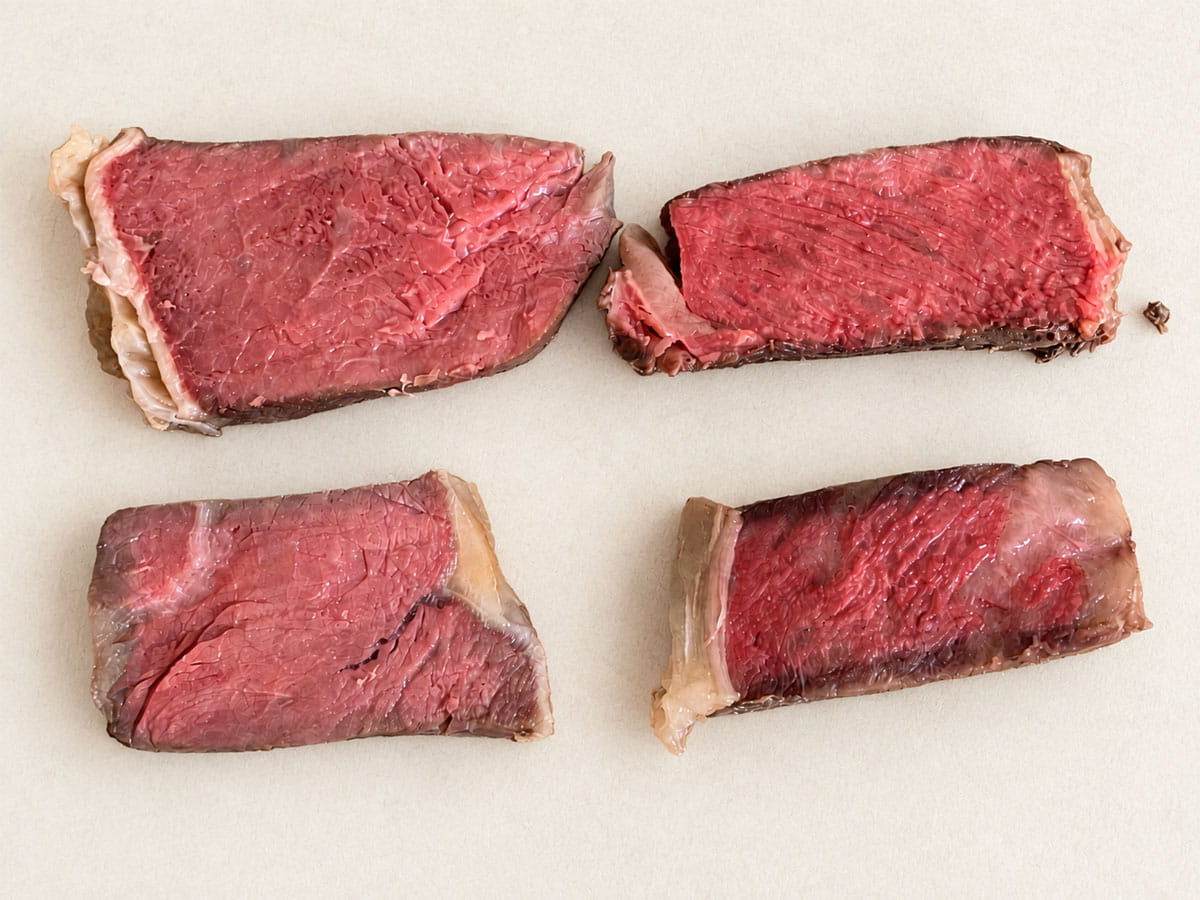

Dry-aged steak doesn’t require a different cooking method from a regular steak. It does, however, require a different approach to seasoning and cooking time.
Why Dry-Aged Steak Needs a Slightly Different Cooking Approach
- It cooks faster: Dry aging causes the meat to lose moisture. As a result, a dry-aged steak heats through faster than a non-dry-aged steak of the same thickness and reaches your target internal temperature sooner. Regardless of the cooking method, keep this in mind and monitor the steak’s internal temperature closely. Don’t cook a dry-aged steak for the same amount of time you would a regular steak.
- It has a unique flavor: Dry aging gives the beef a deeper, more concentrated flavor with slightly nutty, blue cheese-like notes, so don’t use heavy marinades, aggressive seasoning, or strongly flavored sides that can overpower what makes the steak special. A few hours of dry brining is all it needs. Black pepper is optional, and the sides should complement the steak rather than compete with it.
Dry-Aged Steak Cooking Methods at a Glance
Let’s look at the most common ways to cook a dry-aged steak and when each works best.
| Method | Best For | Recommended Thickness | Cook Time* | Difficulty |
| 1. Direct pan-searing | Fast cooking and a rich, deeply browned crust | 1-1.5 in / 2.5-3.8 cm | About 4-5 min for a 1-in / 2.5-cm steak, medium-rare | Medium |
| 2. Forward searing | Cooking thick steaks in less time | 1.5-2+ in / 3.8-5+ cm | About 30 min for a 2-in / 5-cm steak, medium-rare | Easy |
| 3. Reverse searing | Thick steaks cooked evenly from edge to edge | 1.5-2+ in / 3.8-5+ cm | About 1 hour total for a 2-in / 5-cm steak, medium-rare | Easy |
| 4. Sous vide | Cooking to the exact internal temperature every time | 1.5-2+ in / 3.8-5+ cm | About 4 hours total for a 2-in / 5-cm steak, medium-rare | Easy |
| 5. Direct grilling | Smoky flavor and cooking outdoors | 1-1.5 in / 2.5-3.8 cm | About 5-7 min for a 1-in / 2.5-cm steak, medium-rare | Medium |
5 Ways to Cook a Dry-Aged Steak
1. Direct Pan-Searing
(Best for: Fast cooking and a rich, deeply browned crust)

About This Method: Pan-searing means cooking the steak from start to finish in a heavy-bottomed skillet over high heat. The steak cooks quickly in a well-preheated pan, developing a deep, golden-brown crust on the outside while the center reaches your preferred doneness.
Pros: It’s fast, develops a deep crust, works in any weather, and makes it easy to turn the browned bits left in the skillet into a quick, flavorful pan sauce.
Cons: The high heat causes more carryover cooking, making it easier to overshoot your target doneness. It also leaves a thicker gray band under the crust, produces a lot of smoke that can set off smoke alarms, and splatters oil all over your stovetop and counters.
Recommended Thickness: 1 to 1.5 inches / 2.5 to 3.8 cm
Cook Time: About 4-5 minutes for a 1-inch / 2.5 cm dry-aged steak cooked to medium-rare.
Cooking time is a rough guide. Use a thermometer and cook to you target pull temperature.
My Take: This is my preferred method for dry-aged steaks about 1 inch (2.5 cm) thick. It’s fast and builds an excellent crust. It takes some practice to get the timing right, but once you do, a well pan-seared dry-aged steak is hard to beat. I don’t recommend this method for steaks thicker than 1 1/2 inches (3.8 cm). Thicker cuts tend to cook less evenly and develop a wider gray band under the crust.
2. Forward Searing
(Best for: Cooking thick steaks faster)
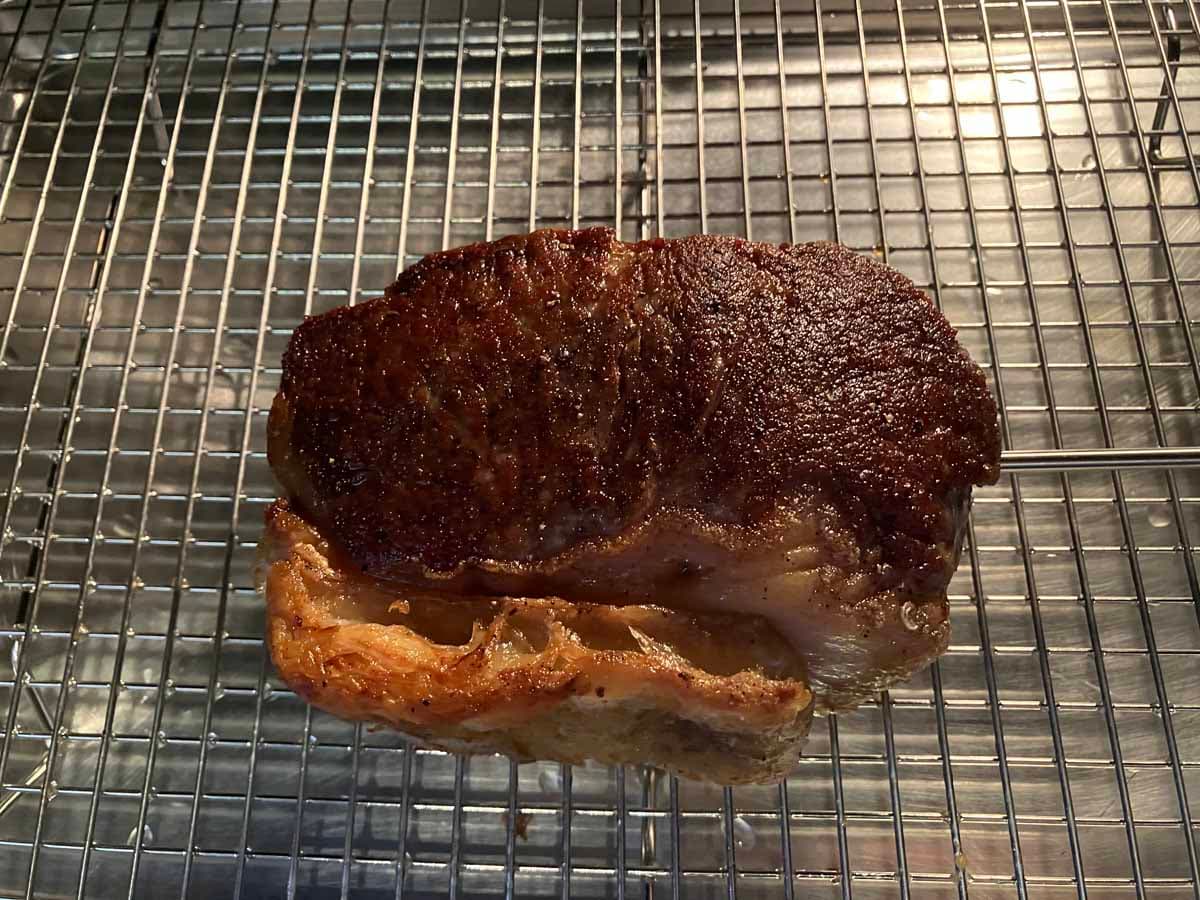
About This Method: Forward searing is a two-step method. You sear the steak first over high heat to build a deep crust, then finish it at a lower temperature until it reaches your target doneness. The traditional setup uses a skillet and an oven, but the same method works on a grill or smoker.
Pros: Straightforward, builds a deep crust, cooks fairly evenly from edge to edge, and makes it easy to reach the desired final temperature.
Cons: Slightly thicker gray band, not for thin cuts, and tricky on a grill where you can’t quickly lower the heat to finish the steak low and slow.
Recommended Thickness: 1.5 to 2+ inches / 3.8 to 5+ cm
Cook Time: About 30 minutes for a 2-inch / 5 cm dry-aged steak cooked to medium-rare
Cooking time is a rough guide. Use a thermometer and cook to you target pull temperature.
My Take: Forward searing is the method I like to use when I want to cook a really thick dry-aged steak quickly. When done right, it’s one of the easiest ways to cook a thick steak. It leaves a slightly thicker gray band under the crust than reverse searing or sous vide, but that doesn’t bother me. The inside still cooks nicely, and the whole process takes less time. The only downside is that it’s relatively hard to do on a grill, especially a charcoal grill, because you can’t quickly lower the heat to finish the steak at a lower temperature.
3. Reverse Searing
(Best for: Thick steaks and even doneness)
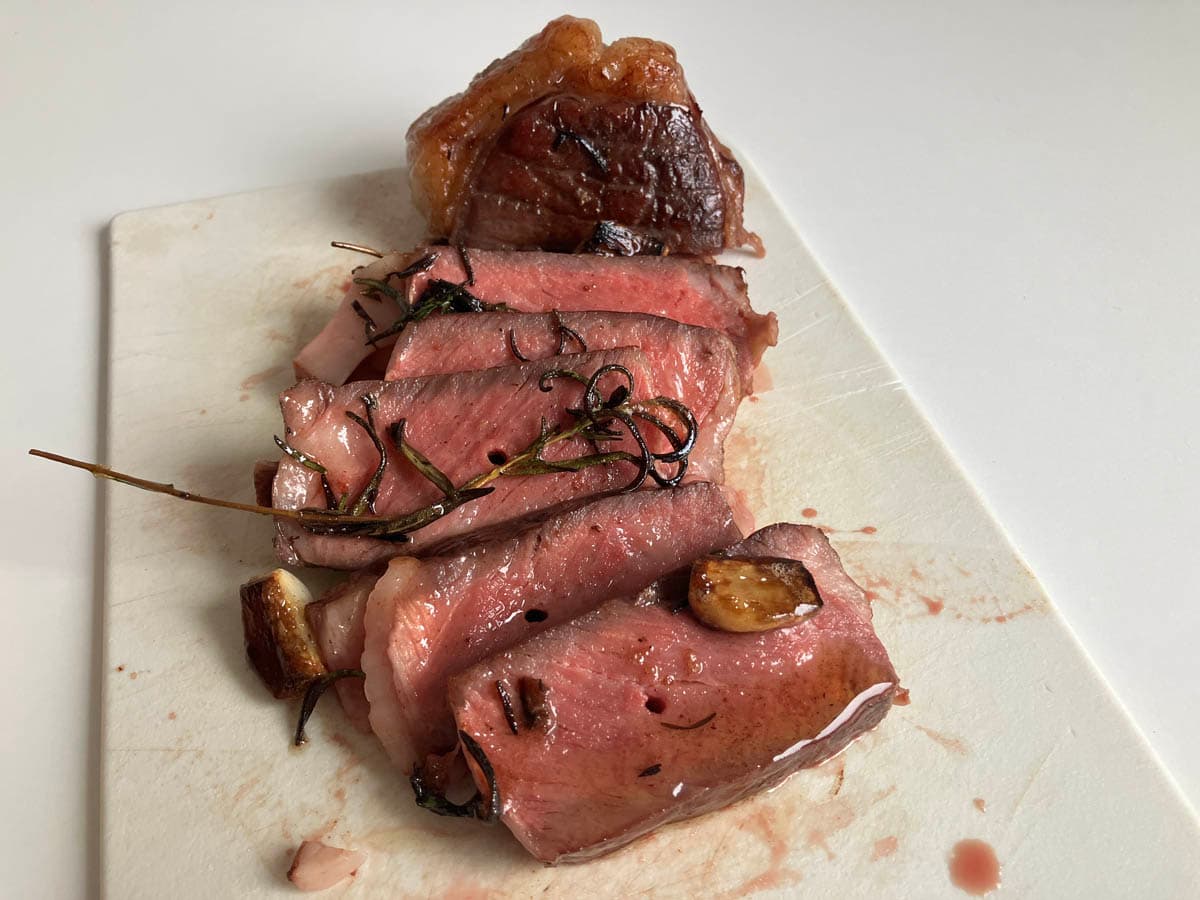
About This Method: Reverse searing is a two-step method where you cook the steak slowly over low heat until it’s close to your target doneness, then finish it over high heat to build a deep crust. The most common setup is oven-to-skillet, but the same approach works just as well on a grill or smoker.
Pros: Fairly easy, gives you very even doneness with almost no gray band, builds a decent crust, and requires very little attention while the steak is in the oven.
Cons: Takes longer overall, and it’s easy to overshoot your target temperature if the final sear goes on too long.
Recommended Thickness: 1.5 to 2+ inches / 3.8 to 5+ cm
Cook Time: About 1 hour total for a 2-inch / 5 cm dry-aged steak cooked to medium-rare
Cooking time is a rough guide. Use a thermometer and cook to you target pull temperature.
My Take: Reverse searing is a solid method for dry-aged steaks around 1.5 to 2 inches (3.8 to 5 cm) thick, especially well-marbled cuts. It cooks the steak very evenly, but I’m not a big fan of reverse searing indoors because it takes a lot of time, and for me, the results just aren’t worth the extra time. I’d rather forward sear the steak, even if that means ending up with a slightly thicker gray band under the crust. Outdoors, though, I like reverse searing much more. Cooking the steak low and slow over a grill or smoker gives it more time to take on smoke, and when I’m cooking outside, I’m usually not in much of a rush anyway.
4. Sous Vide
(Best for: Precise doneness and consistent results)
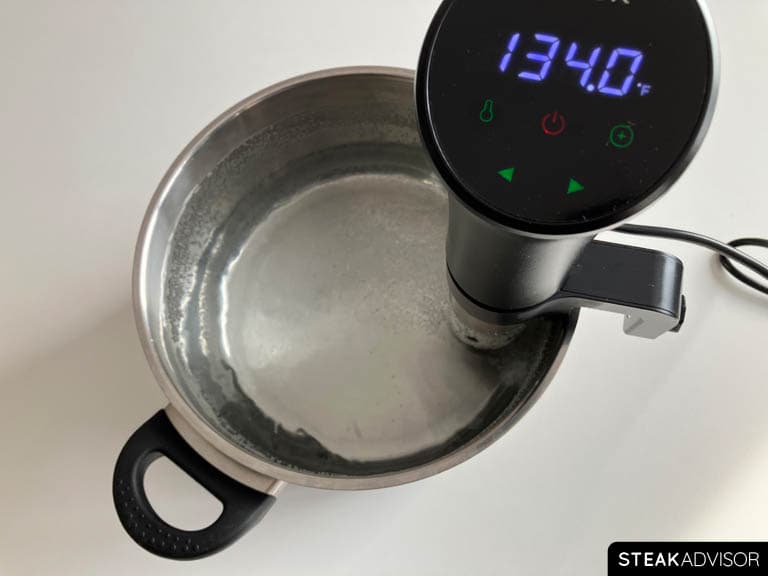
About This Method: Sous vide is a way of cooking steak in a water bath kept at an exact, controlled temperature. It’s a two-step process. First, you seal the steak in a bag and cook it in the water bath at your target temperature with a sous vide circulator. Once the steak is cooked exactly how you want it all the way through, you finish it with a quick sear over high heat to build a decent crust.
Pros: Extremely foolproof, precise doneness from edge to edge, takes the guesswork out of internal temperature, and requires very little hands-on cooking.
Cons: Requires special equipment, takes a long time from start to finish, and it’s easy to overshoot your target doneness if you sear the steak too long at the end.
Recommended Thickness: 1.5 to 2+ inches / 3.8 to 5+ cm
Cook Time: About 4 hours total for a 2-inch / 5 cm dry-aged steak cooked to medium-rare
My Take: Sous vide is my preferred method when I want a dry-aged steak cooked perfectly evenly from edge to edge. What I like most about it is the flexibility. I can put the steak in the water bath, focus on everything else, and sear it when I’m ready to serve. Once the steak reaches the set temperature, I’ve got a pretty generous window to finish the rest of the meal before giving it the final sear. The downside is that really thick steaks take a long time. Sure, it’s completely hands-off, but you still have to remember to get the steak into the water bath a few hours before you plan to serve it.
5. Direct Grilling
(Best for: Smoky flavor and outdoor cooking)

About This Method: Direct grilling works much like pan-searing, using high heat to cook the steak quickly. The difference is that the steak cooks directly on hot grill grates instead of in a skillet, whether you’re using charcoal, gas, or a pellet grill. The goal is to develop a deeply browned, lightly charred crust while cooking the center to your desired doneness.
Pros: It’s fast, adds smoky flavor, builds a charred crust, and keeps the smoke and messy cleanup outside. It also makes steak cooking more of an outdoor experience.
Cons: Higher risk of flare-ups with well-marbled cuts, less precise heat control, a thicker gray band under the crust, and the need for an outdoor cooking setup.
Recommended Thickness: 1 to 1.5 inches / 2.5 to 3.8 cm
Cook Time: About 5-7 minutes for a 1-inch / 2.5 cm dry-aged steak cooked to medium-rare
Cooking time is a rough guide. Use a thermometer and cook to you target pull temperature.
My Take: Like pan-searing, direct grilling works best for dry-aged steaks around 1 inch (2.5 cm) thick. The biggest issue is flare-ups, especially with well-marbled cuts. As the fat renders and drips onto the fire, you need to keep a close eye on the steak and move it off direct heat when the flames get too aggressive, or the outside can burn quickly. That makes direct grilling a little harder for beginners, but if you’re comfortable managing the heat and flare-ups, it’s a solid method. Personally, I also enjoy cooking outdoors, and not having to clean oil splatter all over the kitchen afterward is a nice bonus.

Really helpful comparison. I didn’t realize dry-aged steak cooks faster than regular steak, so the reminder to watch the internal temp was useful.