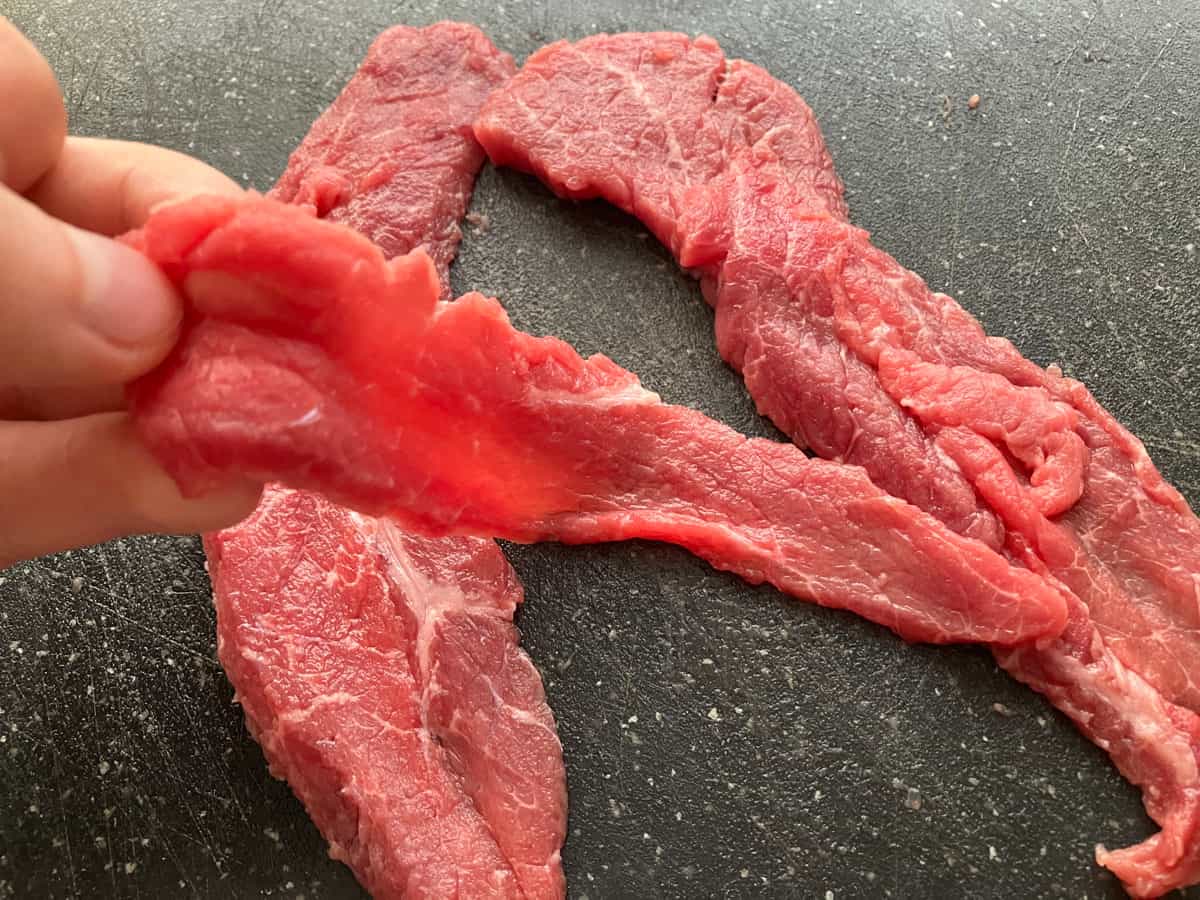

There’s no single best way to cook every thin steak. The right method depends on the cut, thickness, and the result you’re after. In this guide, I’ll walk you through the most common ways to cook thin steaks and explain when each method works best.
For this guide, I consider a steak thin when it’s about 1/2 inch (1.3 cm) thick or less.
Thin Steak Cooking Methods at a Glance
| Method | Best For | Prep Technique | Key Benefit |
| Hot & Fast Pan-Sear | Thin-cut strip, ribeye, flank, outside skirt | Dry-brine, cook whole | Pink center with a browned crust |
| Velvet & Stir-Fry | Lean or tougher beef sliced thin | Slice raw, coat in starch slurry | Tender, juicy beef that won’t dry out |
| Marinate, Char & Slice | Inside skirt, flap steak (bavette) | Marinate whole, cook hot, slice thin | Smoky, charred flavor for tacos & fajitas |
| Skillet-Chopped Beef | Ribeye, top round, sirloin | Cook shaved beef over high heat, chop as it sears | Classic Philly cheesesteak texture |
| Pound, Bread & Fry | Top/bottom round, cube steak | Pound thin, bread, shallow-fry | Crispy golden crust (Chicken-Fried style) |
| Cook It Sous Vide | Tough cuts served whole | Seal, water bath, quick sear | Tenderizes without overcooking |
| Low & Slow Braise | Chuck steak, blade steak, other collagen-rich cuts | Braise in flavorful liquid until tender | Melt-in-your-mouth shredded beef |
The 7 Best Ways to Cook Thin Steaks
1. Hot & Fast Pan-Sear
(Best for Steaks That Cook Well Over High Heat)
A quick, high-heat sear works best for 1/2-inch (1.3 cm) steaks like NY strip, ribeye, outside skirt, or flank. Dry-brine the steak first, then sear it in a screaming-hot cast iron skillet for 60 to 90 seconds per side.
Why it works: High heat browns the outside quickly, so the steak develops a browned crust by the time the center reaches medium-rare to medium.
I cover the full technique in my 1/2-Inch-Thick Pan-Seared Steak Recipe.

2. Velvet & Stir-Fry
(Best for Asian-Style Thin Beef)
Velveting is a great way to keep thin slices of lean or tougher beef tender in a stir-fry. Slice the steak thinly against the grain, then coat it with a small amount of cornstarch, soy sauce, and oil. For very tough cuts, add a small pinch of baking soda. Cook the beef quickly in a very hot wok or skillet, working in small batches so it browns instead of steaming.
Why it works: Cornstarch helps the beef retain moisture during high-heat cooking, while baking soda helps tenderize tougher cuts.
RecipeTin Eats’ Easy Chinese Beef Stir Fry is a great recipe to try.
3. Marinate, Char & Slice
(Best for Tacos & Fajitas)
Coarse-grained cuts like inside skirt or flap steak (bavette) are ideal for tacos and fajitas. Marinate the whole steak with citrus, garlic, and spices, then cook over high direct heat or on a scorching-hot griddle until well charred, rest for 5 minutes, then slice thinly against the grain.
Why it works: The marinade adds flavor and tenderizes the meat, while slicing against the grain shortens the muscle fibers and makes each bite easier to chew.
I recommend Vindulge’s Carne Asada Skirt Steak Tacos for this method.

4. Skillet-Chopped Beef
(Best for Steak Sandwiches & Cheesesteaks)
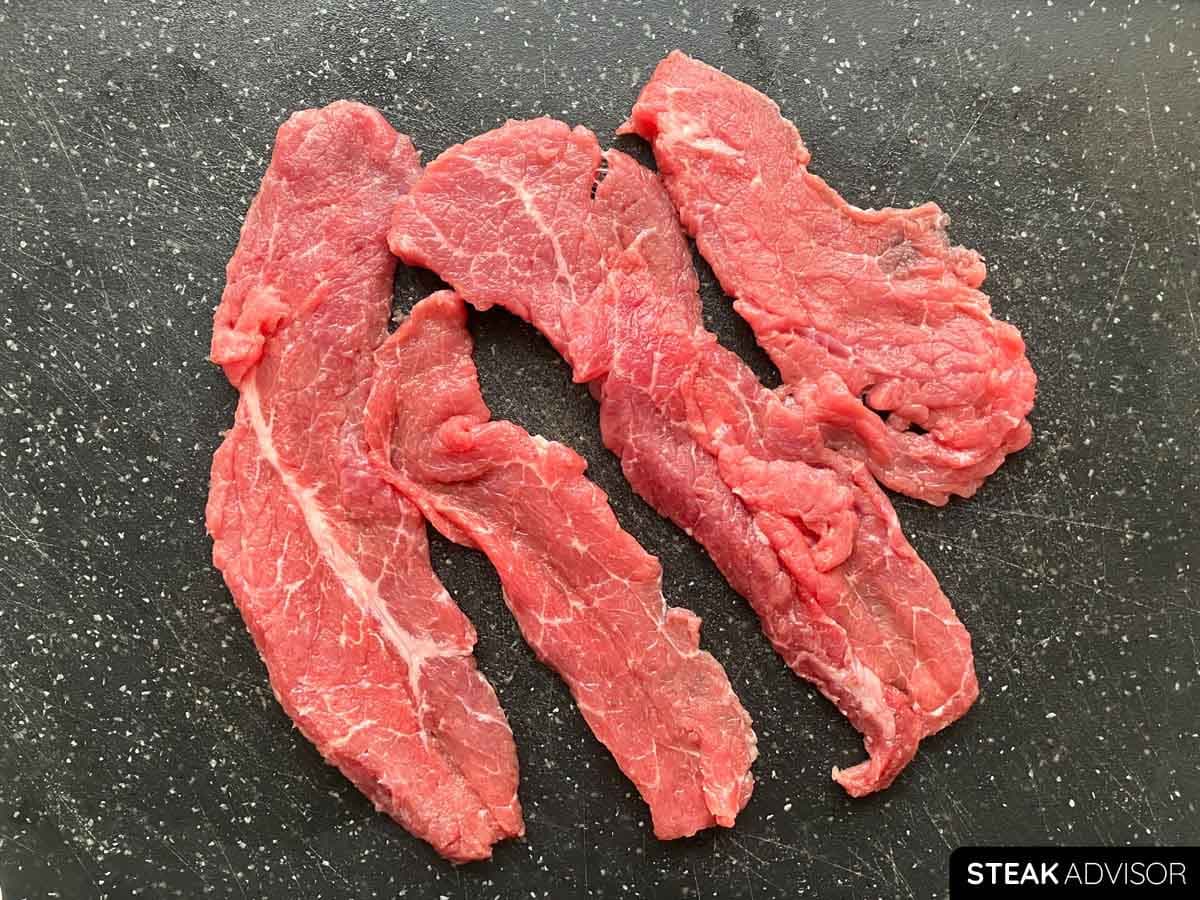
For thin, store-bought shaved beef, cook it fast on a scorching-hot griddle or skillet, chopping it with a metal spatula as it sears. Once browned, melt the cheese directly over the beef, then pile it into a roll for cheesesteaks or other steak sandwiches.
Why it works: High heat creates tons of browned, crispy bits, while chopping the beef keeps the pieces small and easy to eat.
I recommend Serious Eats’ Philly Cheesesteak for this method.
5. Pound, Bread, and Fry
(Best for Tough Round Cuts)
For lean, naturally tough cuts like top or bottom round, pound the steak thin with a meat mallet, dredge it in seasoned flour or coat it in breadcrumbs, depending on the dish, and shallow-fry until golden and crisp. It’s ideal for chicken-fried steak, country-fried steak, and similar breaded dishes. Serve with gravy, sautéed onions, potatoes, or your favorite sauce.
Why it works: Pounding breaks down tough muscle fibers, while the breading and frying add crispness, fat, and richness that lean round steak naturally lacks.
Allrecipes’ Chicken-Fried Steak is a great example of this method.
6. Cook It Sous Vide
(Best for Tough, Flavorful Cuts)
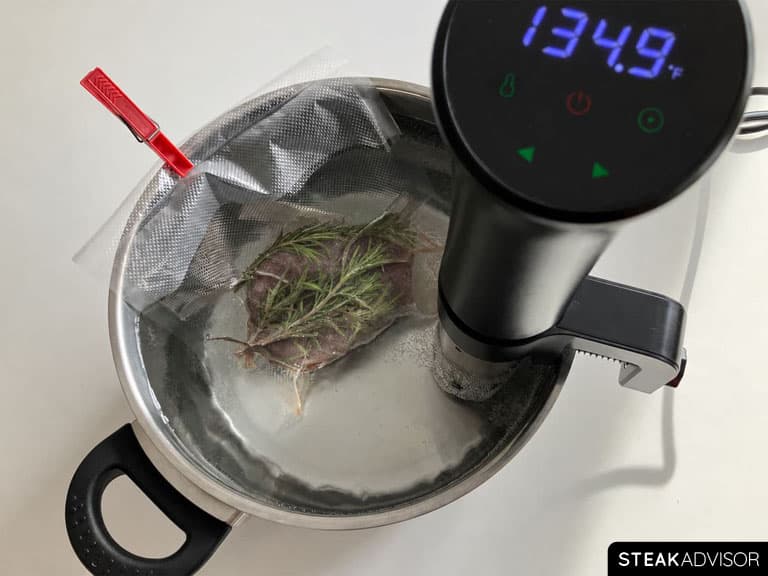
For tough, flavor-packed cuts, sous vide gradually tenderizes tough muscle and connective tissue while keeping the meat perfectly even from edge to edge. Seal the steak, cook it at your target temperature for 12-36 hours depending on the cut, then finish with a fast sear in a ripping-hot pan.
Why it works: Long, controlled cooking gradually tenderizes tough muscle and connective tissue without overcooking the steak.
For this method, try DadCooksDinner’s Sous Vide Chuck Steak.
7. Low & Slow Braise
(Best for Collagen-Rich Cuts)
For tough, inexpensive cuts with plenty of connective tissue, braise the steak low and slow in broth, tomato sauce, or another flavorful cooking liquid. Braise it in a Dutch oven, heavy pot, or slow cooker until fork-tender. Once tender, shred the beef for tacos or sandwiches, or serve it directly in the braising sauce with potatoes or vegetables.
Why it works: Long, gentle cooking converts tough collagen into gelatin and renders fat, leaving the beef tender, juicy, and rich.
For this method, try Allrecipes’ Braised Beef.
