

Over the years, I’ve tested several ways to cook steak in the oven. Below are the three methods I use most, along with their pros, cons, ideal steak thickness, and a full recipe for each one.
Steak Oven Methods at a Glance
There isn’t one best way to cook steak in the oven. The right method depends mostly on the thickness of the steak, the results you want, and how much time you have.
| Method | Best For | Ideal Thickness | Pros | Cons |
| Reverse Sear (Oven-to-Pan) | When even doneness matters most | 1.5 to 2+ in / 3.8 to 5+ cm | Minimal gray band; mostly hands-off oven time | Slow; easy to overshoot target doneness during the final sear |
| Forward Sear (Pan-to-Oven) | Similar results to reverse searing in less time | 1.5 to 3 in / 3.8 to 7.6 cm | Deep crust; shorter cook time; gradual oven finish | Slightly thicker gray band |
| Oven Broiler Only (No Pan) | Oven-only cooking | 1 to 2 in / 2.5 to 5 cm | Fast; no stovetop sear needed | Less even doneness; smaller margin for error |
3 Ways to Cook Steak in the Oven
1. Reverse Sear (Oven-to-Pan)
(Best for Even Doneness With Minimal Gray Band)
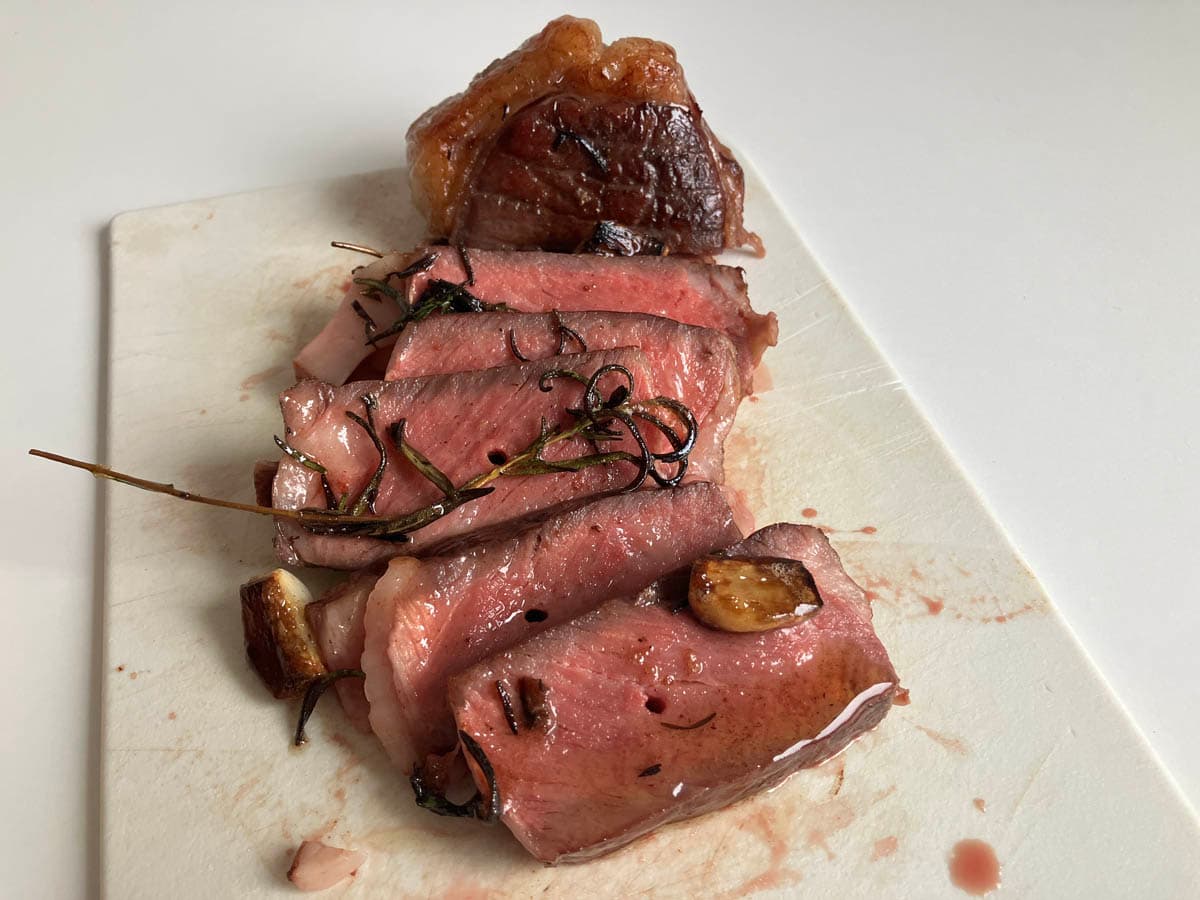
About This Method: The reverse sear is a two-step method for cooking steak. You start by cooking the steak gently in the oven at low heat until it’s close to your target doneness. Then you take it out and finish it in a very hot pan to build a deeply browned crust on the outside. The inside stays evenly cooked from edge to edge.
Ideal Thickness: 1.5 to 2+ inches / 3.8 to 5+ cm
Cook Time: About 1 hour total for a 2-inch / 5 cm steak cooked to medium-rare
My Takeaway: What I like most about reverse searing is the even pink interior and minimal gray band. Most of the cook is hands-off, but the final sear still needs careful timing because the steak is already close to its target temperature and is easy to overcook in the pan. If I’m spending about an hour on a steak, I usually prefer the grill for the added smoky flavor. Indoors, I’d choose reverse searing when even doneness matters more than speed.
2. Forward Sear (Pan-to-Oven)
(Best for Similar Results to Reverse Searing in Less Time)
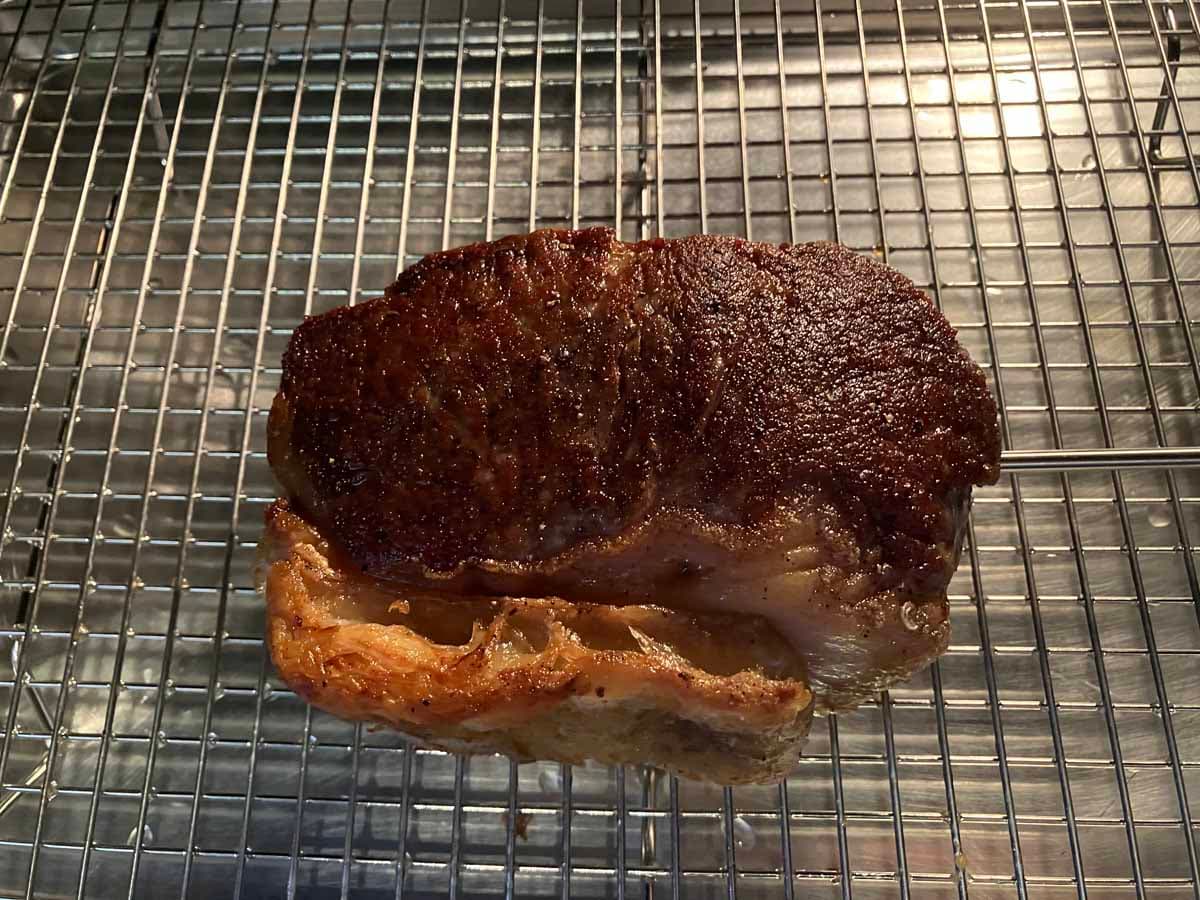
About This Method: A forward sear, also known as a front sear or traditional sear, is a two-step method for cooking steak. You start by searing the steak over high heat in a pan to build a deep, golden-brown crust, then finish it at a lower temperature in the oven so the center comes up to doneness gradually and evenly.
Ideal Thickness: 1.5 to 3 inches / 3.8 to 7.6 cm
Cook Time: About 30 minutes for a 2-inch / 5 cm steak cooked to medium-rare
My Takeaway: Forward searing is my favorite oven method because it’s faster than reverse searing and builds a much deeper, darker crust while still keeping the center evenly cooked and juicy. I don’t mind the slightly thicker gray band, especially since it stays relatively small compared with broiling or straight pan-searing. I reach for this method most often with very thick steaks, around 2 1/2 inches / 6.5 cm or more, where reverse searing starts to take too long. For me, the deeper crust and shorter cooking time are worth the trade-off.
3. Oven Broiler Only (No Pan)
(Best for Fast, Oven-Only Cooking)
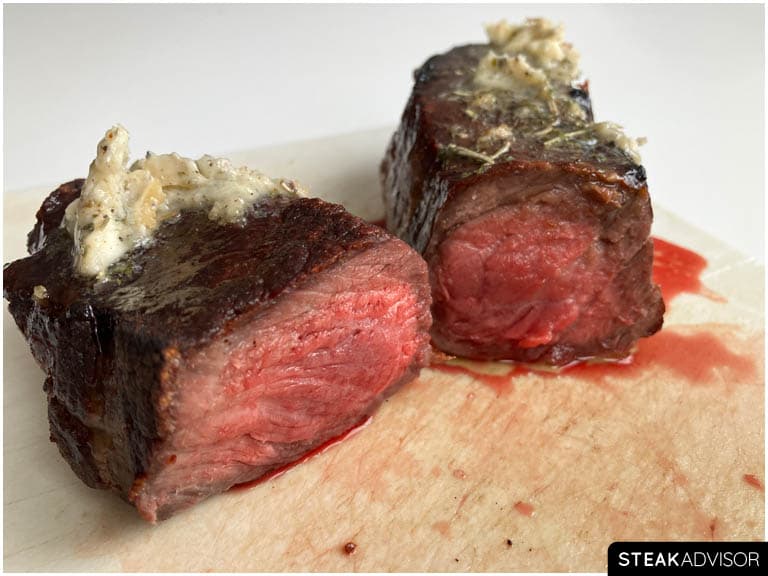
About This Method: Broiling cooks the steak entirely under the oven’s top heating element using intense, direct heat. It’s a fast, oven-only method that skips the pan completely.
Ideal Thickness: 1 to 2 inches / 2.5 to 5 cm
Cook Time: About 8 to 12 minutes, depending on thickness and target doneness
My Takeaway: I only use the broiler when I need to cook the steak entirely in the oven. It’s fast and cleanup is easy, but the crust isn’t as deep, the gray band is thicker, and there’s very little room for error before the steak overcooks. I also avoid using this method for expensive, well-marbled cuts because flare-ups are more likely. Once you get used to your broiler, though, it’s a quick way to cook a decent steak without using a pan.

Wow this article is exactly what I was looking for. A concise summary of the different methods with east to follow instructions. Many thanks.
I was looking for the best oven method for a thick strip steak, and this comparison was exactly what I needed. I went with the forward sear instead of broiling, and it made much more sense for what I wanted.
Thanks for reading. Forward sear is a great choice when you want good results without the extra time.