| PREP TIME | REST TIME | COOK TIME |
| 5 mins | 1 to 6 hours | 10 mins |
A thin strip steak, about 1 inch (2.5 cm) thick, cooks fast. To keep the inside medium-rare while building a nice crust, you need to prepare the steak properly and cook it over high heat. Finish it with butter, garlic, and fresh herbs (a few sprigs of thyme or rosemary), and you’ll have a steak that tastes like it came straight from a great steakhouse.
This recipe is available in two versions: a quick overview with the basic steps, and a detailed, step-by-step guide with photos and additional tips.
Important
This recipe works best for strip steaks that are about 1 inch (2.5 cm) thick. If your steak is thinner or thicker, you’ll get better results by following one of my other recipes:
- 1/2-inch (1.3 cm) Steak in a Pan
- 1 1/2-inch (3.8 cm) Strip Steak in a Pan
- 2-inch (5 cm) Steak in a Pan
If you’d rather use another cooking method (like sous vide, reverse sear, or anything else), check out my full list of strip steak recipes.

The Ingredients You’ll Need
- Steak: New York Strip Steak (About 1 inch /2.5 cm thick)
- High-smoke-point oil: 2 tablespoons (30 ml), I recommend refined avocado oil
- Kosher salt: 1 teaspoon
- Black pepper: 1/2 teaspoon
- Fresh herbs: A few thyme sprigs or rosemary
- Garlic: 2–3 cloves, peeled
- Unsalted butter: 2 tablespoons (28 g)
The Tools You’ll Need
- Pan (cast-iron skillet, carbon steel pan, or heavy-bottomed stainless steel skillet)
- Tongs
- Instant Read Thermometer
How to Cook Thin New York Strip Steak – Ultimate Guide
Start by gathering all the ingredients and tools listed in the recipe. Once you have everything ready, follow the steps below for a perfectly cooked thin strip steak.

Step 1: Prepare the Steak
Pat the steak dry on all sides with paper towels, then season both sides generously with kosher salt (about 1/2 teaspoon per side). After salting, let the steak rest in one of two ways:
- Faster Method (1 hour): Place the steak on a wire rack set over a baking sheet and let it rest at room temperature for 1 hour.
- Best Method (4–6 hours): For deeper flavor and a better crust, place the salted steak uncovered on a wire rack in the refrigerator for 4-6 hours.
Whichever method you choose, take the steak out of the fridge 20 minutes before cooking
Note
For the best crust, the steak’s surface needs to be completely dry. Here’s what happens when you salt a steak:
- In the first minutes, the salt pulls moisture to the surface.
- Over the 45–60 minutes, that liquid gets reabsorbed, leaving the surface dry enough for a proper sear.
That’s why one hour of resting after salting is the bare minimum if you want better browning and flavor. For thin strip steaks (about 1 inch / 2.5 cm thick), I highly recommend dry-brining for 4–6 hours. This not only deepens the flavor but also helps you build a much better crust, which is especially important with thinner cuts.
Always remove the steak from the refrigerator at least 20 minutes before cooking. This helps it cook more evenly and prevents the cold red spot in the center.
For more on salting and resting, check out my dedicated guides:


Step 2: Preheat the Pan
Place the pan over medium-high heat. Heat the pan for 3–4 minutes, then add 2 tablespoons of a high-smoke-point oil and let it heat for an additional minute. While the pan heats, pat the steak dry once more and season both sides with finely ground black pepper. Then move on to the next step to begin cooking.
Note
After a dry surface, the next key to a great crust is a properly heated pan. Aim for a pan surface of about 450°F (232°C). Why so hot? Maillard browning proceeds rapidly at temperatures ranging from 280 to 330°F (140 to 165°C). When the steak hits the pan, the surface temperature drops, so starting the pan hotter (about 450°F / 232°C) keeps you in the ideal browning zone. You don’t need 600°F (315°C); about 450°F (232°C) is enough for a hard sear.
In my experience, preheating a cast-iron skillet on a gas stove over medium-high heat typically takes 3–5 minutes (check with an IR thermometer if you have one).
To sear a steak effectively and safely, you need the right pan and oil. Use a pan that can reach high temperatures and hold heat well:
- Best choice: Cast-iron skillet
- Good alternatives: Carbon steel or a heavy, thick-bottomed stainless steel pan
For oil, choose one with a high smoke point so it won’t burn at searing temperatures. Refined avocado oil with a smoke point of around 500°F (260°C) is my top pick, but I’ve listed a few alternative options below.
| Type of Fat | Smoke Point ºF | Smoke Point ºC |
|---|---|---|
| Refined Avocado Oil | 520ºF | 270ºC |
| Refined Safflower Oil | 510ºF | 266ºC |
| Beef Tallow | 480ºF | 250ºC |
| Pecan Oil | 470ºF | 243ºC |
| Refined Peanut Oil | 450ºF | 232°C |


Step 3: Pan-Sear the Steak
Turn on the exhaust fan or open a window (pan-searing creates a lot of smoke). Carefully place the steak in the hot pan fat-side down to render the fat and crisp it to your liking. Then flip to the other side and sear; press gently with tongs to ensure even contact with the pan. Flip the steak every 30 seconds; this helps build an even crust on both sides and reduces the gray band inside.
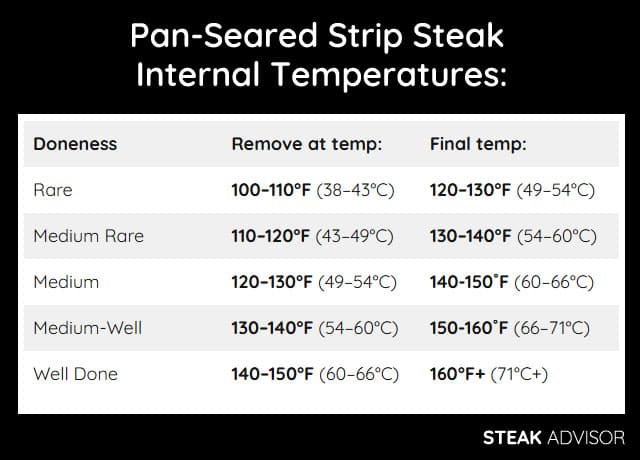
Cook until the internal temperature is about 20°F (11°C) below your target doneness (see the temperature chart below). Then transfer the steak to a cutting board and let it rest for 5 minutes before slicing. While it rests, move on to the next step and prepare the aromatics: garlic, butter, and fresh herbs.
| Doneness | Remove at temp: | Final temp: |
| Rare | 100–110°F (38–43°C) | 120–130°F (49–54°C) |
| Medium Rare | 110–120°F (43–49°C) | 130–140°F (54–60°C) |
| Medium | 120–130°F (49–54°C) | 140-150˚F (60–66°C) |
| Medium-Well | 130–140°F (54–60°C) | 150-160˚F (66–71°C) |
| Well Done | 140–150°F (60–66°C) | 160°F+ (71°C+) |
Note
Forget the old advice about flipping a steak only once or cooking it for a set number of minutes. Every steak cooks differently, depending on its thickness, the type of pan used, and the power of the stove. That’s why I always recommend investing in a meat thermometer. It’s a small investment that makes a huge difference. Monitor the internal temperature as you cook, and always remove the steak a little earlier than your target doneness to avoid overcooking.
Remember, cooking doesn’t stop when the steak leaves the pan. As it rests, the internal temperature typically rises by about 20°F (11°C) within 5 minutes for a 1-inch (2.5 cm) thick cut cooked in a hot pan. With high-heat methods like pan-searing, this carryover cooking temp increase is significant. Don’t make the mistake of thinking it’s only 5–10°F (3–6°C); that is true only for gentler cooking methods, but not in this case (cooking over direct high-heat).
As for flipping, turning the steak every 30 seconds gives you far better control. It speeds up cooking, helps the crust build evenly, and reduces the gray band inside. Flipping only once or twice is a myth – it doesn’t provide any real benefit and gives you less control.


Step 4: Add the Aromatics
Add the peeled garlic cloves and fresh herbs to the pan. Sear just until the garlic starts to brown, then lower the heat to medium-low and add the butter. Once the butter is fully melted and aromatic, turn off the heat and move to the final step.
Note
Browning the aromatics in the same pan used for the steak infuses the butter with rich flavor. Once the butter has melted, reduce the heat; otherwise, it can burn quickly over high heat.
In this recipe, I chose to cook the steak first and then prepare the aromatics. Thin strip steaks cook so quickly over high heat that trying to manage butter, garlic, and herbs at the same time can become overwhelming. I’ve found this simpler approach works much better, especially if you don’t cook steak often. It keeps things stress-free while still giving you great flavor.

Step 5: Serve the Steak
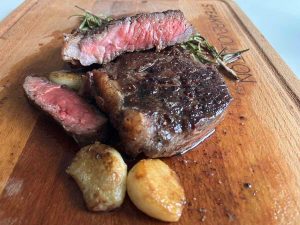
Once the steak has rested, slice it into thin strips. Strip steak has a fine grain and natural tenderness, so you don’t need to stress about slicing technique – it will turn out great either way. Just before serving, spoon the aromatic butter over the slices and add the seared garlic and herbs from the pan for a rich, flavorful finish.

Thin New York Strip Steak Recipe
- Prep Time: 5 minutes
- Rest Time: 1 to 6 hours
- Cook Time: 10 minutes
- Total Time: 15 minutes
Description
Pan-seared thin New York Strip Steak, cooked to perfection with a golden-brown crust and a juicy center, finished with garlic, butter, and fresh herbs. A simple, steakhouse-quality meal you can make at home.
Ingredients
For Steak:
- New York Strip Steak (About 1 inch /2.5 cm thick)
- 2 tablespoons (30 ml) of high-smoke-point oil (I recommend refined avocado oil)
- 1 teaspoon kosher salt
- 1/2 teaspoon black pepper
- A few thyme sprigs or rosemary
- 2–3 garlic cloves (peeled)
- 2 tablespoons (30 g) unsalted butter
Tools:
- Pan (Cast-iron, carbon steel, or heavy-bottomed stainless steel skillet)
- Tongs
- Instant Read Thermometer
Instructions
- Prepare the Steak: Pat the steak dry on all sides with paper towels, then season both sides generously with kosher salt (about 1/2 teaspoon per side). After salting, let the steak rest in one of two ways: Faster Method: Place the steak on a wire rack set over a baking sheet and let it rest at room temperature for 1 hour. Best Method: For deeper flavor and a better crust, place the salted steak uncovered on a wire rack in the refrigerator for 4–6 hours. Whichever method you choose, take the steak out of the fridge 20 minutes before cooking
- Preheat the Pan: Place the pan over medium-high heat. Heat the pan for 3–4 minutes, then add 2 tablespoons (30 ml) of a high-smoke-point oil and let it heat for an additional minute. While the pan heats, pat the steak dry once more and season both sides with finely ground black pepper. Then move on to the next step to begin cooking.
- Pan-Sear the Steak: Turn on the exhaust fan or open a window (pan-searing creates a lot of smoke). Carefully place the steak in the hot pan fat-side down to render the fat and crisp it to your liking. Then flip to the other side and sear; press gently with tongs to ensure even contact with the pan. Flip the steak every 30 seconds. Cook until the internal temperature is about 20°F (11°C) below your target doneness (see notes for temperature chart). Then transfer the steak to a cutting board and let it rest for 5 minutes before slicing. While it rests, move on to the next step.
- Add the Aromatics: Add the peeled garlic cloves and fresh herbs to the pan. Sear just until the garlic starts to brown, then lower the heat to medium-low and add the butter. Once the butter is fully melted and aromatic, turn off the heat and move to the final step.
- Serve the Steak: Once the steak has rested, slice it into thin strips. Strip steak has a fine grain and natural tenderness, so you don’t need to stress about slicing technique. Just before serving, spoon the aromatic butter over the slices and add the seared garlic and herbs from the pan for a rich, flavorful finish.
Notes