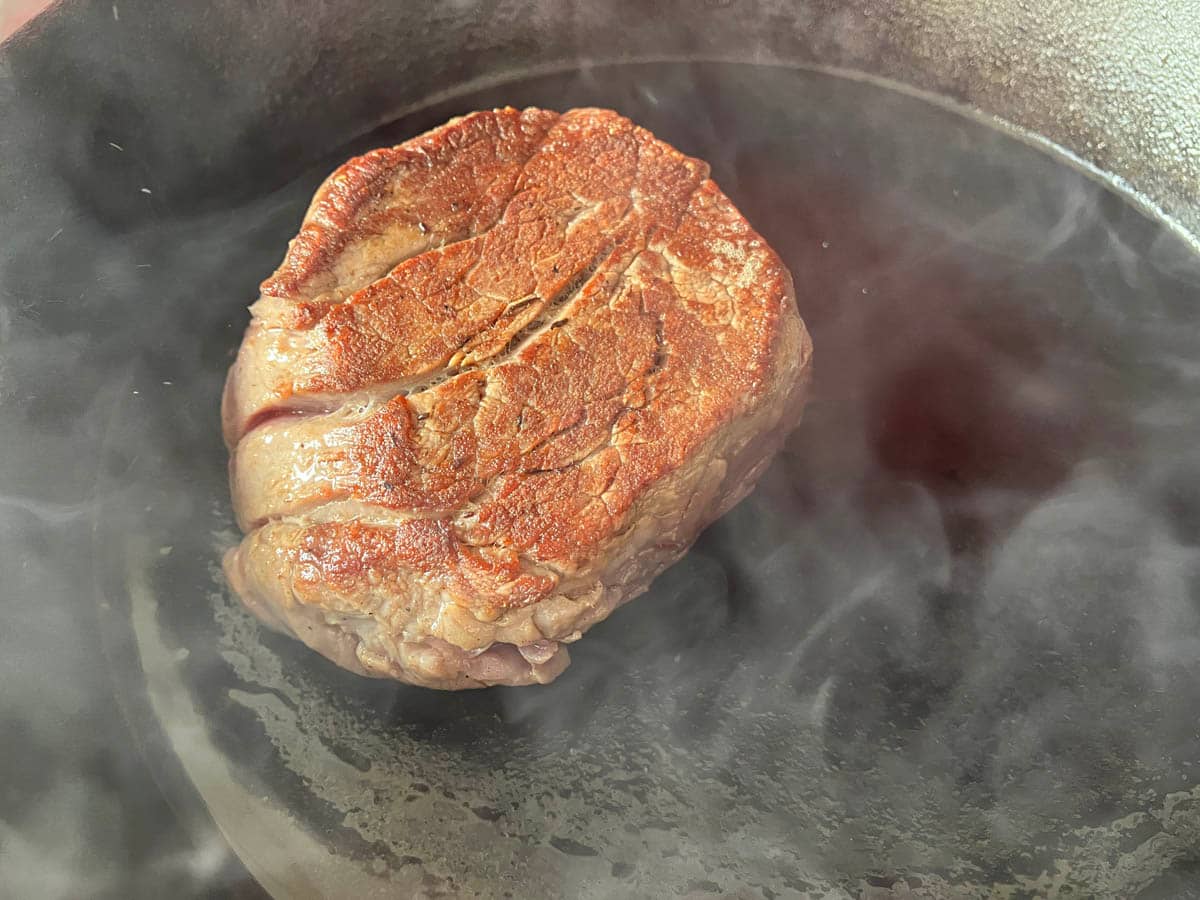

This pan-seared filet mignon is made entirely in one skillet (no oven needed). A hot pan builds a deep, crispy crust, while a simple garlic-herb butter finish adds rich flavor without making the cooking process more complicated than it needs to be.
Important
This recipe works best for filet mignon steaks about 1 to 1 1/2 inches (2.5-3.8 cm) thick. For thicker steaks or other methods, see my other filet mignon recipes.
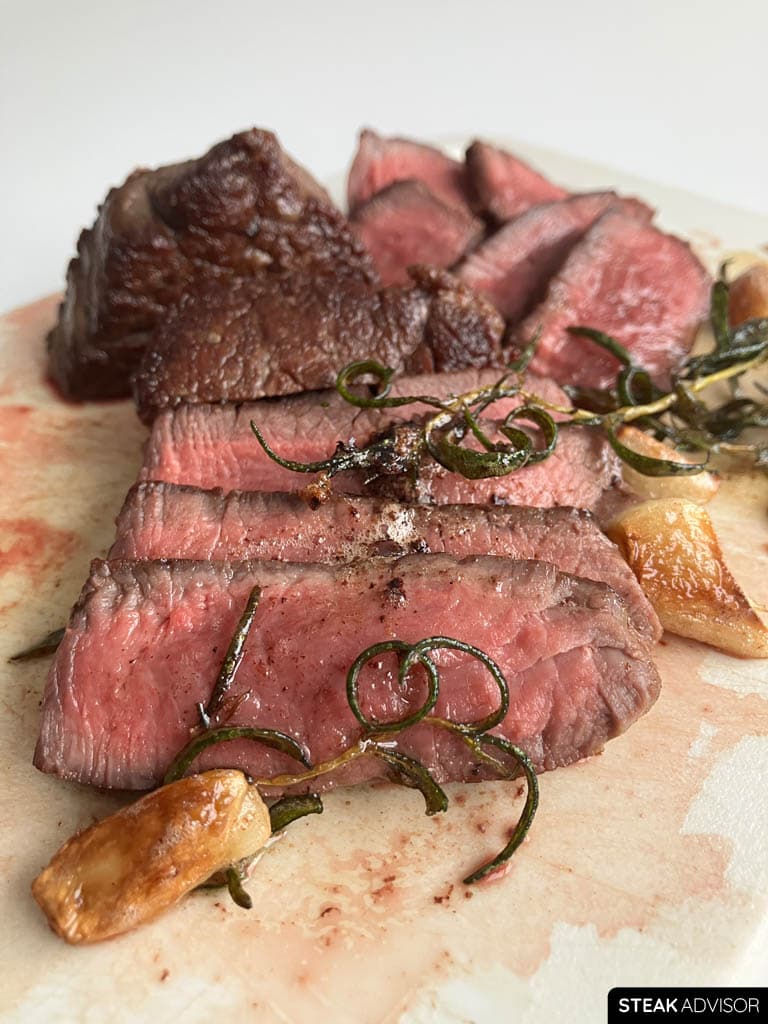
Why You’ll Love This Pan-Seared Filet Mignon
- One of the quickest ways to cook filet mignon
- A deep, browned crust
- No complicated butter basting
- Easier control over the final doneness
- Rich flavor from garlic-herb compound butter
Ingredients You’ll Need
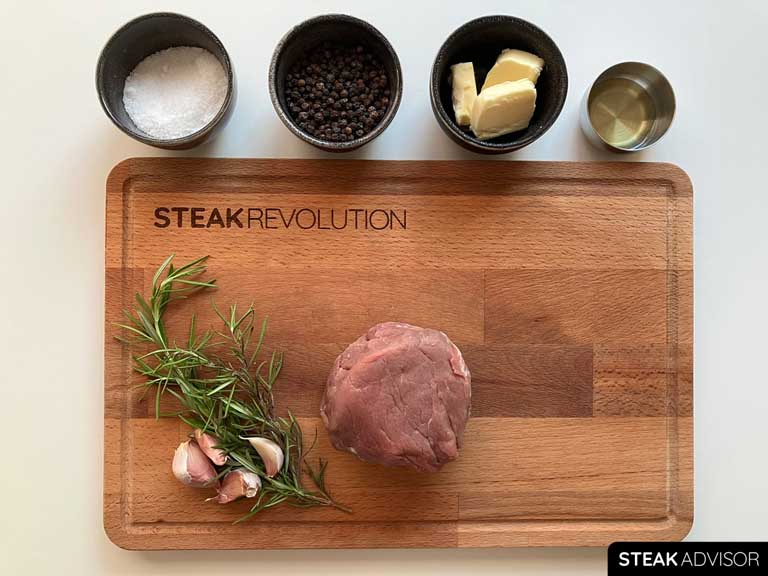
For the steak:
- Filet mignon: Aim for a tenderloin beef filet about 1 to 1 1/2 inches (2.5-3.8 cm) thick and approximately 6-8 oz (170-225 g) in weight. That’s the sweet spot for building a good crust without overcooking the inside if you’re aiming for medium-rare to medium. I recommend choosing a well-trimmed, evenly shaped filet with no silver skin attached.
- Oil/Fat: Use a refined, high-smoke-point oil for searing. I like refined avocado oil because it has a neutral flavor and a smoke point of about 500°F (260°C). Refined high-oleic safflower oil, refined high-oleic canola oil, refined canola oil, refined olive oil, and refined peanut oil are also good options. Clarified butter (ghee) also works well. Don’t sear the steak in regular butter; it burns quickly over high heat.
- Salt: I prefer kosher salt because its larger crystals are easier to distribute evenly. Use salt equal to about 1% of the steak’s weight. For an 8 oz (225 g) filet, use about 2.25 g. This is roughly 3/4 teaspoon of Diamond Crystal kosher salt or 1/2 teaspoon of Morton kosher salt. If you only have table salt on hand, use about 1/3 teaspoon and sprinkle it evenly, as it is denser and easier to overuse. For the most consistent result, measure the salt by weight the first time. Once you know what the right amount looks like, you can season by eye.
- Black pepper (optional): Use finely ground black pepper. It stays close to the surface, helping the steak make better contact with the pan. Coarsely cracked pepper can create small gaps between the meat and the pan, making it harder to get an even sear.
For the garlic-herb compound butter:
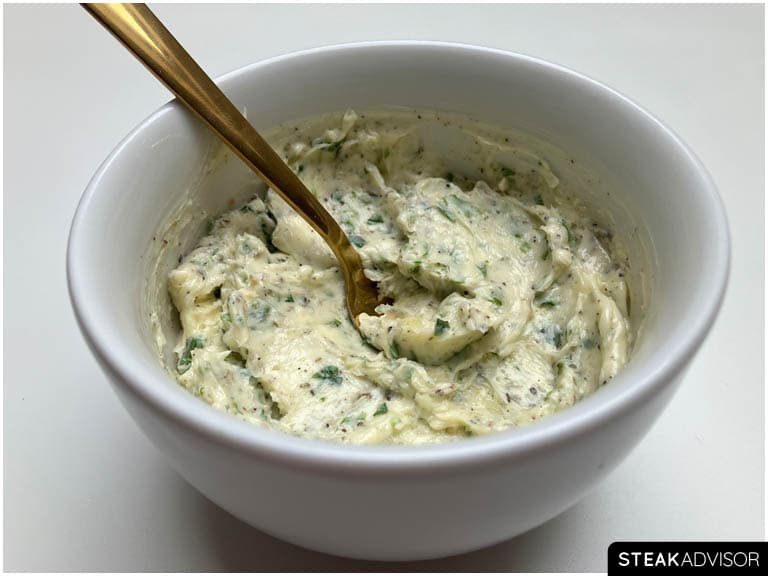
Made with softened butter, garlic, and herbs, it melts over the filet mignon as it rests, adding rich flavor without complicating the searing process. It’s one of my favorite quick tricks for making steak more flavorful.
If you prefer a different flavor, see my other steak butter recipes.
- Butter: Use 1/2 stick (56 g) of good-quality unsalted butter with at least 80% fat.
- Garlic: Use 2 garlic cloves, finely chopped, minced, or pressed so it blends evenly into the butter. For a milder, sweeter garlic flavor, you can use roasted garlic instead.
- Salt: Start with a generous pinch (about 1/8 teaspoon), then taste and add more if needed. Using unsalted butter gives you full control over the seasoning.
- Black pepper: Start with a generous pinch (about 1/8 teaspoon) of finely ground black pepper, then adjust to taste.
- Parsley: Use 1/2 tablespoon finely chopped fresh parsley, or 1/2 teaspoon dried. I highly recommend using fresh parsley for better color and texture.
- Rosemary: Use 1/2 tablespoon finely chopped fresh rosemary, or 1/2 teaspoon dried. Chop it very finely so the pieces distribute evenly and do not feel woody or tough.
Tools You’ll Need
- Wire rack with baking sheet: I use this setup for dry-brining the steak. The rack keeps the meat raised so air can circulate around it and dry the surface more evenly, while the baking sheet catches any moisture drawn out by the salt and helps keep the fridge clean.
- Pan: I highly recommend a cast-iron skillet because it retains heat well and helps develop a deep crust. A carbon-steel pan or heavy-bottomed stainless-steel skillet also works well. I don’t recommend a nonstick pan because it isn’t designed for the high heat needed for a proper sear.
- Tongs: I recommend long, comfortable tongs that let you flip the steak easily while keeping your hands away from the hot pan and oil splatter.
- Meat thermometer: I like an instant-read thermometer for quick temperature checks, while a leave-in probe thermometer is useful for monitoring the steak throughout cooking. Both work well, so use whichever you prefer.
How to Pan-Sear a Filet Mignon
Prep the steak.
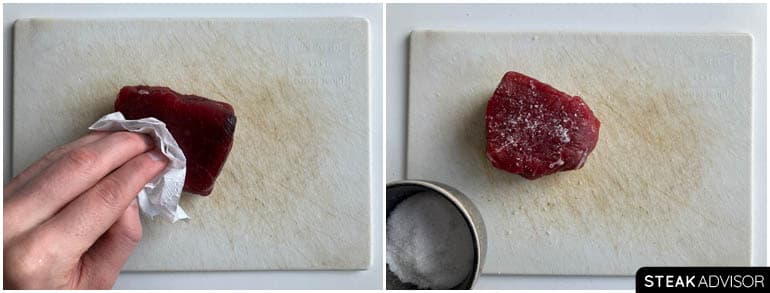
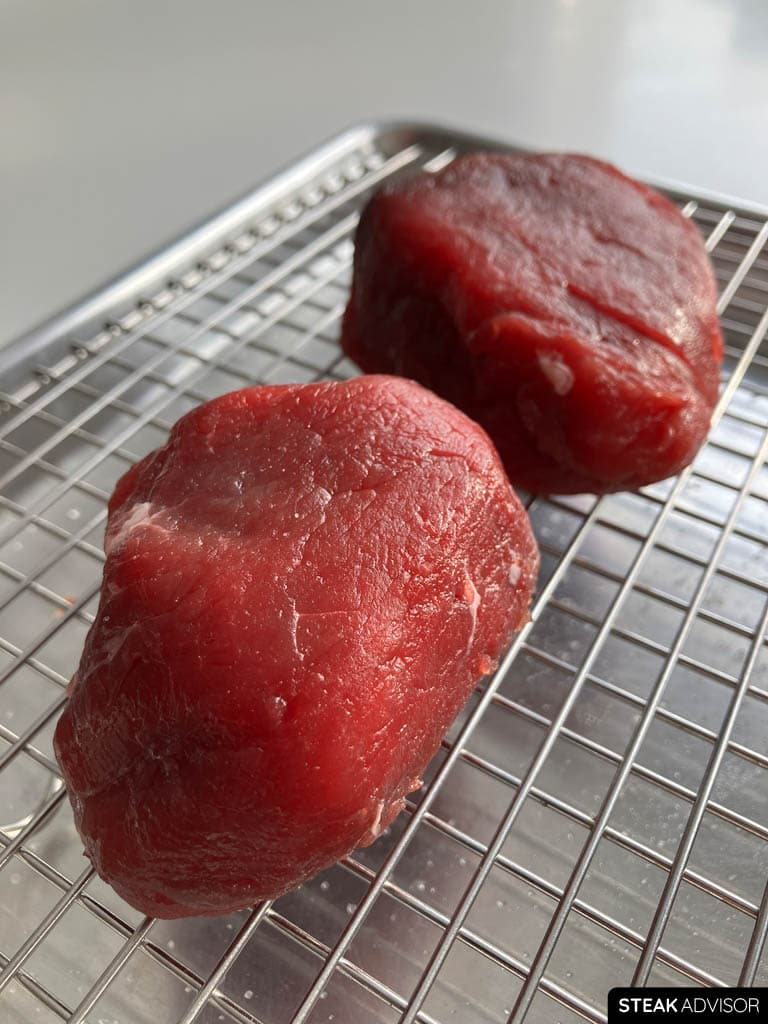
Pat the filet mignon dry with paper towels, then season it evenly on all sides, including the edges, with kosher salt equal to about 1% of the steak’s weight.
For an 8 oz (225 g) filet mignon, use about 0.08 oz (2.25 g) of salt, or roughly 3/4 teaspoon of Diamond Crystal or 1/2 teaspoon of Morton kosher salt. If you don’t have kosher salt, use about 1/3 teaspoon of fine table salt.
Place the salted filet mignon on a wire rack set over a baking sheet, leave it uncovered, and refrigerate it.
- If you’re short on time: leave it in the fridge for at least 1 hour. That’s the minimum amount of time the salt needs to do its job. One hour gives the salt enough time to draw out moisture and let it absorb back into the steak.
- If you have more time and want a deeper flavor and better crust: refrigerate it uncovered for 4 to 6 hours (this is the option I recommend).
- If you don’t have at least 1 hour, don’t salt the filet mignon in advance. Either season it right before it goes into the pan, or salt it after searing.
This process (salting the steak and leaving it uncovered in the fridge) is called dry-brining.
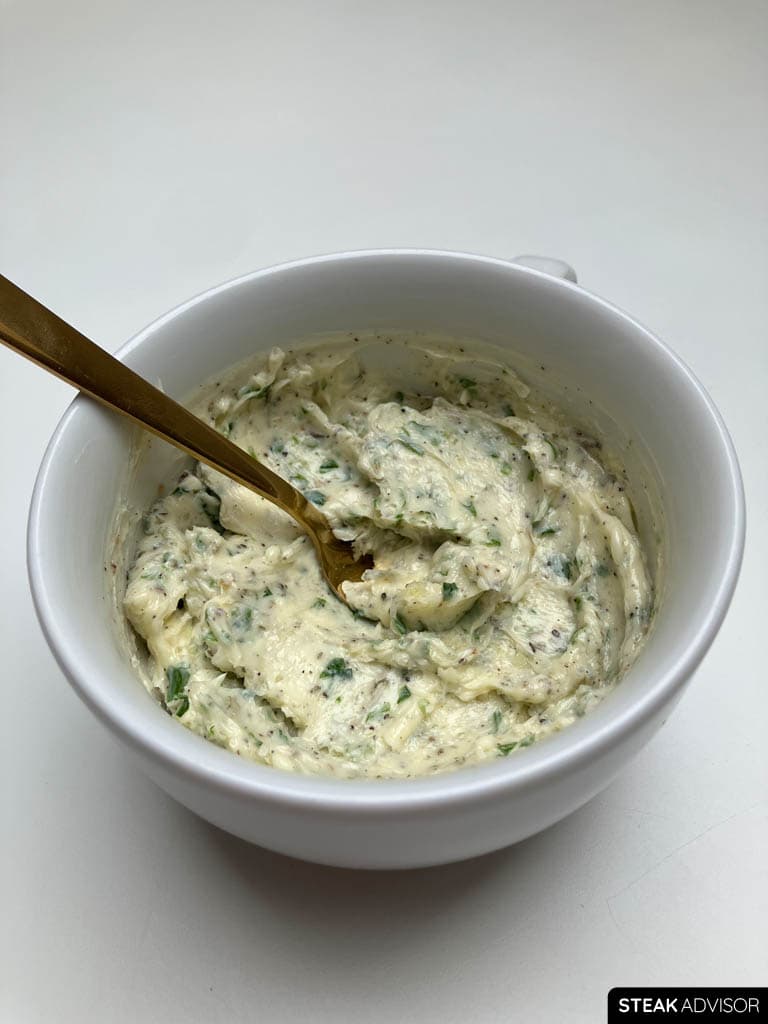
Make the garlic-herb compound butter while the salted filet mignon rests in the fridge.
Place the butter in a bowl and let it soften at room temperature until easy to mix but still firm enough to hold its shape. To speed up the process, cut it into small cubes first. Alternatively, you can place the butter in a microwave-safe bowl and microwave it in 5-second intervals, checking after each one. Be careful not to melt it.
Add the finely chopped or pressed garlic, finely chopped parsley and rosemary, and seasonings, then mix with a fork until combined. Taste and adjust the salt and pepper if needed.
Refrigerate and remove from the refrigerator 15 minutes before cooking the filet.
Let the steak sit out: If the steak was refrigerated after salting, remove it from the fridge and let it sit at room temperature for 15 minutes.
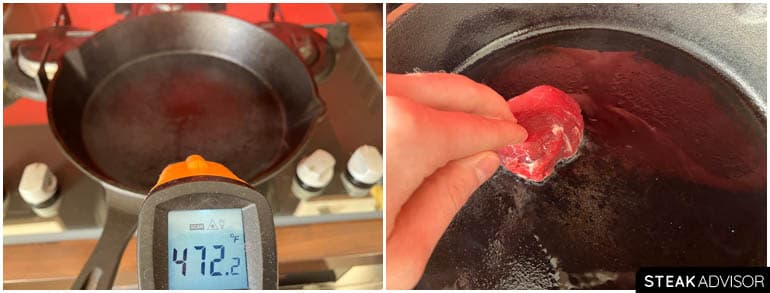
Preheat the pan: Heat a cast-iron, carbon-steel, or heavy-bottomed stainless-steel skillet over medium-high heat for 3-4 minutes. Add 2 tablespoons of high smoke point oil and let it heat for about 1 more minute.
Tip: Searing produces a lot of smoke, so turn on your exhaust fan or open a window before you start.
While the oil heats, pat the filet mignon dry again with paper towels. If using black pepper, season the steak with finely ground pepper just before searing.
Sear the steak.
Carefully place the filet mignon in the hot pan and press it down gently for full contact. Sear, flipping every 30 seconds, until the internal temperature reaches about 25°F (14°C) below your target doneness.
- 110°F (43°C) for medium-rare,
- 120°F (49°C) for medium,
- or 130°F (54°C) for medium-well.
See the chart later in the article for rare, well-done, and final rested temperatures.
Once the steak reaches the pull temperature listed above, turn it on its side and sear the edges for up to 1 minute total, rotating as needed. After searing the edges, remove the steak from the pan and let it rest uncovered for 5 minutes.
Finish the steak.
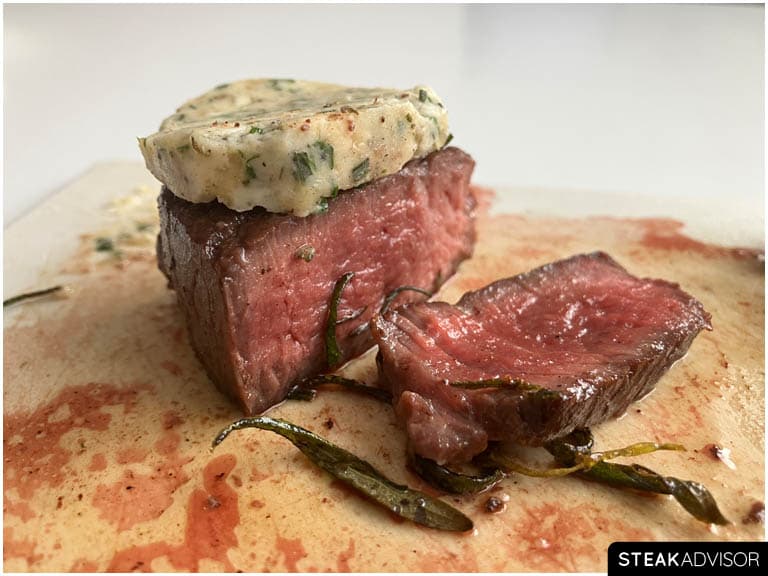
While the steak rests, top it with garlic-herb compound butter so it melts over the hot steak. After 5 minutes, slice and serve.
Tip: Store any leftover butter in the refrigerator for up to 4 days and use it on bread, vegetables, or other meats.
Alternative garlic-herb butter finish (If you don’t have compound butter).
While the steak rests, use the same pan you seared it in. If the pan is dry, add 1 to 2 tablespoons of oil. Add a few peeled garlic cloves and cook over medium heat until lightly browned.
Reduce the heat to low, then add 2 tablespoons (30 g) of unsalted butter and a couple of sprigs of rosemary or thyme. Once the butter has melted, remove the pan from the heat and spoon the garlic-herb butter over the sliced steak just before serving.
Pan-Seared Filet Mignon Temperature Chart
These guidelines apply only to filet mignon seared in a pan from start to finish as described in this recipe.
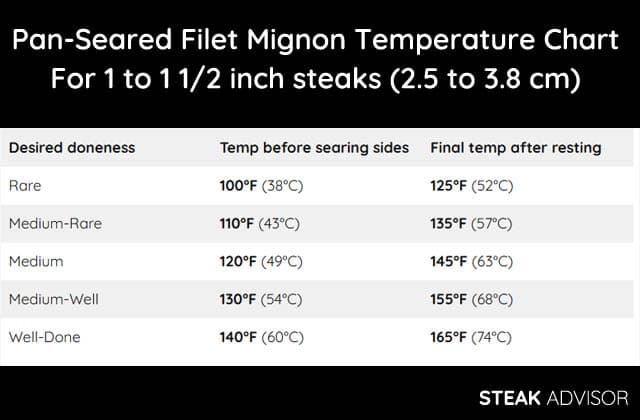
Use the “Temp Before Searing Sides” column as your guide. Once the steak reaches that temperature, turn it onto its side and sear the sides for about 1 minute total, rotating as needed. Then remove the steak from the pan and let it rest uncovered for 5 minutes. The “Final Temp” column shows the expected temperature after resting.
With this method, a filet mignon about 1 to 1 1/2 inches (2.5 to 3.8 cm) thick will continue to rise by about 25°F (14°C) from the time you start searing the sides to the end of the rest. That increase comes from the final minute of side-searing plus carryover cooking during the 5-minute rest, which is why the chart tells you to start searing the sides about 25°F (14°C) below your target final temperature.
| Desired doneness | Temp before searing sides | Final temp after resting |
| Rare | 100°F (38°C) | 125°F (52°C) |
| Medium-Rare | 110°F (43°C) | 135°F (57°C) |
| Medium | 120°F (49°C) | 145°F (63°C) |
| Medium-Well | 130°F (54°C) | 155°F (68°C) |
| Well-Done | 140°F (60°C) | 165°F (74°C) |
What is the best doneness for pan-seared filet mignon?
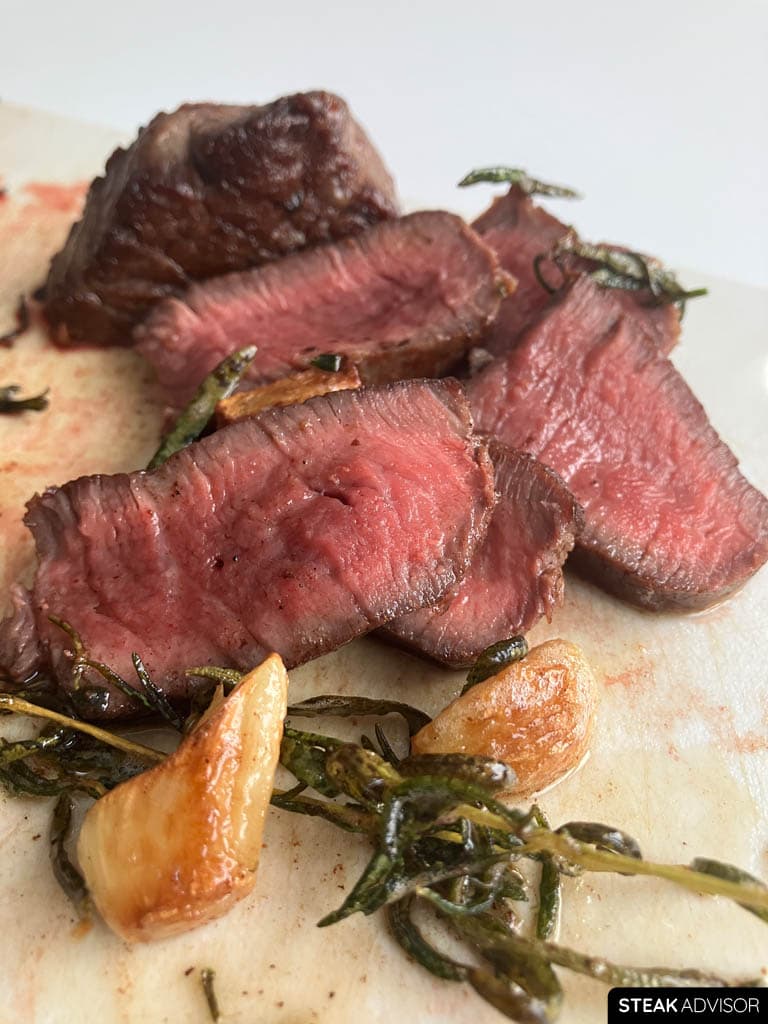
My preferred doneness for filet mignon is medium-rare, about 135°F (57°C). Because it is very lean, it dries out quickly past medium, unlike well-marbled cuts such as ribeye.
For a less pink center, cook it to medium, but no further. Push it too far, and it will lose what makes filet mignon special in the first place, its extremely tender texture.
What to Serve with Pan-Seared Filet Mignon
Personally, I really like serving it with some potatoes, usually oven-baked potatoes or quick French fries. Additionally, I add a simple green salad because it is easy and quick to make and pairs perfectly with both the potatoes and the beef.
Below are more ideas:
- Garlic Mashed Potatoes
- Roasted Potatoes
- Sautéed Mushrooms
- Roasted Asparagus
- Garlic Green Beans
- Caesar Salad
- Crispy French Fries
- Creamed Spinach
Tips for the Best Pan-Seared Filet Mignon – Summarized
- Dry-brine the steak for 4-6 hours for a much better flavor and crust, but avoid going much longer if you want to keep the gray band from getting thicker.
- Preheat the pan until it’s very hot, around 450°F (232°C).
- Use a high-smoke-point oil for searing.
- Do not sear the steak in regular butter.
- Pat the steak dry right before searing to remove surface moisture.
- Flip the steak every 30 seconds for more even cooking.
- Use a meat thermometer instead of relying on cooking time.
- Skip the butter basting and finish the steak with compound butter instead.
- Cook the steak on the flat sides until it reaches about 25°F (14°C) below your target doneness. Then lightly sear the sides for no longer than 1 minute and remove the steak from the pan.
- Do not skip the rest. Let the steak rest uncovered for 5 minutes. As it rests, its internal temperature will continue to rise due to carryover cooking, bringing the steak close to your target doneness.
For more details on why these steps matter, see the Recipe Success Tips section in my complete guide to pan-searing steak on the stove.

Pan-Seared Filet Mignon Recipe
- Prep Time: 20 minutes
- Dry-Brine Time: 1 to 6 hours
- Cook Time: 10 minutes
- Total Time: 1 hour 30 minutes
- Yield: 1 serving
Description
This filet mignon is seared in a hot pan for a deep, crisp crust, then finished with garlic-herb butter for extra flavor (no oven needed).
Ingredients
For steak
- A beef tenderloin filet about 6-8 oz (170-225 g), 1-1 1/2 in (2.5-3.8 cm) thick (choose an evenly shaped, well-trimmed piece with no silver skin)
- 2 tablespoons (30 ml) refined avocado oil (see Notes below for alternatives)
- salt, about 1% of the steak’s weight (see instructions for a 8 oz / 225 g example)
- optional: about 1/4 teaspoon of finely ground black pepper
For garlic-herb compound butter (for serving)
- 1/2 stick (56g) of unsalted butter
- 2 garlic cloves, finely chopped or pressed
- A generous pinch of salt (about 1/8 teaspoon), plus more to taste
- 1/8 teaspoon finely ground black pepper (a generous pinch), plus more to taste
- 1/2 tablespoon finely chopped fresh parsley or 1/2 teaspoon dried
- 1/2 tablespoon finely chopped fresh rosemary or 1/2 teaspoon dried rosemary
Tools
- Wire rack and baking sheet (for dry-brining the steak)
- Pan (cast-iron, carbon steel or heavy-bottomed stainless steel skillet)
- Tongs
- Meat thermometer (instant-read or leave-in probe thermometer)
Instructions
Prepare the Filet Mignon
- Pat the filet mignon dry with paper towels.
- Season it evenly on all sides, including the edges, with kosher salt. Use approximately 2.25 g, roughly 3/4 teaspoon of Diamond Crystal or 1/2 teaspoon of Morton kosher salt, per 8 oz (225 g) steak. This equals about 1% of the steak’s weight. If you don’t have kosher salt, use about 1/3 teaspoon of fine table salt.
- Place the salted filet mignon uncovered on a wire rack set over a baking sheet, then refrigerate it. Choose the resting time based on your schedule and the results you want:
- If you’re short on time: refrigerate it for at least 1 hour. That’s the minimum amount of time the salt needs to do its job.
- If you have more time and want deeper seasoning and a better crust: refrigerate it uncovered for 4 to 6 hours. This is the option I highly recommend.
- If you have less than 1 hour: don’t salt the filet mignon in advance. Season it immediately before it goes into the pan. Add flaky finishing salt after slicing only if needed.
Make the Garlic-Herb Compound Butter
- Cut the butter into small cubes and place them in a bowl. Let soften at room temperature. Alternatively, use a microwave-safe bowl and microwave in 5-second intervals until soft but not melted.
- Add the garlic, parsley, rosemary, salt, and pepper. Mix with a fork, then adjust the seasoning if needed.
- Refrigerate and remove from the refrigerator 15 minutes before cooking the filet mignon.
Preheat the Pan
- Searing produces a lot of smoke, so turn on your exhaust fan or open a window before you start.
- If the steak has been in the fridge after salting, take it out and let it sit at room temperature for an additional 15 minutes before cooking.
- Set a cast-iron, carbon-steel, or heavy-bottomed stainless-steel skillet over medium-high heat and let it heat for 3-4 minutes. Add 2 tablespoons of a high-smoke-point oil and let it heat for another minute.
- While the pan is heating, pat the filet mignon dry one more time.
- Optional: If using black pepper, season all sides with about 1/4 teaspoon of finely ground black pepper, depending on its size and your preference.
- Then immediately move on to the next step.
Pan-Sear the Filet Mignon
- Carefully place the filet mignon in the hot pan and press it down gently so it makes full contact with the surface.
- Sear it, flipping every 30 seconds, until the internal temperature reaches about 25°F (14°C) below your target doneness.
110°F (43°C) for medium-rare,
120°F (49°C) for medium,
or 130°F (54°C) for medium-well.
For rare, well-done, and final rested temperatures, use the chart below. - Then turn the steak onto its side and sear the edges for up to 1 minute total, rotating as needed.
- Once the edges are seared, remove the steak from the pan and let it rest uncovered for 5 minutes.
Compound Butter Finish
- Place a bit of garlic-herb compound butter on the hot steak as soon as it comes out of the pan. It will slowly melt while the steak rests.
- Store leftovers in the refrigerator for up to 4 days and use on bread, vegetables, or other meats.
Slice and Serve the Steak
- Don’t forget to let the filet mignon rest for 5 minutes before slicing.
- After those 5 minutes, slice the filet mignon however you like and serve it with your favorite aromatics and sides.
Notes
Oil/Fat Alternatives: Use refined high-oleic safflower, refined high-oleic canola, refined canola, refined olive, or refined peanut oil. Ghee also works well. Don’t sear the steak in regular butter; it burns quickly over high heat.
Salt: If you don’t have kosher salt, use 2.25 g (about 1/3 teaspoon) of fine table salt for an 8 oz (225 g) steak. This is equal to about 1% of the steak’s weight.
Compound butter: Use any compound butter you like. Garlic-herb compound butter is the classic choice for steak, but it’s not the only option. For more ideas, see my full list of steak butter recipes.
Dry brining for 12-24 hours: You can dry-brine the steak for 12-24 hours, but expect a thicker gray band under the crust. The flavor and crust will be excellent, but not everyone likes the deeper, saltier flavor that develops after a long dry brine, especially when the steak sits closer to 24 hours. If you want to try a longer dry brine, I recommend starting with 12 hours first. Then, next time, you can go longer and see if you like the difference. Just keep in mind that the closer you get to 24 hours, the more noticeable the gray band under the crust becomes.
Alternative garlic-herb butter finish (If you don’t have compound butter): While the steak rests, use the same pan you seared it in. If the pan is dry, add 1 to 2 tablespoons of oil. Lightly brown a few peeled garlic cloves over medium heat. Reduce the heat to low, then add a couple of sprigs of rosemary or thyme and 2 tablespoons (30 g) of unsalted butter. Let the butter melt, turn off the heat, then spoon the garlic-herb butter over the sliced steak before serving.

Fantastic method Adam. You are definitely my go to steak guru. I really appreciate all the details your recipes include.
Thanks so much, Holly. I really appreciate that.
Great recipe! I was worried about the 25°F carryover, but it really did rise that much. Wow!
Perfect recipe for a quick filet mignon without using the oven. The compound butter gave it plenty of flavor, and it was much easier to hit the doneness I wanted.
Thanks for trying the recipe.
This was perfect for a quick filet mignon without using the oven. I cooked a 1.5-inch filet to about 135°F and still got a really nice crust. Simple method and the steak turned out excellent.
Awesome, glad it turned out great!
Ever since I stopped butter basting and started using compound butter after searing, it’s been much easier to hit the doneness I’m aiming for. The steak still tastes great both ways, but this method feels a lot more controlled.
Great to hear it worked well for you.