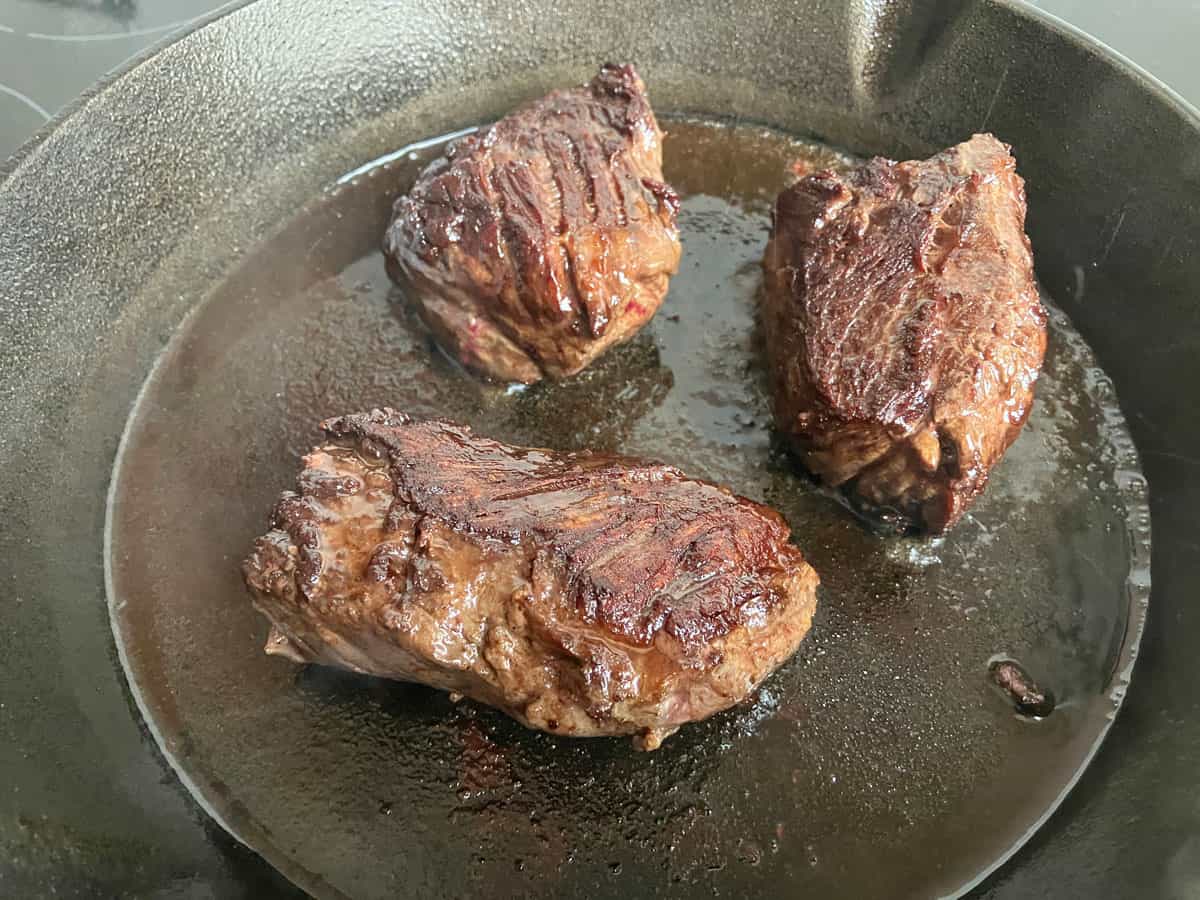

Hanger steak is one of my favorite cuts of beef because when it’s cooked right, it’s tender, juicy, and packed with bold, beefy flavor. I keep this recipe simple with a few hours of dry-brining, a hard sear, and garlic-herb compound butter.
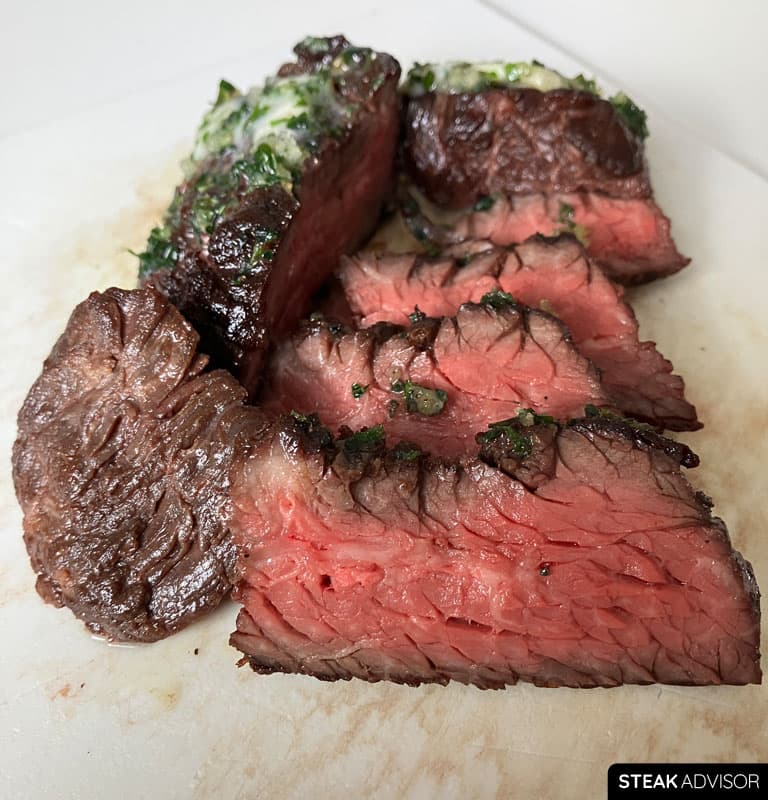
Hanger steak gets plenty of love on the grill, but it’s also great pan-seared. Once trimmed, it cooks quickly, sears beautifully, and needs just a few minutes in the pan.
Prep Note
I’ve included step-by-step instructions for trimming a whole hanger steak and cutting it into evenly sized pieces so they cook at the same rate in the pan.
Ingredients You’ll Need
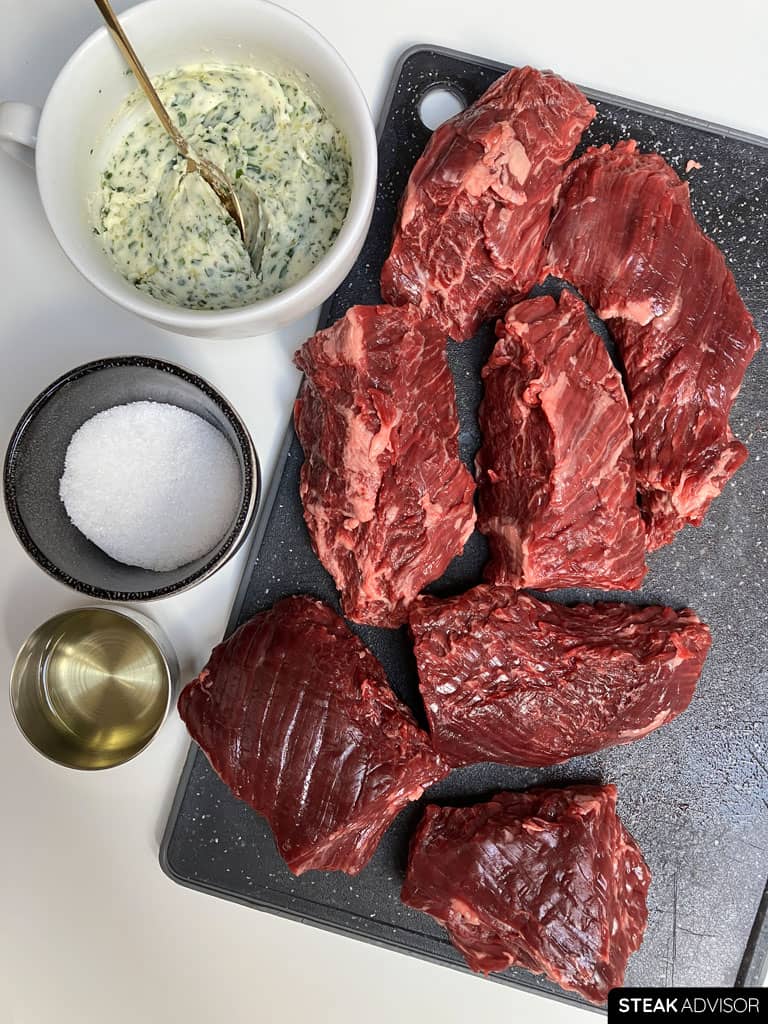
For the steak:
- Hanger steak: I prefer buying it whole so I can trim it myself and cut it into evenly thick steaks. Pre-trimmed or pre-cut hanger steak works well too, but go for the thicker pieces. Skip the butterflied steaks; they’re way too thin and better suited for stuffed rolls.
- Salt: Use about 1% of the steak’s weight in salt. I prefer kosher salt because its larger crystals are easier to distribute evenly. For reference, 1 lb (454 g) of steak needs about 0.16 oz (4.5 g) of salt. Because different salts vary in crystal size and density, measuring by weight gives you the most consistent results. Once you know what the right amount looks like with the salt you use, you can season by eye. I’ve included approximate teaspoon amounts for different types of salt in the recipe instructions below.
- Oil: Use a high-smoke-point oil for searing. I prefer refined avocado oil for its neutral flavor and smoke point of about 500°F (260°C). As alternatives, you can use refined high-oleic safflower oil, refined high-oleic canola oil, refined canola oil, refined olive oil, or refined peanut oil. Clarified butter (ghee) is another good option. Don’t use regular butter for searing because it burns quickly at high heat.
For the garlic-herb compound butter:
Compound butter is softened butter mixed with garlic and fresh herbs, then seasoned with salt and pepper to taste. As it melts over a hot steak, it adds rich, savory flavor to every bite.
- Butter: Use 1/2 stick (56 g) good-quality unsalted butter with at least 80% fat. I prefer unsalted butter so I can control the seasoning myself.
- Garlic: Add 2 fresh garlic cloves, finely minced, chopped, or pressed.
- Rosemary: Use 1/2 tablespoon finely chopped fresh rosemary or 1/2 teaspoon dried rosemary. I prefer fresh rosemary for its stronger aroma and flavor. If using fresh, chop it very finely so you do not end up with tough, woody pieces.
- Parsley: Use 1/2 tablespoon finely chopped fresh parsley or 1/2 teaspoon dried parsley. I usually go with fresh for the brighter flavor and color, but dried works perfectly well.
- Salt and black pepper: Add about 1/8 teaspoon of each to start. Taste the butter and adjust from there.
Want to switch up the ingredients? Check out my other steak butter recipes.
Tools You’ll Need
- Wire rack and baking sheet: I use this setup for dry-brining. The rack lets air circulate around the steak, helping the surface dry evenly, while the baking sheet catches any drips and keeps the refrigerator clean.
- Heavy skillet: I prefer a cast-iron skillet because it holds heat well and helps the steak develop a deep, even crust. A carbon-steel pan or heavy-bottomed stainless-steel skillet works too. Don’t use a nonstick pan because it isn’t designed for searing at such high temperatures.
- Long-handled tongs: Use sturdy tongs with a comfortable grip. They give you better control when flipping and moving the steak and keep your hands farther from the hot pan and splattering oil.
- Meat thermometer: Usually, I use an instant-read thermometer. If you’re worried about overcooking, a leave-in probe thermometer is a great option because it lets you monitor the internal temperature from start to finish.
How to Pan-Sear a Hanger Steak
Optional: Trim the Steak
Skip this step if your steak is already trimmed or pre-cut.
If buying a whole untrimmed hanger steak, expect it to weigh roughly 1.5 to 2.5 lbs / 680 to 1133 g before trimming.
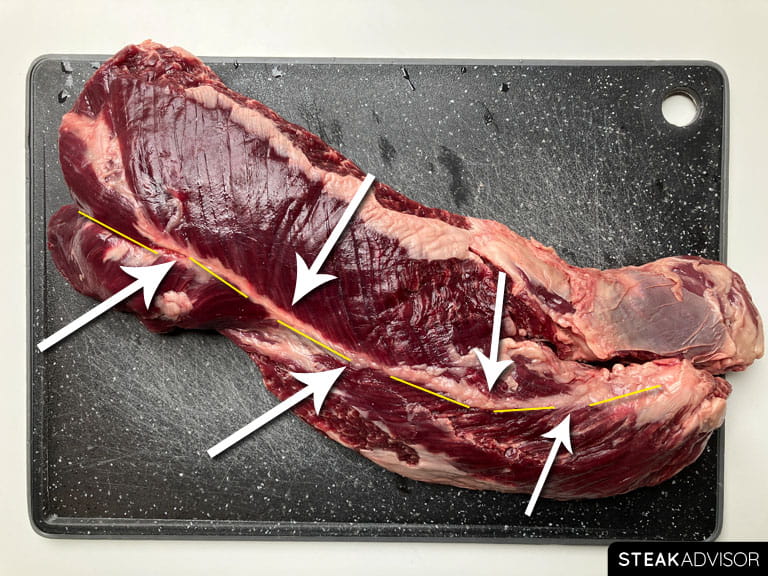
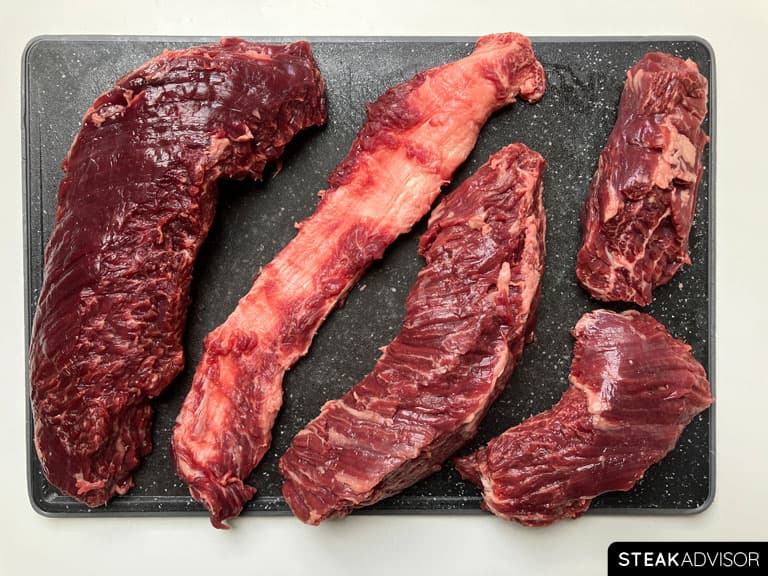
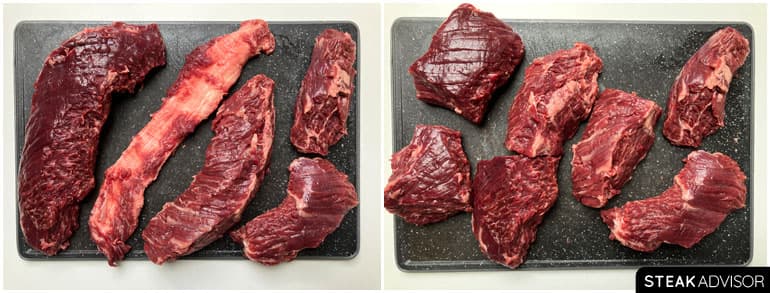
Start by removing any excess fat and silver skin from the outside. Then remove the tough center sinew that runs lengthwise through the steak. It’s pretty straightforward. Use a sharp knife to carefully cut along both sides of the center sinew, removing it while keeping as much meat intact as possible.
Check out the photos below to see what the steak looks like after trimming away the outer fat and silver skin and removing the center sinew.
Cut Into Pan-Sized Portions
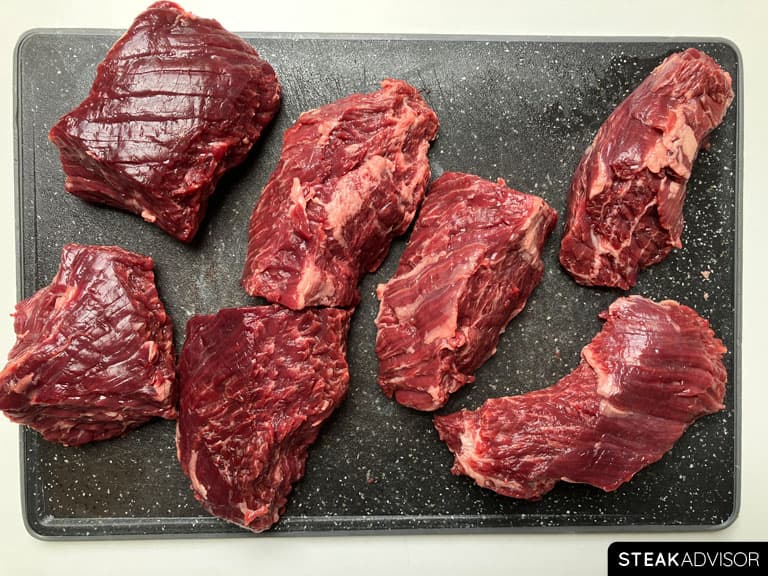
Now cut the remaining meat into portions that are as even in size and thickness as possible. Hanger steak typically ranges from about 3/4 to 1 1/4 inches thick (2 to 3 cm), so keeping the pieces similar will help them cook more evenly.
As you can see below, my trimmed hanger steak, which started at about 2.5 lbs (1.1 kg), gave me 7 fairly even pieces, each weighing around 4.6 oz (130 g), ready to season and sear.
Dry-Brine the Steaks
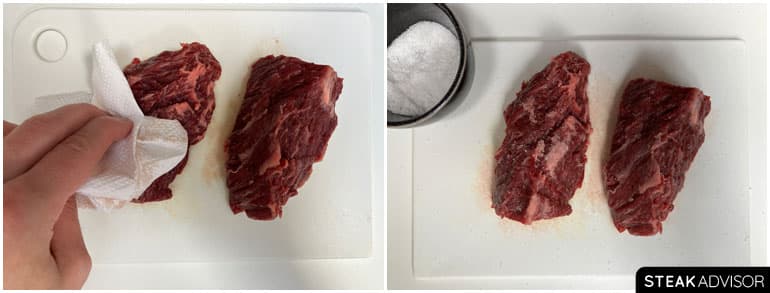
Pat the steak pieces dry with paper towels. Based on the trimmed steak’s weight, measure out salt equal to 1% of that weight (the ideal ratio to season the meat deeply without making it overly salty), then distribute it evenly over all sides of the pieces.
For a 4.6 oz (130 g) steak piece, use about 1.3 g of salt, or approximately:
- 1/2 teaspoon Diamond Crystal kosher salt,
- 1/4 teaspoon Morton kosher salt,
- or 1/4 teaspoon table salt.
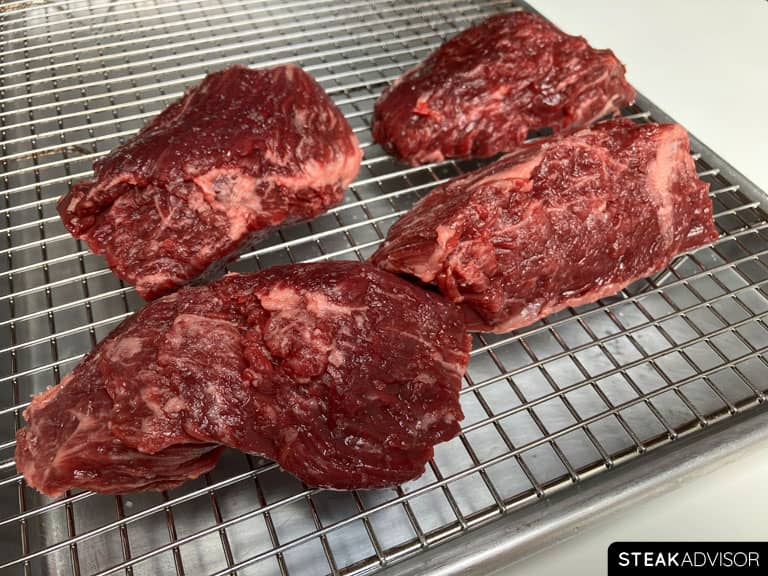
Place the steak pieces on a wire rack set over a baking sheet and refrigerate uncovered. Give them at least 1 hour, though I recommend 3 to 4 hours for the best crust and flavor.
If you don’t have at least an hour to dry-brine, don’t salt in advance. Either salt the steak pieces immediately before placing them in the pan, or season them after cooking as you eat. Salting anywhere in between draws out surface moisture and ruins your sear.
Make the Garlic-Herb Compound Butter
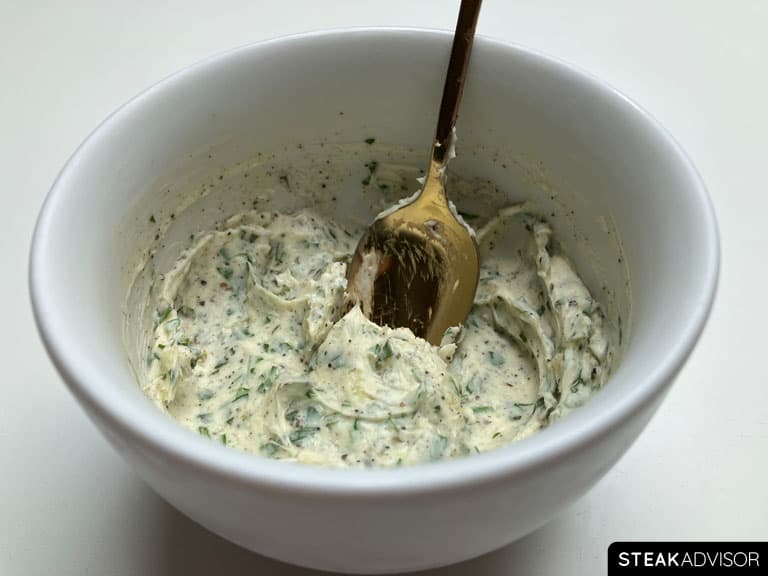
Cut the butter into small cubes and place them in a small bowl. Let them sit at room temperature until soft enough to mash, but not melted. If you’re short on time, microwave it in 5-second bursts, checking between each so it doesn’t melt completely.
Add the garlic, parsley, rosemary, pepper, and salt, then mash everything together with a fork until smooth and well combined. Taste and adjust the seasoning if needed, then cover the bowl and chill in the fridge.
Preheat the Pan
If you dry-brined the steaks, take them out of the fridge 15 minutes before cooking. Set out the compound butter at the same time to let it soften a bit.
Tip: High-heat searing generates plenty of smoke, so turn on your exhaust fan or crack a window before you start.
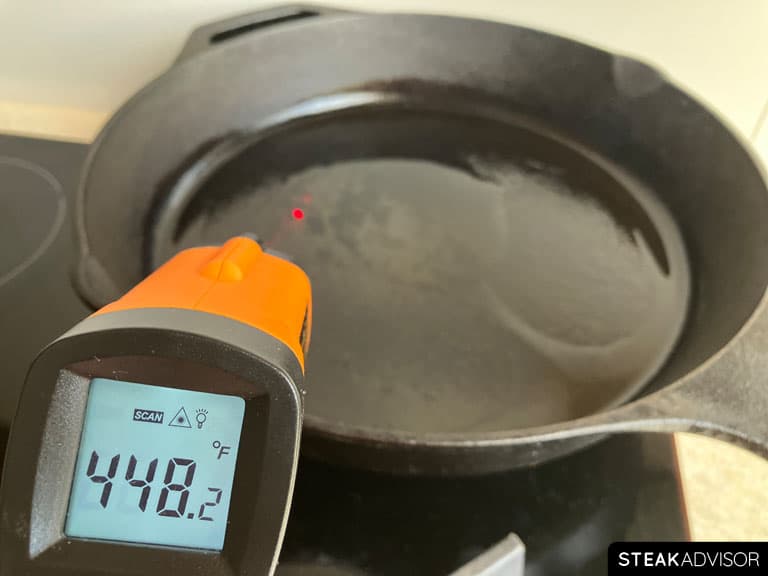
Set a heavy skillet, like cast iron, carbon steel, or heavy-bottomed stainless steel, over medium-high heat for 3 to 4 minutes. Add 2 tablespoons of high-smoke-point oil and heat for one more minute.
While the pan heats up, pat the steak pieces dry one last time with paper towels. Removing surface moisture keeps heat from wasting energy on evaporation, which gets browning started immediately and builds a far superior crust.
Pan-Sear the Steak Pieces
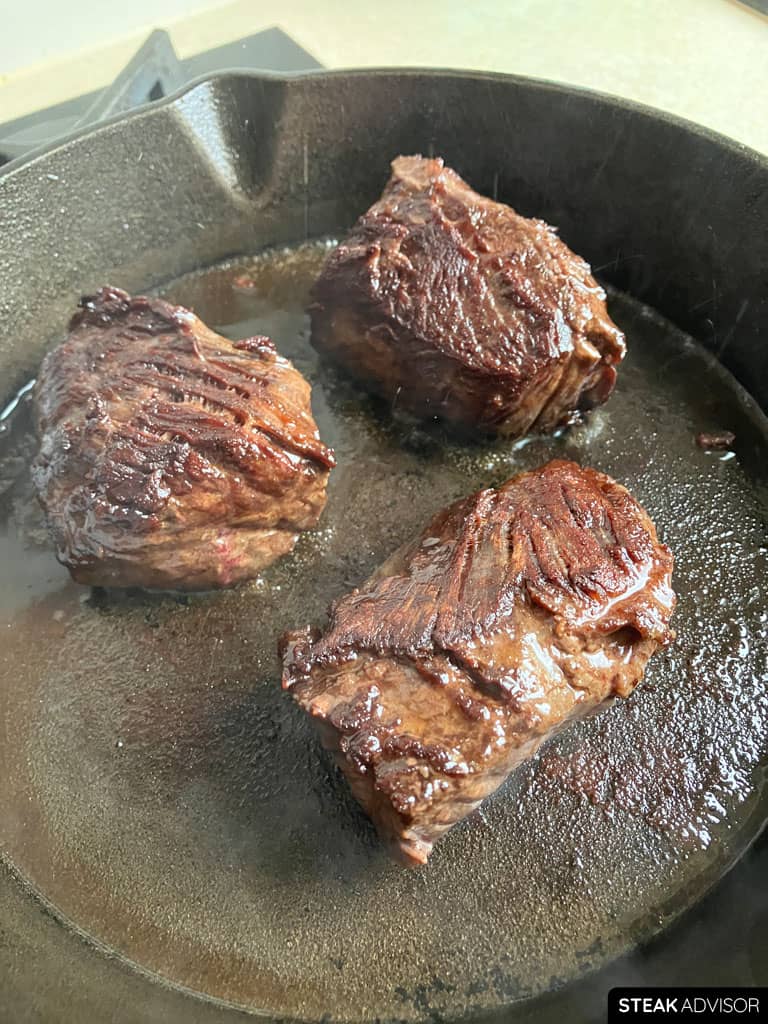
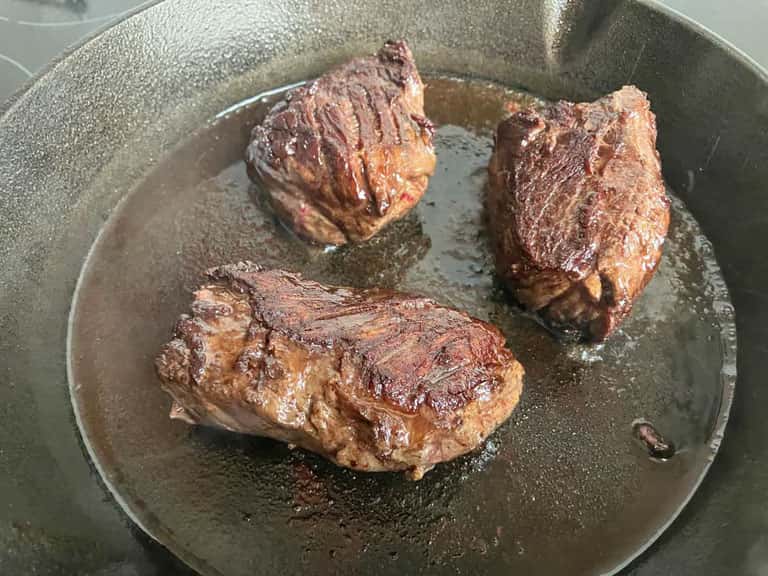
Place as many steak pieces in the pan as will fit comfortably without touching or overlapping. Work in batches rather than crowding the skillet. Hanger steak cooks quickly, so an extra batch adds only a few minutes.
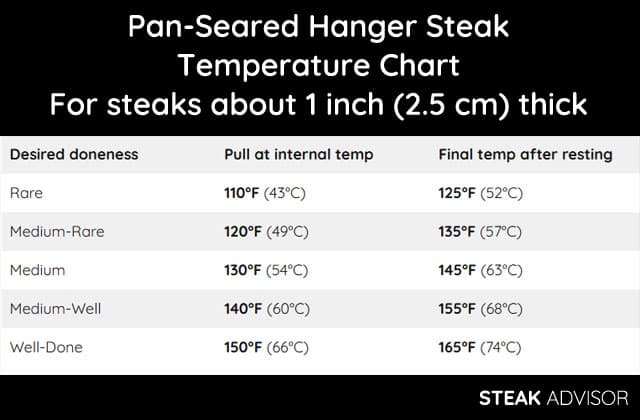
Cook the pieces, flipping every 30 seconds, until the center of each one reaches the pull temperature for your desired doneness in the chart below. Check each piece individually and pull thinner pieces off the heat as soon as they hit their target pull temperature.
In my experience, on a gas stove over medium-high heat in a 12-inch (30 cm) cast-iron skillet, a 1-inch (2.5 cm) thick piece usually takes about 5 minutes total to reach a pull temperature of 130°F (54°C) for medium. Don’t rely strictly on timing, though; I always recommend trusting your thermometer.
Start checking the temperature after about 3 minutes. Slide the thermometer probe horizontally into the thickest part, aiming for the center. Check each piece individually and pull thinner pieces off the heat first.
Once a piece hits its target pull temperature, move it to a cutting board or plate, top it with the compound butter, and let it rest for 5 minutes. The residual heat will keep cooking the meat while it rests (carryover cooking), bringing the steak to its final doneness without overcooking in the pan.
Tip: Let the skillet reheat briefly between batches. If the pan looks dry, add an extra tablespoon or two of oil and let it warm up for about 30 seconds before cooking the next round.
Pan-Seared Hanger Steak Temperature Chart
| Desired doneness | Pull at internal temp | Final temp after resting |
| Rare | 110°F (43°C) | 125°F (52°C) |
| Medium-Rare | 120°F (49°C) | 135°F (57°C) |
| Medium | 130°F (54°C) | 145°F (63°C) |
| Medium-Well | 140°F (60°C) | 155°F (68°C) |
| Well-Done | 150°F (66°C) | 165°F (74°C) |
Slice and Serve
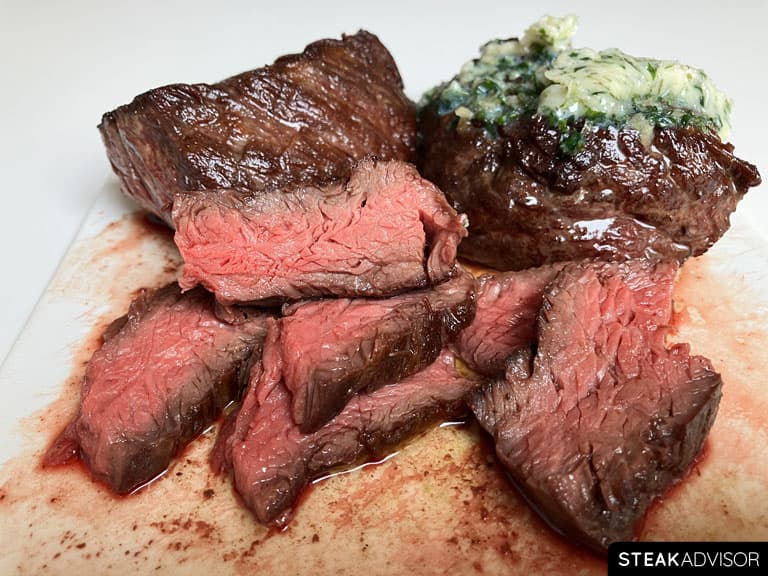
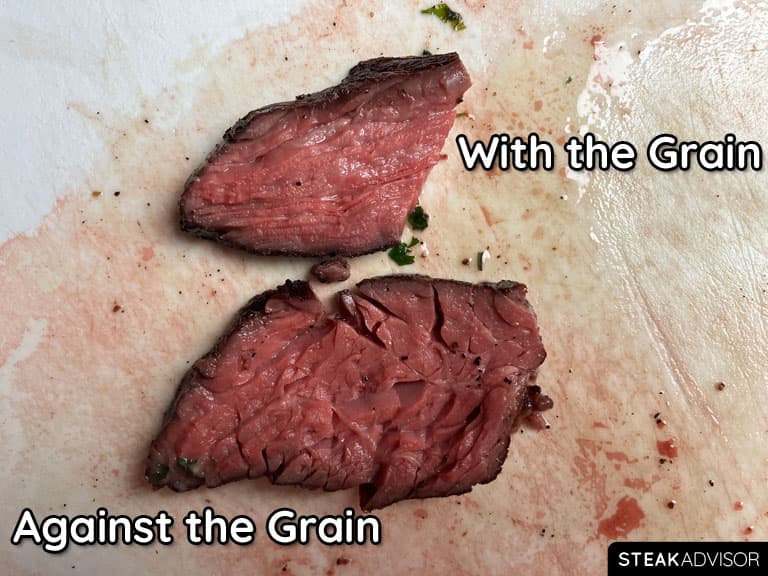
After resting for 5 minutes, your steak is ready to slice. The golden rule here is simple: never slice along the grain, or the meat will turn out chewy.
Always slice hanger steak against the grain to shorten the muscle fibers for a tender bite. Scroll down a bit further in the article, where I show you how to find the grain using clear photos, and check out the embedded video tutorial for extra visual help.
Serve with your preferred sides and enjoy!
What to Serve with Pan-Seared Hanger Steak
Hanger steak pairs wonderfully with just about any potato dish and a fresh side salad. If you need some inspiration, here are a few of my favorite combinations to complete the meal:
- Crispy Oven-Baked Potatoes
- Thick-Cut Steak Fries
- Creamy Mashed Potatoes
- Oven-Roasted Brussels Sprouts
- Arugula and Tomato Salad
What Is the Best Doneness for Pan-Seared Hanger Steak?
Hanger steak is best cooked medium-rare to medium. That’s when it’s at its juiciest and most tender. I aim for an internal temperature of about 140°F (60°C) after resting, which, in my opinion, is the sweet spot.
Cook hanger steak beyond medium, and it starts to lose tenderness and juiciness, turning tough and chewy. Cook it rare, and it becomes mushy and slippery.
How to Slice Hanger Steak Against the Grain
Slicing hanger steak properly makes a massive difference in how tender it feels. The key is to slice it thinly and always against the grain.
Hanger steak has long, clearly visible muscle fibers. If you slice in the same direction as those fibers, they remain long, and your teeth have to work much harder to chew them. Slicing across the grain shortens those fibers, making every bite noticeably easier to eat.
On a whole hanger steak, the grain direction shifts slightly, but it is still relatively easy to spot. Just remember to always slice across it. With a cooked steak, it gets a bit trickier because the grain isn’t always as clear. Don’t worry, though, because I will show you a few examples below of what hanger steak looks like and how it changes when you slice it against the grain versus with the grain.
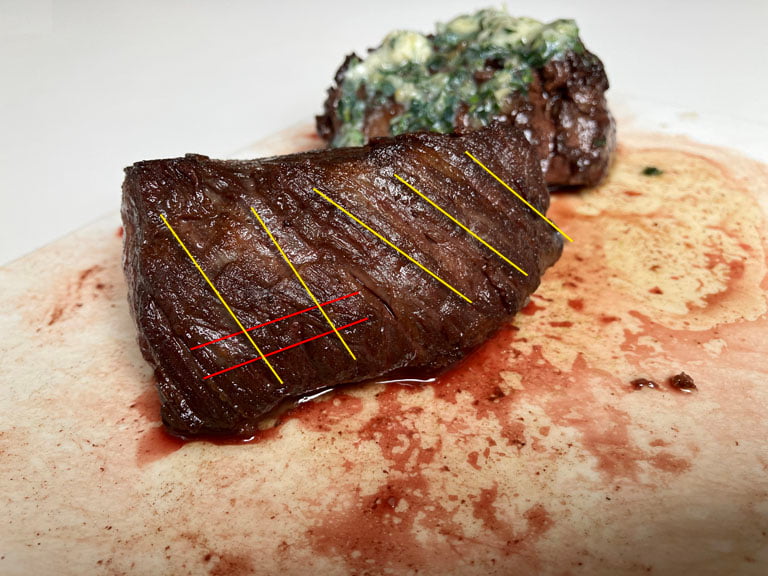
In the photo of the cooked hanger steak, the yellow lines show the direction of the grain. To slice it properly, follow the red lines; that is the angle you want to cut at to go against the grain. If your hanger steak is large, cut it in half or into smaller sections first to make slicing against the grain easier.
If you want to see a great visual demonstration of this exact technique and how to rotate the pieces while slicing, check out this helpful video by Snake River Farms.
Tips for the Best Pan-Seared Hanger Steak – Key Takeaways
- Go for a thicker cut: If you choose pre-trimmed cuts, skip the butterflied hanger steak and look for pieces that are about 1 inch (2.5 cm) thick.
- Cut into smaller sections: Cut the whole hanger steak into a few smaller, inches-long pieces of even thickness so they cook uniformly and are much easier to slice against the grain later.
- Dry-brine your steaks: Dry-brine for deeper flavor and a dry surface that browns much better. For the best results, dry-brine for 3 to 4 hours.
- Follow the 1% salt rule: Use salt equal to 1% of the steak’s weight so you do not over-salt the meat.
- Skip short-term salting: If you don’t have at least an hour to dry-brine, do not salt in advance, because salting right before cooking draws out surface moisture and ruins your sear.
- Use a heavy skillet: Use a heavy skillet, preferably cast iron, and preheat it well for 4 to 5 minutes before searing.
- Choose the right oil: Use a high-smoke-point oil, such as refined avocado oil. Do not sear in regular butter.
- Pat completely dry: Pat the steak completely dry before searing. A dry surface browns faster and develops a better crust.
- Don’t crowd the pan: Do not overcrowd the pan. Cook the steak in batches if needed.
- Flip constantly: Flip the steak every 30 seconds for more even cooking and better crust control.
- Use a thermometer: Use a meat thermometer instead of relying on cooking time. Check each piece separately and remove thinner pieces first.
- Pull it early: Remove the steak much earlier than the old-school 5°F (3°C) rule suggests. With a hard, fast sear, carryover cooking is much greater than most people realize, so pull it about 15°F (8°C) below your target doneness.
- Rest with butter: Top with compound butter and rest for 5 minutes, allowing residual heat to bring the steak to its final doneness.
- Slice against the grain: Always slice thinly against the grain. This shortens the muscle fibers and makes each bite easier to chew.
If you want to dig deeper into why these tips actually work, head over to my complete guide on how to properly cook steak on the stove.
Print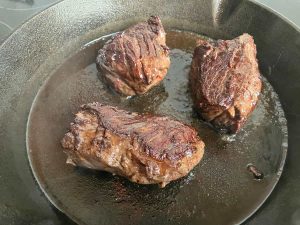
Pan-Seared Hanger Steak Recipe
- Prep Time: 20 minutes
- Dry-Brine Time: 1 hour
- Cook Time: 10 minutes
- Total Time: 1 hour 30 minutes
- Yield: 2 large or 3-4 moderate servings
Description
Learn how to cook an incredible hanger steak on your stove with a crispy, deeply browned crust and a tender, juicy center every single time.
Ingredients
For the Steak:
- About 1 lb (454 g) trimmed hanger steak, whole or cut into thick pieces (skip butterflied cuts)
- Salt, 1% of the steak’s weight (see instructions for a 4.6 oz / 130 g piece example)
- 2 tablespoons (30 ml) high-smoke-point oil (I recommend refined avocado oil; see Notes for alternatives)
For the Garlic-Herb Compound Butter:
- 1/2 stick (56 g) unsalted butter, softened
- 2 garlic cloves, finely minced, chopped, or pressed
- 1/2 tablespoon fresh rosemary, finely chopped, or 1/2 teaspoon dried
- 1/2 tablespoon fresh parsley, finely chopped, or 1/2 teaspoon dried
- About 1/8 teaspoon each salt and black pepper, plus more to taste
Tools:
- Wire rack and baking sheet
- Pan (cast-iron, carbon steel or heavy-bottomed stainless steel skillet, not nonstick), preferably cast iron
- Tongs
- Meat thermometer (instant-read or leave-in probe thermometer)
Instructions
Optional: Trim the Steak
- Skip this step if your steak is already trimmed or pre-cut.
- Pat the steak dry with paper towels.
- Trim away any excess fat and silver skin from the outside.
- Use a sharp knife to cut along both sides of the tough center sinew, removing it while keeping as much meat intact as possible.
- See the photos below for what the steak should look like after trimming.
Cut Into Portions
- Cut the trimmed hanger steak into similarly sized pieces, keeping the thickness as consistent as possible for even cooking.
- My 2.5 lb (1.1 kg) hanger steak yielded 7 pieces, each about 4.6 oz (130 g).
Dry-Brine the Steaks
- Pat the pieces dry, weigh them, and salt each one proportionally (1% of its individual weight).
- For a 4.6 oz (130 g) piece, use about 1.3 g salt:
1/2 tsp Diamond Crystal kosher salt
1/4 tsp Morton kosher salt
1/4 tsp table salt - Place on a wire rack over a baking sheet and refrigerate uncovered for at least 1 hour (preferably 3 to 4 hours for the best crust and flavor).
- Short on time? If you can’t dry-brine for at least 1 hour, salt the steaks right before searing or season them after cooking. Salting in that 15- to 60-minute window draws out surface moisture and ruins your crust.
Make the Compound Butter
- Cut the butter into small cubes, place them in a small bowl, and let soften at room temperature (or microwave in 5-second bursts until soft, not melted).
- Add the garlic, parsley, rosemary, pepper, and salt, then mash with a fork until smooth and well combined.
- Taste, adjust seasoning if needed, then cover and refrigerate until needed.
Preheat the Pan
- If you dry-brined the steaks, take them out of the fridge 15 minutes before cooking. Set out the compound butter at the same time so it can soften slightly.
- Tip: Turn on your exhaust fan or crack a window (high-heat searing generates plenty of smoke).
- Heat a heavy skillet over medium-high heat for 3 to 4 minutes. Add 2 tablespoons of high-smoke-point oil and heat for another minute.
- While the pan heats, pat the steaks dry again with paper towels. A dry surface helps them brown faster and develop a better crust.
Pan-Sear the Hanger Steak Pieces
- Place as many pieces in the pan as fit comfortably without touching. Cook in batches if needed.
- Sear the steak, flipping every 30 seconds, until each piece reaches the pull temperature for your desired doneness:
120°F (49°C) for medium-rare,
130°F (54°C) for medium,
140°F (60°C) for medium-well,
See notes for the complete steak temperature chart. - Check each piece individually with a thermometer inserted horizontally into the thickest part (start checking after about 3 minutes).
- Once each piece hits its target pull temperature, transfer it to a plate or cutting board, top with compound butter, and rest for 5 minutes. Carryover cooking will bring it to its final doneness.
- As a reference, a 1-inch (2.5 cm) thick piece takes about 5 minutes total in my 12-inch (30 cm) cast-iron skillet to reach 130°F (54°C) for medium. Use the thermometer, not the clock, as your guide.
- Between batches: Let the skillet reheat briefly. If it looks dry, add 1 to 2 tablespoons more oil and heat for about 30 seconds before continuing.
Slice and Serve
- After resting for 5 minutes, slice the steak against the grain (perpendicular to the muscle fibers) for the most tender bite.
- Serve with your favorite sides and enjoy.
Notes
Oil/Fat: Use refined avocado oil, refined high-oleic safflower oil, refined high-oleic canola oil, refined canola oil, refined olive oil, refined peanut oil, or ghee (clarified butter). Do not use regular butter for searing (it burns at high heat).

First time making hanger steak, and it came out better than expected. The trimming photos helped a lot.
Thanks, Megan. Happy the photos helped.
First time cooking hanger steak, and the trimming tips helped a lot. Great flavor, nice crust, and slicing it against the grain made a big difference.
Thanks, Eric.