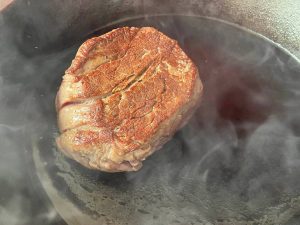
Description
This filet mignon is seared in a hot pan for a deep, crisp crust, then finished with garlic-herb butter for extra flavor (no oven needed).
Ingredients
For steak
- A beef tenderloin filet about 6-8 oz (170-225 g), 1-1 1/2 in (2.5-3.8 cm) thick (choose an evenly shaped, well-trimmed piece with no silver skin)
- 2 tablespoons (30 ml) refined avocado oil (see Notes below for alternatives)
- salt, about 1% of the steak’s weight (see instructions for a 8 oz / 225 g example)
- optional: about 1/4 teaspoon of finely ground black pepper
For garlic-herb compound butter (for serving)
- 1/2 stick (56g) of unsalted butter
- 2 garlic cloves, finely chopped or pressed
- A generous pinch of salt (about 1/8 teaspoon), plus more to taste
- 1/8 teaspoon finely ground black pepper (a generous pinch), plus more to taste
- 1/2 tablespoon finely chopped fresh parsley or 1/2 teaspoon dried
- 1/2 tablespoon finely chopped fresh rosemary or 1/2 teaspoon dried rosemary
Tools
- Wire rack and baking sheet (for dry-brining the steak)
- Pan (cast-iron, carbon steel or heavy-bottomed stainless steel skillet)
- Tongs
- Meat thermometer (instant-read or leave-in probe thermometer)
Instructions
Prepare the Filet Mignon
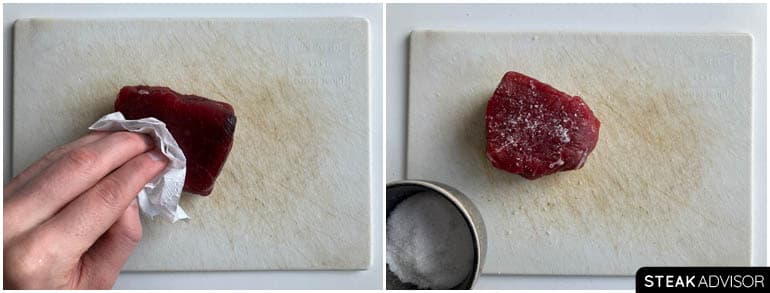
- Pat the filet mignon dry with paper towels.
- Season it evenly on all sides, including the edges, with kosher salt. Use approximately 2.25 g, roughly 3/4 teaspoon of Diamond Crystal or 1/2 teaspoon of Morton kosher salt, per 8 oz (225 g) steak. This equals about 1% of the steak’s weight. If you don’t have kosher salt, use about 1/3 teaspoon of fine table salt.
- Place the salted filet mignon uncovered on a wire rack set over a baking sheet, then refrigerate it. Choose the resting time based on your schedule and the results you want:
- If you’re short on time: refrigerate it for at least 1 hour. That’s the minimum amount of time the salt needs to do its job.
- If you have more time and want deeper seasoning and a better crust: refrigerate it uncovered for 4 to 6 hours. This is the option I highly recommend.
- If you have less than 1 hour: don’t salt the filet mignon in advance. Season it immediately before it goes into the pan. Add flaky finishing salt after slicing only if needed.
Make the Garlic-Herb Compound Butter
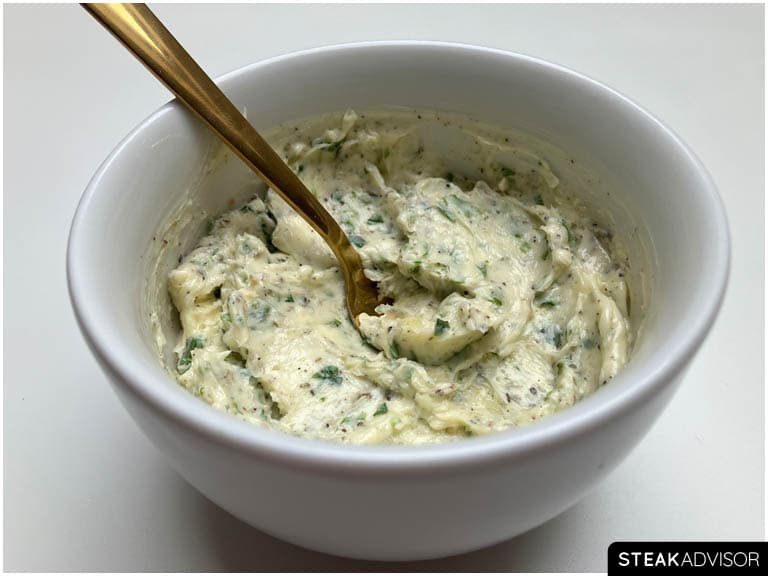
- Cut the butter into small cubes and place them in a bowl. Let soften at room temperature. Alternatively, use a microwave-safe bowl and microwave in 5-second intervals until soft but not melted.
- Add the garlic, parsley, rosemary, salt, and pepper. Mix with a fork, then adjust the seasoning if needed.
- Refrigerate and remove from the refrigerator 15 minutes before cooking the filet mignon.
Preheat the Pan
- Searing produces a lot of smoke, so turn on your exhaust fan or open a window before you start.
- If the steak has been in the fridge after salting, take it out and let it sit at room temperature for an additional 15 minutes before cooking.
- Set a cast-iron, carbon-steel, or heavy-bottomed stainless-steel skillet over medium-high heat and let it heat for 3-4 minutes. Add 2 tablespoons of a high-smoke-point oil and let it heat for another minute.
- While the pan is heating, pat the filet mignon dry one more time.
- Optional: If using black pepper, season all sides with about 1/4 teaspoon of finely ground black pepper, depending on its size and your preference.
- Then immediately move on to the next step.
Pan-Sear the Filet Mignon
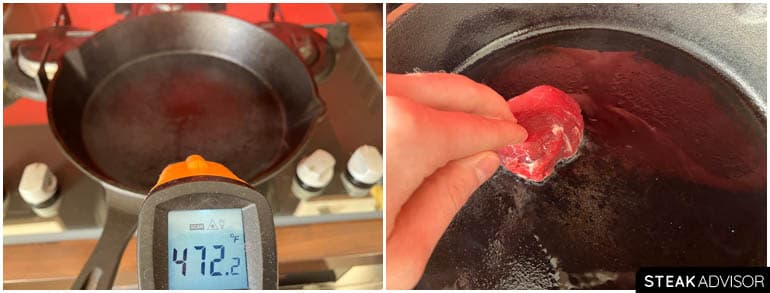
- Carefully place the filet mignon in the hot pan and press it down gently so it makes full contact with the surface.
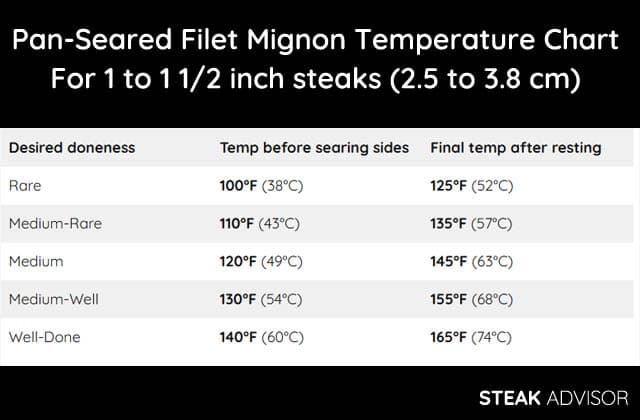
- Sear it, flipping every 30 seconds, until the internal temperature reaches about 25°F (14°C) below your target doneness.
110°F (43°C) for medium-rare,
120°F (49°C) for medium,
or 130°F (54°C) for medium-well.
For rare, well-done, and final rested temperatures, use the chart below. - Then turn the steak onto its side and sear the edges for up to 1 minute total, rotating as needed.
- Once the edges are seared, remove the steak from the pan and let it rest uncovered for 5 minutes.
Compound Butter Finish
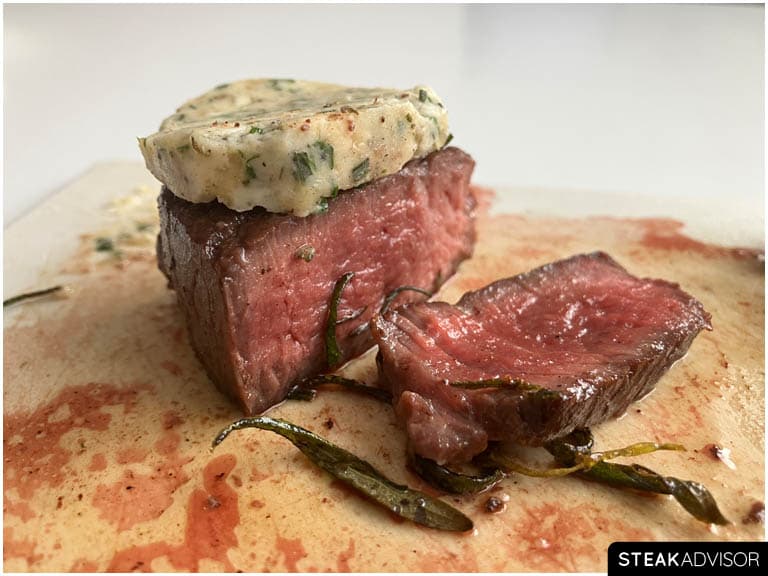
- Place a bit of garlic-herb compound butter on the hot steak as soon as it comes out of the pan. It will slowly melt while the steak rests.
- Store leftovers in the refrigerator for up to 4 days and use on bread, vegetables, or other meats.
Slice and Serve the Steak
- Don’t forget to let the filet mignon rest for 5 minutes before slicing.
- After those 5 minutes, slice the filet mignon however you like and serve it with your favorite aromatics and sides.
Notes
Oil/Fat Alternatives: Use refined high-oleic safflower, refined high-oleic canola, refined canola, refined olive, or refined peanut oil. Ghee also works well. Don’t sear the steak in regular butter; it burns quickly over high heat.
Salt: If you don’t have kosher salt, use 2.25 g (about 1/3 teaspoon) of fine table salt for an 8 oz (225 g) steak. This is equal to about 1% of the steak’s weight.
Compound butter: Use any compound butter you like. Garlic-herb compound butter is the classic choice for steak, but it’s not the only option. For more ideas, see my full list of steak butter recipes.
Dry brining for 12-24 hours: You can dry-brine the steak for 12-24 hours, but expect a thicker gray band under the crust. The flavor and crust will be excellent, but not everyone likes the deeper, saltier flavor that develops after a long dry brine, especially when the steak sits closer to 24 hours. If you want to try a longer dry brine, I recommend starting with 12 hours first. Then, next time, you can go longer and see if you like the difference. Just keep in mind that the closer you get to 24 hours, the more noticeable the gray band under the crust becomes.
Alternative garlic-herb butter finish (If you don’t have compound butter): While the steak rests, use the same pan you seared it in. If the pan is dry, add 1 to 2 tablespoons of oil. Lightly brown a few peeled garlic cloves over medium heat. Reduce the heat to low, then add a couple of sprigs of rosemary or thyme and 2 tablespoons (30 g) of unsalted butter. Let the butter melt, turn off the heat, then spoon the garlic-herb butter over the sliced steak before serving.