| PREP TIME | REST TIME | COOK TIME |
| 5 mins | 1 to 4 hours | 2 to 4 mins |
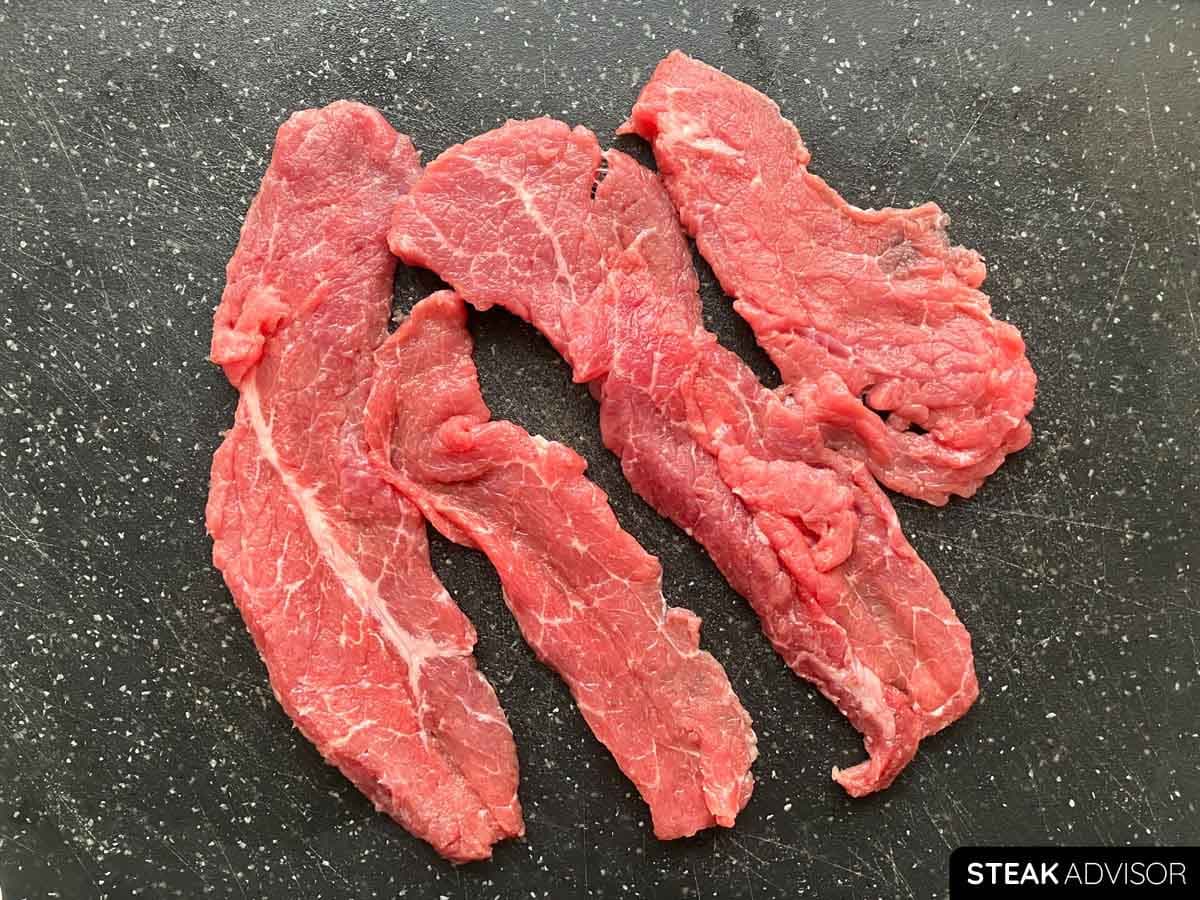
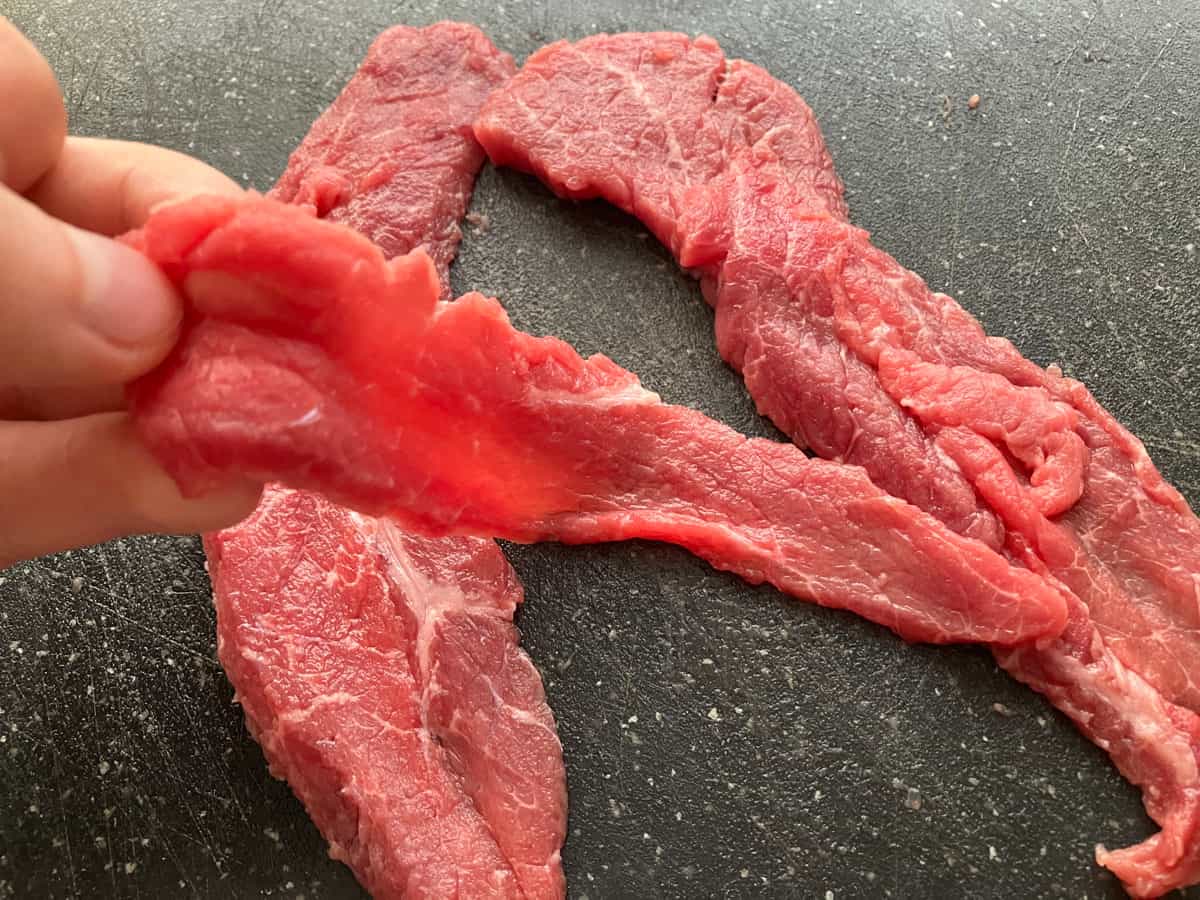
It’s super hard to cook a very thin cut of steak (about 0.5 inches / 1.27 cm thick), but it’s still possible. The key is to prepare the steak properly and sear it quickly over high heat. I will show you step-by-step how to cook a very thin steak so the inside stays medium-rare/medium while the outside gets a light, browned crust. It’s a fast and straightforward recipe, perfect for thin-sliced, well-marbled cuts like ribeye or strip steak.
Important
This recipe works best for steaks that are about 0.5 inch (1.27 cm) thick. If your steak is thicker, you’ll get better results by following one of my other recipes:
- 1 inch (2.5 cm) Steak in a Pan
- 1.5-2 inch (3.8-5 cm) Steak in a Pan
- 2.5-inch (6.3 cm) Steak in a Pan

The Ingredients You’ll Need
- Steak: About 0.5 inches (1.27 cm) thick steak (ideally a tender, flavorful cut such as ribeye, strip, or outside skirt)
- High-smoke-point oil: 2 tablespoons (30 ml), I recommend refined avocado oil
- Kosher salt: 1/2 teaspoon (about 3-4 g)
- Black pepper: 1/2 teaspoon
- Compound butter (Optional)
The Tools You’ll Need
- A smaller pan (Cast-iron, carbon steel, or heavy-bottomed stainless steel skillet)
- Tongs
How to Cook a Very Thin Steak – Step by Step Photos
Start by gathering all the ingredients and tools listed above, then follow the steps below to cook your thin steak perfectly.

Step 1: Prepare the Steak
Pat the steak dry with paper towels on both sides, then season with kosher salt (about 1/4 teaspoon per side). Place it on a wire rack set over a baking sheet and let it rest for at least 1 hour at room temperature, or refrigerate it uncovered for about 4 hours for a much better flavor and a drier surface (I highly recommend the 4-hour dry-brine option for very thin steaks). Important: If you refrigerate the salted steak, take it out 15–20 minutes before cooking and let it sit at room temperature.
Note
Salting is one of the most important steps for achieving a great crust. Moisture is the enemy of a good sear, and the steak’s surface needs to be dry before it hits the pan. Here’s what happens after salting: within a couple of minutes of salting, the salt draws out liquid, and the surface becomes wet – this is the worst time to sear a steak. Over the next 45–60 minutes, most of that liquid is reabsorbed along with the salt, leaving the steak more flavorful and drier on the outside, which is exactly what you want for browning.
One hour is the bare minimum. However, if you really want to see the difference, go for the 4-hour dry brine in the refrigerator. The flavor becomes deeper, and the crust turns out significantly better. Trust me, with a very thin cut, it’s the only way to get that nice, browned surface.
Season lightly, about 1/4 teaspoon of kosher salt per side is enough. Spread it evenly over the whole steak. Since it’s a thin cut, it doesn’t need much more. Also, please don’t keep it in the refrigerator for more than 4 hours. The longer it rests (especially 8–12 hours or more), the thicker the gray band forms inside. With such a thin cut, that gray band takes up too much of the steak and doesn’t look good at all.


Step 2: Preheat the Pan
Place your pan over medium-high heat and let it heat for 3–4 minutes. Add 2 tablespoons of a high-smoke-point oil and let it heat for another minute. While the pan is heating, pat the steak dry again with paper towels and season both sides with finely ground black pepper. Once the pan and oil are hot, you’re ready to begin searing.
Note
A thin steak, about 0.5 inches (1.27 cm) thick, only needs about 3-4 minutes over medium-high heat. That’s why the pan has to be hot from the start – but don’t overthink it. You don’t need to blast it until it smokes like crazy. Preheat a cast-iron skillet over medium-high heat for 4–5 minutes, and it’ll reach a temperature of around 500°F (260°C). At least, that’s what I get on my gas stove at medium-high – hot enough to sear fast without burning.
For this job, choose a pan that can hold high heat evenly. Cast iron is my top choice, but you can also use a carbon steel or heavy stainless steel skillet. And use the right oil; refined avocado oil is my favorite, with a smoke point of 500°F (260°C). Here are a few solid alternatives:
| Type of Fat | Smoke Point ºF | Smoke Point ºC |
|---|---|---|
| Refined Avocado Oil | 520ºF | 270ºC |
| Refined Safflower Oil | 510ºF | 266ºC |
| Beef Tallow | 480ºF | 250ºC |
| Pecan Oil | 470ºF | 243ºC |
| Refined Peanut Oil | 450ºF | 232°C |


Step 3: Pan-Sear the Steak
For a medium-rare to medium doneness, place the steak in the pan and gently press it with tongs to ensure even contact with the surface. If your steak is 0.4–0.5 inches (1–1.3 cm) thick, start by moving the steak to a fresh, hotter spot in the pan every 15 seconds during the first minute (this helps it sear better by keeping it over the hottest areas of the pan, resulting in better browning). Flip the steak and repeat the process on the other side for an additional 60-90 seconds. For slightly thicker steaks (0.6–0.7 inches / 1.5–1.8 cm), add about 30 seconds per side, still moving it to a hotter spot in the pan every 15 seconds. Once seared, remove the steak from the pan and let it rest for 5 minutes.
Optional: At the beginning or end of searing, take a moment to sear the fat edge of the steak for 30–60 seconds. This helps render the fat and adds extra flavor. Hold the steak upright with tongs and press the fatty side against the pan until it turns golden and crisp.
Depending on the thickness, you’ll typically hit medium-rare in about 2.5 to 3.5 minutes total if you follow these steps closely. If you prefer your steak cooked to medium or medium-well, sear each side for an additional 30 seconds.
Note
Usually, I recommend checking the temperature with a thermometer, but with such a thin steak, it’s not always easy or even possible to get the probe in the right spot. If you can, hold the steak with tongs and slide the probe in from the side, directly into the center. Aim to remove the steak about 15°F (8°C) below your target doneness (see the temperature chart below). Carryover cooking will raise the temperature during the 5 minutes of resting, bringing the steak right to your target.
| Steak Doneness | Internal Temp. (°F) | Internal Temp. (°C) |
| Blue Rare | 110-120°F | 43-49°C |
| Rare | 120-130°F | 49-54°C |
| Medium Rare | 130-140°F | 54-60°C |
| Medium | 140-150°F | 60-66°C |
| Medium Well | 150-160°F | 66-71°C |
| Well-Done | Over 160°F | Over 71°C |
If you don’t have a thermometer, follow the timing closely, but pay attention to visual cues. Around the 2-minute mark, the surface should be slightly brown; that’s the time when you can remove it from the pan and check doneness. If the steak still looks underdone, just place it back in the pan for a few more quick flips. Use that total time as your reference the next time you cook a steak of the same thickness on your setup. Always keep this in mind: undercooked steak is easy to fix, but once it’s overcooked, there’s no going back.


Step 4: Serve the Steak
After the steak has rested, slice it thinly. With tender cuts like ribeye or strip, slice however you prefer. For cuts with long, coarse muscle fibers (such as skirt, flank, hanger, or similar), always slice against the grain. This shortens the muscle fibers, making every bite more tender and easier to chew.
Aromatics (Optional): For an extra boost of flavor, finish the steak with compound butter. Place a very thin slice on top of the steak as it rests, allowing it to melt slowly over the surface. Or, warm the butter in the pan and pour it over the steak right before serving.


Very Thin-Cut Steak Recipe
- Prep Time: 5 minutes
- Rest Time: 1 hour
- Cook Time: 3 mins
- Total Time: 1 hour 8 minutes
Description
Quick and easy way to cook a very thin steak (about 0.5 inches / 1.27 cm thick). This method keeps the inside medium-rare/medium while giving the outside a light, golden crust. Perfect for thin-sliced, well-marbled cuts like ribeye or strip.
Ingredients
For Steak:
- About 0.5 inches (1.27 cm) thick steak (ideally a tender, flavorful cut such as ribeye, strip, or outside skirt)
- 2 tablespoons (30 ml) of high-smoke-point oil (I recommend refined avocado oil)
- 1/2 teaspoon kosher salt (about 3–4 g)
- 1/2 teaspoon black pepper
- Compound butter (Optional)
Tools:
- A smaller pan (Cast-iron, carbon steel, or heavy-bottomed stainless steel skillet)
- Tongs
- Meat thermometer (Optional)
Instructions
- Prepare the Steak: Pat the steak dry with paper towels on both sides, then season with kosher salt (about 1/4 teaspoon per side). Place it on a wire rack set over a baking sheet and let it rest for at least 1 hour at room temperature, or refrigerate it uncovered for about 4 hours for a much better flavor and a drier surface (I highly recommend the 4-hour dry-brine option for very thin steaks).
- Important: If you refrigerate the salted steak, take it out 15–20 minutes before cooking and let it sit at room temperature.
- Preheat the Pan: Place your pan over medium-high heat and let it heat for 3–4 minutes. Add 2 tablespoons (30 ml) of a high-smoke-point oil and let it heat for another minute. While the pan is heating, pat the steak dry again with paper towels and season both sides with finely ground black pepper. Once the pan and oil are hot, you’re ready to begin searing.
- Pan-Sear the Steak: Place the steak in the pan and gently press it with tongs to ensure even contact with the surface. If your steak is 0.4–0.5 inches (1–1.3 cm) thick, start by moving the steak to a fresh, hotter spot in the pan every 15 seconds during the first minute. Flip the steak and repeat the process on the other side for an additional 60-90 seconds. For slightly thicker steaks (0.6–0.7 inches / 1.5–1.8 cm), add about 30 seconds per side, still moving it to a hotter spot in the pan every 15 seconds. Once seared, remove the steak from the pan and let it rest for 5 minutes.
- Optional: At the beginning or end of searing, take a moment to sear the fat edge of the steak for 30–60 seconds. This helps render the fat and adds extra flavor. Hold the steak upright with tongs and press the fatty side against the pan until it turns golden and crisp.
- Depending on the thickness, you’ll typically hit medium-rare in about 2.5 to 3.5 minutes total if you follow these steps closely. If you prefer your steak cooked to medium or medium-well, sear each side for an additional 30 seconds.
- Serve the Steak: After the steak has rested, slice it thinly. With tender cuts like ribeye or strip, slice however you prefer. For cuts with long, coarse muscle fibers (such as skirt, flank, hanger, or similar), always slice against the grain. This shortens the muscle fibers, making every bite more tender and easier to chew.
- Aromatics (Optional): For an extra boost of flavor, finish the steak with compound butter. Place a very thin slice on top of the steak as it rests, allowing it to melt slowly over the surface. Or, warm the butter in the pan and pour it over the steak right before serving.
Notes

Explore Other Guides:
- How to Reverse Sear a Steak
- How to Cook a Dry-Aged Steak
- How to Cook Steak on the Stove
- Dry-Brining Steak: How Much Salt and How Long [Tested]