

Being able to tell if a steak has gone bad is important. Food poisoning isn’t something you want to deal with. Sure, storing steak in the fridge slows spoilage, but it doesn’t stop it. If it’s not stored properly or it’s been sitting too long, it will go bad. And no, you can’t always judge it just by how it looks. If you’re not sure whether your steak is still good, I’ve listed six simple ways below to help you figure it out.
1. Check the Use-By Date
One of the easiest ways to tell if your steak is still good is to check the use-by date. It sounds obvious, but it’s the quickest way to know if it’s still safe to cook. Just make sure you’re looking at the use-by date, not the sell-by date.
The sell-by date is mainly for the store. It tells store staff when to pull the steak off the shelf. The use-by date is for you. If it says December 11th, plan to cook it by then.
If you know you won’t have time to cook it, freeze it sooner rather than later. Don’t wait until the last day. The earlier you freeze it, the less you’ll mess with the steak’s quality. And do yourself a favor and label it with the date before you toss it in the freezer so you don’t forget how long it’s been in there. If you’re not sure how to do it properly, I’ve put together a guide to freezing steak.
2. Look for Visual Signs
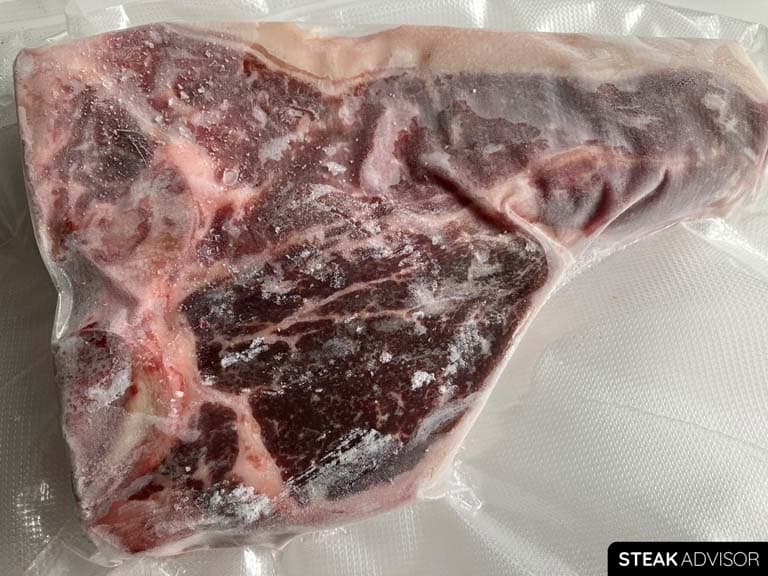
A change in color doesn’t automatically mean your steak has gone bad. What matters is why it changed. Once you take the steak out of the packaging, look closely for any unusually dark spots or strange patches. If you notice odd shades like dull brown combined with gray, yellow, or even green, that’s a red flag.
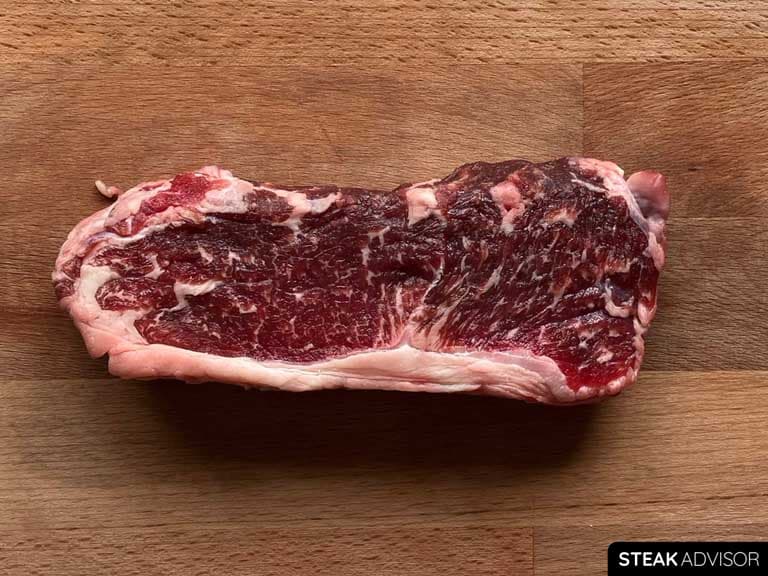
When you first buy a vacuum-sealed steak, it usually has a deep purplish or burgundy color. Once you open the package and expose the steak to air, it turns bright cherry red within about 10–15 minutes. That’s completely normal. Let it sit in the fridge for a few days, and it’ll start to turn brown. A lot of people see that and immediately think it’s spoiled. But brown by itself doesn’t always mean the steak has gone bad. What you’re looking for is a combination of signs. If the color change comes with a slimy surface or an off smell, that’s when you should be concerned.
If you’re curious why steak changes color, take a look at my guides on Why Steak Turns Brown and What the Red Juice in Steak Really Is. I break down exactly what causes those changes.
An important point to remember
According to the USDA, food shouldn’t stay at room temperature for more than 2 hours. If the temperature is between 40°F and 90°F (4°C and 32°C), you’ve got about a two-hour window. But if it’s hotter than 90°F (32°C), like on a hot summer day, that window drops to just one hour.

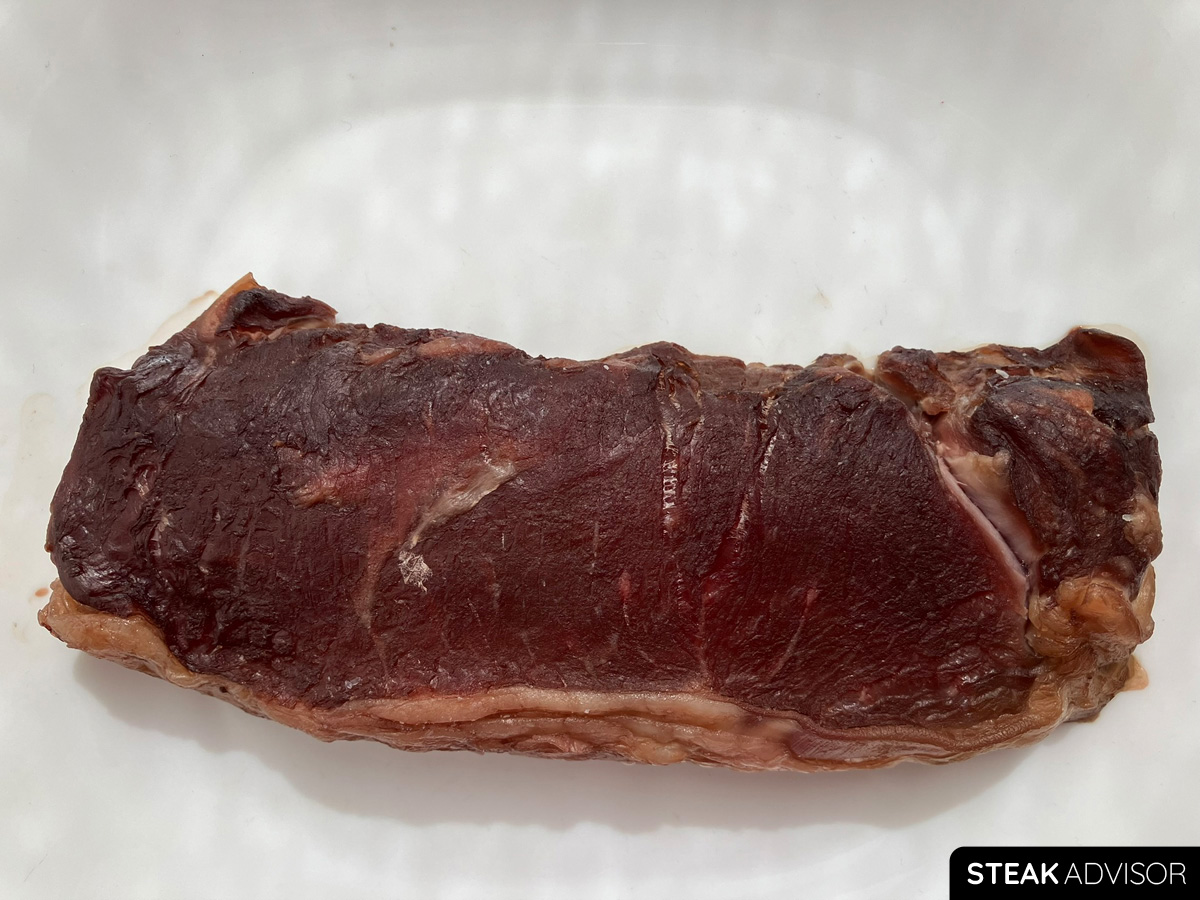
Below is the same steak 24 hours later, after dry brining with salt.
3. Check the Texture
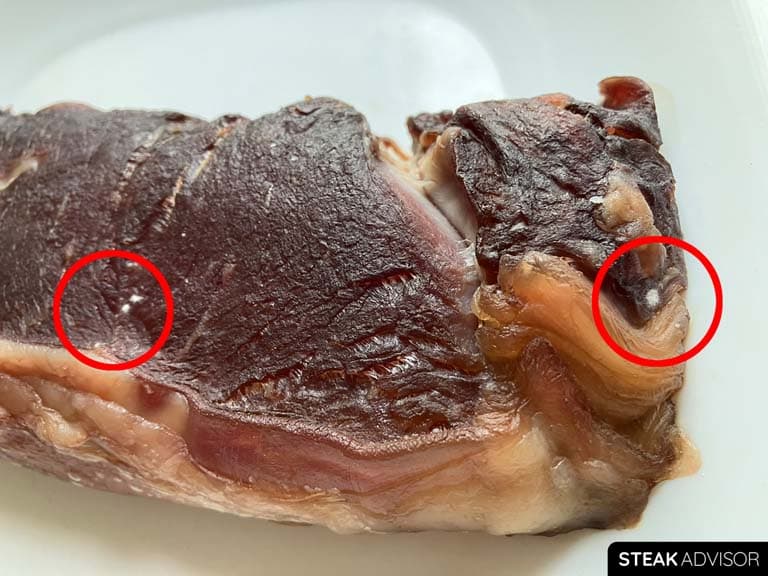
If a steak has gone bad, the texture is often one of the first signs. It may feel slimy or sticky to the touch. Run your fingers over the surface. If you notice a slippery film that doesn’t rinse off easily, that’s a red flag. That slimy texture usually means bacteria have started breaking down the meat. And if you see mold, that’s a clear sign the steak is no longer safe to eat. Don’t try to save it. Throw it away.
4. Smell the Steak
One of the easiest ways to tell if a steak has gone bad is to smell it. A fresh steak and a spoiled one don’t smell the same. Raw steak doesn’t smell amazing, but it shouldn’t make you pull back your head, either. If you get a strong sour smell, like ammonia or rotten eggs, or anything that makes you hesitate, that’s a clear sign it’s gone bad.
A quick note about dry-aged steak: it naturally has a stronger, sometimes slightly cheesy smell. That comes from the aging process. So don’t judge a dry-aged steak by smell alone. Check for other signs too, like discoloration or a slimy texture.

5. Check How Long the Steak’s Been in the Fridge
Don’t let steak sit in the fridge too long. Even if it looks fine, time still matters. According to the USDA (United States Department of Agriculture), raw steak lasts about 3 to 5 days in the fridge. Cooked steak lasts around 3 to 4 days. After that, you’re taking a risk. The texture can start to feel slimy, and the smell may turn sour. If it’s past that window and something feels off, don’t overthink it. Throw it away.

6. Look for Freezer Burn
Freezer burn doesn’t mean your steak has spoiled. According to the USDA, food stored constantly at 0°F (-18°C) remains safe indefinitely. Freezing keeps food safe. What changes is the steak’s overall quality. Over time, the texture dries out, and the flavor just isn’t the same. That’s why it’s still worth checking for freezer burn.
Freezer burn is basically your steak drying out in the freezer. You’ll notice dry, grayish, or pale patches on the surface, and sometimes a lot of ice crystals inside the packaging. The steak might feel leathery or dried out in spots. You can still cook it. But don’t expect it to taste like a steak that was frozen and stored properly. The longer it sits in the freezer, the more the texture and flavor change.
If the packaging is damaged, the steak is thin, there’s excessive frost, or you can’t remember how long it’s been in there, it may not be worth keeping. Not because it’s unsafe, but because the eating experience won’t be great. If it’s a thicker steak, you can try to save it by trimming off the freezer-burned outer parts. Yes, you’ll lose a bit of meat, but the inside (the part that wasn’t affected by the freezer burn) can still taste like a properly stored steak.
That said, once you thaw the steak, always check the smell and texture. If it smells sour or feels slimy, that’s not freezer burn anymore. That’s spoilage.
What Does a Bad Steak Look Like?
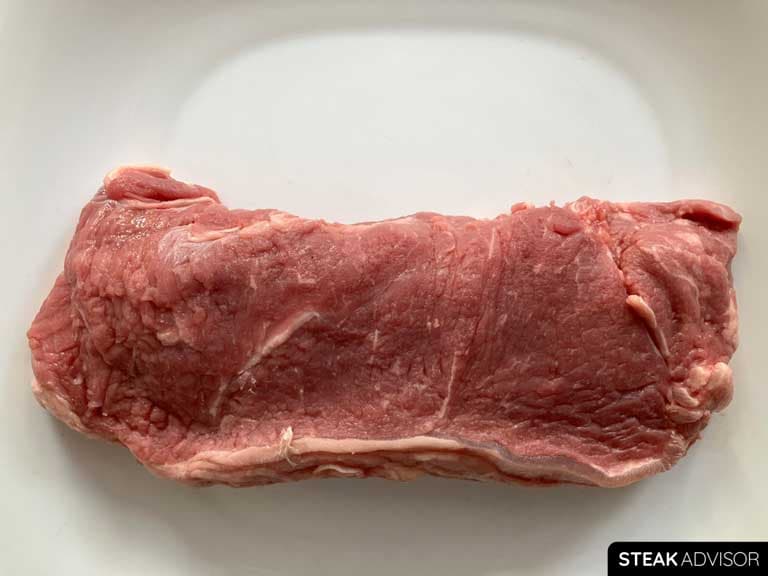
Below is an example of a steak that was left at room temperature (60–75°F / 16–24°C) for too long and went bad. Instead of the bright cherry-red color, the steak’s surface turned darker, with red and brown tones. After 48 hours at room temperature, mold started forming on the surface. The texture changes as well. Instead of feeling firm and slightly moist, it became sticky and slimy. The smell was clearly off. Sour, unpleasant, sometimes even sharp.
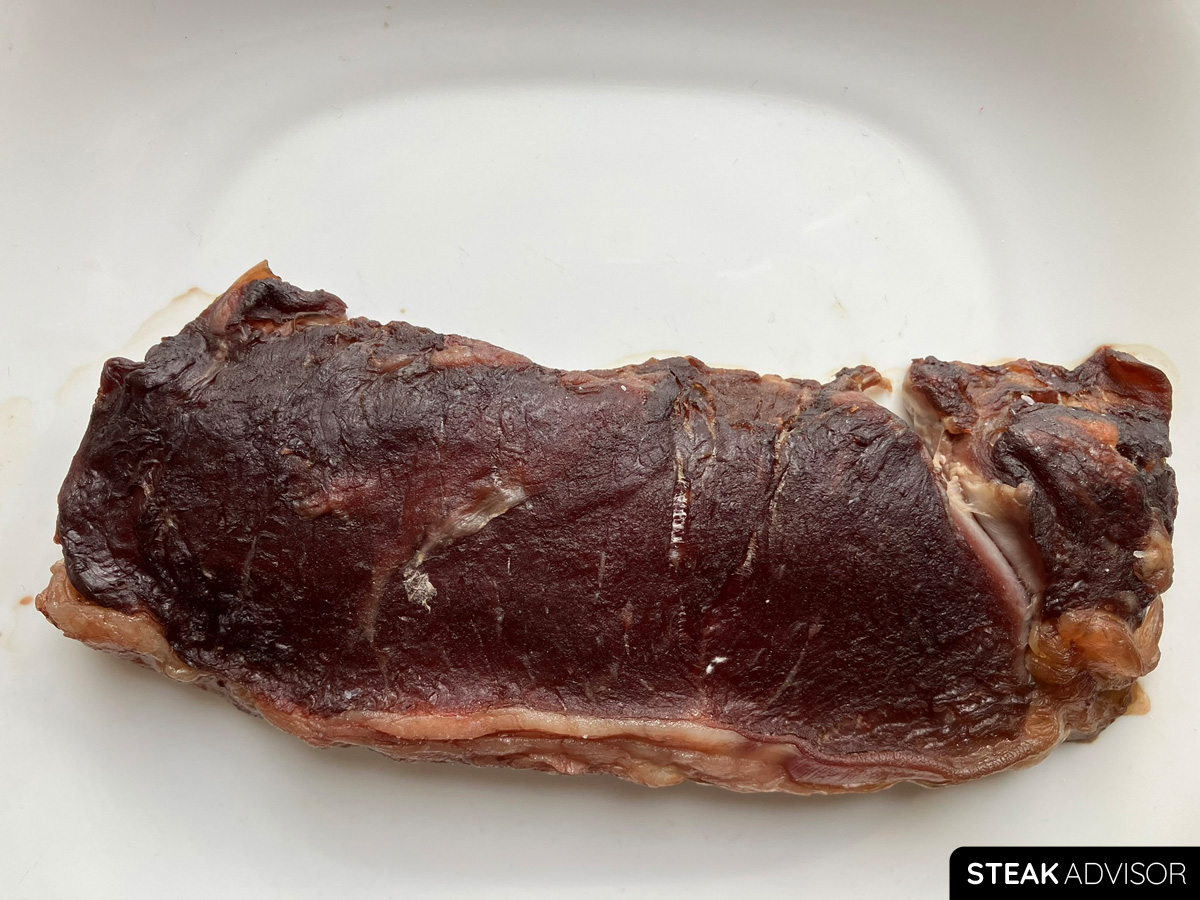
Below, I’ve added a few more photos of that same steak so you can see how it changed from fresh to bad within the first 24 hours.

What Are the Risks of Eating Spoiled Steak?
Eating spoiled steak isn’t just about bad taste. It can make you seriously sick. Bad steak can cause food poisoning. Symptoms can range from stomach cramps and nausea to vomiting, diarrhea, and fever. In some cases, it can be more severe, especially for kids, older adults, or anyone with a weakened immune system. If you’re wondering exactly how bad it can get, check out the USDA’s guide on food poisoning symptoms.
How to Prevent Steak from Going Bad?
- Don’t leave it too long at room temperature: According to the USDA, you’ve got about 2 hours at a normal room temperature. If it’s really hot, over 90°F (32°C), like on a summer day, that drops to just one hour.
- Store it properly: If you plan to cook the steak within a day or two, keep it in the refrigerator. Don’t leave it exposed to air. Keep it in the original packaging or put it in an airtight container or zip-top bag. Store it on the lowest shelf, which is usually the coldest part of the fridge.
- Keep the fridge at the correct temperature: Set your refrigerator to 4°C (40°F) or lower. If you’re not sure what temperature it’s actually running at, use a fridge thermometer. Many refrigerators run warmer than the dial suggests. Also, avoid opening the fridge constantly. Temperature swings speed up spoilage.
- Freeze it early: If you won’t cook the steak within 1–2 days, freeze it sooner rather than later. Wrap it tightly in freezer-safe wrap or vacuum seal it to prevent freezer burn. Keep the freezer at -18°C (0°F) or below.
- Label and date everything: Write the purchase date or freezing date on the package. Fresh raw steak is generally safe in the fridge for 3–5 days, according to the USDA. As for frozen steak, the USDA says it’s safe indefinitely if stored at -18°C (0°F) or below, but it doesn’t mean it will keep its quality forever. Over time, the texture, moisture, and flavor suffer. For the best quality, the USDA recommends using frozen steak within 4–12 months.
