

Ever bite into a steak and wonder why it’s so tough and chewy? Well, there are a bunch of reasons for that. Maybe it was undercooked or overcooked, or cooked using a method that doesn’t work well for that particular cut. Sometimes it comes down to how you sliced it after cooking, or even the cut of steak you chose in the first place. Before I break down all the specific reasons, let me get one thing straight first.
Is Steak Supposed to Be Tough and Chewy?
A properly cooked steak shouldn’t be overly tough or chewy. That said, some cuts naturally have more chew than others, mostly because of their muscle structure, connective tissue, and the way you cook them. Cuts like flank or hanger steak, for example, are naturally much chewier than cuts like a strip steak or ribeye. Even so, none of these cuts should be extremely hard to chew when you cook them properly and slice them correctly.
The 7 Reasons Why Your Steak is Chewy and Tough
Now that we’ve covered the basics, let’s break down the most common reasons steak turns out tough and chewy and, more importantly, how you can avoid each one next time.
Reason 1: The Cut of Steak You Chose
The cut of steak you choose has a big impact on how tender, juicy, and flavorful it turns out to be. Not all steaks cook the same way. Some are naturally tender, some have more chew, and others are just extremely tough by nature. Choose the wrong cut, and you’re much more likely to end up with a tough, chewy steak.
For example, cuts like filet mignon, ribeye, and flat iron are among the most tender steaks you can buy. Cuts like flank or hanger steak have thicker muscle fibers, so they’re naturally chewier, but they can still be very tender when cooked and sliced properly. On the other hand, you’ve got cuts like round, sirloin, and chuck steaks, which are known for being much tougher (with a few exceptions).
If you’re not sure which ones to choose, I put together a full list of steak cuts, going through which are tender, which are tough, and which you should avoid cooking like a steak. Yeah, that sounds weird, but some cuts are named “steak” even though they aren’t good to cook as a steak.
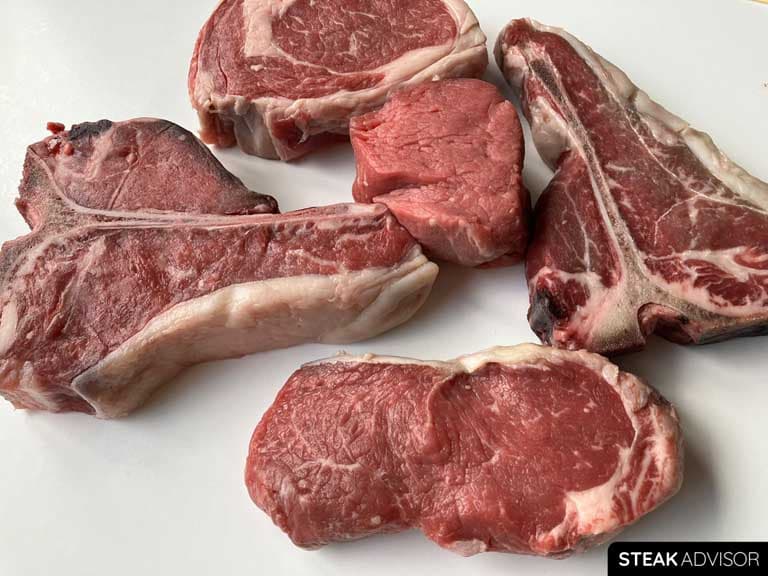
Now, don’t get me wrong. There are ways to turn almost any cut of beef into something tender. But those methods usually involve slow cooking, lower heat, or much longer cook times, which is a completely different approach. If you’re planning to cook a steak the traditional way (fast and over direct high heat), avoid naturally tough cuts.
Reason 2: Steak Doneness
Steak doneness refers to how far a steak is cooked, which is determined by its internal temperature. There are several doneness levels, each with its own temperature range, which I’ve listed in the table below.
| Steak Doneness | Internal Temp. (°F) | Internal Temp. (°C) |
| Blue Rare | 110-120°F | 43-49°C |
| Rare | 120-130°F | 49-54°C |
| Medium Rare | 130-140°F | 54-60°C |
| Medium | 140-150°F | 60-66°C |
| Medium Well | 150-160°F | 66-71°C |
| Well-Done | Over 160°F | Over 71°C |
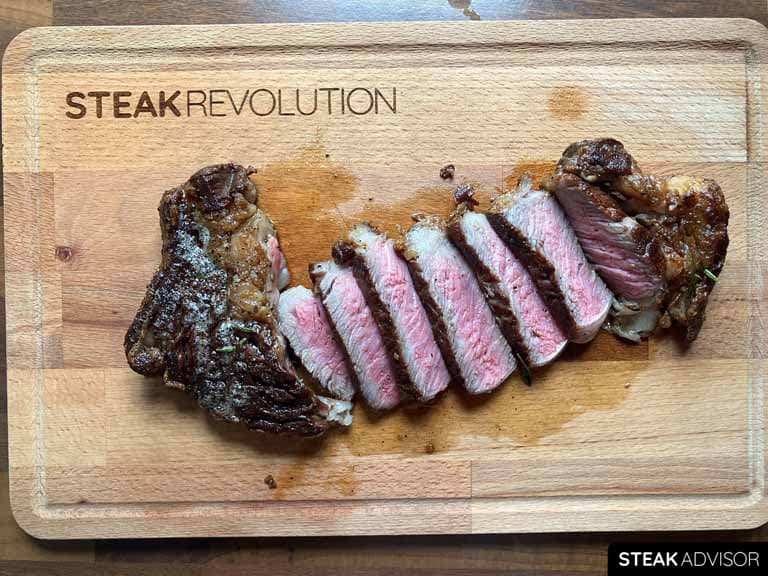
As a steak cooks, heat triggers a series of chemical reactions that affect its texture. The longer you cook the steak, the more moisture it loses and the firmer it becomes. Cook a steak too long, and the muscle fibers tighten up and push out the juices, which is when it starts to turn dry, tough, and chewy. That’s exactly why many chefs don’t recommend cooking steak well-done. By the time it reaches about 160°F (71°C), most of the moisture is already gone, and the steak loses much of its flavor.
For most cuts, medium-rare is the best choice for leaner steaks, while slightly more marbled cuts can handle medium without losing too much juiciness and tenderness. Cook a steak past that point, and it quickly becomes noticeably drier and less tender, especially with lean cuts. On the other hand, undercooking a steak can leave the texture cold, chewy, or even a bit mushy, depending on the cut.
If you want to learn more, I break it all down in my complete guide to steak doneness.
Reason 3: How You Slice the Steak
Filet mignon, strip steak, ribeye, they’re naturally tender, so you can slice them pretty much any way you want and they’ll still be easy to chew. But that’s not the case with every cut. With steaks like skirt, hanger, flap, or flank, slicing the wrong way makes a huge difference. You can cook them perfectly and still end up with a tough, chewy steak if you don’t slice them against the grain.
Before we go any further, let me explain what “the grain” actually is. The grain is the direction in which the muscle fibers run through the meat. When you look at a raw steak and see long lines running across it, those lines are the grain (see photo below).

Those fibers are tough by nature. If you bite into them whole, your teeth have to do a lot more work. When you slice against the grain, you’re cutting those long fibers into much shorter pieces. Shorter fibers are easier to chew, which is why the steak feels so much more tender. Slicing with the grain leaves long, stringy fibers that stay chewy even if the steak is cooked perfectly. That’s why slicing direction matters so much with these cuts. You can cook the steak perfectly and still end up with a chewy texture if you slice it the wrong way at the very end.
Think of it like this:
- Against the grain = shorter fibers = tender
- With the grain = long fibers = chewy
Put two slices next to each other, one cut with the grain and one against it, and the difference is obvious. Same steak, same cook, totally different eating experience.

One last thing: the grain isn’t always obvious, and it can change depending on how the steak was butchered. So before you start slicing, take two seconds to look at the lines in the meat and figure out which way they run. If you’re not sure what to look for, I’ve put together a guide to properly slicing steak, with photos showing the grain direction on popular cuts. It makes it a lot easier to get it right.
Reason 4: The Age of the Animal
As an animal gets older, its meat naturally becomes tougher. The main reason isn’t the muscle itself, it’s the connective tissue.
Inside the muscle, there’s collagen. Over time, that collagen forms more and stronger cross-links. Think of those cross-links as little chemical bridges holding everything tightly together. The older the animal, the more of those “bridges” you get. And the more of them there are, the tougher and more stable the connective tissue becomes.
When you cook meat, collagen can break down into gelatin, and that’s what gives you tenderness. But in older animals, because those cross-links are stronger and more developed, the collagen doesn’t break down as easily. It stays firm and heat-resistant. That’s why the meat feels tougher and requires more chewing. Younger animals are different. Their collagen has fewer cross-links, and those bonds are weaker. That makes the connective tissue easier to break down during cooking, which is why meat from younger animals tends to be more tender.
So even before you think about the type of steak, marbling, doneness, or slicing technique, the animal’s age already sets the baseline for how tender that steak can be.
If you want to go deeper into the science behind it, there’s a solid breakdown in the article “The Role of Collagen in Meat Tenderness” on ScienceDirect. It explains exactly how collagen cross-linking affects texture during cooking.

Reason 5: Steak Marbling
You’ve probably heard it a hundred times: a more marbled steak is a better steak. And yeah, that’s true. More marbling means more flavor. But it also plays a big role in tenderness, not just taste.

Marbling is fat inside the meat, running between the muscle fibers. When a steak has a higher fat-to-muscle ratio, there’s less resistance when you bite into it. But here’s the catch. This only works if you cook the steak properly. That fat actually has to render. If it doesn’t melt, it’s not doing you any favors. What’s worse, an undercooked, highly marbled steak with unrendered fat has a rubbery, waxy texture that’s just unpleasant.
Once the fat starts to melt, though, everything changes. Chewing becomes easier and smoother, and the steak feels noticeably more tender. With very highly marbled steaks, like high-grade Wagyu, the texture can get so soft it almost feels like biting into butter.
That said, marbling isn’t some magic fix. It doesn’t help much when a steak has a lot of connective tissue. That’s why marbling matters most for well-trimmed, naturally tender cuts like ribeye or strip steak. On tougher cuts, slicing and cooking techniques still matter more.
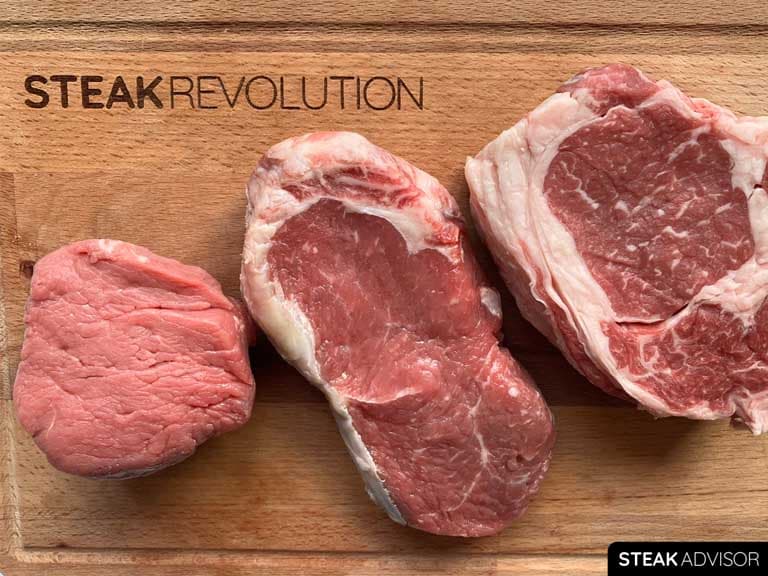
And one more thing people forget: even the fattiest steak can turn tough, dry, and chewy if you overcook it. Once the fat fully renders and starts to evaporate, you lose the very thing that made the steak tender in the first place. Cook a steak to well-done, and all that beautiful marbling won’t save you.
If you want to dig deeper, I break everything down in my article Steak Marbling: What It Is and Why It’s So Important.
Reason 6: The Grade of the Steak
Steak grade isn’t some magical guarantee of quality. It’s not perfect. And it’s definitely not the only thing that decides whether a steak turns out tender and juicy or tough and chewy. But it still matters.
Beef is graded mainly to estimate eating quality (flavor, tenderness, and juiciness). And most of that comes down to one thing: intramuscular fat (marbling). The more intramuscular fat a steak has, the higher the grade usually is. Maturity of the animal also plays a role, but marbling is the big one. The final grade gives you a general idea of what you can expect before you even cook the steak.
Grading is voluntary. Processing plants actually have to pay for it. They don’t have to grade their beef, but most do because they know people look at those labels. When someone sees a grade on a steak, it gives them a quick sense of what they’re getting.
Depending on the country, grading systems are different. In the U.S., beef is graded by the USDA. The most common grades you’ll see in stores are:
- USDA Prime – Highest grade. Lots of marbling. Very tender, very juicy, very flavorful. Expensive for a reason.
- USDA Choice – The most common grade. Solid marbling, good flavor, good tenderness. Honestly, this is the sweet spot for most people.
- USDA Select – The leanest of the three and the cheapest. Less marbling, so less juiciness and tenderness. It’s not bad, but it’s not ideal for quick, high-heat cooking.

Now here’s the important part. Grading isn’t a perfect system. It doesn’t tell you everything. It won’t fix a cut full of connective tissue. But for the most common store cuts (ribeye, strip steak, filet mignon), it’s actually a very useful indicator.
If you want a steak that turns out tender and flavorful with quick, high-heat cooking (pan, grill, whatever), go for a naturally tender cut with a higher grade (at least USDA Choice). If you want top quality, go Prime. And if you’re buying Select, just know what you’re working with. Those steaks are lean. They’re better suited for slower cooking methods or techniques that help preserve moisture. Throwing a Select steak into a ripping hot pan and expecting Prime-level tenderness always ends badly. Know what you’re buying. Then cook it accordingly.
Reason 7: Cooking Technique
You can buy the best steak in the world and still mess it up if you cook it the wrong way. The type of steak cut matters. But the cooking method matters just as much. Even lean steaks with a lot of connective tissue can turn tender, but only if you use the right cooking technique.
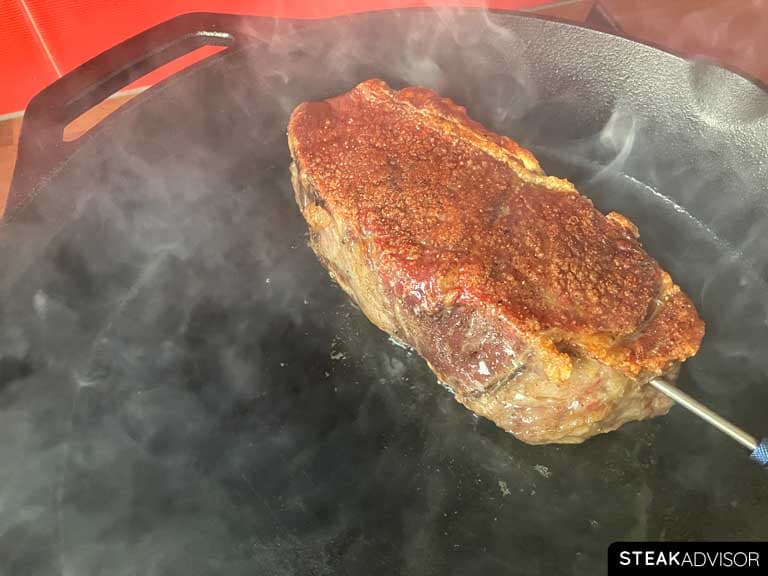
- For naturally tender cuts with low connective tissue, like ribeye, filet mignon, or a good strip steak, the recommended method of cooking is dry-heat (pan-searing, grilling, broiling, or roasting). Those cuts don’t need hours of cooking. They just need enough heat to build a crust while keeping the inside at the right doneness.
- For cuts with a lot of connective tissue, like round, chuck, and most sirloin cuts, the recommended cooking method is low and slow at low temperatures. These cuts won’t magically become tender with high heat. They need time. Long, slow cooking at lower temperatures gives the connective tissue a chance to break down. That’s where moist heat methods like braising or sous vide come in. Low and slow lets the collagen soften rather than tighten.
For lean cuts that have a lot of connective tissue, I highly recommend combining slow cooking with dry-brining, marinades, or both. Dry-brining improves flavor and helps with moisture. A good marinade helps break down muscle fibers. Slow cooking plus proper prep makes a huge difference.
How to Make Steak Not Chewy?
Let me sum this up and add a few extra tips that really make a difference.
- First, choose the right cut for the cooking method you’re using. Naturally tender cuts like filet mignon, ribeye, or strip steak are the best for fast, high-heat cooking like pan-searing or grilling. Tougher cuts with more connective tissue are different. They need time at lower temperatures. Cooking them slowly (whether that’s braising, sous vide, or roasting at a low temp) gives the connective tissue time to break down. That’s what actually makes them tender.
- Second, salt it properly. Not five minutes before it hits the pan. Give it at least 60 minutes. If you’ve got more time, 4–8 hours in the fridge is even better. The flavor gets deeper, the surface dries out, and the steak cooks better overall. That alone makes a noticeable difference, especially with choice or prime grade cuts. If you’re dealing with a really tough cut, you can dry-brine it longer (12 to even 24 hours). That extra time helps build deeper flavor and gives you a drier surface for a better sear. Just keep one thing in mind. The longer the steak sits salted, the thicker the gray band under the crust becomes. If you’re curious about the science behind it or looking for more tips, check out my guide on How to Salt a Steak.
- Third, marinating. It’s not just about flavor. A good marinade (one with some acidity or enzymes) helps loosen the muscle fibers, making a noticeable difference in texture, especially with tougher cuts. Just don’t overdo it, or the steak texture will turn from tender to mushy.
- Fourth, stop overcooking or undercooking your steak. Both are huge reasons it turns chewy. When you overcook it, the muscle fibers tighten up and squeeze everything out. The fat renders out too far, the moisture disappears, and what’s left feels dry and tough. But undercooking isn’t great either. If the steak is too rare for the cut, the fat hasn’t rendered properly, and the texture can feel cold, waxy, and chewy, sometimes even a bit mushy. So stop guessing. Use a meat thermometer. Pull the steak early and let the carryover cooking finish it.
- Fifth, slice it correctly. With cuts like flank, skirt, or hanger, always slice against the grain. When you cut against the grain, you’re shortening those long muscle fibers, which makes each bite much easier to chew. You can cook the steak perfectly and still ruin its texture at the very last step just by cutting it the wrong way.
- And finally, let it rest. Once the steak comes off the heat, don’t touch it. Give it 5–10 minutes. It’s still cooking during that time due to carryover cooking. The juices redistribute, and the temperature stabilizes. If you slice it too early, you interrupt that process and can end up with a steak that’s slightly underdone and less tender than it should be.
If you’re still struggling with tougher cuts, I’ve actually run side-by-side tests on different tenderizing methods using eye of round, one of the toughest cuts you can buy. In my case study on How to Tenderize Steak, I break down exactly what worked, what didn’t, and which methods made a real, noticeable difference. No theory, just results from actual tests.
