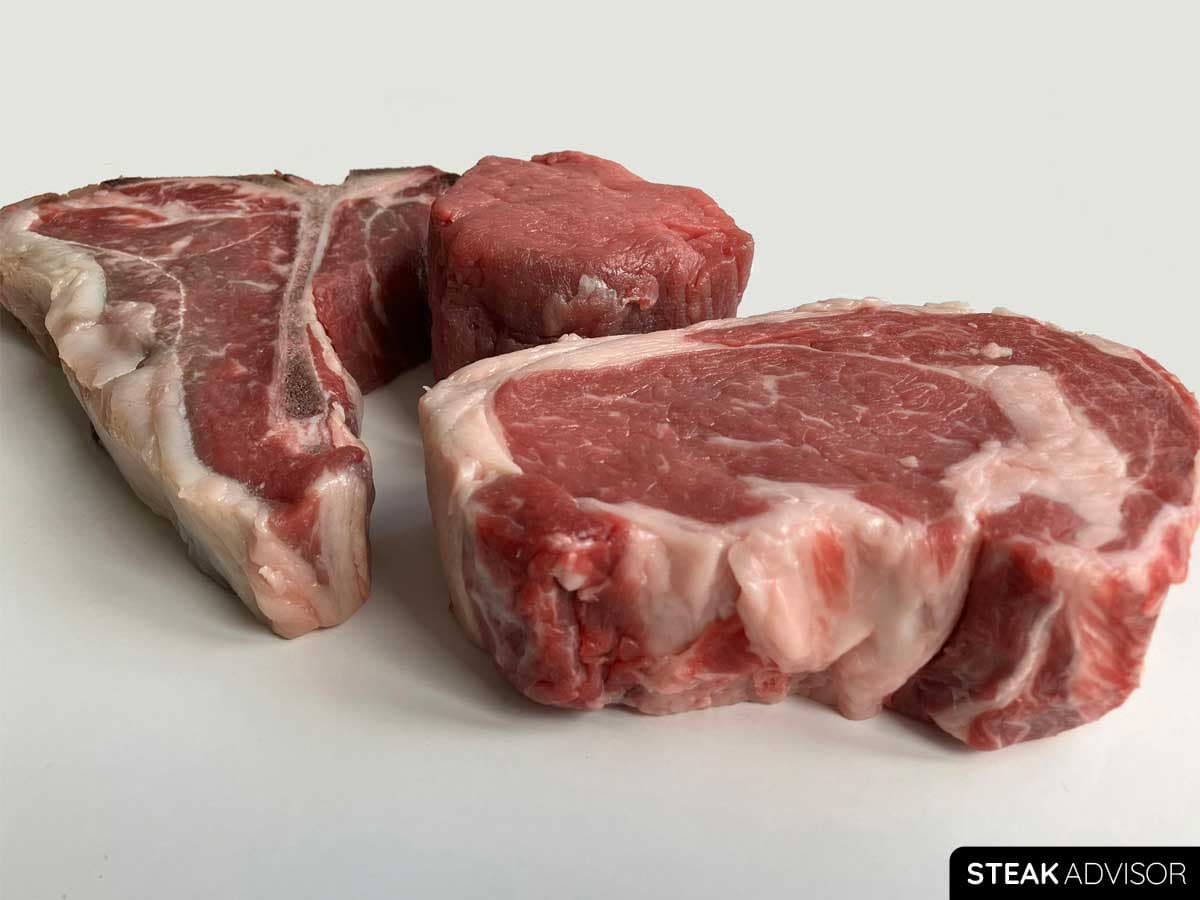

In this guide, I’ll walk you through how to choose, buy, and enjoy the right steak cut for your budget, taste, and cooking style. If you’re completely new to steak and don’t know where to begin, don’t worry, this is the perfect place to start. So let’s start with the basics.
What Exactly is a Steak?
Most of us associate the word steak with beef, but technically, other meats (and even some vegetables) can be cut into steak-like pieces. Think of things like tuna steak, pork steak, or even thick-cut cauliflower steaks. But for this guide, we’re focusing entirely on beef steak.
Generally, a steak is a cut of meat sliced across the muscle fibers (sometimes with a bone attached). But that definition has a few exceptions. Cuts like flank steak, skirt steak, flap steak, and ribeye cap don’t fit perfectly into that definition, yet they’re still considered steaks because of how they’re prepared and cooked.
Most people know the classic cuts (ribeye, strip steak, filet mignon, skirt steak, flank steak), but there are many other steak cuts, each with differences in flavor, tenderness, fat content (marbling), thickness, shape, cooking method, and price. In this guide, I’ll stick to the most common steak cuts to keep things simple. But I’ll also link to my other articles, where you can learn about the less common ones if you want to explore more.

Choose the Right Cut
There are a lot of ways to cook steak, and even more types of steak to choose from. Every cut is different; some are more tender, some are richer in flavor, some have more fat (marbling), and some are just naturally thicker or thinner. Your job here is to decide what you actually want in a steak, then pick a cut that matches those preferences.
Once you know which cut you like, the next step is figuring out how you want it cooked and whether that cut is actually a good fit for that cooking style. To make this easier, I recommend reading these articles first:
- How to Cook a Steak – In this article, I go over all the common ways to cook a steak. You’ll see the pros, cons, and which cuts work best for each method. It’s a great read whether you’re new to cooking steak or you’ve been doing it for years.
- Types of Steak Cuts – This is where I list almost every steak cut you can buy, organized by the primal cut it comes from.
- Steak Roundups – These are collections where I rank steak cuts based on things like fat content, tenderness, cooking method, or even the type of dish you want to make.
- Best Cuts of Steak – A quick, simple list of top steak cuts with short descriptions of each one, including what makes them special and the best ways to cook them.
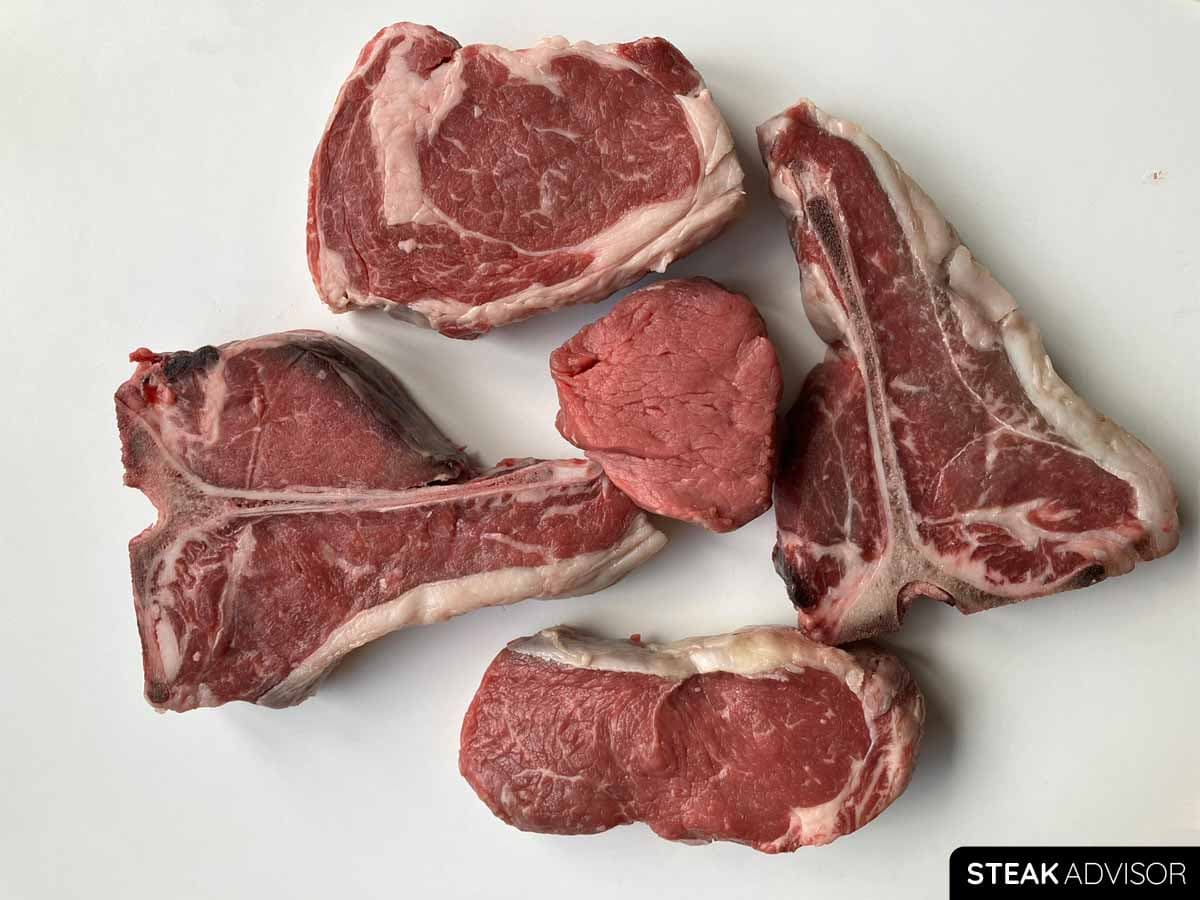
If you’re in a hurry, here’s a quick list of 10 steak cuts that never disappoint:
- Ribeye steak (including bone-in versions like tomahawk and cowboy)
- Strip steak (New York strip)
- Filet mignon (tenderloin steak)
- Flank steak
- Outside skirt steak (not the inside skirt)
- Picanha (coulotte steak)
- Porterhouse or T-bone (strip on one side, filet on the other)
- Hanger steak
- Flat iron steak
- Denver steak
From that list, the easiest cuts to cook at home (whether you’re using a stove, oven, sous vide, or reverse-sear) and the ones you’ll most likely find at any supermarket are ribeye, strip steak, and filet mignon. These cuts are naturally tender, flavorful (except filet mignon, which is much milder), and pretty forgiving, especially when they’re at least 1 1/2 inches (3.8 cm) thick. If you’re totally new to cooking steak, start with one of these. Ribeye is a great beginner choice; it stays juicy and full of flavor even if you overcook it a bit.
If you want to learn more about these cuts and how they differ, check out the guides I mentioned above. Going into detail on every single cut would make this article way too long, so here I’m just giving a quick overview of the most popular ones.
Understand Beef Quality Grades

Once you’ve selected the cut you like, the next step is understanding the different beef grades so you know what you’re getting and what you’re paying for.
In the United States, every steak you see in a store is USDA-inspected. It’s illegal to sell meat that wasn’t produced under the United States Department of Agriculture (USDA) supervision. Grading, though, is a different story. Grading is voluntary. Processing plants have to pay for it. They don’t have to grade their beef, but most of them do because they know consumers pay attention to those labels. When people see a USDA grade on a steak, it gives them a quick idea of what they’re buying.
The USDA assigns grades based on a combination of factors, including marbling (I’ll explain marbling in the next section), maturity, and other carcass characteristics. These grades give you a quick idea of the steak’s overall quality before you buy it.
The USDA grades you’ll usually see at the store are Select, Choice, and Prime. These grades are based on the amount of marbling a cut has, which gives you a good idea of how tender and juicy the steak will be when you cook it.
- USDA Prime Beef: The highest grade. Lots of marbling, super tender, juicy, and flavorful. About 4-10% of beef is Prime, so it’s expensive.
- USDA Choice Beef: The most common grade (about 60-75% of all beef). Good marbling, great flavor, and more affordable than Prime. Just a great middle-ground option.
- USDA Select Beef: Leanest of the three and the most affordable. Less marbling, so not as juicy or flavorful, but still decent quality and budget-friendly. Makes up about 10–20% of U.S. beef.
Most stores put the grade right on the package, but they’re not legally required to. Still, it’s pretty standard for sellers to label anything that’s Choice or Prime, since those are the higher-quality options. If there’s no grade listed at all, it’s almost always Select. There are a few other USDA grades (Standard, Commercial, Utility, etc.), but you rarely see those in regular stores. For more details, check out my complete guide on beef grades.
A quick note: beef from outside the U.S. is graded differently. Many countries have their own systems, especially when it comes to wagyu. If you want to understand those grades, the easiest way is to look up the specific type of beef you’re buying. Or you can evaluate the steak by how it looks. I’ll explain to you how to do that below.
Visually Evaluate a Steak
Beef grades are helpful, but they don’t tell the whole story. Even two steaks with the same grade (like two Prime steaks) can look completely different. The grade is just a quick way to sort good beef from lower-quality beef. To pick the best steak, you need to look at it yourself. Check the marbling, the thickness, and how well it was trimmed and cut. Those details matter just as much as the grade.
Let me break each of these down for you, starting with marbling.
Marbling
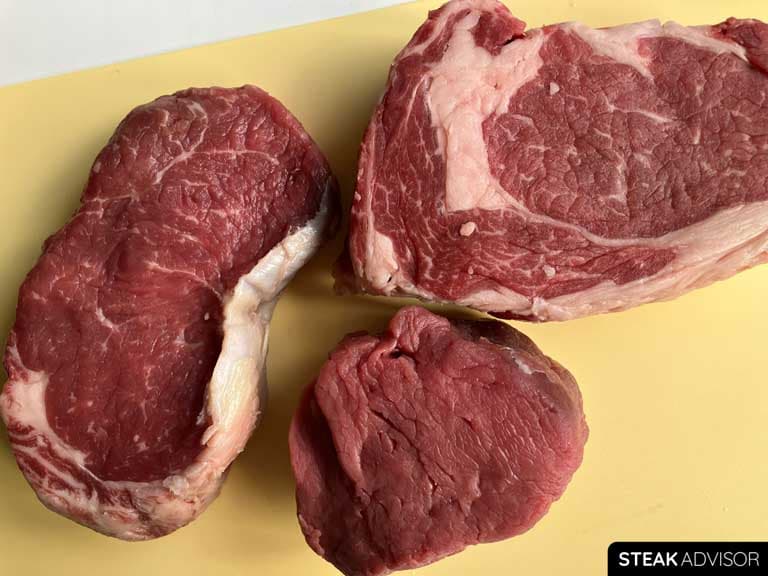
When you’re picking a steak, choose the one with more marbling. It’s common to see two steaks with the same grade (Prime or Choice) but completely different amounts of marbling. In that case, if they cost the same, go for the one with more marbling – more fat means more flavor.
Marbling is the intramuscular fat inside the meat, the small white flecks and streaks you see running through the muscle. That’s where the name comes from, since it looks a bit like a marble pattern. It’s not the outer fat you trim off, and it’s not the fat between muscles. Marbling is the fat inside the meat.
Marbling matters a lot because it significantly impacts flavor and tenderness. In general, the more marbling a steak has, the juicier and more flavorful it will be. But keep in mind that too much can be overwhelming. That’s why wagyu beef, which has a ton of marbling, is usually served in smaller portions (eating a whole steak that rich can be overwhelming for most of us). I like steaks that are more meaty than fatty, so I usually look for the level of marbling you find in regular USDA Prime or a well-marbled Choice steak.
Thickness

If you can, choose a thicker steak. Thicker cuts are much easier to cook and way more forgiving. A thicker cut gives you more time to build a beautiful crust on the outside before the center reaches your desired doneness. Thin steaks cook so fast that it’s almost impossible to build a good crust without overcooking the inside.
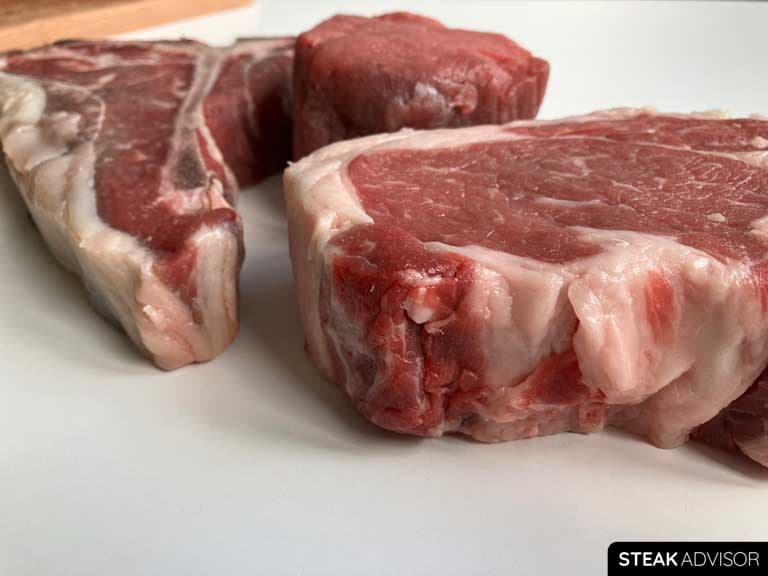
For naturally thick cuts like ribeye, strip, filet mignon, picanha, or porterhouse/T-bone, the ideal thickness is 1 to 2 inches (2.5–5 cm), depending on how you plan to cook it. About 1 inch (2.5 cm) is the bare minimum and works well for quick-cooking methods like pan-searing or grilling, without butter basting. 1 1/2 inches (3.8 cm) is great for almost any cooking method (including butter basting). Steaks that are 2 inches (5 cm) or more need a two-stage cooking method (like reverse sear, front-sear; pan-to-oven method, sous vide, or smoking) so the inside cooks evenly without burning the outside. If the steak looks too big for one person, share it. It’s always better to buy one thick steak than two thin ones.
That said, this doesn’t apply to naturally thin cuts like skirt, flap (bavette), or flank steak. These cuts can vary a lot in thickness. For example, a whole skirt steak can range from about 1/2 to 1 inch (1.27 to 2.5 cm) in thickness. Still, if you see a couple of good-looking skirt steaks, pick the thicker one if you want a nice sear on the outside and a medium-rare center.
Trim Quality

This part is more technical and takes some practice, but it really matters. You may sometimes find steaks that aren’t trimmed well. That can mean pieces of another cut still attached, the fat cap removed completely, silver skin or connective tissue left on, or the steak having an uneven shape. When you’re paying good money for a steak, you want a clean, well-trimmed, properly cut piece. So don’t grab the first one you see. Compare a few and pick the best-looking one.
I’ve seen plenty of steaks that clearly weren’t trimmed properly. Like strip steaks with a bit of sirloin still attached, filet mignons with the silver skin still on, picanha with the fat cap removed, or great cuts like hanger or flank sliced way too thin.
As I said earlier, trim quality is a bit more technical, and the easiest way to understand what a cut should look like is to check photos or videos. I recommend searching online for pictures of the raw cut you’re buying, and watching a few butchering videos from experienced butchers. There are plenty out there, and you can learn a lot from them.
Color

A fresh steak should look purplish or bright, cherry red. The bright red color usually means the steak has been exposed to oxygen. A deeper, darker red often means the steak was sealed with little to no oxygen, which is also normal. Sometimes a steak may look a little brown, and that can still be fine. Beef changes color depending on how long it’s been exposed to oxygen.
If you want to know when browning is normal and when it’s not, check out my article Why Does Steak Turn Brown. And if your steak looks slimy or seems off, my article 6 Ways to Tell If a Steak Has Gone Bad can help you figure it out.
Beef Aging
Most people don’t realize it, but every piece of beef sold in stores is technically aged beef. The difference is how it’s aged and for how long.
The main idea behind beef aging is simple: give the beef some time (from a few days to several weeks) so natural enzymes (mainly calpains) can break down the muscle fibers, making the meat more tender. There are two aging methods: wet aging and dry aging. Both rely on the same basic enzyme activity to tenderize the meat, but they develop very different flavors and aromas. That’s where the real differences between them show up.
Below is a quick table comparing wet-aged and dry-aged beef:
| Wet-aged beef | Dry-aged beef | |
| Flavor | Mild flavor; stays mostly the same with slight changes. | A deeper, intense, nuttier taste with a bit of funk. |
| Tenderness | Generally more tender (depends on aging time). | More tender, especially when aged longer. |
| Availability | Most of the beef you find in stores. | Mainly in specialty butcher shops and restaurants. |
| Aging-time | Usually a few days to about 2–4 weeks. | Usually 3 to 4 weeks, sometimes 6-8+ weeks. |
| Price | Cheaper. | More Expensive. |
And here’s a deeper look at how the two aging methods compare.
Dry-Aged Beef Overview
Dry-aged beef is much less common and is usually available in specialty butcher shops or high-end steakhouses. The process is more complex and expensive because it requires a perfectly controlled environment, constant temperature, steady airflow, and low humidity. The beef is left unpacked and exposed to the air, sitting in this climate-controlled room for about 21 to 60+ days, with about 30 days being the most common. The longer it ages, the deeper and stronger the flavor becomes.
As the beef dry-ages, several things happen:
- It loses moisture, which causes it to shrink. But don’t worry, it doesn’t lose its juiciness.
- Natural enzymes (such as calpains) break down muscle fibers, making the meat more tender over time.
- Good bacteria and molds on the surface create the unique flavor that dry-aged beef is known for.
- The outer layer dries out completely and must be trimmed off, creating more waste.
Because of the time involved, the trimming loss, and the need for specialized equipment, dry-aged beef ends up costing more. When it comes to flavor, dry-aged steak has a deeper, nuttier taste with a bit of funk. Something you won’t get from wet-aged beef. A lot of people love that blue-cheese-style flavor, but not everyone does. Honestly, the best way to know is to try a dry-aged steak once and see if it’s for you.
Since it’s more expensive, it’s worth knowing what makes it different from wet-aged beef before paying extra. I like dry-aged steak, but I treat it as an occasional thing. For everyday meals, I usually stick to wet-aged cuts.
Wet-Aged Beef Overview
Wet-aged beef makes up most of the beef you’ll find in stores. The wet-aging process is simple, inexpensive, and doesn’t create any waste. The meat is placed in a vacuum-sealed, airtight bag and left to age. Because it’s sealed, the beef retains its moisture and doesn’t shrink as dry-aged beef does.
The beef is left vacuum-sealed, under the right conditions, for a few days to about 2–4 weeks. During that time, natural enzymes (such as calpains) break down the muscle fibers, making the meat more tender. The same enzymes work in dry aging, but because wet-aged beef isn’t aged as long, it doesn’t get quite as tender as a long dry-aged steak.
Flavor-wise, wet-aged beef doesn’t change much. The flavor shift is very subtle, which is why wet-aged beef tastes closer to “regular” fresh beef. The main advantage is that the process is easy, consistent, and produces zero trim loss, keeping the price much lower than that of dry-aged beef.
Here’s what happens during wet aging:
- The beef retains all its moisture in the vacuum-sealed package.
- Natural enzymes tenderize the meat over time.
- The flavor stays almost the same, with only slight changes.
- The process is cheap, simple, and creates no waste.
Wet-aged beef is the more budget-friendly option, and the one most people buy without even realizing it’s aged. It doesn’t have the nutty or funky notes that dry-aged beef develops – it’s just classic, clean beef flavor. I personally buy wet-aged steaks most of the time because they’re affordable, consistent, and great for everyday meals.
In the end, try both and see which one you like. Just remember that not all beef at the store is the same.
Other Things to Look for When Choosing a Steak
Below, I’ve listed a few extra factors I personally look for when choosing a steak. They’re not as important as the main ones I mentioned earlier, but depending on what you like, they can still make a difference.
Bone-in vs Boneless

A lot of people think the bone adds flavor, but it really doesn’t. The bone acts as an insulator, helping prevent moisture loss and overcooking near the bone. It also just makes the steak look great. So flavor-wise, there’s no real difference. The choice mostly comes down to preference. If you want a good-looking steak for a special meal, go for bone-in. But remember you’re paying extra for the bone and the presentation, not a difference in flavor.
Bone-in steaks are also more difficult to cook with most methods. When searing in a pan, for example, the bone prevents the steak from sitting flat, resulting often in an uneven crust. If you’re new to cooking steak, it’s better to start with a boneless cut.
Wagyu Beef
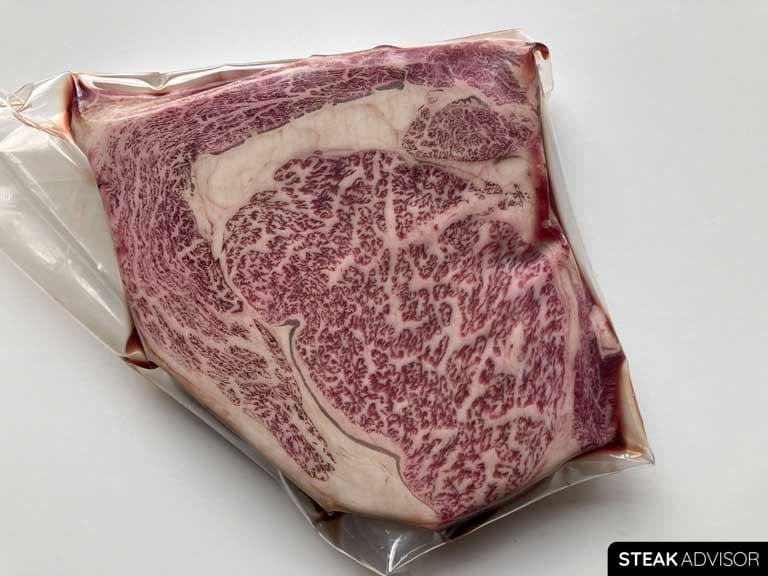
Wagyu beef is a huge topic, so here’s a quick, simple overview. Wagyu is considered some of the highest-quality beef in the world. But keep in mind, not all Wagyu is the same. There are different types and different grading systems. If you want the full breakdown, check out my Wagyu beef guide, where I cover its origins and the types you can find both worldwide and in the U.S.
For this article, here’s what you need to know: Wagyu is the most expensive beef you can buy, and it’s very different from regular beef. It has an extremely high amount of marbling, and when that fat melts, the steak becomes almost buttery with a very rich flavor. Because of its high fat content, Wagyu can be overwhelming in large portions, so it’s best to enjoy it in smaller portions as a special treat. You might wonder, “Is it better than regular beef?” My honest answer: it’s just different. Personally, I prefer a good, well-marbled Choice or Prime steak for everyday eating. I like a stronger, beefier flavor, and I enjoy eating a whole steak.
Wagyu (especially Japanese Wagyu) is extremely rich and extremely expensive. If you’re new to cooking steaks, I’d recommend starting with less expensive cuts first. And whenever you buy Wagyu, make sure it’s from a reliable source. There are still places selling fake “Wagyu” at real Wagyu prices.
Steak Doneness

Steak doneness mostly comes down to personal preference, but there’s one thing many people don’t know. If you like your steak rare, pick a cut that’s naturally lean and tender (like filet mignon). Lean cuts are perfect for rare doneness because they don’t have much fat that needs to melt.
Fatty cuts are a different story. You really don’t want to cook a fatty steak to rare doneness. The fat won’t have enough time to warm up and melt, so instead of being juicy and flavorful, it’ll taste cold and chewy. Cuts with more fat need a bit more heat to get that soft, melty texture that makes them taste great. For most fatty steaks, medium-rare is the lowest you should go. And honestly, it’s the sweet spot for most cuts in general.
Is it Better to Buy Pre-cut Steaks or Cut Them Yourself?
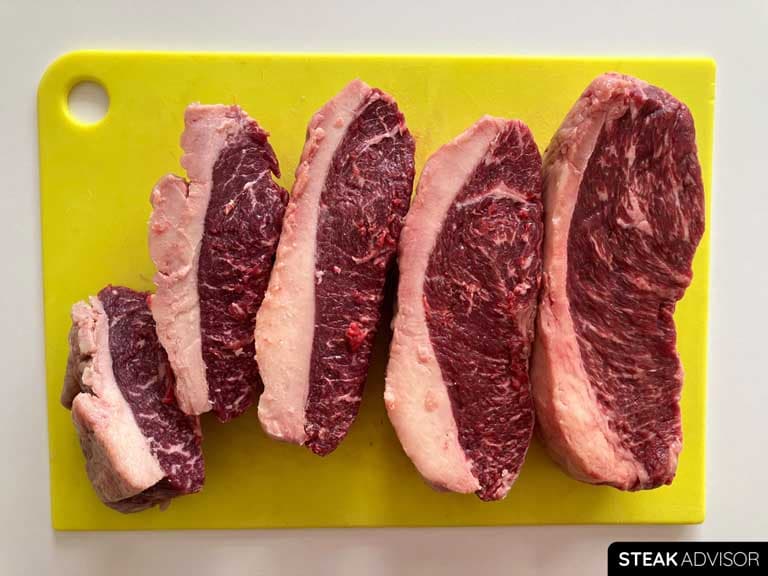
There’s nothing wrong with buying pre-cut steaks as long as the butcher trimmed them well. But if you want to save some money, trim the steak the way you like it, or even age it at home, it’s a good idea to buy a whole cut like a striploin, ribeye roll, or a whole beef tenderloin.
