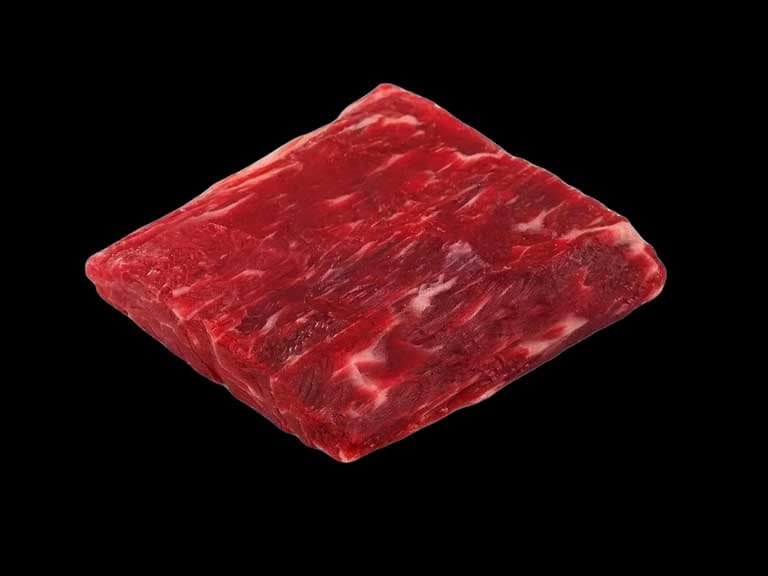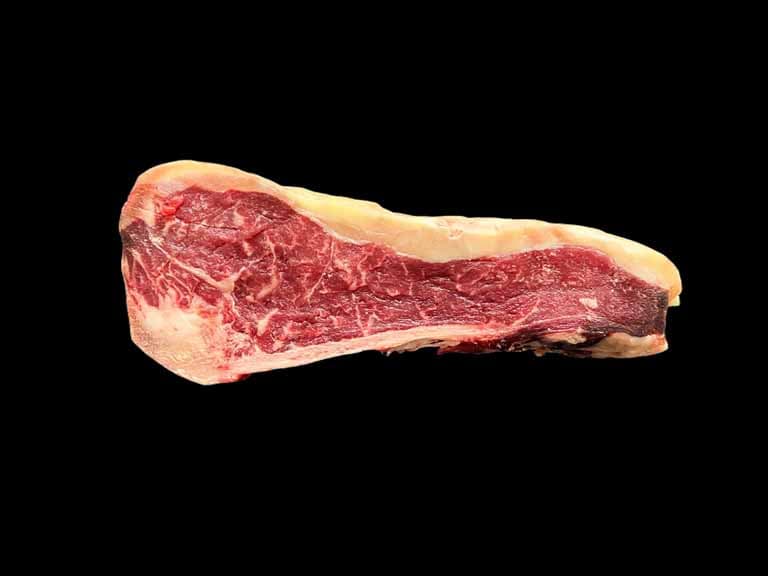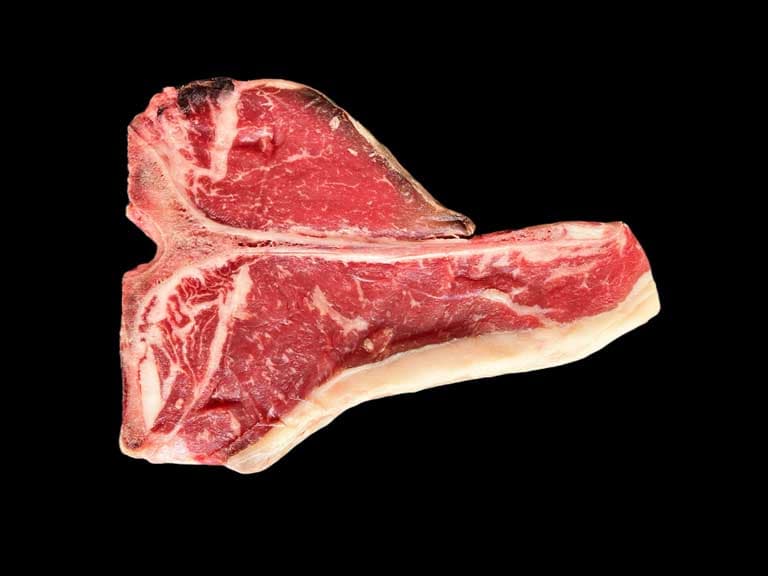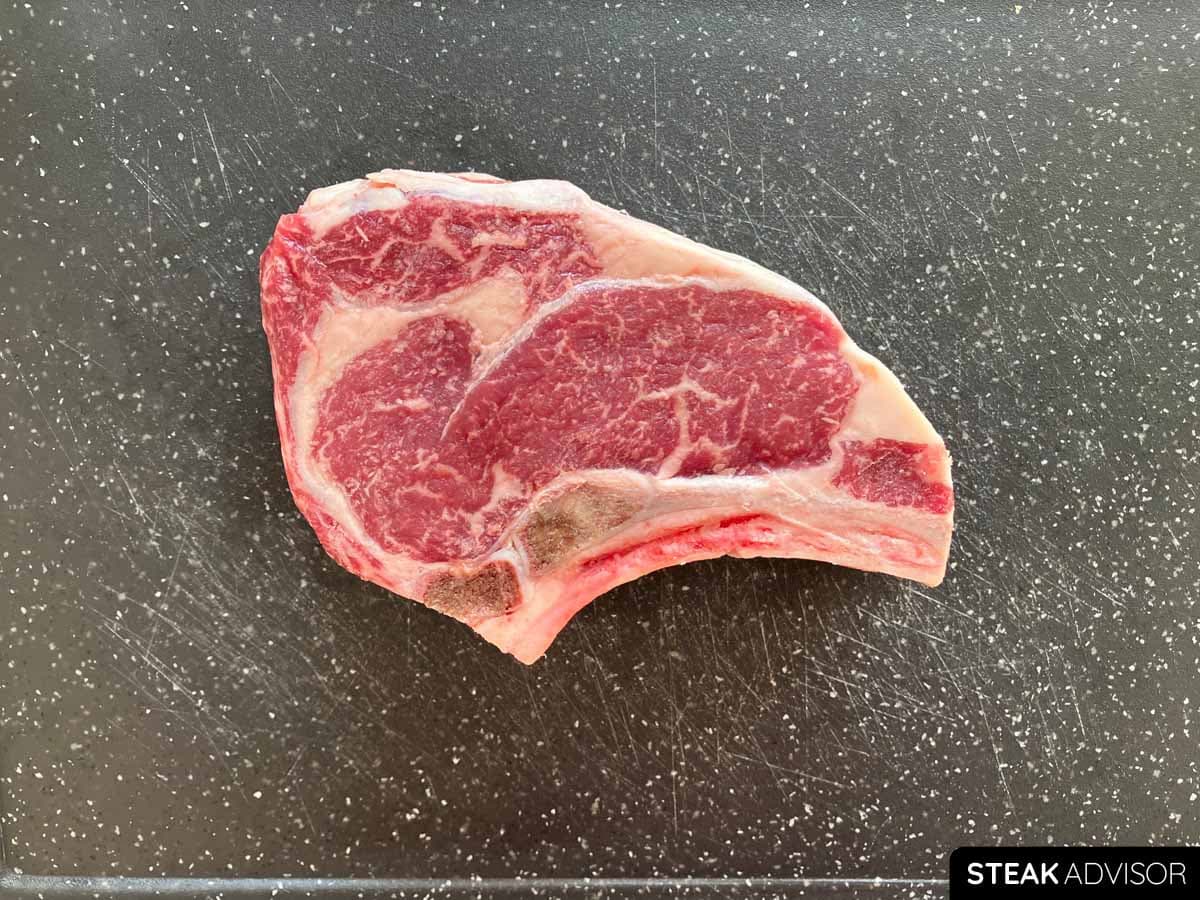

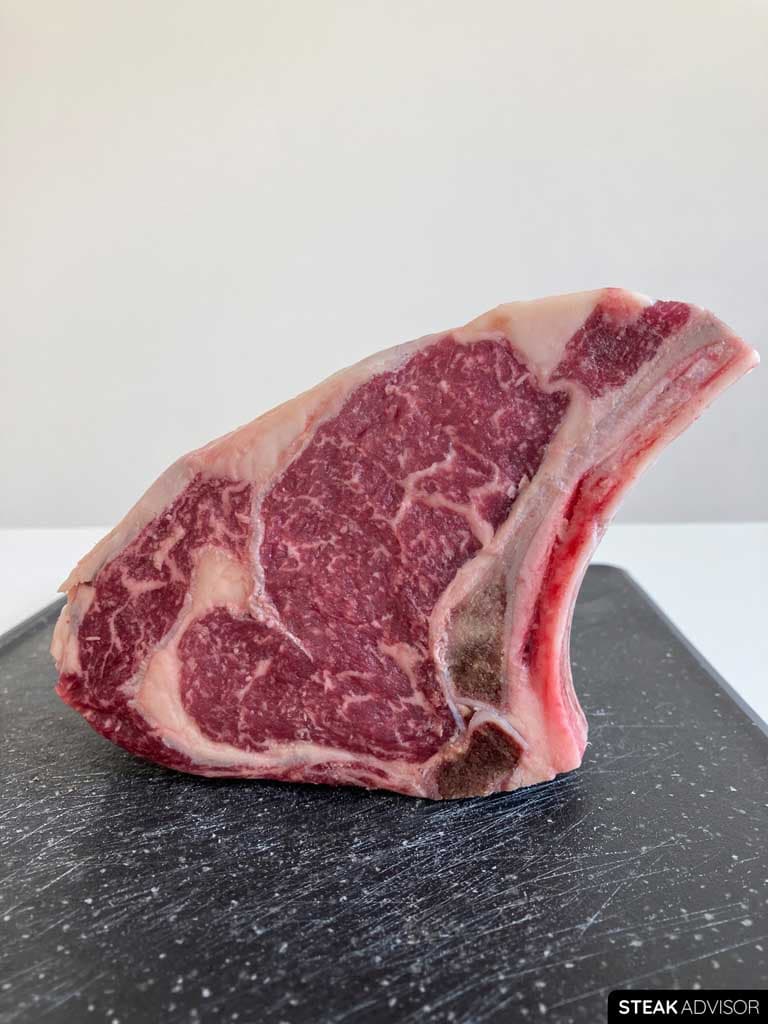
A bone-in ribeye steak is just a ribeye with the bone still attached. In terms of flavor, it’s the same as a boneless ribeye since both cuts come from the same part of the cow. The main differences are how it looks and how it cooks.
The bone gives the steak a more impressive appearance and affects how heat moves through the meat. The meat near the bone cooks more slowly than the rest, making it more difficult or impossible to cook the steak evenly over direct high heat. That doesn’t affect the overall flavor, though. The bone can also prevent full contact with the pan, so depending on your cooking technique, it may be harder to develop an even crust.
Bone-in ribeye costs more than most steaks, so it is often reserved for special occasions. Despite the cost, it remains a reliable choice when you want a steak that feels special and delivers every time.
What Are the Other Names for Bone-in Ribeye Steak?
Here are the most popular other names for the bone-in ribeye steak in the United States:
- Cote de Boeuf,
- Rib Steak,
- Cowgirl Ribeye,
- Rib Steak Bone-In (Frenched),
- Bone-In Ribeye.
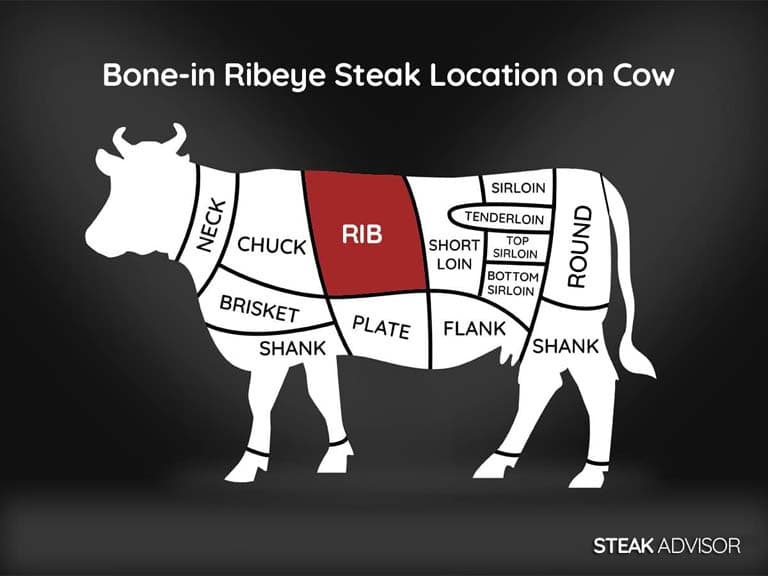
Where Does a Bone-in Ribeye Steak Come From on a Cow?
The bone-in ribeye steak comes from the cow’s rib primal. Located between the chuck and the loin primal, covering ribs 5-6 through 12-13.
Is Bone-in Ribeye Steak Better than Boneless?
Neither version is better in every situation. Bone-in ribeye looks more impressive and offers a more distinctive eating experience, while boneless ribeye is easier to cook evenly and develop an even crust.
Bone-in ribeye can seem juicier near the bone, but that’s not exactly what’s happening. The bone acts as an insulator, slowing down the cooking process in that area. As a result, the meat next to the bone is simply less done than the rest of the steak, which can create the impression that it is juicier. The bone itself does not improve flavor or tenderness, so there is no difference in either between bone-in and boneless ribeye. Some people also like using the bone as a handle when flipping the steak because it keeps their hands off the meat.
Boneless ribeye is easier to cook in a pan. Without the bone, the entire surface of the steak can lie flat against the pan, making it easier to get an even crust. With a bone-in ribeye, the bone may lift part of the meat away from the surface, resulting in an uneven crust. This matters less on a grill because browning does not depend on the steak making full contact with a flat surface. However, the meat near the bone will still cook more slowly.
Bone-in ribeye also costs more, and part of what you pay for is the weight of the inedible bone. Still, many people are willing to pay the higher price for its impressive presentation and the experience of eating a steak with the bone attached.
In short, boneless ribeye is the better choice for pan-searing, even cooking, and value for money. In contrast, bone-in ribeye is better suited to special occasions when presentation and the overall eating experience matter more.
Bone-in Ribeye Steak vs. Tomahawk Steak vs. Cowboy Steak
Bone-in ribeye, tomahawk, and cowboy steaks come from the same cut of meat, but the difference lies in the bone. The bone-in ribeye has a short bone that stays close to the meat. The cowboy steak has a bone about 5 inches (13 cm) long, while the tomahawk steak takes it further with an even longer bone that usually extends well past 5 inches (15 cm). These differences aren’t just about looks. They can also affect how you cook them. The longer bones on the cowboy and tomahawk steaks make them perfect for grilling, while the bone-in ribeye is easier to handle in a regular pan.