

After all the effort of cooking a good steak, the last thing you want is to ruin it at the very end. And yes, slicing really can make a significant difference. With naturally tender cuts like ribeye, strip steak, or filet mignon, it won’t matter much how you slice them. But with steaks that have long, coarse muscle fibers, like skirt, flank, hanger, or flap steak, slicing the wrong way turns a perfectly cooked steak into something tough and chewy.
In this guide, I’ll show you how to slice steak the right way using a real piece of meat, explain what “against the grain” actually means, and help you keep every bite as tender as possible. First, let me explain the basics so you understand why this technique works.
What Is the Grain in Steak?
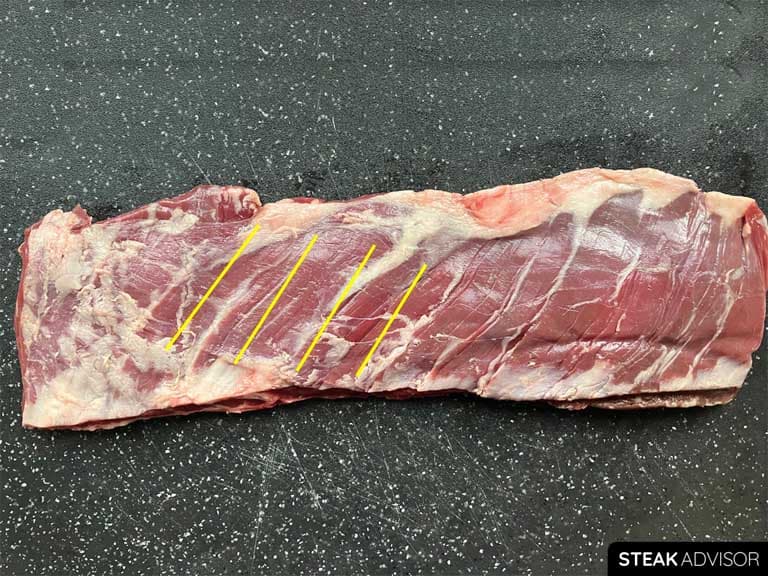
The grain in steak refers to the direction the muscle fibers run. If you look closely at the surface of a steak, you’ll notice lines running in one direction. That pattern is the grain. If you want to slice a steak the right way, the first step is to identify the grain direction.
How to Identify the Grain Direction in Steak?
In some cuts, like flank steak, skirt steak, or hanger steak, the grain is easy to spot because the muscle structure is coarser and more visible. In more tender cuts, like ribeye or filet mignon, the muscle structure is finer, so the grain is harder to notice, but it’s still there.
Keep in mind that the grain does not always run in the same direction in every steak. It can vary depending on the cut and how the steak was butchered.
Take a look at the photos below to see how the grain looks in both raw and cooked steaks. The yellow lines in the photos show the direction the muscle fibers run.




Note
Before cooking, look at the steak and note the direction of the grain. If needed, take a quick photo for reference. This is especially useful for cuts where the grain becomes harder to see after cooking. Once you know what to look for, it becomes much easier to properly slice steak.
What Slicing Against the Grain Means and Why It Matters
Slicing against the grain means cutting across the direction in which the muscle fibers run, rather than cutting parallel to them. When you slice steak this way, you shorten those fibers, so each bite is easier for your teeth to break apart. That’s why steak sliced against the grain feels more tender and easier to chew.
If you slice with the grain, the muscle fibers stay long. That means your teeth have to chew through longer, tougher strands of meat, which makes the steak feel noticeably chewier. This is especially important with cuts like flank steak, skirt steak, or hanger steak, where the muscle structure is coarser.
Take a look at the two steak slices below. One is sliced with the grain, and the other is sliced against it. This comparison shows exactly why slicing against the grain matters.
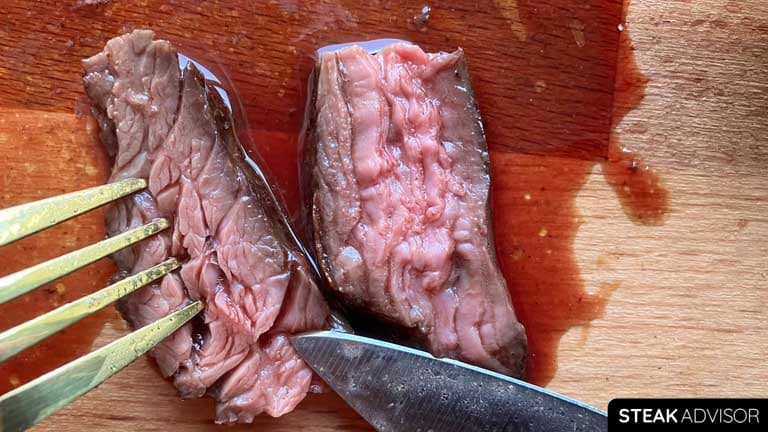
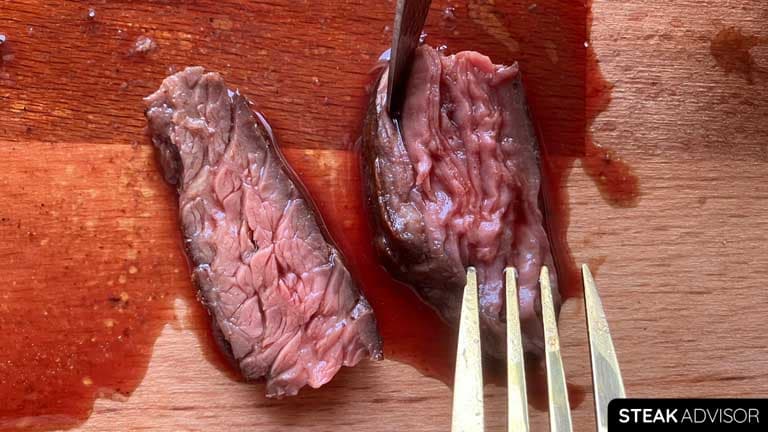
To make the difference easier to understand, try a simple test with flank steak or any other steak with a coarse, visible grain. Slice one piece with the grain and another against it, like in the photo below. Take the piece sliced with the grain and pull it apart in the same direction the fibers run. It should resist tearing. Then rotate that same piece 90 degrees and pull again. Once you’re pulling across the fibers, it tears much more easily.

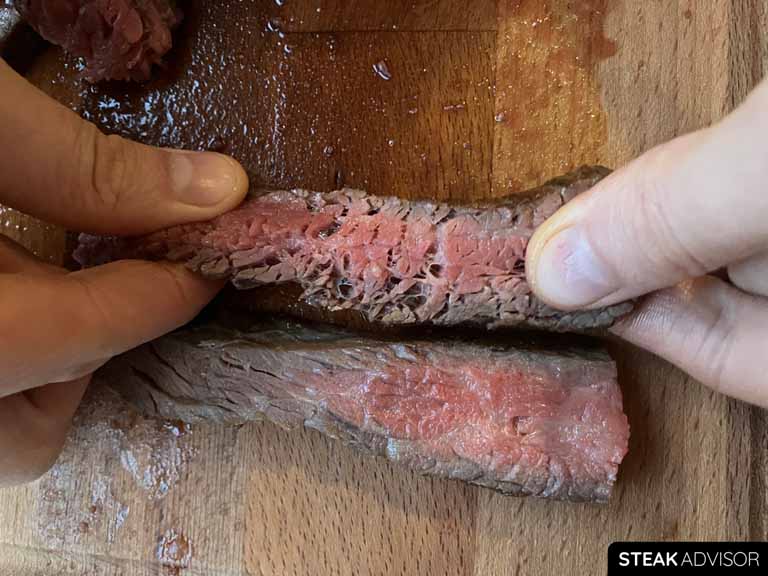
See the difference? This simple test shows exactly why slicing direction matters. When you slice with the grain, the muscle fibers stay long and intact, making the meat harder to pull apart. But when you slice against the grain, those long fibers are shortened, so the meat tears much more easily.
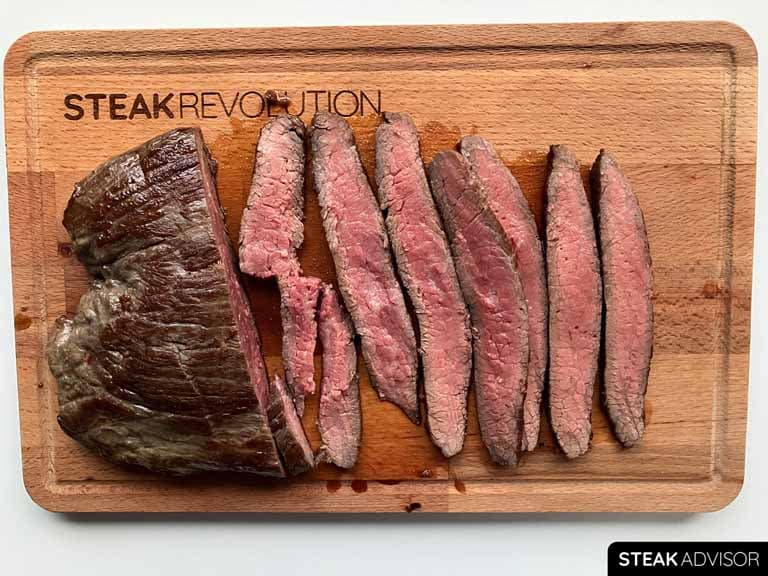
How to Slice Steak Step by Step
Below, I’ll show you how to do it step by step, using flank steak as an example. I’ll also show you what the steak looks like when it’s sliced the wrong way, so you can clearly see the difference.
The process itself is simple.
- Find the direction of the grain.
- Let the steak rest first.
- Slice against the grain into thin, even pieces.
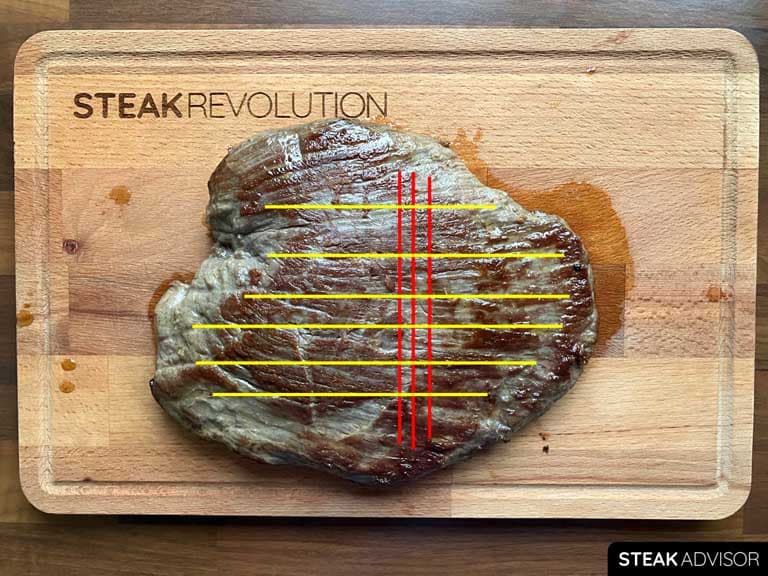
Take a look at the photo below. The yellow line shows the direction of the grain, and the red line shows the direction you should slice with the knife.

Note
This technique is a game-changer for tougher steaks with long, coarse muscle fibers, such as flank, skirt, or hanger steak. Slice those the wrong way, and even a perfectly cooked steak can end up tough and chewy.
Steak Slicing FAQs
Do Grill Marks Indicate the Grain?
No, grill marks are not a reliable way to identify the grain. Sometimes they run in the same direction as the muscle fibers, but that is just a coincidence. If you want to slice steak correctly, look at the grain itself, not the grill marks.
Should All Steaks Be Sliced Against the Grain?
No. For steaks with a coarse, clearly visible grain, slicing against the grain makes a big difference because it shortens the muscle fibers, making the steak easier to chew. But naturally tender cuts such as ribeye, filet mignon, or strip steak are different. They are already tender enough that slicing against the grain is not necessary. You can still do it, of course, but in most cases, it won’t make a noticeable difference.
In the end, it mostly comes down to personal preference. For example, I like to slice a lower-graded strip steak against the grain, especially if it’s a bit leaner or less tender than usual. If you’re not sure which way you prefer, try both and see if you notice any difference.
How Long Should You Let the Steak Rest Before Slicing It?
That depends on the steak’s thickness and your target doneness, but for a steak about 1 1/2 inches (3.8 cm) thick, a 5 to 7-minute rest is a good general rule. During that time, the internal temperature continues to rise due to carryover cooking. If you slice it too early, you can stop that process before the steak reaches your target doneness. For more details, check out my full guide on how long to rest a steak after cooking.
What Is the Best Knife for Slicing Steak?
A sharp, comfortable, well-balanced knife is best for slicing steak. Serrated knives are better for tougher cuts, but they are harder to sharpen and tend to tear the surface a bit. Non-serrated knives give you a cleaner slice and are much easier to maintain.
For everyday steak dinners, you do not need anything fancy. For special meals, though, a really good knife makes a noticeable difference.
