

When you unwrap a freshly bought steak, you’ll usually see some red liquid in the packaging. The same thing happens when you cook a steak to rare or medium-rare and slice into it – there’s that reddish juice again on the plate. Let’s get this straight right away: that red liquid isn’t blood. And yes, it’s completely safe to eat.
People love calling it a “bloody steak,” and I get why. At first glance, it can look like blood. But it’s not. In this guide, I’ll break down exactly what that red stuff really is and why there’s no reason to worry about it.
What’s the Red Liquid in Steak?
That red liquid in the steak isn’t blood, even though it might look like it. It’s mostly water mixed with myoglobin. Butchers and meat processors refer to this liquid as purge. When you cut into a raw steak, or one cooked rare or medium-rare, that myoglobin mixes with water from the muscle fibers, creating the reddish juice you see in the packaging or on the plate.
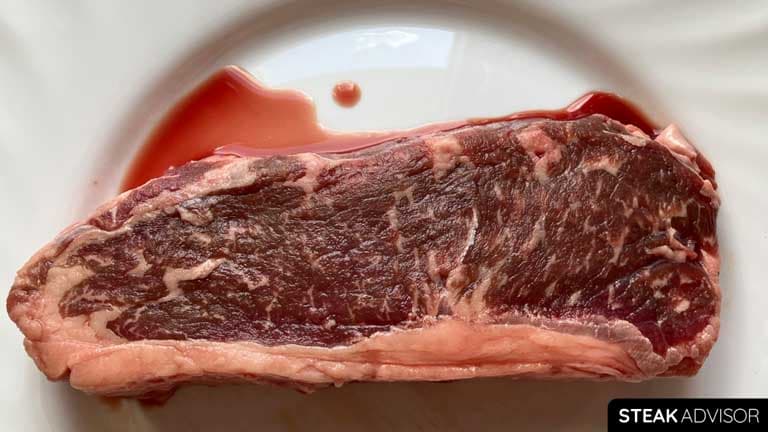
Myoglobin is an iron-rich protein that gives meat its color. The more myoglobin, the darker the meat. Beef naturally contains more of it, which is why it’s deep red. Pork and lamb have less, so they’re lighter. Poultry has even less, which is why it looks pale. Muscles that work harder contain more myoglobin. That’s also why older animals have more of it (their muscles have been used more over time).
When myoglobin is exposed to oxygen, the iron inside it reacts and changes color. That’s why meat doesn’t always look the same. The color you see depends on how much oxygen the meat is exposed to and on the iron’s chemical state.
Here’s what that looks like in real life:
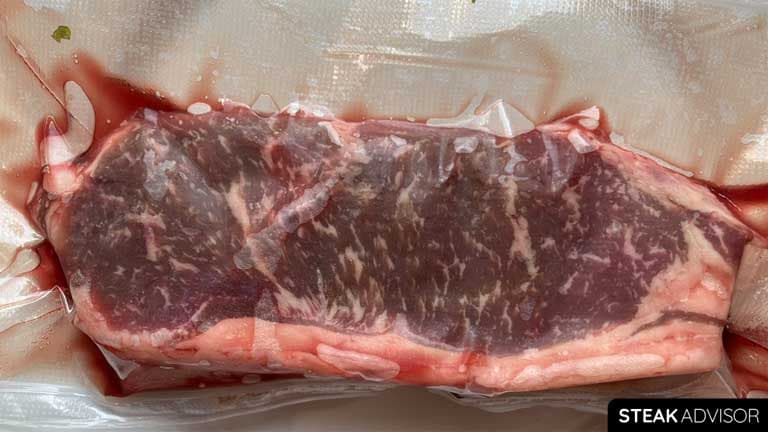
- No oxygen (vacuum-sealed packaging): The meat looks darker, almost purple-red. This is the deoxymyoglobin state. It’s completely normal.
- Fresh air exposure: The meat turns bright red. That’s oxymyoglobin, the color you usually see in the butcher’s display case.
- Limited oxygen (like when steaks are stacked): The surface can look brownish or tan because oxygen can’t fully reach it.
- Long exposure to air: Over time, the iron in myoglobin oxidizes further, and the meat turns brown. That’s called metmyoglobin. It doesn’t always mean the meat is spoiled. It simply means the pigment has oxidized.
If you’re curious how these color changes look in real life, take a look at my full guide on Why Does Raw Steak Turn Brown. I included photos so you can see exactly what I’m talking about.

How Does Cooking Affect the Red Juice in Steak?
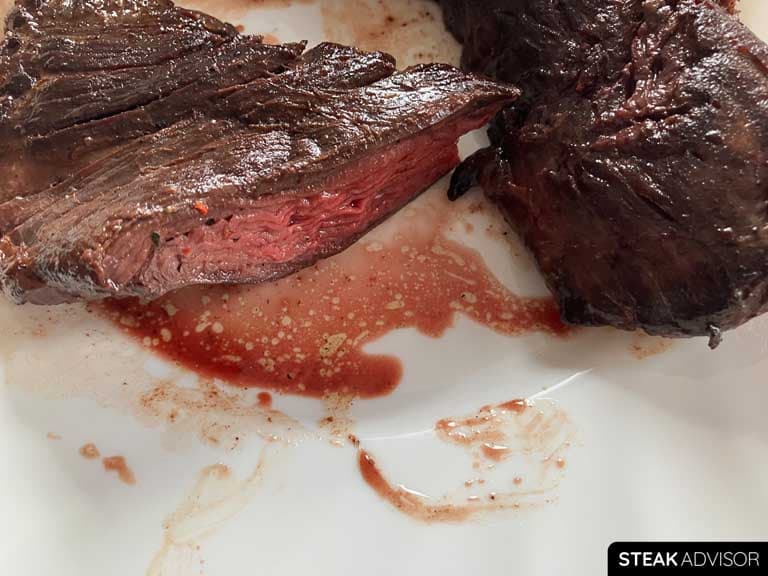
When you cook a steak, myoglobin starts to break down. As the steak’s internal temperature rises, the meat’s color (and the juices) changes from red to pink, then light brown, then gray. The more you cook a steak, the less red you’ll see.
- A rare steak (120–130°F / 49–54°C) still looks red inside.
- Medium-rare (130–140°F / 54–60°C) turns pink.
- By the time you hit well-done (160°F / 71°C), the inside is mostly gray or brown.
So, when you cook a steak to well-done, there’s no red liquid left. The heat denatures the myoglobin, and the inside turns fully brown. That’s normal for whole cuts like steak. But here’s something important. Color isn’t always a perfect indicator of doneness.
Note
In some cases, especially when there’s a higher amount of oxidized myoglobin (metmyoglobin), the meat can turn brown earlier than expected. This is called premature browning. The meat might look fully cooked on the inside, even though it hasn’t reached a safe internal temperature. This is especially important with ground beef, which must reach 160°F (71°C) to be considered safe according to USDA guidelines.
The only reliable way to know whether the meat has reached your target internal temperature is to use a meat thermometer. Color alone isn’t enough. I say this in almost every steak guide for a reason. If you’re interested in the science behind premature browning, I recommend reading the study titled“Factors that Impact Premature Browning” by Kumar Venkitanarayanan, Ph.D., and Cameron Faustman, Ph.D. It explains exactly why this happens and what affects it.
Why Some Steaks Release More Red Juice?
Not every steak releases the same amount of red liquid. Sometimes there’s barely any in the package or on the plate. Other times, there’s a noticeable amount. This is completely normal and doesn’t mean the steak is bad.
Here are the most common reasons why some steaks release more of that red juice than others:
- Cut type: Different cuts come from different muscles, and each muscle has a different water-holding capacity. Muscles that retain less moisture release more purge (red juice) during storage and cooking, while others hold onto their juices better.
- Aging method: Wet-aged beef is stored in vacuum-sealed packaging, which traps natural purge (water mixed with myoglobin) inside the bag. That’s why you’ll see more red liquid when you open it. Dry-aged beef, on the other hand, is stored uncovered in a controlled environment with airflow, where moisture gradually evaporates from the meat’s surface. Because of that moisture loss, dry-aged steaks release less red juice in the package and less on the plate after cooking.
- Freezing and thawing: When a steak freezes, ice crystals form inside the muscle cells, puncturing cell membranes and muscle fibers. When the steak thaws, this structural damage reduces the meat’s water-holding capacity, so more internal moisture leaks out as purge. That released moisture mixes with myoglobin, which is why you’ll see more liquid in the package after thawing.
- Resting time after cooking: As a steak cooks, heat tightens the muscle fibers and pushes the juices toward the center. Letting the steak rest for a few minutes after cooking allows the fibers to relax and redistribute those juices, so less red liquid runs out when you slice into it. Give it at least 5 minutes. It makes a real difference. And that’s one of the reasons I always tell you to wait before slicing. Those few minutes also let the carryover cooking finish the job and bring the steak to its target doneness.
- Cooking level (doneness): As the steak cooks, heat denatures proteins and pushes moisture out. The less it’s cooked, the more red or pink juice it releases because myoglobin is less denatured and more moisture remains in the muscles. That’s why rare and medium-rare steaks look juicier, while well-done steaks don’t have that same reddish liquid on the plate.
What Happens to the Blood in Steak?
Almost all of the blood is drained from the animal during the slaughtering and processing stages. That happens long before the meat ever gets packaged and shipped to the store. What’s left in the muscle is just trace amounts, nowhere near enough to make your steak “bloody”.
That red color you see in raw or partially cooked steak comes from myoglobin, and it’s completely normal. When someone slices into a rare steak and says it’s “bleeding,” it’s not. The blood is already gone. Even the rarest steak you’d get at a great steakhouse doesn’t contain blood. It might look dramatic on the plate, but what you’re seeing is just myoglobin mixed with the meat’s natural juices.
