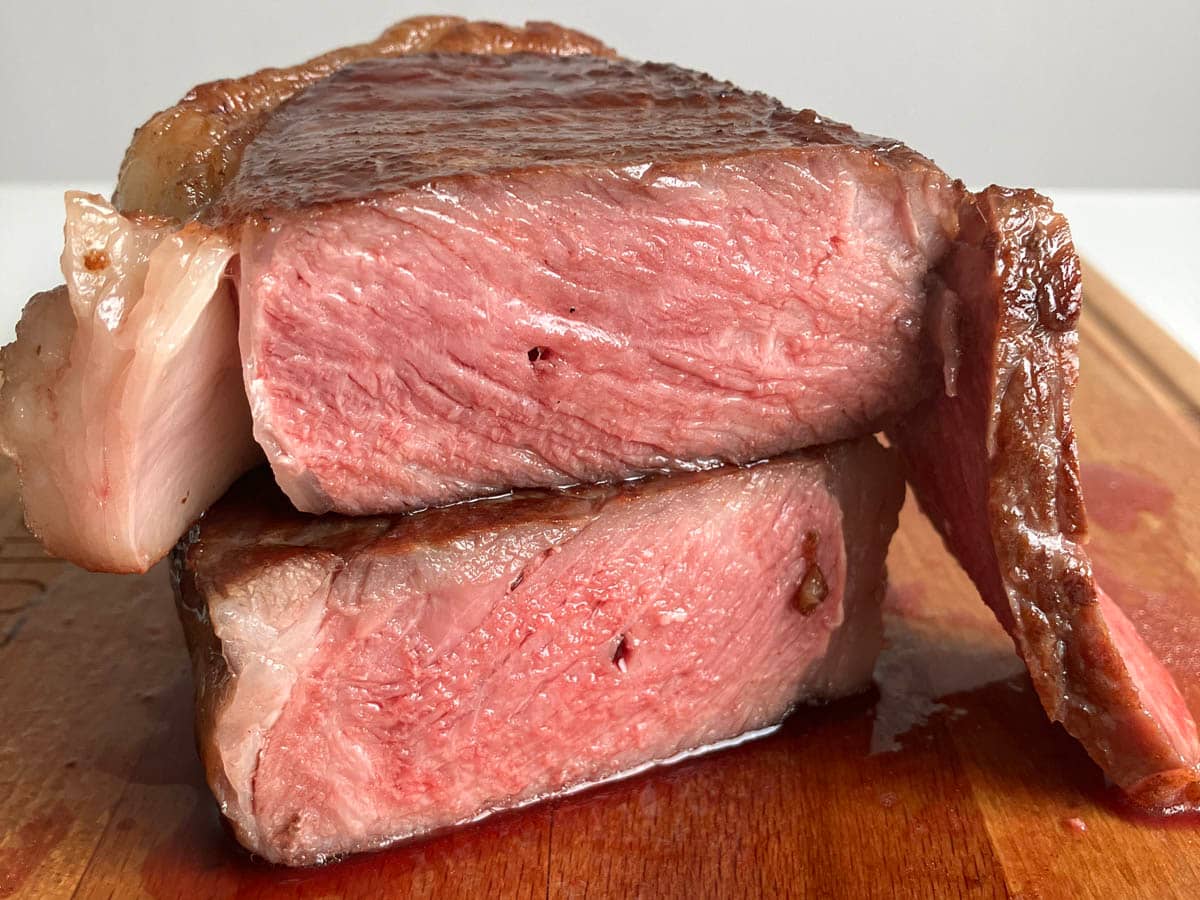

Steak is a solid choice for a Valentine’s Day dinner at home. If you want to skip crowded restaurants (or missed out on a reservation), I’ve listed a few steak recipes below that make it easy to cook something impressive without making it complicated.
These recipes work well for steaks of almost any thickness, whether you’re planning on a 1-inch (2.5 cm) steak, a 2-inch (5 cm) cut, or something even thicker. Choose the recipe that best matches the steak you have and the kitchen setup you’re working with. At the end of the article, I’ve also included a few ideas for what to serve with your steak.
1. Reverse Seared Steak
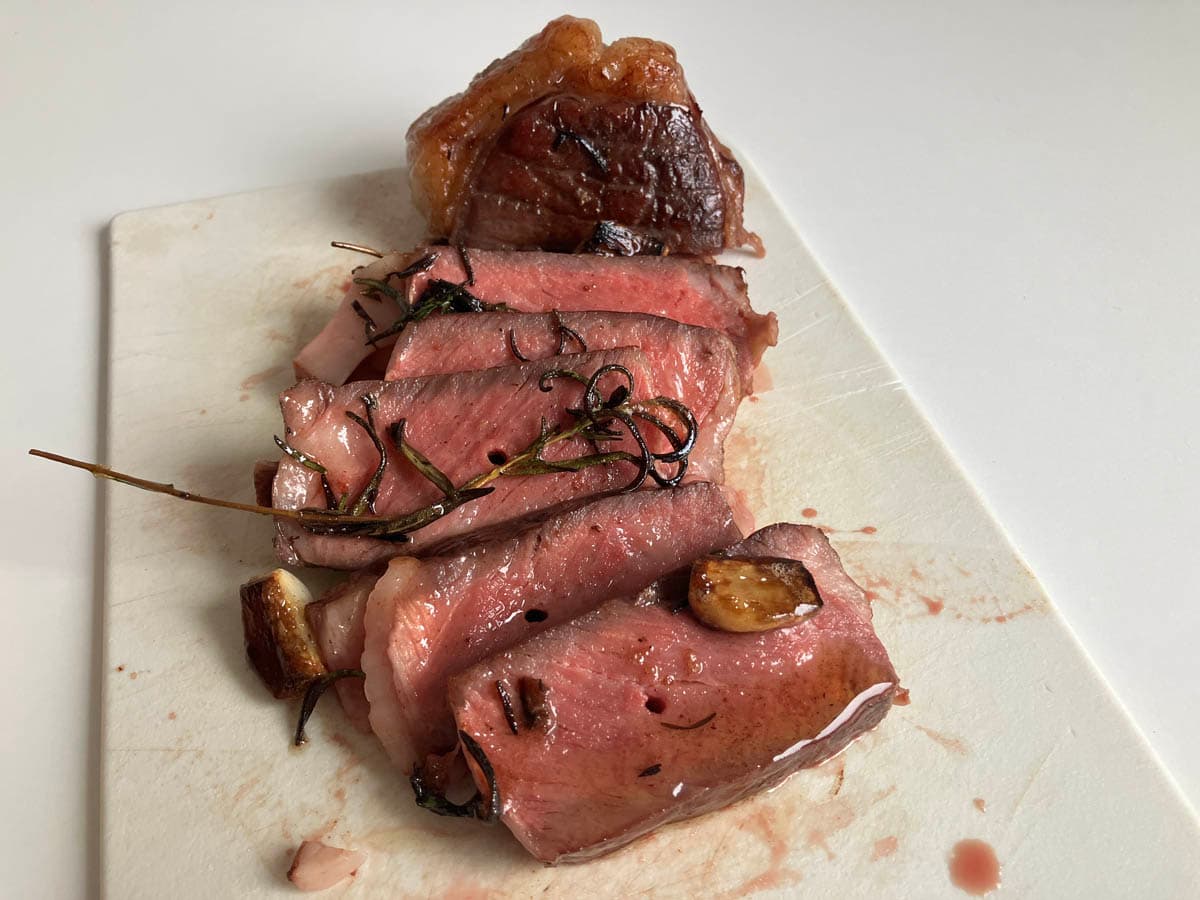
About This Method: The reverse sear is a two-step method for cooking steak. First, you cook the steak gently in the oven at low heat until it’s just below your target doneness. Then you finish it in a very hot pan to build a deep, crispy crust on the outside.
Estimated cook time: About 1 hour total for a steak 2 inches (5 cm) thick, cooked to medium-rare (130-140°F / 54-57°C).
Best Steak Cuts & Thickness: Any naturally tender steak cut with a thickness of at least 1 1/2 inches (3.8 cm). Ideally, up to 2 inches (5 cm) thick, as thicker ones take much longer than 1 hour to cook in the oven. Perfect for premium cuts such as ribeye, filet mignon, porterhouse/t-bone, or strip steak.
Note
Reverse-searing is one of the best ways to cook a steak if you want it evenly cooked from edge to edge, with a decent crust and very little risk of overcooking. It’s one of the most foolproof methods out there.
What I like most about it is that it doesn’t require constant attention. While it does take time, you don’t have to babysit it. That gives you plenty of time to prepare the sides without rushing, so everything is ready and served warm at the same time. It’s a great option when you want to cook a thick steak perfectly on the inside while still putting together a complete, flavorful dinner for a special occasion like Valentine’s Day.
2. Forward Seared Steak

About This Method: A forward sear (also known as a front sear) is a two-step method for cooking steak. First, you sear the steak over high heat in a pan to build a deep, golden-brown crust. Then you finish it gently in the oven over a lower heat, letting the inside come up to doneness more gradually and evenly.
Estimated cook time: About 30 minutes total for a steak 2 inches (5 cm) thick, cooked to medium-rare (130-140°F / 54-57°C), roughly half the time of reverse sear.
Best Steak Cuts & Thickness: Steaks at least 1 1/2 inches (3.8 cm) thick, with 2 inches (5 cm) or more being ideal. Like reverse sear, it’s best for naturally tender, well-marbled cuts such as ribeye, strip steak, or filet mignon. It also works very well for very large, thick, bone-in steaks (about 3 inches/ 7.6 cm thick) like cowboy, tomahawk, or porterhouse.
Note
Forward searing is a solid alternative to the reverse sear. Steaks cooked this way develop an impressive, dark crust and are still evenly cooked on the inside, though the gray band under the crust will be slightly thicker. One of the biggest advantages is cooking time: forward searing reduces the total cooking time by roughly half compared to a reverse sear, while still giving you enough time to prepare quick sides such as sautéed vegetables, classic fries, or pre-cooked potatoes reheated in a pan.
I like this method for very thick cuts, such as a cowboy steak, tomahawk steak, or porterhouse, about 3 inches (7.6 cm) thick. It does require more attention than a reverse sear, especially during the initial high-heat searing stage. Even so, it’s still relatively easy and delivers great results with minimal risk of overcooking when done correctly.
I’d recommend this recipe for a Valentine’s Day dinner if you’re working with a really thick steak and already feel comfortable cooking steak without needing to focus much on the sides. If that’s not the case, a reverse sear is usually the better choice; it’s more forgiving, easier to manage, and a safer option if you don’t cook steak often.
3. 1-Inch (2.5 cm) Thick Steak in a Pan

About This Method: A classic, quick way to cook a steak entirely in a pan over direct high heat, from start to finish.
Estimated cook time: About 5 minutes total for a 1-inch (2.5 cm) thick steak, cooked to medium-rare (130-140°F / 54-57°C).
Best Steak Cuts & Thickness: This recipe works best for steaks around 1 to 1 1/2 inches thick (about 2.5 to 3.8 cm). Naturally tender, well-marbled cuts like ribeye, denver steak, flat iron steak, outside skirt steak, flank steak, hanger steak, picanha, filet mignon medallions, ribeye cap steak, or flap steak.
Note
Steaks thinner than 1 1/2 inches (3.8 cm) cook very quickly, which makes the classic pan-searing method the better option for cuts this size. That said, cooking over direct, high heat leaves very little room for error. If you don’t prepare the steak properly or don’t pay close attention to its internal temperature, it’s easy to overshoot your target doneness and end up with an overcooked steak.
If you’re more comfortable cooking in a pan, this method is a solid choice, and it’s perfect for occasions like Valentine’s Day, when you want something that feels special without spending hours in the kitchen. You’ll need about 5 minutes to preheat the pan, 5 minutes to sear the steak, and another 5 minutes to let it rest before slicing. Because everything happens so quickly, it’s best to prepare your sides first. Make something like mashed potatoes or baked potatoes, set them aside to stay warm, and then cook the steak right before serving.
To keep this method as simple and foolproof as possible, stick closely to the recipe and skip butter basting during cooking. Butter adds great flavor, but with thin steaks, it also increases the risk of overcooking. Instead, finish the steak with a quick compound butter. Just mix softened butter with minced garlic and chopped herbs, then add a small amount on top of the steak right before serving.
What Are Some Good, Simple Sides to Serve with Steak?
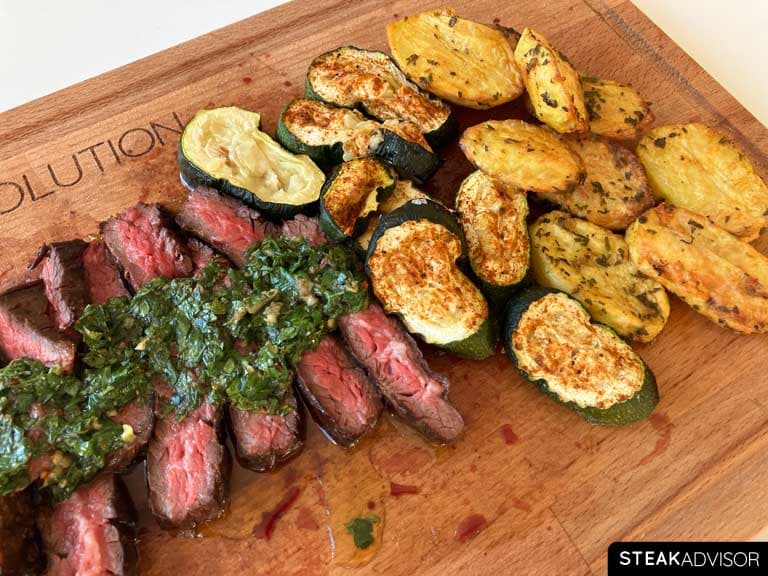
Here are a few good, simple sides that pair perfectly with steak:
Classic, Foolproof Steak Sides
These always work, are easy to prep ahead of time, and don’t steal attention from the steak.
- Mashed potatoes
- Baked potatoes
- Roasted baby potatoes
- Pan-fried potatoes
- Thick-cut steak fries
- Thin French-style steak fries
Note
Potato sides work well no matter how you cook the steak. If you’re using a fast, high-heat steak-cooking method like classic pan-searing, it’s best to prepare the potatoes first, set them aside, and then cook the steak. Since pan-seared steak cooks very quickly, the potatoes will still be warm by the time you’re ready to serve. Doing it the other way around (cooking the steak first) almost always leads to a cold steak by the time the potatoes are ready, especially if you’re making baked or roasted potatoes.
The good news is that once the potatoes are cooked, they’ll stay warm for about 30 minutes without any reheating. That gives you plenty of time to sear the steak and serve everything hot.

Simple Vegetable Steak Sides
Light, quick, and great for balance.
- Roasted asparagus
- Garlic green beans
- Broccoli (roasted or steamed)
- Sautéed mushrooms
- Spinach with garlic
- Zucchini slices
Light, No-Cook Steak Sides
Great when you want to keep things simple or more elegant.
- Simple green salad
- Tomato salad
- Arugula with lemon
The Bottom Line
Instead of spending money on an expensive dinner out for Valentine’s Day, you can use that budget to buy a high-quality cut of steak and cook it exactly the way you like. For thicker, well-marbled steaks, I highly recommend the reverse-sear method. If you’re more comfortable cooking in a pan, forward searing or classic pan-searing are both great options. The key is planning your sides ahead of time so everything is ready to serve warm.
In most cases, I recommend cooking the sides first, setting them aside, and then focusing on the steak. Most sides hold heat well or are easy to gently reheat right before serving. Steak is different; it doesn’t reheat well and overcooks easily, which is why it’s always best served fresh, right after resting.
