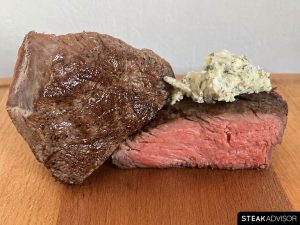
Description
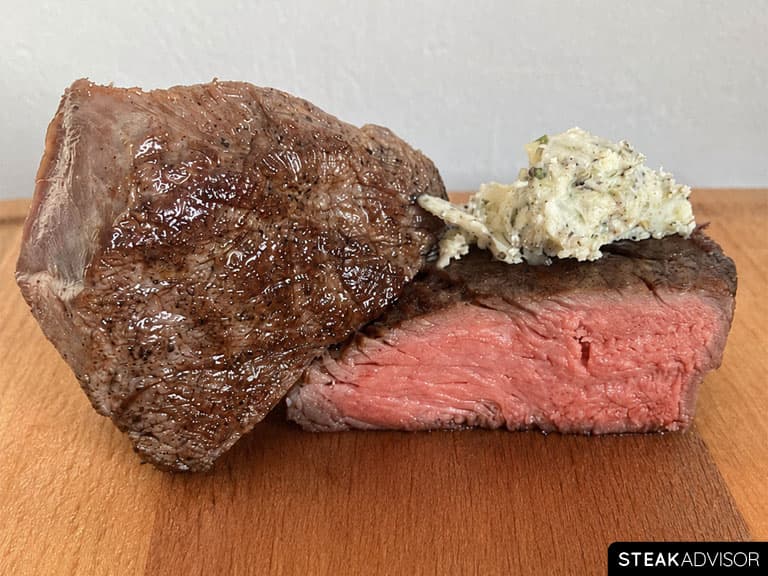
Sous vide steak with precise, edge-to-edge doneness and a juicy interior. You set the exact temperature you want, and the steak comes out precisely at that doneness. It’s simple, reliable, and much more forgiving than cooking entirely over direct heat.
Ingredients
For the steak in a bag:
- 1 naturally tender steak, such as filet mignon, ribeye, or strip steak, preferably 1-2 inches (2.5-5 cm) thick
- salt, 1% of the steak’s weight (see instructions for a 12 oz / 340 g example)
- finely ground black pepper (optional), a generous pinch, or to taste
- garlic powder (optional): A generous pinch, or to taste
- fresh herbs (optional): A few sprigs of thyme or rosemary.
For the final sear in a pan:
- 2 tablespoons (30 ml) high-smoke-point oil or fat (I recommend refined avocado oil; see Notes for alternatives)
For the garlic-herb compound butter (for serving):
- 1/2 stick (56 g) of unsalted butter
- 1/2 tablespoon finely chopped fresh rosemary or 1/2 teaspoon dried rosemary
- 1/2 tablespoon finely chopped fresh parsley or 1/2 teaspoon dried
- 2 garlic cloves, finely chopped or pressed
- 1/8 teaspoon salt (a generous pinch), or more to taste
- A generous pinch of finely ground black pepper (about 1/8 teaspoon), or to taste
Tools:
- Sous vide machine (immersion circulator)
- Heat-safe food container or pot
- BPA-free bags suitable for sous vide
- Vacuum sealer (optional)
- Cast-iron skillet; alternatively, a hot grill or culinary torch
- Meat thermometer (optional)
Instructions
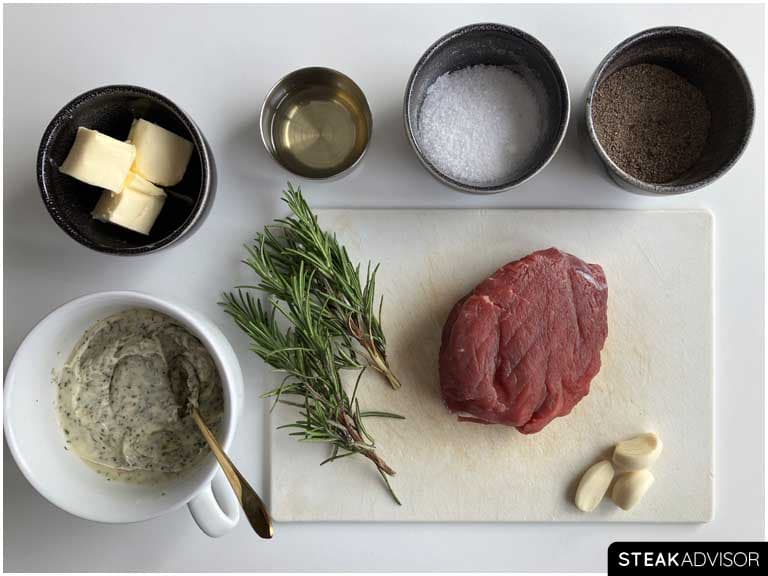
Choose the Target Temperature
- First, decide how you want your steak cooked. With sous vide, the temperature of the water bath determines the steak’s final doneness. For example, for medium-rare at 137°F (58°C), set the water bath to 137°F (58°C).
- Use the ranges below as a guide:
Very Rare to Rare: 118-128°F (48-53°C)
Medium-Rare: 129-139°F (54-59°C)
Medium: 140-149°F (60-65°C)
Medium-Well: 150-155°F (66-68°C)
Well-Done: 156°F+ (69°C+)
- For well-marbled cuts like ribeye or New York strip, I recommend 135-137°F (57-58°C).
- For leaner cuts like filet mignon, many people prefer 129-131°F (54-55°C) for a more tender, juicy result.
Determine the Cooking Time
- For a refrigerated, naturally tender steak such as ribeye, New York strip, or filet mignon, cook for at least:
1 inch (2.5 cm): 1 hour 15 minutes
1 1/2 inches (3.8 cm): 2 hours 20 minutes
2 inches (5 cm): 3 hours 35 minutes - These are minimum heat-through times and do not guarantee pasteurization.
- For frozen steaks, other thicknesses, tougher cuts, or pasteurization times, click or tap the Sous Vide Steak Cooking Time Calculator link to find the recommended cooking time for your steak.
Preheat the Water Bath
- Fill the container with water, keeping it between the circulator’s minimum and maximum fill lines. Set the circulator to your chosen temperature and preheat the water bath.
- While the water bath preheats, continue with the seasoning instructions below.
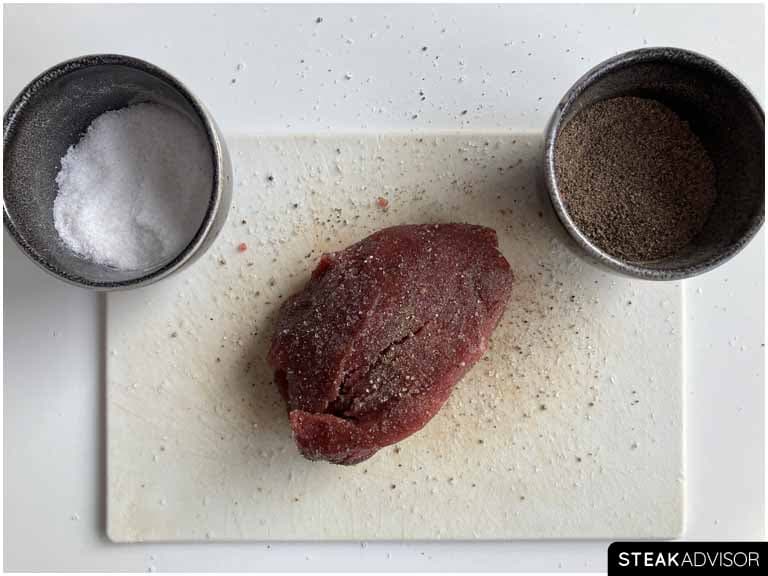
Season the Steak
- Pat the steak dry with paper towels.
- Season all over, including the edges, with salt equal to about 1% of the steak’s weight. For a 12-ounce (340 g) steak, that’s 0.12 oz (3.4 g) , or roughly:
1 1/4 teaspoons Diamond Crystal kosher salt,
3/4 teaspoon Morton kosher salt,
or 1/2 teaspoon table salt. - If using black pepper and garlic powder, sprinkle a generous pinch over each side of the steak, or season to taste.
Bag and Seal the Steak
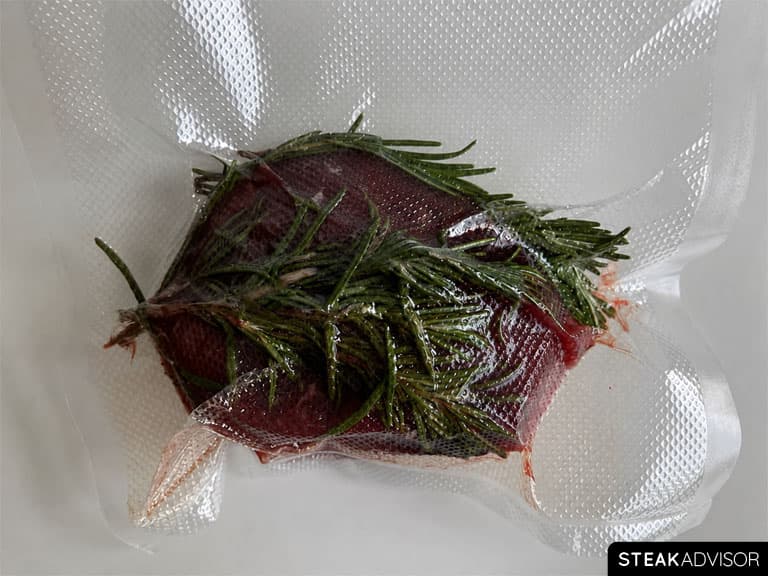
- Place the seasoned steak in a sous vide-safe bag.
- If using fresh herbs, place a few sprigs on both sides of the steak, then vacuum-seal the bag.
- If using a zip-top bag, slowly lower it into the water, keeping the opening above the surface. Seal just above the waterline, removing as much air as possible so the steak stays submerged.
Cook the Steak Sous Vide
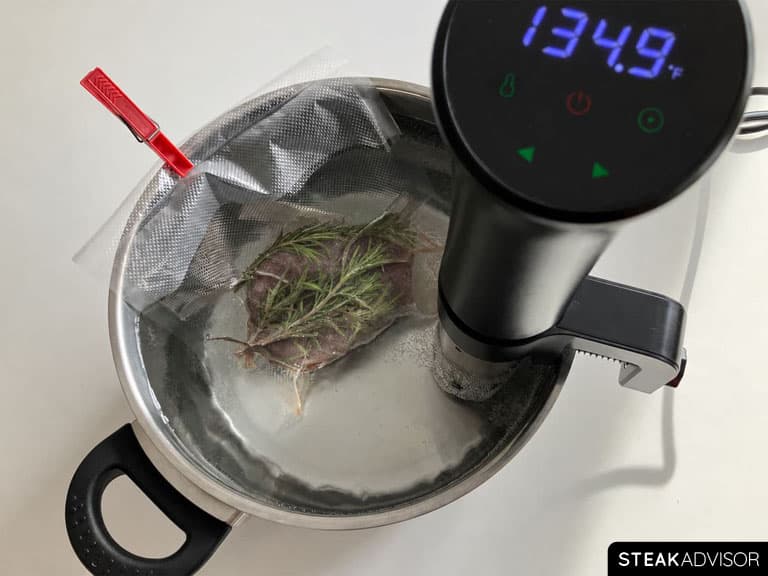
- Once the water bath reaches the target temperature, place the sealed bag in the water.
- Make sure it isn’t blocking the circulator’s intake or outlet. Keep the steak fully submerged, weighing down or clipping the bag in place if needed.
- Cook for the time recommended by the Sous Vide Steak Cooking Time Calculator. If you selected pasteurization, follow the longer time provided.
- Note: For food safety, do not leave steaks in a water bath below 130°F (54°C) for more than 2 hours.
Make the Garlic-Herb Compound Butter
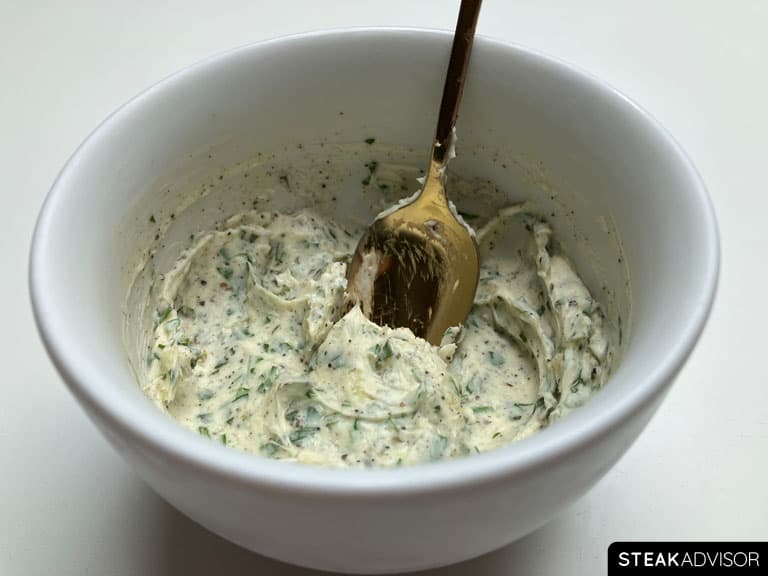
- Cut the butter into small pieces and place it in a bowl. Let it soften at room temperature until it’s easy to mix but not melted.
- To speed things up, microwave it in a microwave-safe bowl in 5-second intervals, checking after each interval.
- Add the rosemary, parsley, garlic, salt, and black pepper. Mix with a fork until evenly combined, then taste and adjust the seasoning.
- Cover and refrigerate until ready to use.
Remove Steak From Bag
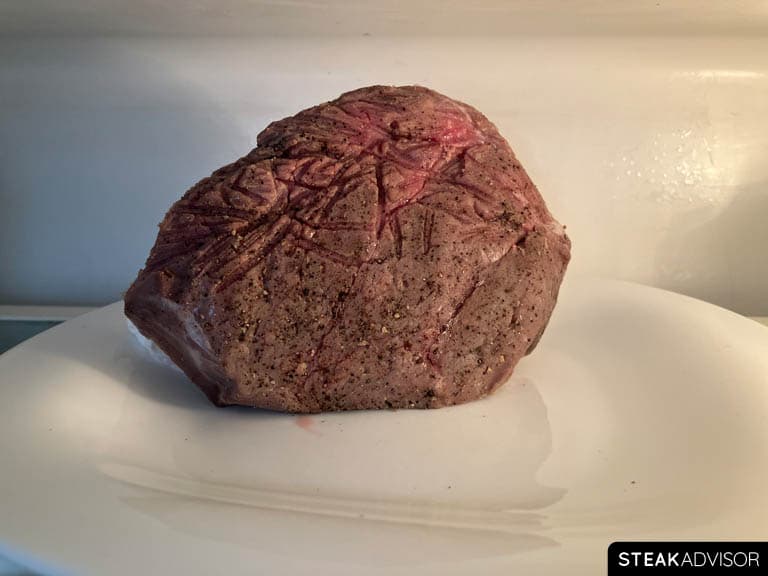
- Once the steak has cooked for the time you planned, remove it from the bag and pat it completely dry on all sides with paper towels.
- Place it uncovered on a wire rack set over a rimmed baking sheet and refrigerate for 15-20 minutes before searing. No wire rack? Stand the steak on its edge on a plate.
- This brief chill lowers the steak’s temperature slightly and dries the surface, giving you more time to develop a deep crust without risking overcooking it.
- For steaks 2 inches (5 cm) thick or more, chill for an additional 5-10 minutes. For steaks around 1 inch (2.5 cm) thick, or when searing quickly over an open flame, reduce the chilling time slightly.
Sear the Steak
- About 15 minutes before searing, remove the compound butter from the refrigerator and let it soften slightly at room temperature.
- Tip: Turn on the exhaust fan and crack a window before you begin. A very hot pan produces a lot of smoke and can easily set off the smoke alarm.
- Heat a skillet over medium-high heat for 3-4 minutes.
- Add 2 tablespoons of high-smoke-point oil and heat for 1 minute, until the oil just begins to smoke.
- While the pan heats, pat the steak completely dry again with paper towels. The drier the surface, the better the crust.
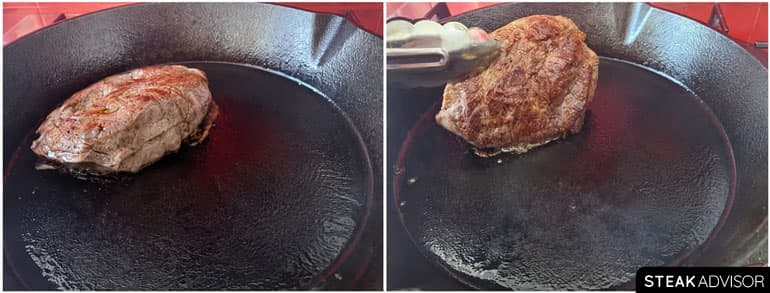
- Sear the steak for 2 minutes total, flipping every 30 seconds.
- Optional: If the steak has a fat cap (like a strip steak or picanha), hold it fat-side down for 60-90 seconds, or until well browned. If it doesn’t have a fat cap, quickly sear the remaining edges for about 15 seconds.
- Note: If using a grill or torch instead of a skillet, keep the searing time as short as possible. The goal is to build a good crust without cooking the center any further.
- Use the 2-minute sear as a starting point. A longer chill may give you a little more time, but the ideal searing time depends on the steak’s thickness, target doneness, and heat intensity. Adjust carefully for your setup, and test longer sears on a less expensive steak first.
Serve the Steak
- Top the steak with compound butter as soon as it leaves the pan, then serve immediately with your favorite sides. No resting is needed.
- Note: Sous vide steak loses heat quickly after searing, so have your sides ready beforehand. Sear, plate, and serve without delay.
Notes
Salt: Use salt equal to about 1% of the steak’s weight. For 12 oz (340 g) of steak, that’s about 1 1/4 teaspoons Diamond Crystal kosher salt, 3/4 teaspoon Morton kosher salt, or 1/2 teaspoon table salt.
The cook time shown in this recipe card is based on a refrigerated, 2-inch (5 cm) thick steak. For other thicknesses, refer to the cooking-time table above or click or tap the https://steakadvisor.com/steak-cooking/how-long-to-sous-vide-a-steak/ link.
Oil or fat alternatives: If you don’t have refined avocado oil, use refined high-oleic safflower oil, high-oleic canola oil, regular refined canola oil, refined olive oil, refined peanut oil, or clarified butter (ghee). Do not use regular butter for searing – it burns at high heat.
Important! If you drop the temperature below 130°F (54.4°C), you’re entering the food safety danger zone where harmful pathogens may survive. Because of that, you shouldn’t cook the food at those temperatures for more than 2 hours. For wild game, it’s especially important to cook the steak at a high enough temperature to kill potential parasites or bacteria.
For more details and tips on cooking steak sous vide, see the FAQs above the recipe card.