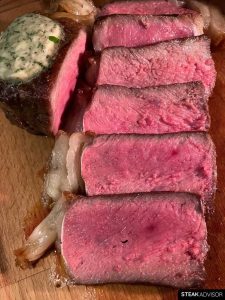
Description
A foolproof pan-sear, oven-finish method for thick-cut steak: start with a hot sear for a rich, flavorful crust, then finish gently in the oven for juicy, evenly cooked results. Served with garlic-herb compound butter, this steak is perfect for any special meal at home.
Ingredients
For Steak:
- Any naturally tender steak, at least 1 1/2 inches (3.8 cm) thick, such as ribeye, filet mignon, porterhouse, T-bone, or New York strip
- 2 tablespoons (30 ml) high-smoke-point oil (I recommend refined avocado oil) see Notes below for alternatives
- salt, about 1% of the steak’s weight (see instructions for a 20 oz / 567 g example)
- optional: about 1/3 teaspoon of finely ground black pepper
For garlic-herb compound butter (for serving)
- 1/2 stick (56g) of unsalted butter
- 2 garlic cloves, finely chopped or pressed
- 1 generous pinch salt (about 1/8 teaspoon), or more to taste
- 1/8 teaspoon finely ground black pepper (a generous pinch), or to taste
- 1/2 tablespoon finely chopped fresh parsley or 1/2 teaspoon dried
- 1/2 tablespoon finely chopped fresh rosemary or 1/2 teaspoon dried rosemary
Tools:
- Oven-Safe Wire Rack
- Baking Sheet
- Pan (a cast-iron, carbon steel, or heavy-bottomed stainless steel skillet)
- Tongs
- Oven
- Meat Thermometer (See notes)
Instructions
Prepare the Steak
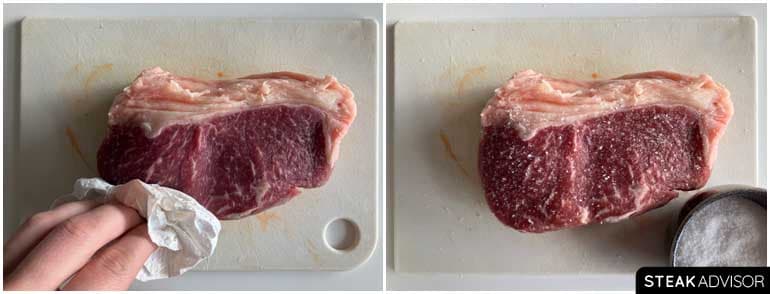
- Pat the steak dry on all sides with paper towels, then season all sides evenly with salt, using about 1% of the steak’s weight.
- For a 20 oz (567 g) steak, that is about 0.2 oz (5.7 g) of salt. This equals roughly 2 1/8 teaspoons of Diamond Crystal kosher salt, 1 1/4 teaspoons of Morton kosher salt, or slightly less than 1 teaspoon of table salt.
- Place the salted steak uncovered on a wire rack set over a baking sheet.
- If you plan to cook it soon, refrigerate it for about 1 hour. That’s the bare minimum.
- For better flavor and crust, refrigerate it for 4 to 6 hours. This is the option I highly recommend.
- If you don’t have at least 1 hour, don’t salt the steak in advance. Season it right before it goes into the pan, or salt it after searing.
Make the Compound Butter while the steak rests
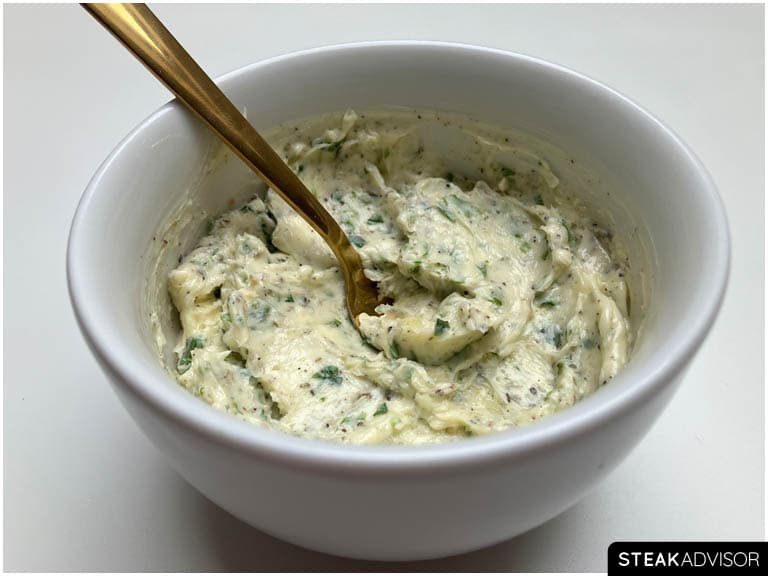
- Cut the butter into small cubes and place them in a bowl. Let soften at room temperature. Alternatively, use a microwave safe bowl and microwave in 5 second intervals until soft but not melted.
- Add the garlic, parsley, rosemary, salt, and pepper. Mix with a fork, then adjust the seasoning if needed.
- Refrigerate until needed.
Preheat the Pan & Oven
- Tip: Searing creates a lot of smoke, so turn on the exhaust fan or open a window before you begin.
- Remove the steak and compound butter from the fridge 15 minutes before cooking.
- Preheat the oven to 225°F (110°C).
- When the oven is almost preheated, place a heavy cast iron, carbon steel, or stainless steel skillet over medium-high heat and let it warm for 3-4 minutes. Add 2 tablespoons (30 ml) of high-smoke-point oil and let it heat for another minute.
Pan-Sear the Steak
- Right before searing, pat the steak dry with paper towels again.
- (Optional) If using black pepper, season the steak with about 1/3 teaspoon of finely ground black pepper.
- If your steak has a fat cap, start by holding it fat-cap side down and sear it until nicely browned. Then lay the steak flat in the pan, press it down gently for full contact, and sear, flipping every 30 seconds.
- Sear the steak for 3 to 5 minutes total, then proceed to the oven-finishing step.
- Lean cuts and steaks closer to 1 1/2 inches (3.8 cm) thick need about 3-4 minutes, while much thicker or well-marbled cuts need 4-5 minutes. The goal here is to build the crust; the steak will finish cooking gently in the oven.

Finish the Steak in the Oven (Wire Rack Method)
- Transfer the steak to an oven-safe wire rack set over a baking sheet.
- Insert a leave-in probe thermometer from the side, positioning the tip in the center of the thickest part, away from bone and large pockets of fat. Place the baking sheet in the center of the oven.
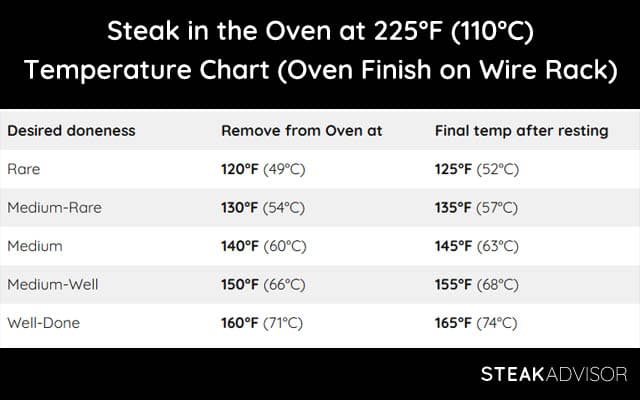
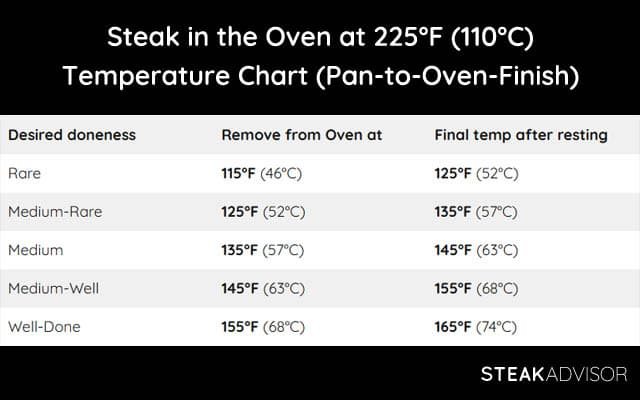
- Cook at 225°F (110°C) until the center of the steak reaches the temperature listed in the “Remove from Oven at” column – 5°F (3°C) below the final target temperature – for your desired doneness (see the chart below).
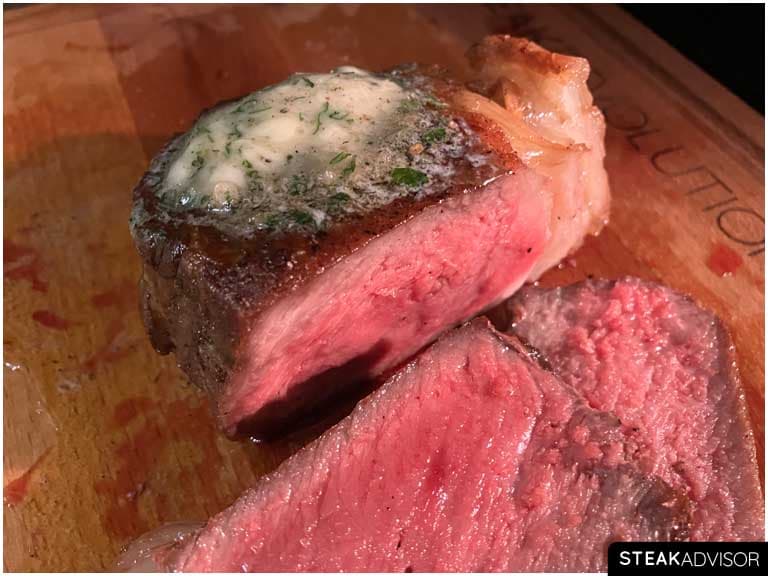
- Then, remove the steak from the oven, top with compound butter, and let it rest uncovered for 5 minutes.
Serve the Forward-Seared Steak
- After the steak has rested, slice it thinly and serve it with your favorite sides.
(Optional) Pan-to-Oven Finish
- If you don’t have a wire rack but you do have an oven-safe pan, you can place the pan with the steak directly in the oven. With this method, cook the steak until the internal temperature reaches about 10°F (6°C) below your final target temperature.
- See notes for how the wire rack method differs from the pan-to-oven finish.
Notes
Oil/Fat Alternatives: Use refined high oleic safflower oil, refined high oleic canola oil, refined canola oil, refined olive oil, refined peanut oil, or ghee. Do not use regular butter for searing because it burns quickly over high heat.
Meat thermometer: I highly recommend using a leave-in probe thermometer for this recipe. Before placing the steak in the oven, insert the probe from the side into the thickest part, positioning the tip in the thermal center and away from bone or large pockets of fat. Adjust it slightly to locate the coldest point.
Compound Butter: Use any compound butter you like. Garlic herb butter is a classic choice for steak, but many other flavors work just as well. See my full collection of steak butter recipes for more ideas.
Dry brining for 12-24 hours: You can dry-brine the steak for 12-24 hours, but expect a thicker gray band under the crust. The flavor and crust will be excellent, but not everyone likes the deeper, saltier flavor that develops after a long dry brine, especially when the steak sits closer to 24 hours. If you want to try a longer dry brine, I recommend starting with 12 hours first. Then, next time, you can go longer and see if you like the difference. Just keep in mind that the closer you get to 24 hours, the more noticeable the gray band under the crust becomes.
Difference between the wire rack method and pan-to-oven finish: You can finish the steak in the oven two different ways. The method you choose affects how evenly it cooks inside and how much of a gray band forms under the crust.
Option 1: Wire Rack Method (my preferred method): With air circulating all around, the steak cooks more evenly on both sides, and you get a much smaller gray band under the crust.
Option 2: Pan-to-Oven Method (if you don’t have a wire rack): With this method, the steak cooks less evenly because the bottom sits on a very hot pan while the top is exposed to the gentler oven heat. A larger temperature difference creates a stronger temperature gradient inside the steak, leading to a thicker gray band just under the crust, and may also lead to a slightly bigger carryover rise as the steak rests.
Alternative to Compound Butter (Quick Garlic and Herb Butter): While the steak rests, place the pan used for searing over medium heat. If the pan is dry, add 1 to 2 tablespoons of oil. Add a few peeled garlic cloves and cook until lightly browned. Reduce the heat to low, then add a couple of sprigs of rosemary or thyme and 2 tablespoons (30 g) of unsalted butter. Once the butter has melted, turn off the heat. Slice the steak, spoon the garlic and herb butter over the top, and serve.