
Description
Learn how to cook steak on the stove in a pan the right way. This method gives you a golden-brown crust, a juicy interior, and restaurant-quality flavor using just a few simple ingredients: steak, salt, pepper, garlic, herbs, and butter. Perfect for beginners and a go-to technique for any thick, tender cut.
Ingredients
For Steak:
- About 1 1/2 inches (3.8 cm) thick steak (any naturally tender steak)
- 1-2 tablespoons (15-30 ml) of high-smoke-point oil (I recommend refined avocado oil)
- 1-2 teaspoons (about 5-10 g) kosher salt (use roughly 1-1.5% of the steak’s weight in salt)
- 1/2 teaspoon finely ground black pepper per 1 pound (453 g) of steak (optional)
- A few thyme sprigs or rosemary (optional)
- 2–3 garlic cloves (optional)
- 2 tablespoons (30 g) unsalted butter (optional)
- Compound butter (optional)
Tools:
- Pan (cast-iron, carbon steel or heavy-bottomed stainless steel skillet)
- Tongs
- Meat thermometer (instant-read or probe thermometer)
Instructions
- Before we start. If you want to keep things simple and reduce the risk of overcooking, skip the butter basting and add a slice of compound butter on top of the steak immediately after you remove it from the pan.
- Start by gathering your ingredients and tools, then follow the steps below. If it’s your first time pan-searing a steak, read through the steps at least once before you start.

Prepare the Steak
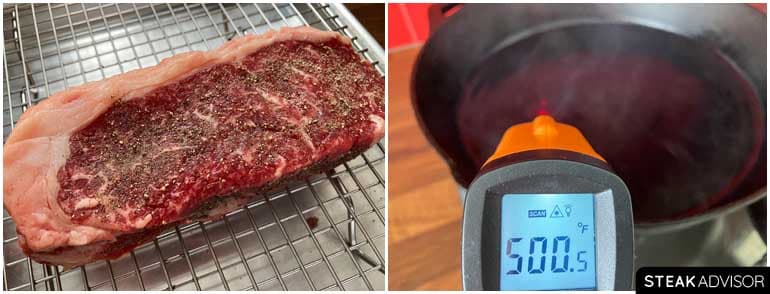
- Pat the steak dry with paper towels to remove excess surface moisture. Season generously with 1-2 teaspoons of kosher salt (1-1.5% of the steak’s weight) on both sides, then place on a wire rack set over a baking sheet and let the steak rest before cooking:
- If you’re short on time, leave it at room temperature for 1 hour.
- If you have more time, refrigerate it uncovered for 4–6 hours for even better flavor and a drier surface (which means a better sear). I highly recommend this option.
- You can dry-brine the steak for 12-24 hours for a much better flavor and crust, but keep in mind that steaks dry-brined longer than 8 hours form a significantly thicker gray band under the crust.

Preheat the Pan
- Remove the steak from the refrigerator about 30 minutes before cooking.
- Place a heavy, thick-bottomed pan (ideally cast iron) over medium-high heat. Let it heat for 2–3 minutes, until the surface reaches about 450–500°F (232–260°C). Then add 1–2 tablespoons of high-smoke-point oil and wait another minute. For thick, well-marbled cuts, one tablespoon is usually enough.
- While the pan is heating, prepare the steak for cooking. Pat it dry again with paper towels, then season with finely ground black pepper if you like (1/2 teaspoon per pound/454 g of steak). Once the pan is hot and the oil is shimmering, you’re ready to start cooking.
Pan-Sear the Steak
- First, turn off the smoke alarm and turn on your exhaust fan or open a window (searing creates smoke).
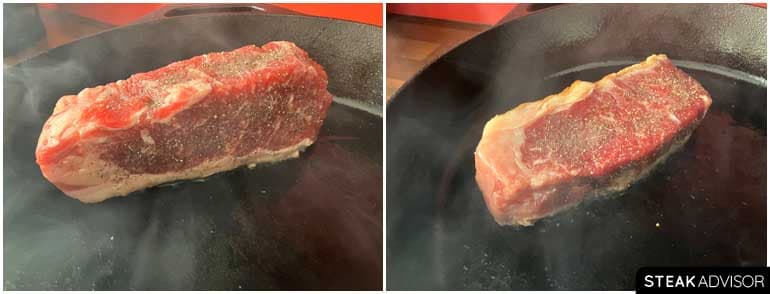
- Carefully place the seasoned steak in the hot pan and gently press it down with a spoon or tongs to ensure it makes good contact with the pan surface. For some cuts, like strip steak or picanha, you can start by placing the steak fat-side down in the pan for 1–2 minutes to render some of the fat before searing the flat sides.
- Cook the steak, flipping it about every 30 seconds. Continue until the steak’s internal temperature reaches around 90°F (32°C). At this point, you can move on to the next step (with butter, garlic, and fresh herbs).
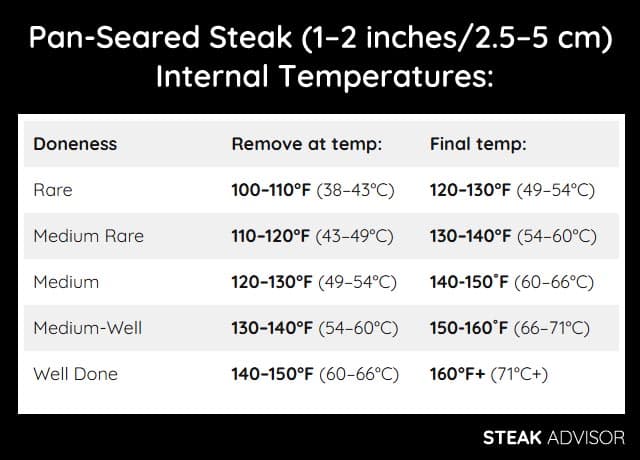
- Optionally: If you’d rather keep things simple, you can skip the butter, garlic, and herbs in the next step. In that case, continue flipping and cooking the steak until it’s about 20°F (11°C) below your final target temperature (see the temperature chart below), then remove it from the pan and let it rest.
Skipping the butter and herbs is fine, though I do recommend the butter-and-herb method for extra flavor. As an alternative, you can always finish the steak after cooking with a slice of compound butter on top.
Add the Herbs, Garlic, and Butter
- Lower the heat to medium-low. Add 2 tablespoons (30 g) butter, 2–3 garlic cloves, and a few sprigs of thyme or rosemary to the pan. Once the butter melts, tilt the pan so it pools at the bottom.
- Move the steak slightly higher in the pan, then spoon melted butter over the steak for about 30 seconds per side. If you’d rather not spoon-baste, there’s an easier option: tilt the pan so the butter pools, place the steak directly in it, and flip every 30 seconds. This method is easier and gives you the same results.
- As you baste, continue to check the steak’s internal temperature. Remove it from the pan when it’s about 20°F (11°C) below your target doneness (see the temperature chart below), then turn off the heat and move to the next step.
Let the Steak Rest
- Place the steak on a cutting board or, ideally, a rack, and let it rest for a few minutes. Don’t slice or move it during this time; leave it alone. As the steak rests, residual heat will raise the internal temperature slightly, bringing it to your target doneness.
- For steaks 1 inch (2.5 cm) thick, rest for about 5 minutes.
- For steaks about 1 1/2 inches (3.8 cm) thick, rest for about 6-7 minutes.
- Add Compound Butter (optional): If you’re using compound butter instead of pan drippings, place a slice on the hot steak while it rests. The butter will melt slowly, coating the surface with flavor.
Serve the Pan Seared Steak:
- When it’s time to serve, slice the steak thinly, if possible, against the grain (see notes below). Don’t forget to pour the leftover butter, garlic, and herbs from the pan over the slices (if you used it instead of compound butter). They’re packed with flavor and make the steak even better.

Notes
How to Slice the Steak After Cooking
Naturally tender cuts, such as ribeye, a good-quality strip steak, or filet mignon, can be sliced however you prefer. However, cuts with long, coarse muscle fibers (such as skirt, hanger, flank, or flap steak) should always be sliced against the grain. Slicing against the grain shortens the muscle fibers, making the steak much easier to chew. If you’re unsure how to slice a specific cut, check out my slicing steak guide for clear, step-by-step examples.