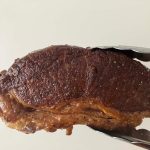
Description
This is my go-to method for searing any steak. It’s reliable, easy to follow, and gives you a beautifully browned crust with a juicy, medium-rare to medium center every time. Below, you’ll find versions for both pan-searing and grilling.
Ingredients
For steak:
- 1/2 to 1 1/2 inch (1.27–3.8 cm) thick steak
- 2 tablespoons (30 ml) of high-smoke-point oil (I recommend refined avocado oil)
- 1-2 teaspoons (about 5-10 g) kosher salt (1-1.5% of the steak’s weight in salt)
- 1/2 teaspoon finely ground black pepper per pound (454 g) of steak (optional)
For Aromatics (optional):
- A few thyme sprigs or rosemary (optional)
- 2–3 garlic cloves (optional)
- 2 tablespoons (30 g) unsalted butter (optional)
- compound butter (optional)
Instructions
- Before we start. This recipe is all about getting a good crust while keeping the inside at a medium-rare to medium doneness. If you’re feeling confident and want to add aromatics, keep one thing in mind: avoid butter-basting steaks that are less than 1 1/2 inches (3.8 cm) thick, or any steak you’re only giving a quick sear to, like after a reverse sear or sous vide. It’s very easy to overcook them.
- Instead, put a bit of compound butter on the steak while it rests, or cook your aromatics in the pan after you finish searing and spoon them over the sliced steak. You’ll still get great flavor without risking pushing the steak past your target doneness.
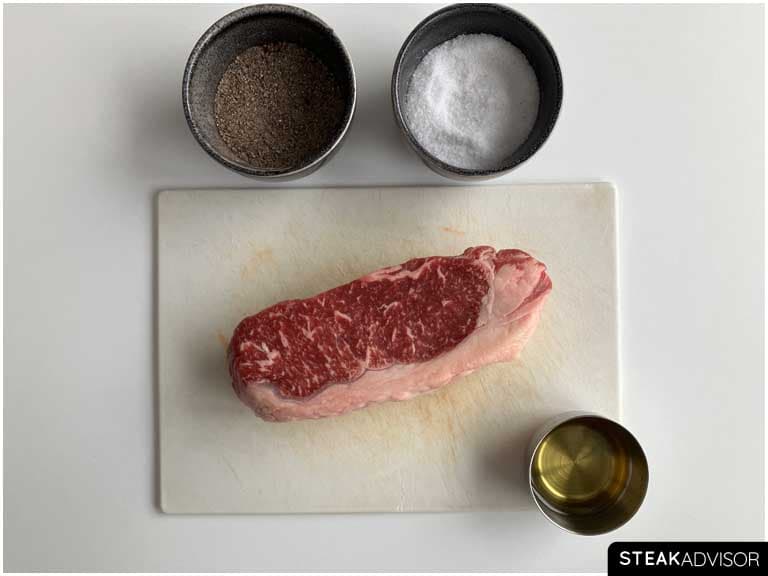
Prepare the Steak
- Trim off any excess fat or silver skin if needed. If you’re cooking a long, whole muscle cut, such as a skirt or flap (bavette), and it doesn’t fit in your pan or on your grill, cut it into smaller pieces. If your steak already looks good and doesn’t require trimming, continue to the next step.
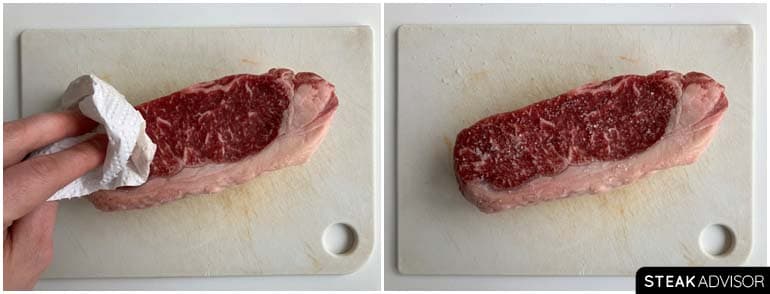
- Pat the steak dry with paper towels on both sides, then season it with 1-2 teaspoons of kosher salt (1-1.5% of the steak’s weight). Place the steak on a wire rack set over a baking sheet and refrigerate uncovered for 4 to 6 hours for the best balance of crust, flavor, and minimal gray band inside.
- If you’re short on time, a 1-hour dry brine is the absolute minimum. You can dry-brine the steak for 12-24 hours for a much better flavor and crust, but keep in mind that steaks dry-brined longer than 8 hours form a significantly thicker gray band under the crust.
To Sear in a Pan
- If you refrigerate the salted steak, take it out 30 minutes before cooking and let it sit at room temperature.
- Turn on the exhaust fan or open a window (pan-searing creates a lot of smoke).
- Place a heavy skillet over medium-high heat and let it warm for 3-4 minutes. Add 2 tablespoons of a high-smoke-point oil and heat for an additional minute.
- While the pan heats, pat the steak dry with paper towels and, optionally, season both sides with finely ground black pepper (1/2 teaspoon per pound/454 g of steak). Once the pan and oil are hot, you’re ready to start searing.

- Carefully place the steak in the pan and gently press it down with tongs to ensure even contact with the surface. For cuts like strip steak or picanha, start fat-side down to render some of the fat and crisp it up. Sear the fat side for 1-2 minutes, or until browned to your liking. Then flip the steak and continue searing, flipping every 30 seconds.
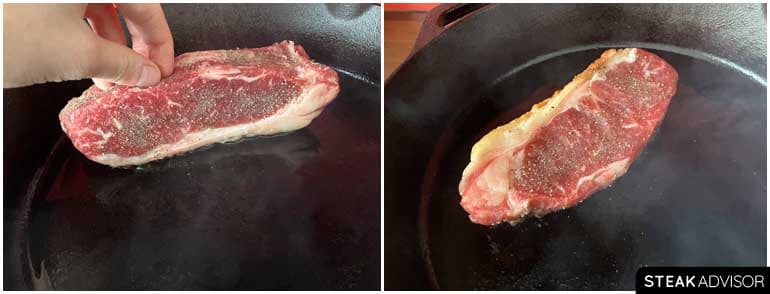
- Cook the steak until its internal temperature is about 20°F (11°C) below your target doneness for steaks 1 to 1 1/2 inches (2.5 to 3.8 cm) thick, or about 15°F (8°C) below for steaks under 1 inch (2.5 cm) thick (see notes for the temperature chart). Then remove it from the pan and let it rest.
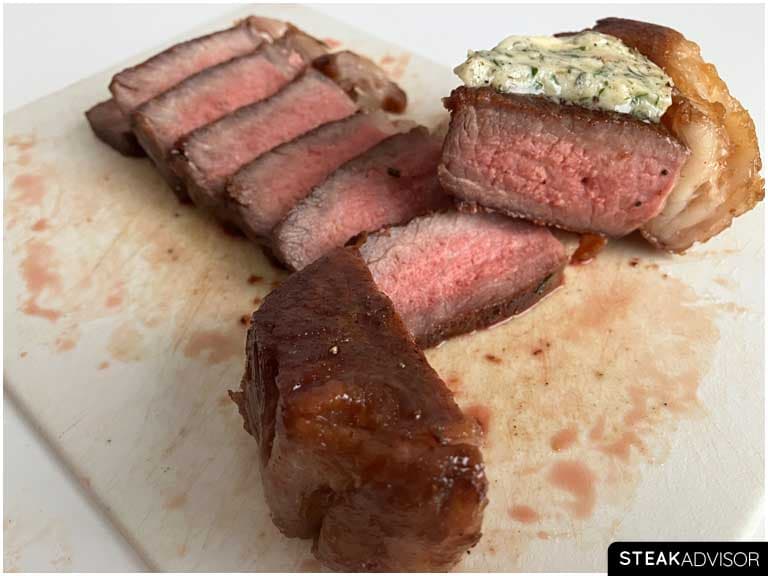
- Let the steak rest for 5 minutes if it’s up to 1 inch (2.5 cm) thick, or 6–7 minutes for steaks about 1 1/2-inch (3.8 cm) thick. As it rests, you can add a bit of compound butter on top (optional) or cook your aromatics in the pan and spoon them over the sliced steak (see notes below).
- Once the steak has rested, slice it thinly and serve. For cuts with coarse muscle fibers, such as skirt, hanger, flap/bavette, or flank steak, always slice against the grain (see notes below).
As for the aromatics, you have three options:
- Once you’ve built the crust you can, melt some butter and spoon it over the steak each time you flip it (butter basting method). This method works best with the front-sear technique and thicker cuts (at least 1 1/2 or 3.8 cm thick), as thinner steaks can overcook quickly.
- Place a few slices of compound butter on top of the steak while it rests (the easiest one).
- Melt butter with chopped herbs and minced garlic in a small bowl or in a pan over direct heat on the grill, then pour it over the sliced steak.
To Sear on the Grill
- Again, if you refrigerate the salted steak, take it out 30 minutes before cooking and let it sit at room temperature.
- Light a full chimney of charcoal. Once the coals are fully lit and covered with gray ash, pour them out and arrange them on one side of the charcoal grate. Set the cooking grate in place, cover the grill, and let it preheat for about 5 minutes, or until the lid temperature reaches about 500°F (260°C).
- If you’re using a gas grill, set half of the burners to their highest heat setting, close the lid, and preheat for about 10 minutes, or until the grill reaches a temperature of around 500°F (260°C).
- Pat the steak dry with paper towels, then place it directly over the hot side of the grill. Cook it while flipping every 30 seconds. Each time you flip, you can also rotate the grill grate to bring a cooler section over the coals and set the steak on that spot. This helps you build an even, well-browned sear instead of dark, burned grill marks.
- Grill the steak over direct heat, adjusting the method based on its thickness:
For steaks thicker than about 1 inch (2.5 cm): Use the front-sear method. Start by building a good crust over direct heat, flipping the steak every 30 seconds. Once the crust looks nice to you (ideally golden-brown), move the steak to the cooler side of the grill, close the lid, and let it finish gently over indirect heat. Take it off the grill when it’s about 10°F (6°C) below your target doneness, then let it rest for 6–7 minutes. - For steaks up to 1 inch (2.5 cm) thick: Keep the steak over direct high heat and flip every 30 seconds. Remove it when the internal temperature is about 20°F (11°C) below your target doneness (see notes for the temperature chart), then let it rest for 5 minutes before slicing.
- Keep an eye on the steak as it cooks to ensure it doesn’t catch on fire from flare-ups. If it does, move it to the cooler side of the grill, let the flames die down, and then return it to the heat to continue searing.
- For the aromatics, follow the same tips I mentioned earlier in the pan-searing section.
To Sear After Sous Vide or Reverse Sear
- For this, please check out my separate guides on sous vide and reverse searing. It’s easy to overcook a steak during the final sear if it’s not done correctly. In this recipe, I’m keeping things simple and focusing only on the classic methods (pan-searing and grilling) to keep the instructions clear and the overall recipe shorter.
Notes
Temperature Chart

Aromatics
I’m not against using aromatics, but over the years, the butter-basting technique has been hyped a lot. It’s a great technique, but only if you’re confident with high-heat cooking or if you’re cooking a steak that’s at least 1 1/2 inches (3.8 cm) thick. With thinner steaks, it’s very easy to overcook them while butter-basting, especially over direct heat. Additionally, the hot melted butter keeps the surface warm even when that side isn’t facing the heat, which increases carryover cooking.
That’s why I suggest learning how to sear a steak on its own first. Start with easier aromatics, like adding compound butter while the steak rests or making a quick garlic-herb butter after you take it off the heat. Once you feel comfortable, you can try butter-basting. But honestly, I usually stick with compound butter. It’s easier, quicker, and still adds plenty of flavor.
Slicing technique
Slicing against the grain shortens the muscle fibers, which makes each bite much easier to chew. This is especially important for cuts with long and coarse fibers, like skirt, flank, hanger, or flap/bavette steak. If you slice these cuts with the grain, the fibers stay long and the meat ends up tough and chewy – it’s one of the most common mistakes people make with these steaks. Cuts like ribeye, filet mignon, or strip steak are naturally tender, so the slicing direction doesn’t matter as much. You can slice them however you like.