Description
A foolproof pan-sear, oven-finish method for thick-cut steak: start with a hot sear for a rich, flavorful crust, then finish gently in the oven for juicy, evenly cooked results. Served with garlic-herb compound butter, this steak is perfect for any special meal at home.
Ingredients
For Steak:
- Any tender steak that’s at least 1 1/2 inches/3.8 cm thick (ribeye, new york strip, filet mignon, porterhouse/t-bone)
- 1-2 tablespoons (15-30 ml) high-smoke-point oil
- 1-2 teaspoons (about 5-10 g) kosher salt (see notes)
- 1/2 teaspoon finely ground black pepper per pound (454 g) of steak (optional)
- Compound butter (alternatively, use unsalted butter, 2–3 garlic cloves, and a few sprigs of fresh rosemary or thyme)
Tools:
- Pan (a cast-iron, carbon steel, or heavy-bottomed stainless steel skillet)
- Baking Sheet
- Wire Rack
- Meat Thermometer (a leave-in probe thermometer or an instant-read thermometer)
- Tongs
Instructions
Before we start: Start by gathering all the ingredients and tools. If you’re using compound butter, prepare it ahead of time – you’ll need it immediately after the initial sear, before the steak goes into the oven. Once everything’s ready, follow the steps below.

Prepare the Steak
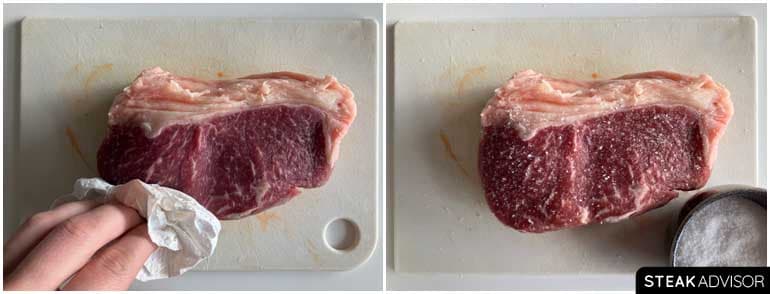
- Dry the steak thoroughly on all sides with paper towels. Season both sides evenly with 1-2 teaspoons of kosher salt (see notes below). Then place the steak uncovered on a wire rack set over a baking sheet. For the best flavor and a better sear, dry-brine the steak in the fridge for 4–6 hours (this is the option I highly recommend, especially for thicker cuts).
- If you’re short on time, let the salted steak sit at room temperature for about 1 hour instead. Do not dry-brine for more than 6 hours unless you’re okay with a thicker, gray band under the crust.
- If you used the fridge method, remove the steak 30 minutes before cooking and let it rest at room temperature.
Preheat the Pan & Oven
- First, set your oven to 225°F (110°C).
- While the oven preheats, prepare your pan for searing. Place a heavy, oven-safe skillet over medium-high heat and let it warm up for 3-4 minutes. Add 1-2 tablespoons of high-smoke-point oil and let it heat for an additional minute. Once the pan reaches about 450–500°F/232–260°C, it’s time to sear.
- You don’t need much oil if you’re cooking a well-marbled steak; 1 tablespoon (15 ml) is enough. However, for leaner cuts like filet mignon, use up to 2 tablespoons (30 ml) to help with browning.
Pan-Sear the Steak
- Right before searing, pat the steak dry again. Then season both sides with finely ground black pepper if you like (1/2 teaspoon per pound/454 g of steak).
- Carefully place the steak in the hot pan and gently press it down with tongs or your fingers so that the surface makes full contact with the pan. Keep the heat at medium-high and sear the steak, flipping every 30 seconds to build a deep, even crust on both sides. Once you’ve got a crust you love, turn off the heat and get ready for the next step.
- If you’re cooking a steak with a fat cap (like picanha or a strip steak), you can start by searing the fat side down for 60 to 90 seconds to render some of the fat.
- For timing: a 1 1/2-inch (3.8 cm) thick steak usually needs no more than 4 minutes of total searing, and a 2-inch (5 cm) thick steak about 5 minutes. The goal here is to build the crust. We’ll finish cooking the steak gently in the oven.

Finish Cooking the Steak in the Oven
- Finish the steak in the oven, depending on how evenly you want the inside to cook and how much you want to minimize the gray band just under the crust:
- Option 1 (highly recommended): transfer the steak to a wire rack set over a baking sheet, then place it in the center of your preheated oven. Because the air circulates all around the meat, it cooks more evenly on all sides with a minimal gray band.
- Option 2 (if you don’t have a wire rack): place the pan (with the steak) straight into the oven (make sure your pan is oven-safe). Keep in mind that this method cooks the steak less evenly, since the bottom sits on a very hot pan while the top is exposed to gentler oven heat. That difference creates a noticeably thicker gray band later.
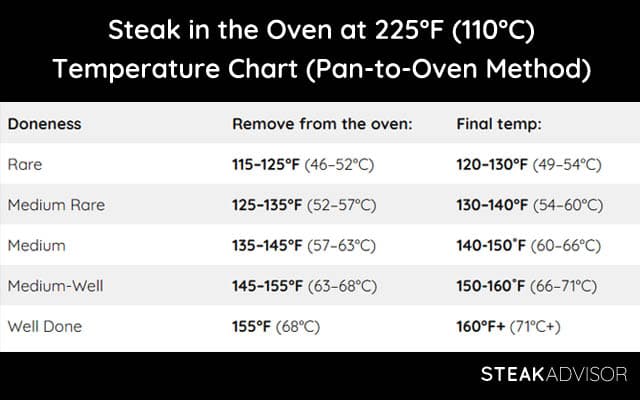
- Whichever option you choose, bake the steak at 225°F (110°C) until the internal temperature is 5°F (3°C) below your final target doneness (see the temperature chart below).
- Once the steak hits your target temperature, carefully remove the hot pan (or the wire rack and baking sheet) from the oven. Transfer the steak to a cutting board or leave it on the wire rack and let it rest for 5 minutes (never let it rest in the hot pan!). As the steak rests, its internal temperature will rise those last few degrees due to the carryover cooking, bringing it right to your target doneness.
Add Aromatics
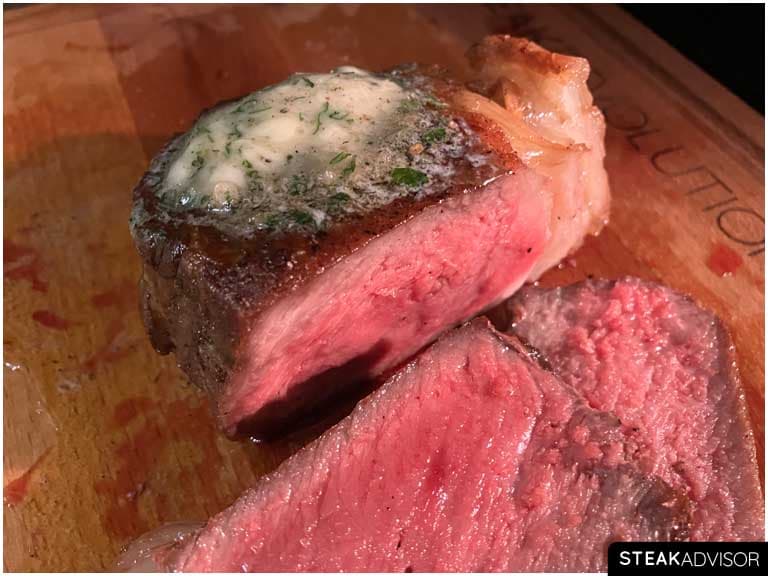
- Place two thin slices of compound butter right on top of the hot steak. The butter, herbs, and garlic will melt, infusing the steak with rich, aromatic flavor.
- If you don’t have compound butter, you can sear a few garlic cloves and a couple of sprigs of rosemary or thyme in a pan over medium-high heat while the steak rests. Then, melt some butter in the same pan and spoon the mixture over the steak right before serving.
Serve the Oven-Baked Steak
- After the steak has rested, slice it thin. Serve it up with your favorite side, and don’t forget to include everything from the pan/baking sheet, whether that’s the melted garlic-herb compound butter or just the seared garlic and herbs, depending on what you used. Whatever you do, don’t skip the leftover juices. Pour them over the steak right before serving for a final burst of flavor.
Notes
Kosher salt
A good rule of thumb is to season the steak with about 1% of its weight in salt. If you prefer a slightly saltier flavor, you can go up to 1.5%. For example, a 20 oz (567 g) steak would need around 0.2 oz (5.7 g) of salt. Measuring by weight is best since different salts vary in density. For example, kosher salt weighs much less than table salt by volume.